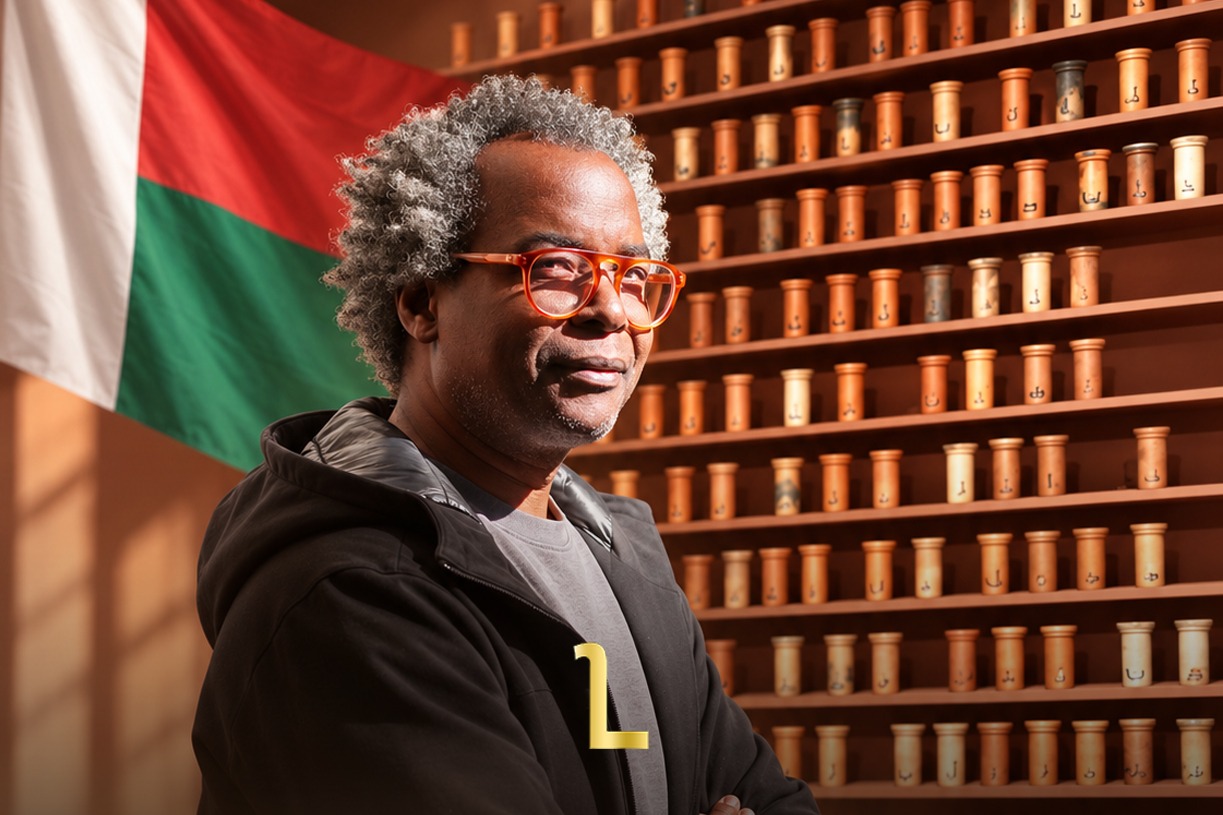
Fez — Moroccan contemporary artist M’barek Bouhchichi has concluded a six-month exhibition in Madagascar that brought together traditional craftsmanship, contemporary art, and cultural exchanges between Morocco and the island nation.
Titled “Les Mains des Poètes” (The Hands of Poets), the exhibition ran from April 24 to October 17 at Fondation H in Antananarivo, under the curatorship of Hobisoa Raininoro.
The project brought together Moroccan and Malagasy artisans to create a collection of works using wood, metal, clay, textiles, paper, and sound.
Rather than treating craftsmanship solely as a technical skill, Bouhchichi approached manual creation as a form of artistic expression capable of preserving collective memory and communicating across cultures.
Bringing Moroccan and Malagasy traditions together
The exhibition emerged from a six-week research residency that Bouhchichi undertook in Madagascar’s capital in 2025.
During his stay, the artist visited markets, workshops, and cultural spaces, meeting local blacksmiths, ceramicists, weavers, designers, and musicians.
These encounters formed the basis of collaborations involving artisans in Antananarivo, Antsirabe, and Imi n’Tatelt in Morocco.
According to Fondation H’s official presentation, the resulting artworks examined the connections between materials, the human body, and the transmission of knowledge.
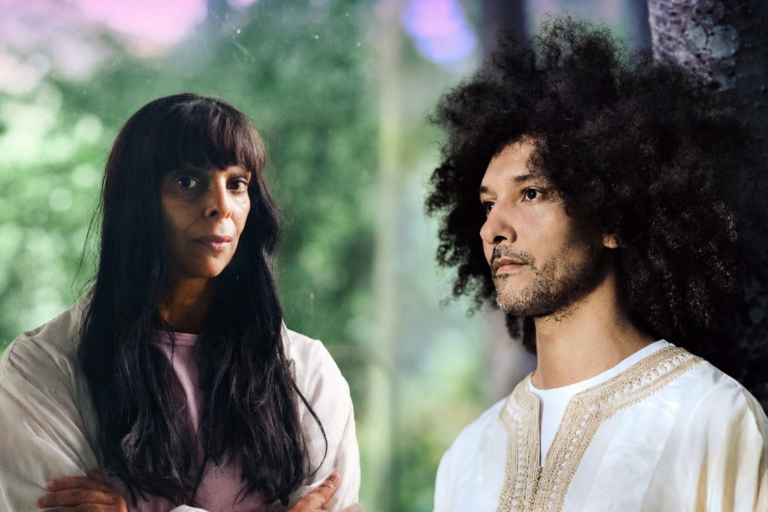
One of the exhibition’s textile projects brought Bouhchichi together with Moroccan weaver and embroiderer Saadia Elouaziz.
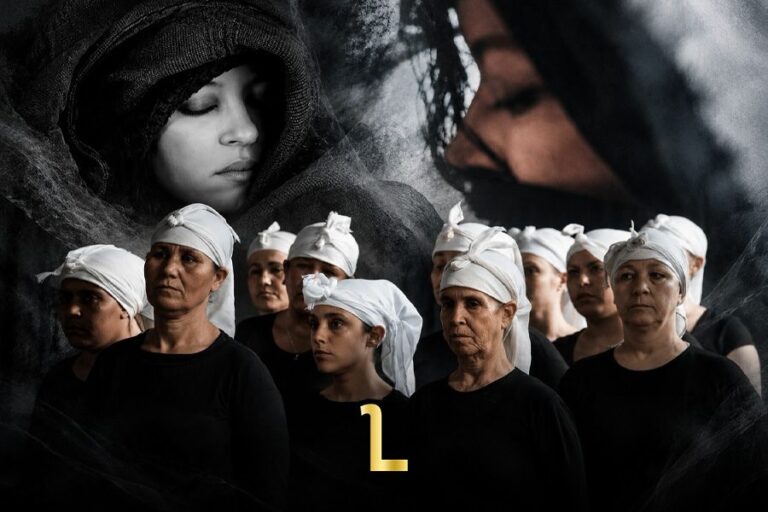
The collaboration explored the history of Queen Soazara, a Sakalava ruler whose life intersects with Madagascar’s colonial history.
Working with traditional Malagasy wild silk, Elouaziz embroidered motifs inspired by local tattooing traditions before dyeing the textile with henna.
The process combined Moroccan embroidery skills with Malagasy textile practices, creating works that connected the histories of two African countries.
Exploring language, history, and cultural memory
The exhibition also featured a collaboration with Malagasy designer Domi Sanji on “Matsaraba,” a contemporary typeface inspired by sorabe, an Arabico-Malagasy writing system developed by the Antemoro people around the 15th century.
The new typeface comprises 127 characters, designed to reflect the relationship between writing, identity, and the preservation of cultural knowledge.
Bouhchichi worked with the Fango workshop to transform the characters into clay printing blocks.
Other installations examined the status of African cultural objects in European museum collections.
One work recreated a traditional Malagasy cooking pot held by the Musée du quai Branly – Jacques Chirac in Paris.
Produced in collaboration with local craftspeople, the replica challenged assumptions about who holds the knowledge and authority to reproduce cultural heritage.
Another installation, created with the metalworking workshop of Fitiavana Ratovo, drew inspiration from traditional Malagasy funerary sculptures while questioning how African objects have historically been displayed and interpreted abroad.
An artistic practice rooted in memory
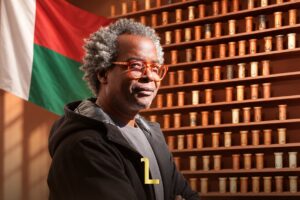
Born in Akka, Morocco, in 1975, Bouhchichi lives and works in Tahannaout.
His artistic practice encompasses painting, sculpture, drawing, installation, and video, frequently exploring questions of identity, collective memory, and the representation of Black bodies in Moroccan society.
His works appear in collections including the Centre Pompidou in Paris and the Museum of African Contemporary Art Al Maaden in Marrakech.
Through “Les Mains des Poètes,” Bouhchichi extended these concerns into a collaborative project in which artisans became central participants in the creation of contemporary artworks.
The exhibition’s conclusion on October 17 marked the end of a project developed through encounters, material experimentation, and exchanges between Moroccan and Malagasy artistic traditions.