10 Rooftops You Can’t Miss in Essaouira
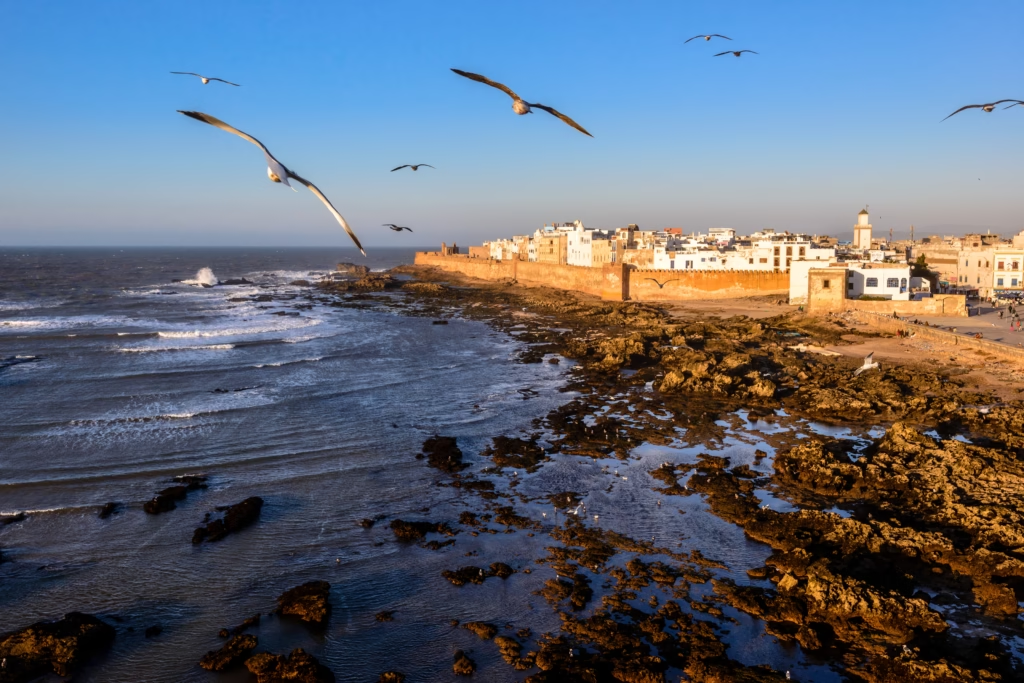
This city is known for rooftops, and this article will show you why!
The Ritual Of Henna Night In Moroccan Weddings
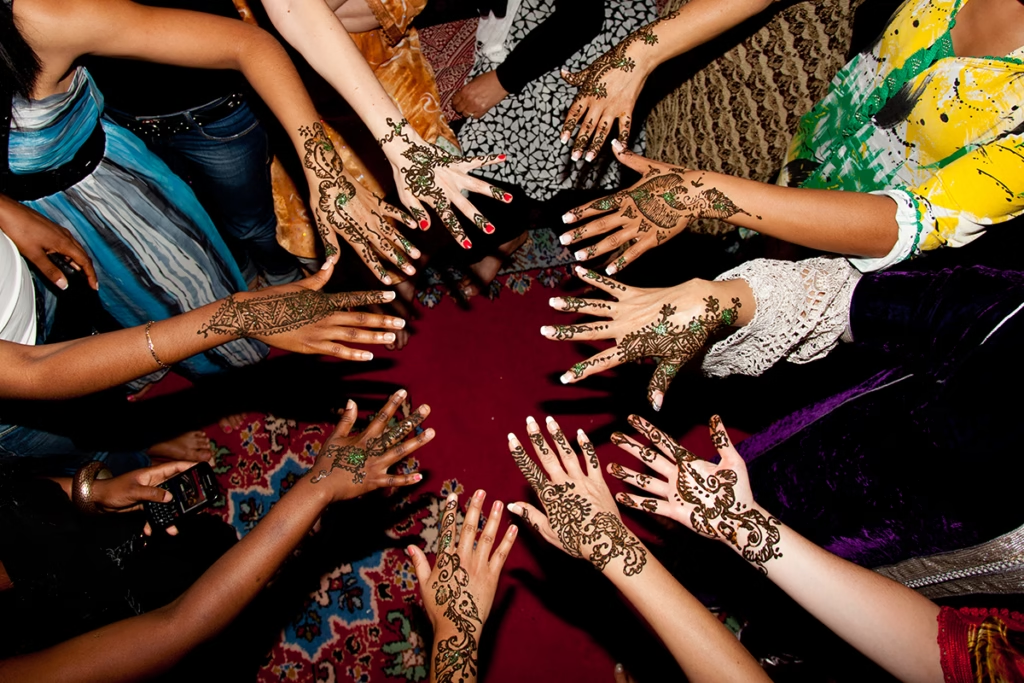
With warmth lingering in her palms and a quiet echo of the night, it was painted into her skin, stitch by sacred stitch, by the hands that raised her.
Portugal + China = Macau: 400 Years of Unexpected Cultural Chemistry
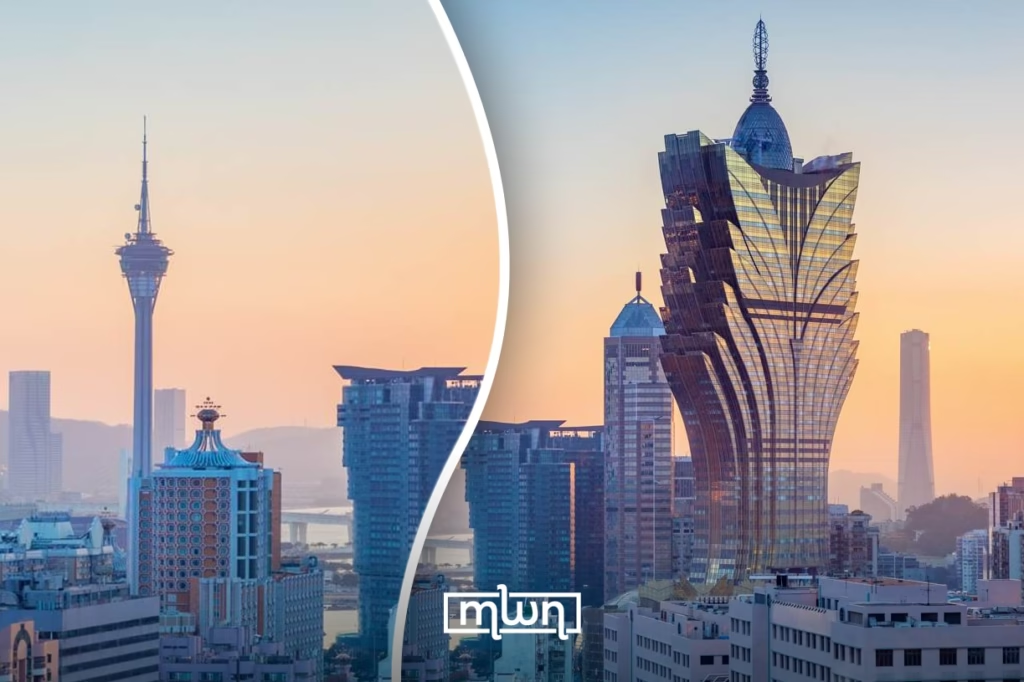
Forget what you know about casinos and dim sum. Macau is not just China’s gambling playground, it’s one of the world’s most underrated cultural mysteries. Fez – For over four centuries, this tiny 33-square-kilometer sliver of land has been quietly staging a historic encounter between empires. A Portuguese foothold on Chinese soil since 1557, Macau evolved into a strange, beautiful chimera, a city where temples sit next to Baroque churches, and dragon dances meet Catholic processions. Macau is now a Special Administrative Region of China, sitting just across the water from Hong Kong and a short trip from Guangzhou. But its soul is far older, messier, and more intriguing than most guidebooks dare to explain. This is not your average tourist city, it’s a living museum of globalization before globalization had a name. Long before fusion cuisine became a thing, Macau had already perfected it. In its kitchens, Chinese stir-fry techniques danced with Portuguese stews. African chicken: a fiery, paprika-heavy dish, was invented here, not in Africa. Bacalhau (salted cod) found a new home next to Cantonese rice noodles. Even egg tarts became something else entirely: Portuguese in crust, but unmistakably Macanese in soul. This culinary crossroads wasn’t just about flavor, it was a survival strategy. Colonial Macau had to keep the Portuguese elite happy while feeding the local Chinese population. The result? Dishes like pork chop buns and crab congee that speak two languages on your palate. It’s easy to think of Macau as a sideshow to Hong Kong’s economic drama, but don’t be fooled, Macau was once the European gateway to China. The Portuguese didn’t just bring spices and Catholicism; they brought diplomacy, piracy, Jesuits, and a wild mix of intentions. It was here that East and West sat awkwardly at the same table, and sometimes fought over who got to light the incense. Before Hong Kong took the spotlight, Macau was the main character. It was the only place in China where Europeans were allowed to settle long-term. Jesuit missionaries like Matteo Ricci used it as a base to enter Beijing’s court, armed with star maps and Western clocks. It wasn’t always peaceful, but it was always weirdly collaborative. Macau’s architecture is a walking contradiction. The ruins of St. Paul’s Cathedral, perhaps the city’s most photographed landmark, stands like a Roman relic, but just behind it, incense coils hang from the ceiling of A-Ma Temple, dedicated to a sea goddess. Fortaleza do Monte, once a fortress protecting the Catholic missionaries, now gives panoramic views over a skyline that looks more Vegas than Vatican. Look closer, and you’ll see traces of colonial tension etched into the cobbled streets. Lovers’ Lane hides between pastel houses, once the homes of Eurasian elites who didn’t fit neatly into either world. Baroque facades conceal family altars. Every square inch of this city has a secret, sometimes sacred, sometimes scandalous. Despite its modern-day casino glamour (which, to be fair, funds most of its economy), Macau still treasures its lesser-known traditions. Nearly 70 practices are now officially recognized as intangible cultural heritage. We’re talking about things like the Drunken Dragon Festival: a surreal parade where shopkeepers pretend to be drunk dragons blessing the fish market. Or the haunting tones of Taoist ritual music echoing through old courtyards. Cantonese opera still thrives here, not as tourist entertainment but as a cherished art. Temples light up with worshippers honoring Mazu, goddess of the sea. And tucked away in alleyways are workshops where woodcarvers shape deities from camphor wood, using techniques passed down for generations. The Portuguese are gone, but not really Portugal handed Macau back to China in 1999, but the city didn’t shed its colonial skin. It wears it like a second language. Street signs are still in Portuguese. Government documents still speak both tongues. The legal system remains rooted in Western jurisprudence. And at the dinner table, the debate between soy sauce and olive oil is never really settled. Macau didn’t become East or West. It chose to be both, in a way that still confuses maps and defies political soundbites. Macau isn’t a time capsule, it’s a trick mirror. It reflects what happens when empires clash, trade, flirt, and eventually learn to live together. It’s where China’s philosophical depth met Europe’s colonial ambition, and both ended up changed forever. You don’t just visit Macau. You uncover it, layer by layer, dish by dish, festival by festival. And if you’re lucky, you leave with more questions than answers. Which is exactly what Macau wants.
Abu Dhabi’s Cultural District Set to Redefine the Museum Experience
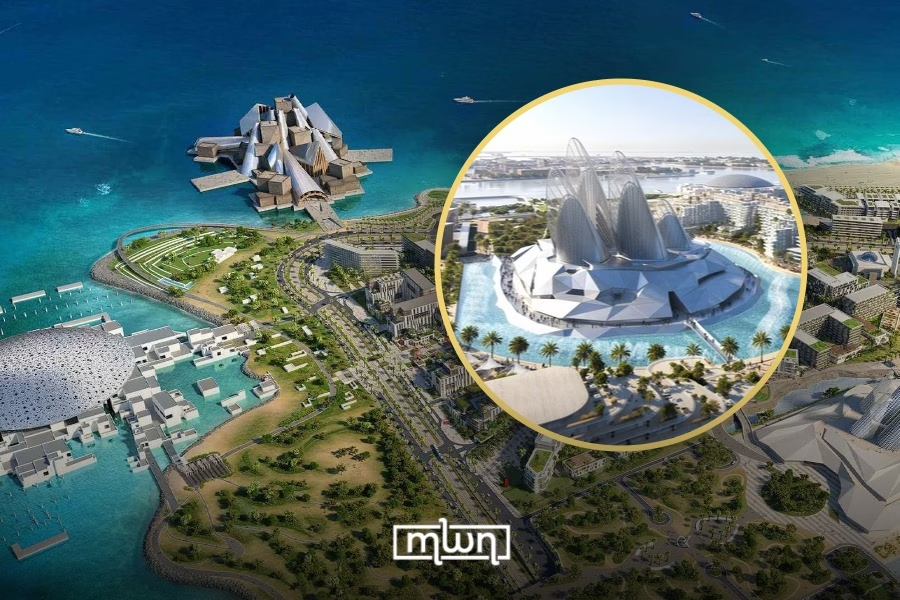
In the desert, Abu Dhabi is building the most concentrated museum district on Earth. Fez – Abu Dhabi is approaching culture the way it approaches architecture: deliberately, ambitiously, and on its own terms. By the end of this year, the city’s long-planned Cultural District on Saadiyat Island will begin to open in full, offering one of the most densely concentrated collections of museums in the world. Spanning over two square kilometers, the district brings together internationally recognized institutions such as the Louvre Abu Dhabi and the upcoming Guggenheim, alongside new museums developed specifically for the UAE. But what makes the project remarkable isn’t just its scale, it’s the way each space has been designed to exist in dialogue with the others. According to Mohamed Khalifa Al Mubarak, Chairman of the Department of Culture and Tourism, the strength of the district lies in its interconnectedness. “What makes this project unique is not just the institutions, but how they interact with each other,” he said. The district will be fully walkable, with shaded and naturally cooled pathways designed to withstand the region’s harsh summer climate. The idea is to make cultural exploration not only accessible but part of the everyday rhythm of the city. Among the new institutions is the Zayed National Museum, set to open in late 2025. Designed by Foster + Partners, it will focus on the history, heritage, and future of the UAE and the wider region, exploring themes such as trade, faith, and the natural environment through six permanent galleries. The Natural History Museum Abu Dhabi, also under construction, will look even further back, tracing the story of life on Earth across 13.8 billion years. Read also: Hussein Slaoui’s Song That Captured Morocco’s American Moment During WWII One of its most high-profile acquisitions is “Stan,” a near-complete Tyrannosaurus rex skeleton, purchased for $31.8 million. Visitors will also see fragments of a meteorite older than the Sun itself. Adding a contemporary layer to the district is teamLab Phenomena Abu Dhabi, an immersive digital art space created by the Japanese collective teamLab. The building, cloudlike in form, is designed to house installations that respond to movement, sound, and light, shifting with each visitor’s interaction. The Louvre Abu Dhabi, which opened in 2017, has already set a strong precedent. With a permanent collection that spans civilizations and centuries, it has positioned itself as a global museum with a regional voice. Its distinctive dome, designed by Jean Nouvel, remains one of the most striking architectural features in the Gulf. By the end of 2025, the Guggenheim Abu Dhabi is expected to open, bringing Frank Gehry’s fragmented architecture to the island. The collection will focus on post-1960s contemporary art, with particular attention to artists from West Asia, North Africa, and South Asia. Taken together, these institutions reflect a larger ambition: to place Abu Dhabi at the center of cultural production, not just consumption.
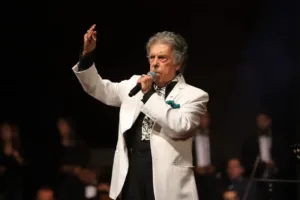
A Soundtrack of Identity: Moroccan Traditional Music
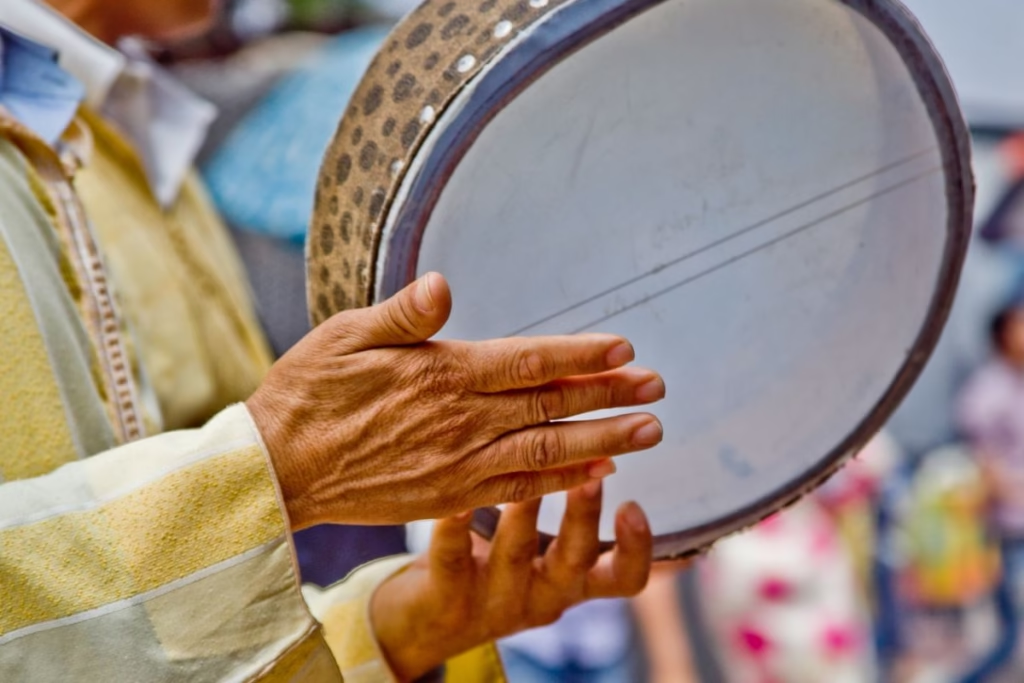
In case you didn’t know, Morocco’s music is as rich and varied as its landscapes.
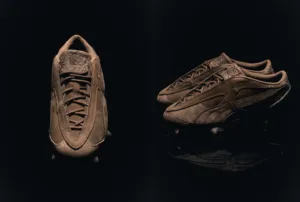
Belgha and Sherbil in Moroccan Memory
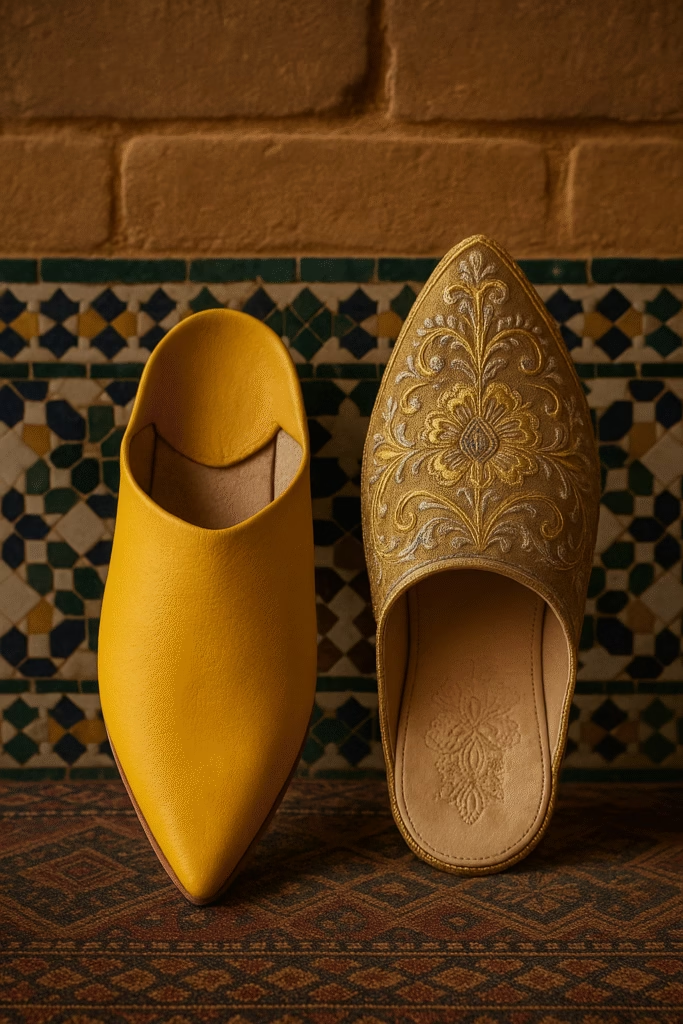
In Morocco, these two items are more than shoes, they’re part of the country’s history
ASEAN Embassies in Rabat Team Up for First-Ever Cultural Festival in Morocco
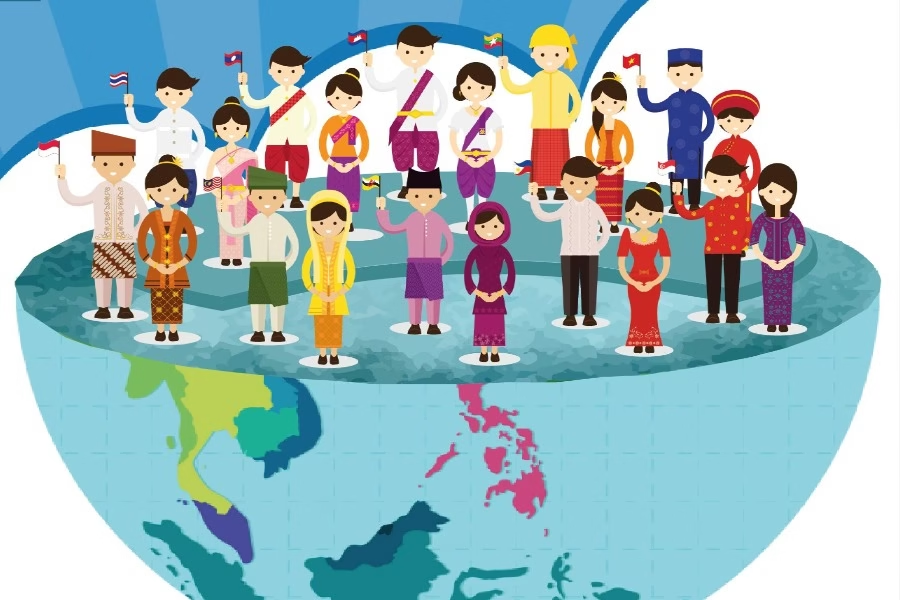
While Morocco is thousands of miles from Southeast Asia, this celebration aims to build bridges — not only between governments, but also between cultures, cuisines, and communities.
Inside Morocco’s Natural Healing Ingredients
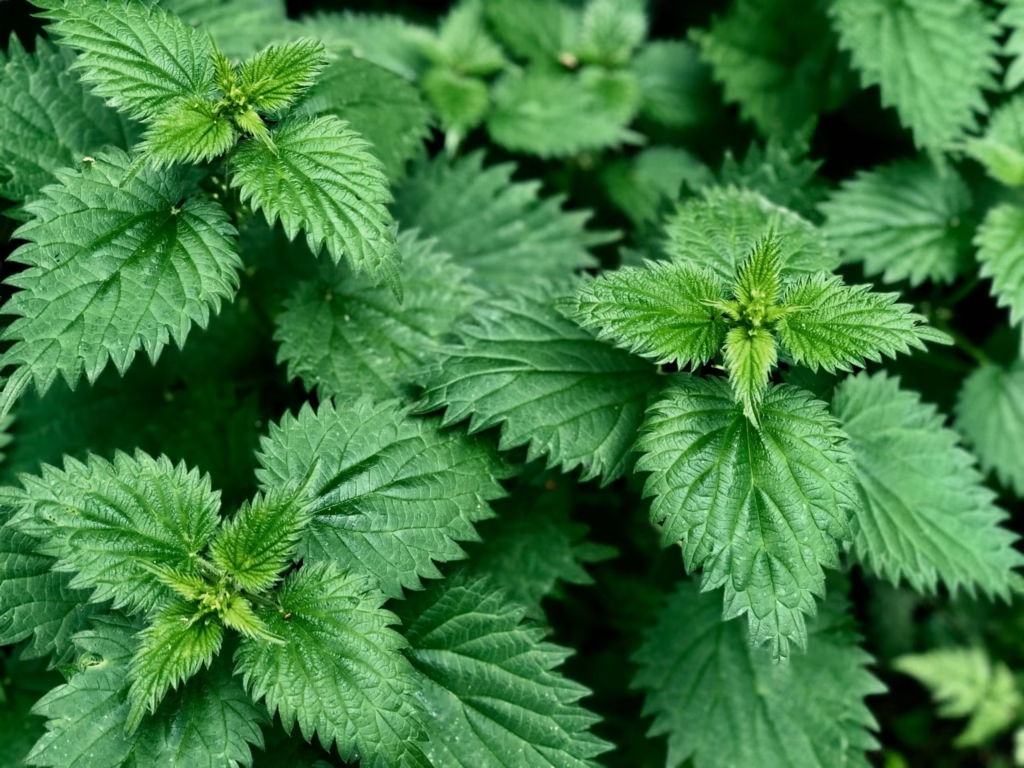
In a Moroccan home, and you’ll find more than just vibrant colors and warm vibes, you’ll discover a pharmacy of nature’s finest healing treasures.
MOGA 2025: Essaouira’s Electronic Music Festival Drops First Lineup
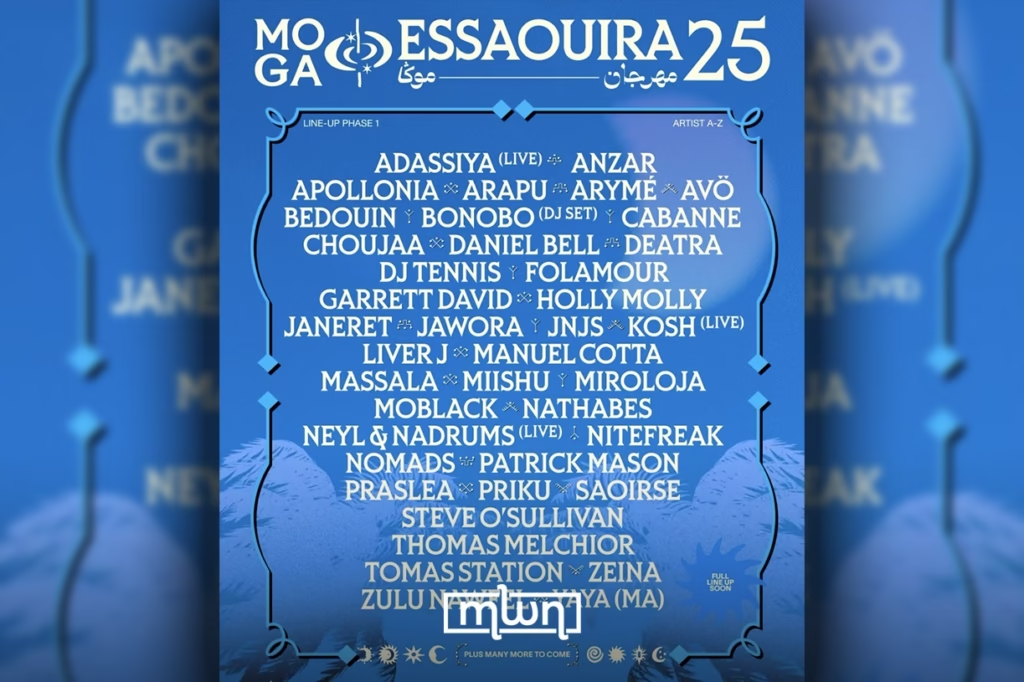
With this first lineup announced, MOGA Festival once again sets the tone for a celebration that blends music, culture, and community.
The first Artist to recreate Mona Lisa with 100 iPhone replicas
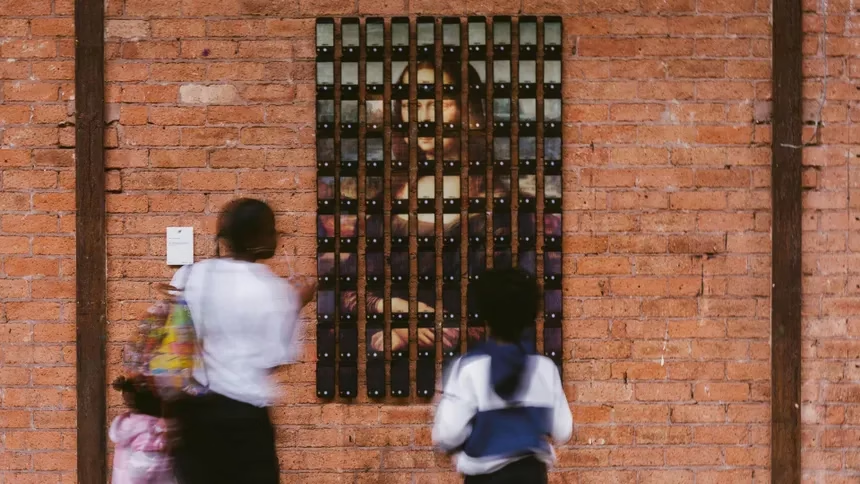
This British artist has done something unexpected with our famous Mona Lisa