Think Salé Is Just Rabat’s Quiet Neighbor? You’re Wrong
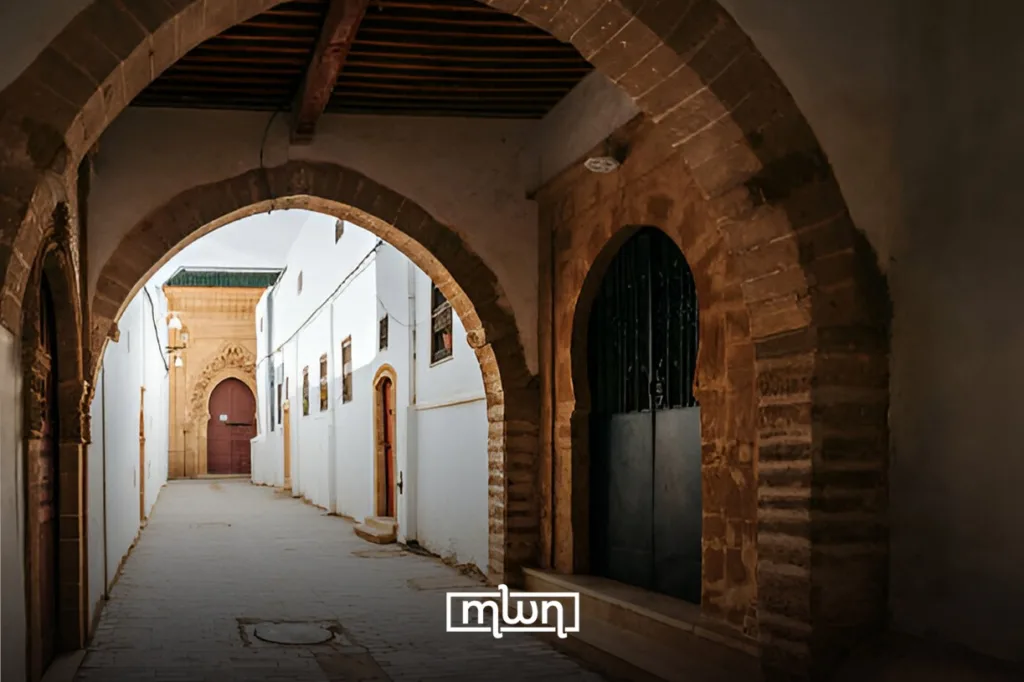
The city is more than just traffic, cafés, and that one friend who says he’s “not from Rabat.”
Weekend Escapes Near Rabat-Salé for a Quick Change of Scenery
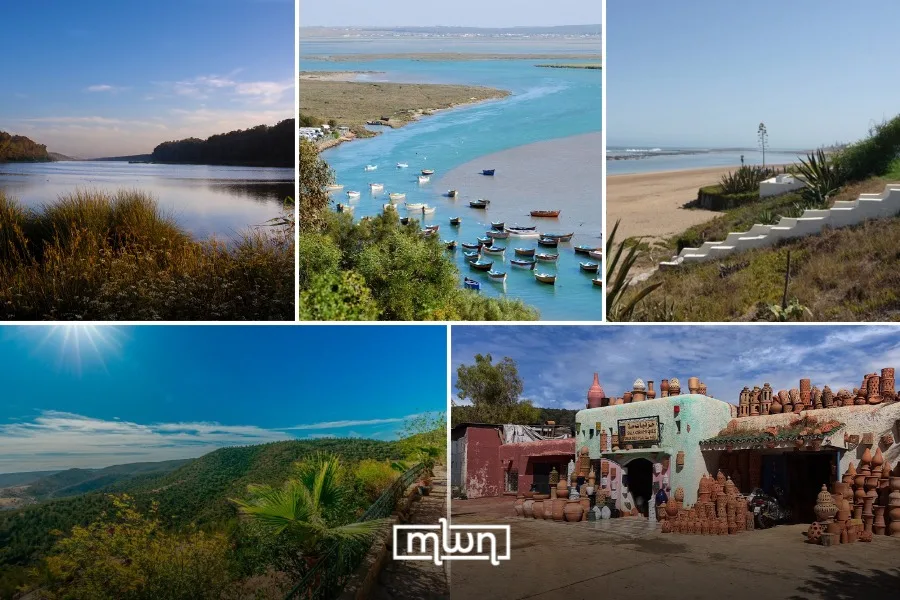
From coastal lagoons to forests and craft villages, several easy excursions near Rabat-Salé offer ideal options for a short weekend break without long travel.
Fall of the Republic of Salé: A Tale of Power Struggles, Shifting Alliances
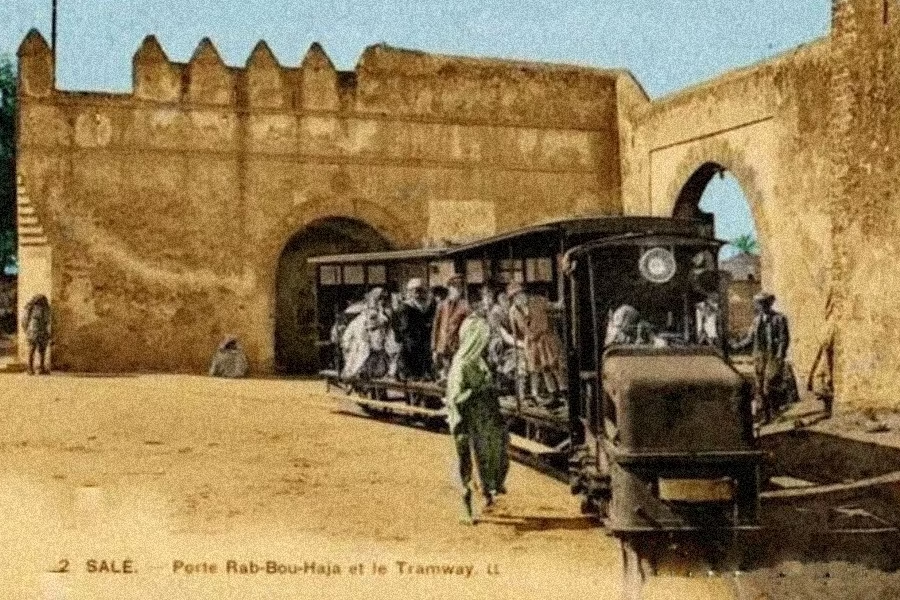
Powerful fleets, secret deals, and an empire lost to time. Fez – The Republic of Salé, once a powerful force in Morocco, saw its downfall in the 17th century after a series of complex political and military maneuverings. The initial agreement that sparked the Republic’s downfall revolved around a promise from Philip VI of Spain: In exchange for the Republic’s submission, Spain agreed to allow the return of the Saleans to their original home in Houarnashos and to ensure they would be free from the Inquisition’s punishments. Additionally, Spain was set to receive 68 cannons from Salé. Things didn’t go as planned, however. Instead of an alliance with Spain, the leaders in Salé reached a more localized agreement to divide positions within the council. While this seemed like a clever way to secure power, it ultimately weakened the Republic, leaving it divided and vulnerable. One of the central figures in the Republic’s history was the newly elected leader, El Ayachi, a man from the Bani Hilal tribe who had migrated westward. El Ayachi’s reign was marked by fierce battles against the Delaiyyi, a group that sought to extend their control over Salé. El Ayachi was defeated in 1641, and the Delaiyyi seized control of the region. This defeat set the stage for the Republic’s decline. Read also: The Real Aicha Kandicha: Legend, Heroine, or Myth? In 1660, the Houarnashians led an uprising, placing Gilaan Reis in charge of the Republic. But their rebellion could not withstand the growing power of Sultan Moulay Rashid, who successfully unified Morocco in 1668. With the unification of the kingdom under the Alaouite dynasty, the Republic of Salé came to a definitive and permanent end. At its peak, the Republic boasted a formidable fleet of ships equipped with both sails and oars, making them highly maneuverable in naval combat. Despite their impressive military presence, the Republic’s power began to wane due to internal strife and external pressures. Interestingly, European powers such as France, the Netherlands, and England found themselves forced to engage diplomatically with the Republic of Salé, especially after they failed to breach the Bouregreg River. The Republic had become a strategic player in the region, not only for its military capabilities but also for its role in securing the release of captured Europeans and ensuring the continuation of free trade in the Mediterranean. Ultimately, the Republic of Salé’s story is one of shifting alliances, internal divisions, and the rise and fall of a once-dominant force in North Africa.
Inside Morocco’s Buzzing Bee Museum
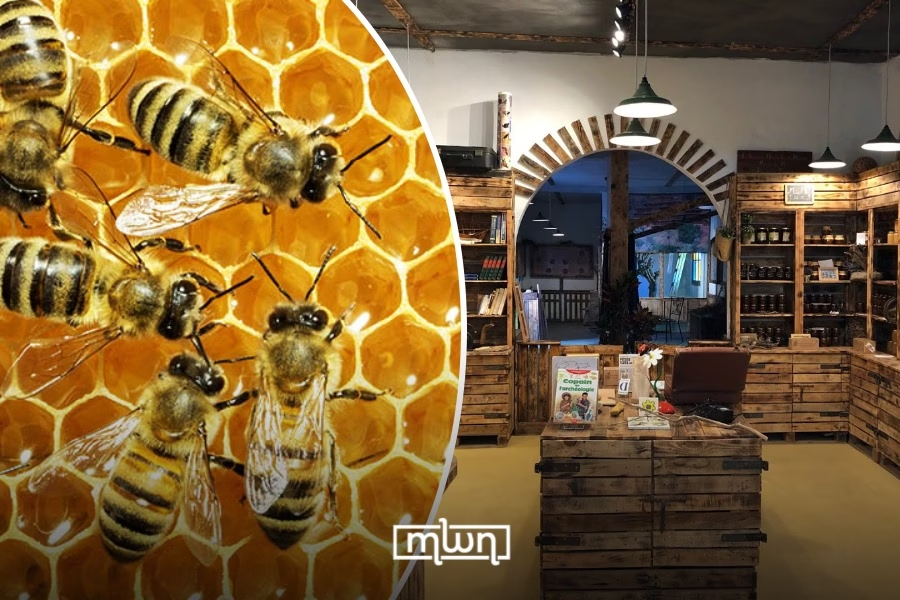
Sale’s buzzing with more than traffic, there’s a hive of learning just around the corner. Fez– After three decades living in France, Idriss El Ouarradi packed up his knowledge, his passion for bees, and a lifetime of experience, and brought it all home to Morocco. In an interview with Al Jazeera, he explained how his dream of creating a space where people could fall in love with bees the way he did finally came to life in the form of the Bee Museum in Sale, just outside Rabat. And this isn’t your average museum. It’s Africa and the Arab world’s first of its kind. An immersive, hands-on, honey-soaked wonderland that takes you deep into the mysterious, magical world of bees. Since opening in 2019, it’s already welcomed over 3,000 curious visitors, from school kids on field trips to adults who just want to understand what really goes on inside a beehive. At first glance, the museum looks like a peaceful little retreat, but step inside and you’re suddenly in the middle of a buzzing universe. Transparent glass hives let you watch bees up close working, cleaning, raising babies, building wax, guarding the queen, and defending their turf like tiny warriors. It’s nature’s choreography, and it’s mesmerizing. El Ouarradi’s goal? Make science accessible. Break down complex ideas. Get kids asking questions. Get adults unlearning the myths. During school visits, he’s often surrounded by tiny hands in the air and big questions: “Do bees sleep?” “Does the queen boss everyone around?” He takes the time to answer every single one, not just with facts, but with wonder. The museum is packed with surprises: detailed posters on the history of bees, tools used by ancient and modern beekeepers, and even rare books on bee science in Islamic history. One section dives into the bee’s anatomy and communication style (yes, they do have a dance language). Another shows how honey is made, step by sticky step. There’s also a display of different types of honey, pollen, and even beauty products made from beeswax. Plus, a mini-lab for studying bees more closely. But El Ouarradi isn’t just showing off, he is teaching. For instance, many people think crystallized honey means it’s fake or spoiled. Not true, he says. In fact, real honey should crystallize – it means it hasn’t been messed with. Despite Morocco’s biodiversity, the country still imports 95% of its honey – a fact that for El Ouarradi, that’s unacceptable and completely fixable. His solution? Educate. Share knowledge. Make beekeeping a thing again. Built from scratch with his own money, this museum is a heartfelt contribution to his country and proof that sometimes, the smallest creatures can teach us the biggest lessons. Read also: How Moroccans Say ‘Welcome’ Without Saying It