Discover the Unique Types of Moroccan Tiles
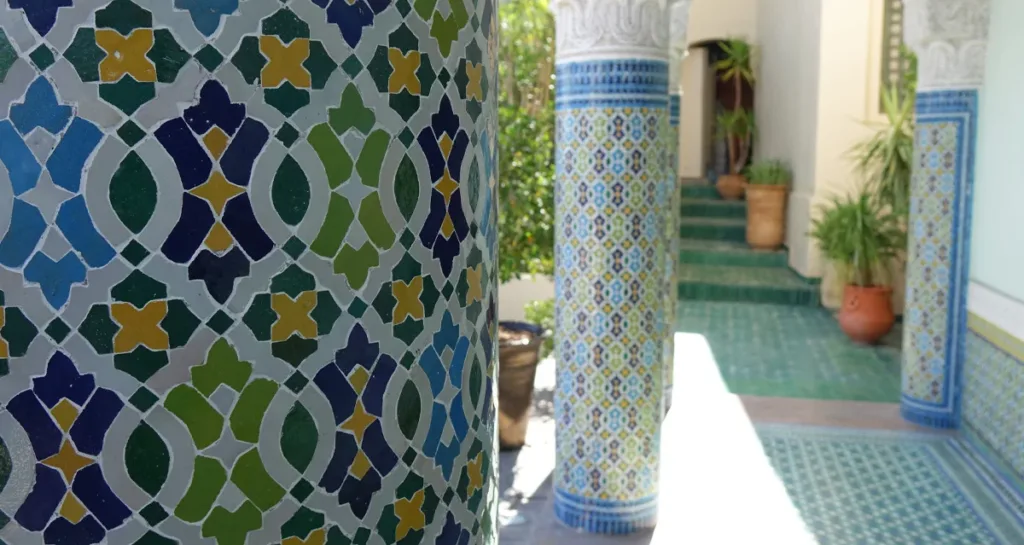
Let’s step inside Morocco’s world of tiles, where patterns carry centuries of craftsmanship.
Imouzzer Kandar Celebrates Heritage and Youth at 5th Tamazirte Festival
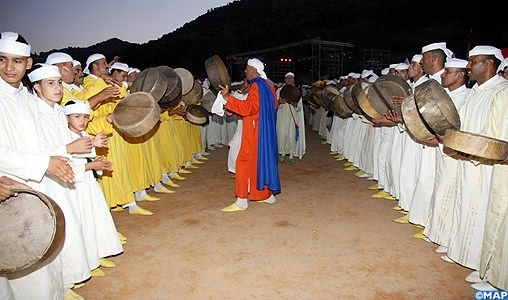
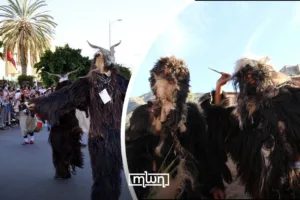
The city of Imouzzer Kandar, in the Sefrou province, was vibrating with the sounds of traditional music and vibrant colors of its rich heritage.
Sweet, Chewy, and Loved Worldwide: It’s National Mochi Day!

Today marks a national celebration of one of Japan’s most beloved treats: soft, chewy, and captured the hearts and taste buds of people around the globe. Can you tell what it is?
Perfume Your Body The Moroccan Traditional Way
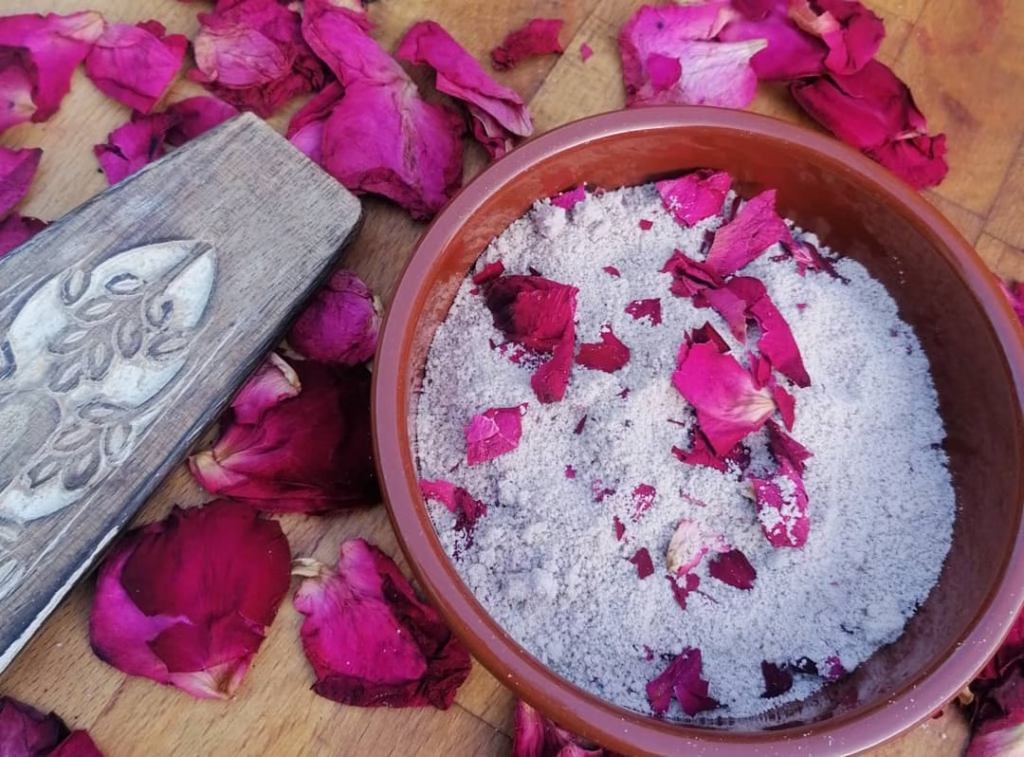
Your scent isn’t just vanity, it’s your presence and the lingering memory you leave behind.
The Ritual Of Henna Night In Moroccan Weddings
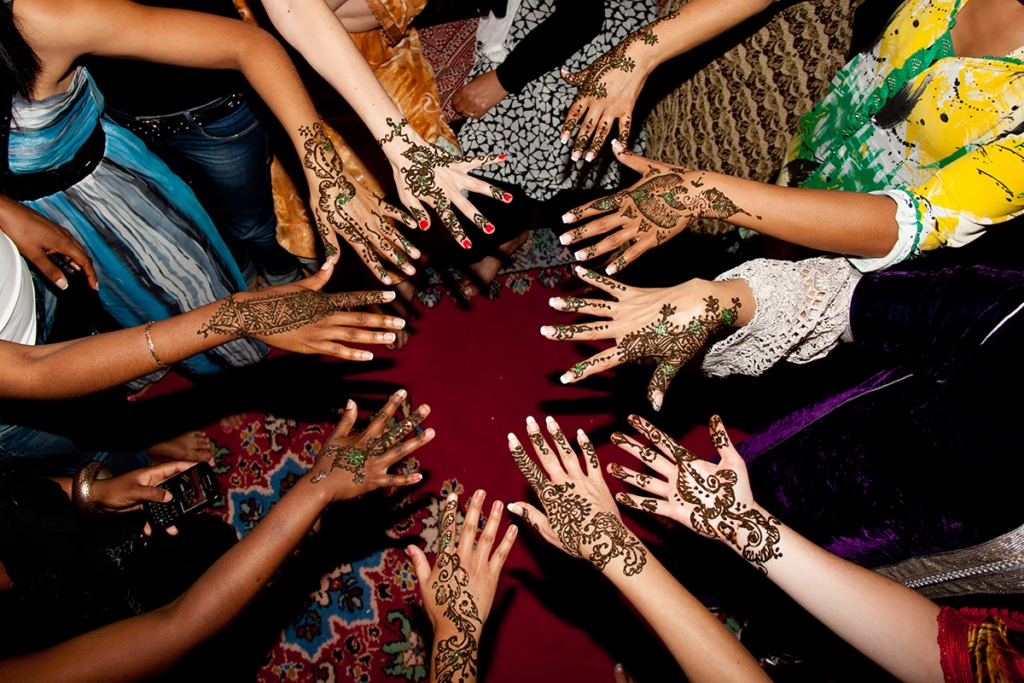
With warmth lingering in her palms and a quiet echo of the night, it was painted into her skin, stitch by sacred stitch, by the hands that raised her.
A Soundtrack of Identity: Moroccan Traditional Music
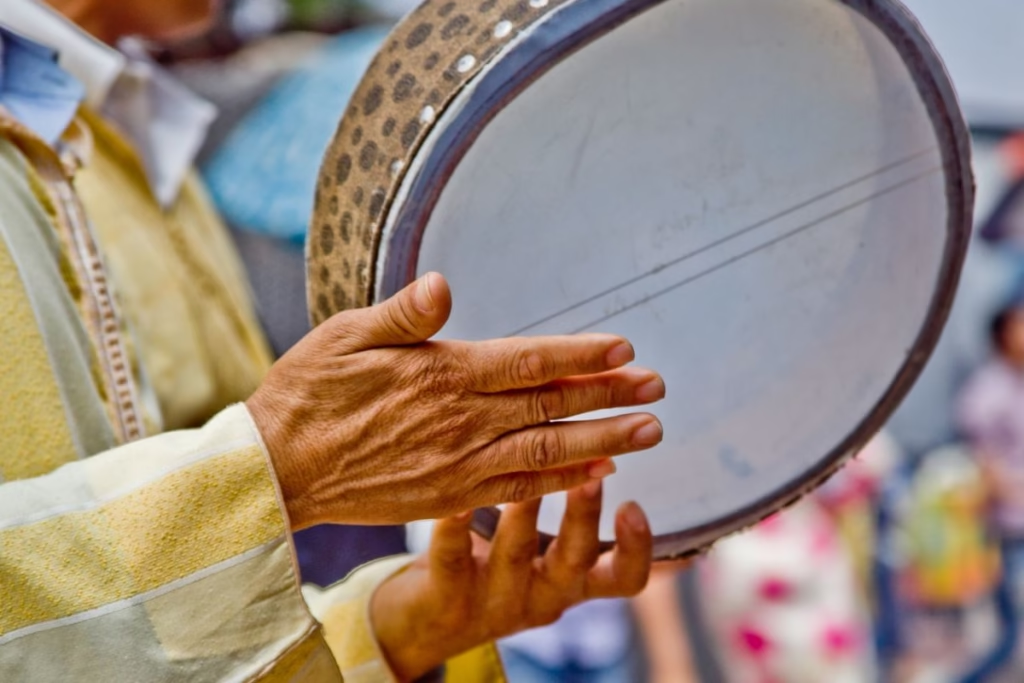
In case you didn’t know, Morocco’s music is as rich and varied as its landscapes.
Morocco’s Hospitality: A Tradition Passed Through Blood
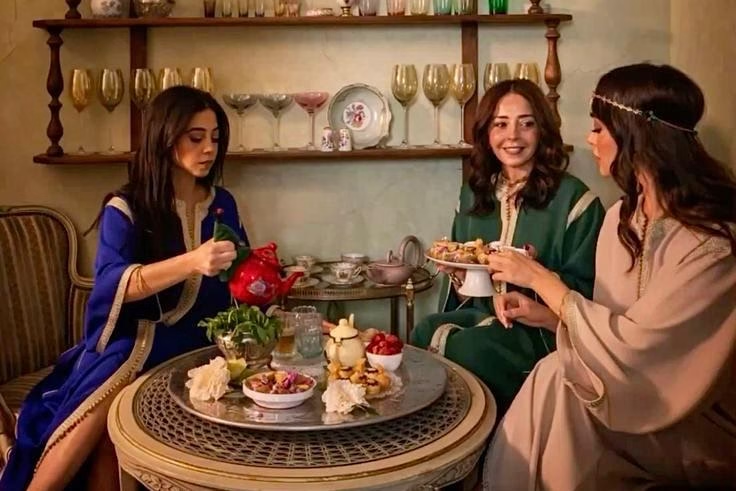
Moroccan hospitality is not just a gesture; it’s a duty, an instinct, and a source of pride passed through generations. Rabat – In Morocco, no one leaves hungry. Whether you’re a family member, a friend of a friend, or a stranger, you’ll be offered tea, food, and sometimes even a bed without hesitation. Moroccan hospitality runs deep, shaped by a rich mix of Berber, Arab, and African traditions. The Berbers, Morocco’s indigenous people, have long placed great importance on welcoming travelers and strangers. Enriched by Arab and African influences, hospitality is a core aspect of the Moroccan identity, characterized by warmth, generosity, and a genuine desire to make guests feel welcome and comfortable. It is a unique welcoming culture. Welcoming rituals are important to Moroccans, as they symbolize the opening of their homes to guests. Every guest is welcomed with a friendly handshake or a tight hug and a sincere smile. “Marhba” or “Ahlan wa sahlan” are greetings that invite you to feel at home. The Moroccan warmth goes beyond simple gestures, with offers of traditional Moroccan baked goods and hearty conversations while sharing a warm cup of mint tea. Moroccan tea, or Morocco’s symbol of hospitality, surpasses the simple notion of a drink. At the heart of every home, it embodies a deep respect and a warm welcome extended to every guest. Meals are often served in a single large round dish placed at the center of the table, inviting everyone to gather around and share from the same plate. This tradition reflects unity, generosity, and a sense of togetherness. Moroccan hospitality goes beyond borders, shaping Morocco’s reputation as the crown jewel of North African tourism. Visitors seeking authenticity are drawn in by the promise of a genuine human connection, where every traveler is welcomed as a valued guest. For many travelers, this age-old tradition is one of the most memorable parts of their journey. Being invited into a local home, sharing a traditional meal, and connecting over stories with warm-hearted hosts often leaves a lasting impact. Tourists leave Morocco carrying the feeling of having truly been welcomed. Even as the world changes around them, Moroccans hold tightly to their traditions of hospitality. The values of generosity, kindness, and respect remain at the heart of their culture, and there’s a strong commitment to passing this cherished legacy on to future generations.
How Moroccans Celebrate Ashura: A Living Tradition of Faith, Food, and Festivity
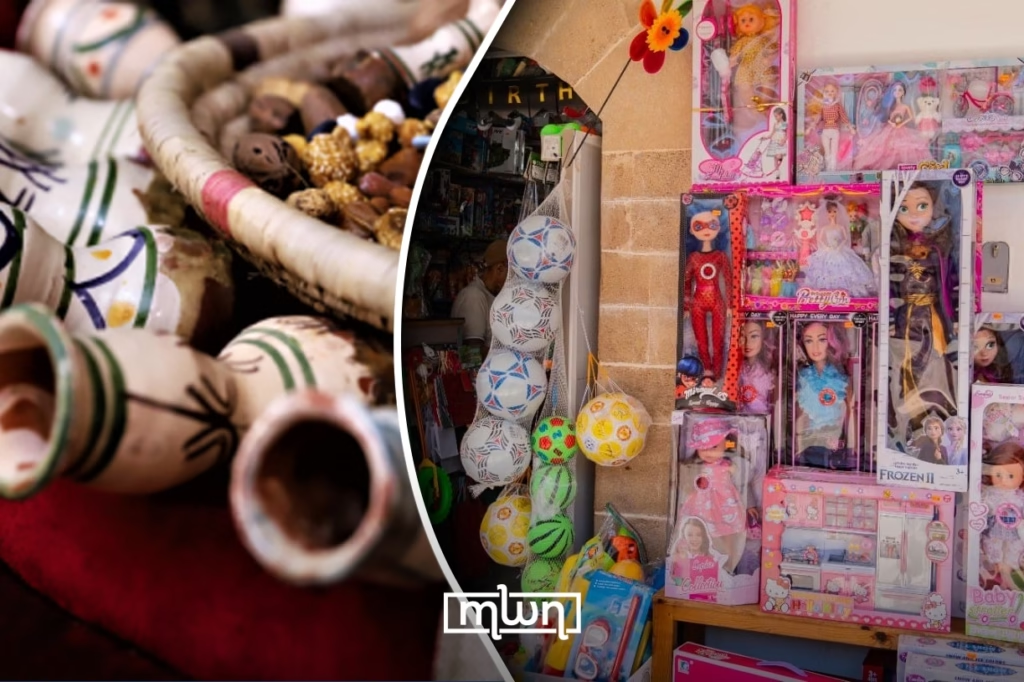
Morocco, Ashura is a vivid intersection of Islamic devotion and ancestral tradition, celebrated in homes, markets, and neighborhoods alike. Fez – Ashura, observed on the 10th day of the Islamic month of Muharram, holds a unique and vibrant place in Moroccan culture. While it is a day of religious significance across the Islamic world, in Morocco, Ashura becomes an occasion deeply rooted in the country’s society, mixing spiritual devotion, family gatherings, communal generosity, and cultural expression. With centuries of evolving traditions, Ashura remains one of Morocco’s most enduring and dynamic celebrations. A heritage rooted in history The Moroccan celebration of Ashura stretches back hundreds of years. Over time, it has grown from a day of fasting and remembrance into a rich occasion blending religious practice with local customs. In many regions, the days leading up to Ashura see a burst of activity in markets and neighborhoods. Merchants prepare for the influx of customers, and families make plans for festivities and special meals. Central to the celebration is the idea of honoring faith, fostering family ties, and giving back to the community. One of the oldest customs is “laachour,” where wealthy merchants distribute gifts and small amounts of money to children, women, and the less fortunate. This practice continues today, reinforcing values of social solidarity and shared joy. Creating a place of joy From the first days of Muharram, Moroccan markets undergo a colorful transformation. Stalls overflow with traditional toys, drums, and items used only during Ashura. Children eagerly await gifts like :taarija”, a small, brightly colored clay drum covered in stretched skin, used to create cheerful rhythms during the celebrations. The marketplace becomes more than a commercial space; it turns into a cultural theater, full of noise, music, and the anticipation of celebration. Parents buy toys and clothes for their children, adding to the excitement. At home, families light candles and arrange symbolic displays, filling rooms with warmth and spiritual light. The ambiance of Ashura is joyful but also contemplative. Tasty food and symbolic dishes No Moroccan celebration is complete without a table full of carefully prepared dishes, and Ashura is no exception. Food is central to the occasion, not only as nourishment but as an expression of cultural identity and generosity. Among the standout dishes is couscous, often served with seven vegetables and either lamb or beef. This version of couscous represents abundance and unity and brings extended families together around a single large dish. Another traditional favorite is “thrid” pieces of flatbread soaked in a rich meat and vegetable broth. Some regions prepare “rfissa”, a spiced dish made with shredded bread and chicken. Sweets and nuts are so essential in Ashoura. Peanuts, sesame cookies, dried fruits, and what is locally called “lhagouz” sweets are shared with guests and neighbors. These foods are part of a larger message of hospitality, tradition, and belonging. It’s common to see children going door to door receiving small treats from neighbors, creating a warm and communal spirit. Music and art Cultural performances are a major feature of Ashura in Morocco. Throughout cities and rural towns alike, streets come alive with traditional music and dance. Local groups play folk rhythms using instruments like the “bendir” and “taarija”, while women and children join in with chants and dances passed down through generations. Street parades, storytelling sessions, and craft fairs all add layers to the celebration. Some regions host open-air theatre performances that re-enact historical stories or revive ancient legends tied to Morocco’s religious and political heritage. These shows are not just entertainment, they’re vehicles of education and cultural preservation. In many areas, artists and craftsmen set up temporary exhibits showcasing handmade goods, woodwork, pottery, and textiles. Children are often invited to workshops to learn traditional crafts, linking the festive joy of Ashura with skills and knowledge they can carry forward. The language of decoration Decoration plays a critical role in giving Ashura its visual identity. Moroccan homes and public spaces are dressed up with care and intention. Candles are placed around living rooms and courtyards, emitting a soft glow that symbolizes both remembrance and celebration. In markets and alleyways, colorful garlands and lights hang from shopfronts and doorways, turning neighborhoods into living galleries of cultural pride. Homes are filled with the scent of incense, and traditional clay pots and decorative ceramics are put on display. The act of decorating is a huge part of the ritual of welcoming blessings and sharing joy. Spiritual and religious rituals While Ashura is festive, it also carries a solemn and spiritual weight. Many Moroccans fast on the 9th and 10th of Muharram, following the example of the Prophet Muhammad. Mosques fill with worshippers attending special prayers, reading the Qur’an, and participating in remembrance gatherings. Families gather for shared worship at home, reciting Quranic verses together and offering prayers for health, forgiveness, and spiritual growth. In some homes, quiet moments of reflection are encouraged, especially among children, to instill the values of humility and thankfulness. Giving is a key tradition on Ashura. Beyond the symbolic act of distributing gifts, families take this opportunity to give zakat to those in need. Charity organizations organize campaigns to provide food, clothing, and toys to orphans and poor families, making Ashura not only a celebration but also a time of compassion and duty. Though rooted in centuries of tradition, Ashura in Morocco continues to evolve. Today, social media platforms serve as a space for communities to announce public events, share religious reflections, and organize charitable initiatives. Online broadcasts of religious sermons and storytelling sessions allow even those far from home to stay connected with the spirit of the occasion. Modern theatrical shows, fusion music performances, and youth-led charity drives are some of the newer elements that have joined the old. And yet, amid all the change, the heart of Ashura remains the same: it is a time to remember, to rejoice, to share, and to strengthen the cultual threads that bind Moroccans across generations. The Moroccan celebration of Ashura is a rich and
The Elegance of ‘Derza’: A Traditional Garment That Once Defined Moroccan Women
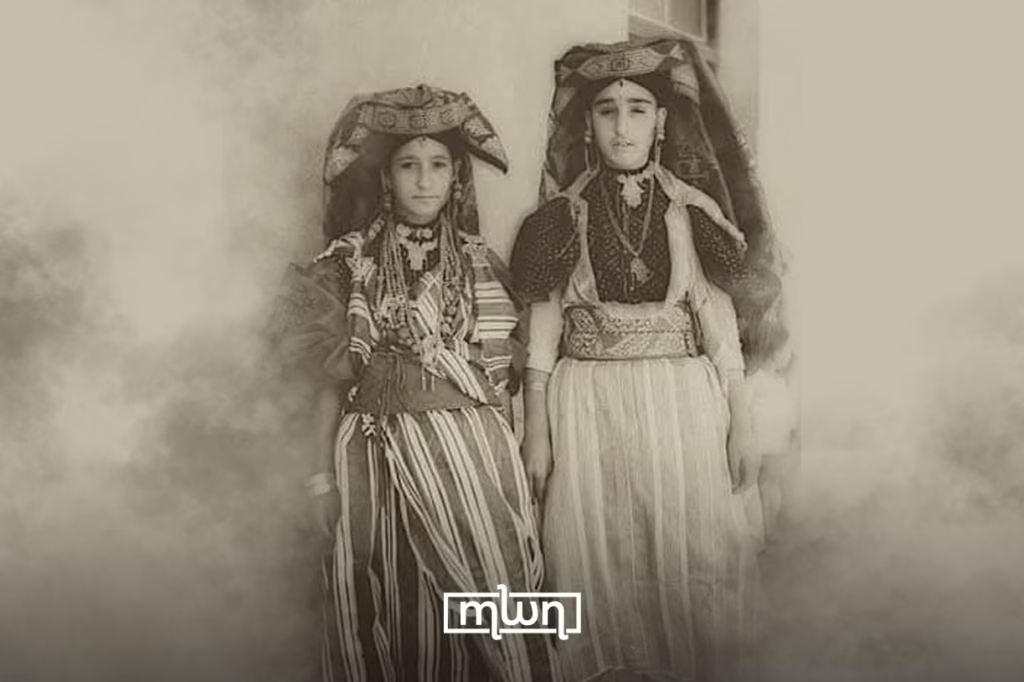
One traditional Moroccan garment tells a story of artistry, tradition, and a lost craft. Fez – In the diverse world of Moroccan fashion, few garments have held as much cultural significance and complexity as the “Derza”. This traditional piece of clothing, once worn by women from the Atlas Mountains, has an intriguing history that spans beyond mere aesthetics, connecting regional traditions with artisan craftsmanship. Originally a staple among the Amazigh women of the Atlas region, the Derza was more than just a garment, it was a symbol of regional identity and artisan expertise. Over time, its influence spread to the Tafilalet region, further expanding its cultural footprint. At first glance, one might mistake the Derza for a single piece of clothing. However, it is actually made up of two distinct components skillfully integrated to create a cohesive and elegant appearance. The garments are designed to give the illusion of a single, fluid piece, emphasizing the complexity and craftsmanship involved in its creation. The Derza is traditionally woven in a combination of three striking colors: deep red, dark orange, and light brown. The design is both bold and elegant, with long sleeves, a flowing silhouette, and a distinctive “Lebniqa” (belt). The Lebniqa is an essential feature of the Derza, contributing to its unique structure and aesthetic appeal. Its complexity is part of what gives the garment its prestige, elevating it from a simple piece of clothing to an object of high value in the cultural context of its time. There was a distinct cultural difference in how the Derza was worn. Jewish women of the Tafilalet region added a skirt and belt to the garment, pairing it with a Melhef, a traditional outer cloak, creating a layered and refined look. On the other hand, Muslim women, particularly those from the Atlas region, preferred to wear the Derza as a single, flowing piece, emphasizing its simplicity and elegance. One of the key features of the Derza is its seasonal adaptability. There were two primary variations: one for winter, made from wool and decorated with silk, and another for summer, crafted from lightweight silk or fabric that allowed the wearer to stay cool in the hotter months. This seasonal distinction adds another layer of utility and sophistication to the garment, blending form with function. The embroidery that adorned these garments was truly remarkable. In some cases, Derza was decorated with intricate gold thread embroidery, often mimicking natural motifs such as flowers, trees, and even animals. The designs were often geometrical, with symbols like the eight-pointed star and the hexagon adding to the visual richness. Some Derza garments even featured symbols reminiscent of traditional facial tattoos, further linking the garment to the broader cultural identity of Moroccan women. While the Derza was historically reserved for a more affluent class, it was also a garment of prestige, one that signified not only wealth but also the high skill level of the artisans who crafted it. The embroidery, which was sometimes done with precious gold thread, was a hallmark of luxury. It was clear that only those with the means and time could afford such a fine garment. However, as with many traditional arts, the Derza eventually fell out of favor. The complex and labor-intensive creation process, along with its high cost, led to its gradual disappearance, especially after the 1950s. The artisans who once crafted these beautiful garments have since passed on, and the skill of making Derza has been lost to time, leaving behind only memories of its former glory. Despite its decline, the Derza remains a powerful reminder of Morocco’s rich textile traditions; a fusion of artistry, culture, and history. While it may no longer be a common sight in Moroccan wardrobes, the legacy of Derza lives on, not just in the stories of the women who once wore it, but in the exquisite craftsmanship it represents. Read also: The Colors of Moroccan Cities
Eid Money: A Beloved Tradition of Gift-Giving in Islam
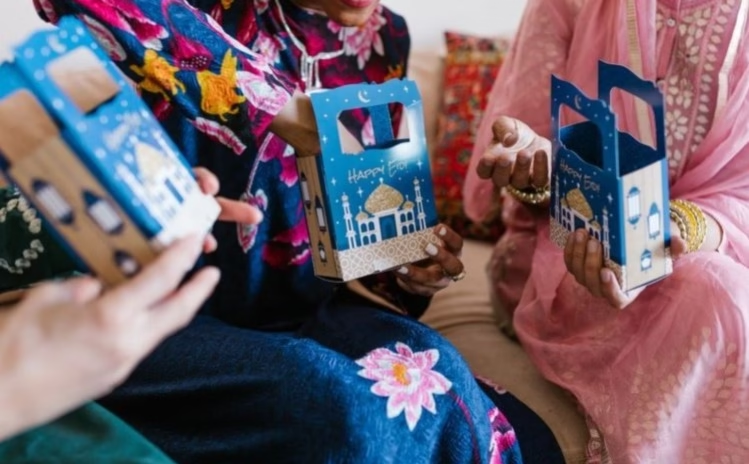
Eid isn’t complete without new clothes, sweet treats, and most importantly, cash in hand! Fez – Nothing lights up a child’s eyes on Eid morning quite like the promise of “Eid money,” those crisp banknotes that feel like pure magic in tiny hands. In Morocco, just like in many other Muslim countries, this cherished tradition has been around for centuries, bringing joy to young and old alike. While in the East, it’s called “Eidiya,” in Morocco, we simply call it “Flous L’Eid,” because, let’s be honest, nothing says celebration quite like cash! For kids, Eid morning is a strategic mission. They wake up, put on their brand-new outfits, and wait (sometimes not so patiently) for the Eid money rain to begin. The first target? Their dad, fresh from Eid prayers, who must deliver his contribution before breakfast is even considered. Then comes the extended family: grandparents, uncles, aunts, each one a potential source of financial happiness. And what do kids do with their newfound wealth? That depends. Some burn through it instantly on sweets, balloons, and those noisy plastic toys that drive parents crazy. Others play it cool, stash it away, and flex their savings skills. But let’s be real, most will spend it all within 24 hours on whatever catches their eye in the festive streets. While Eid money was once exclusively a children’s privilege, times have changed. These days, even adults get in on the action. Parents might give it to their teenagers, husbands surprise their wives, and some generous elders hand out a little something to their entire family. After all, nothing beats the universal joy of unexpected cash. Of course, over time, Eid gifts have expanded beyond money. Some people prefer giving clothes, sweets, or even small tokens of appreciation. Read also: “Haqq Al-Melh”: Morocco’s Most Heartfelt Tradition But let’s be honest: when given the choice, who wouldn’t pick cash? Eid money isn’t just a modern-day invention. Historians trace its origins back to the Mamluk era, when it was known as “Jamiqiya”: a special allowance given for new clothes. Depending on status, some received golden dinars, while others got silver coins. Later, under the Ottoman Empire, the practice evolved, sometimes including sweets and gifts alongside the money. The tradition spread across the Muslim world over time, morphing into what we now call Eid money. Like clockwork, every Eid, someone brings up the “Is Eid money a religious obligation?” debate. The answer? Nope! Islamic scholars have clarified that Eid money isn’t a religious duty but rather a beloved custom that aligns with the Islamic value of gift-giving. It’s all about spreading happiness, strengthening bonds, and making the holiday extra special, especially for kids. At the end of the day, Eid isn’t just about money, gifts, or even the feast that follows. It’s about joy, family, and connection. The real treasure is in the smiles it brings.