Turkiye’s Aphrodisias is Giving Visitors a Chance to View History Under the Stars
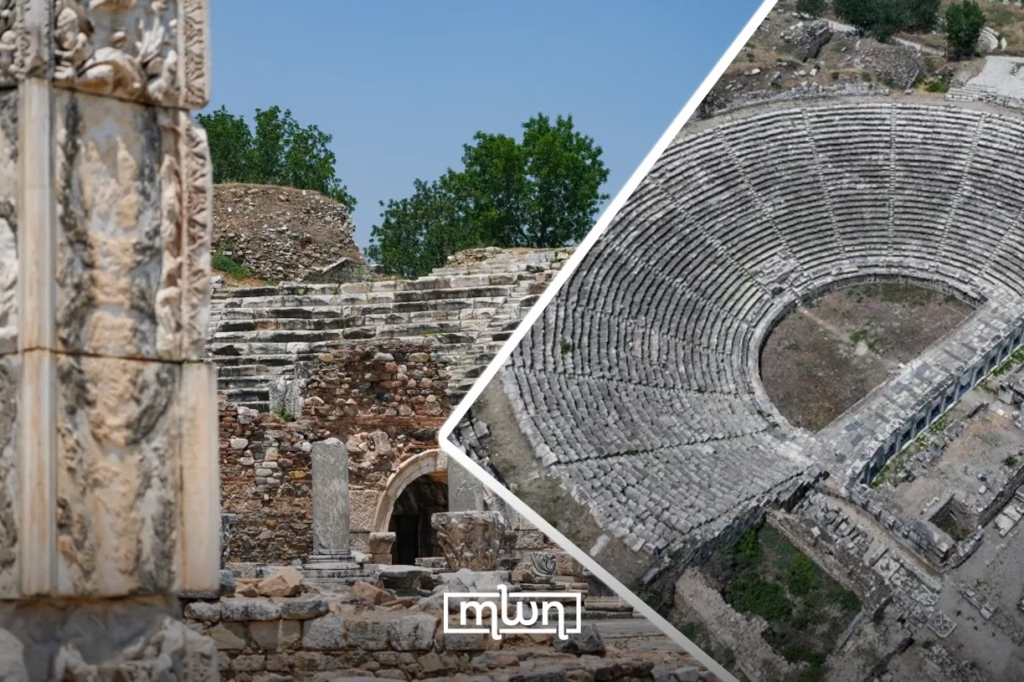
A “Night at the Museum” is now no longer just something in the movies, it’s real and coming to Turkey. Fez– What if you could walk through the ruins of an ancient city at night? That’s exactly what’s coming to Aphrodisias, one of Turkiye’s most spectacular archaeological sites. This once-forgotten city, named after the goddess of love, is undergoing a multi-phase revival, and one of the most exciting parts of the plan is a night museum that will allow visitors to experience history under the stars. According to Al Jazeera, Mehmet Duman, who’s overseeing the site’s development, explained that the new transformation is unfolding in three stages: excavation, restoration, and infrastructure. But this isn’t just about digging up old stones, it’s about reimagining the entire visitor experience. And yes, that includes nightly access. In addition to renewing the welcome center and building an environmental planning hub, a brand-new night museum is in the works. Once completed, it’ll offer a rare chance to explore illuminated ruins after sunset, an atmospheric, otherworldly take on cultural tourism that’s more about mood and memory than just facts and labels. But let’s go back to the ground itself. Recent excavations focused on the Ottoman-era bathhouse and an area known as the “Tetrastoon”. “We had major breakthroughs last year,” Duman told Al Jazeera. “Both sites will be opened to visitors later this year once the restoration work wraps up.” What makes the bathhouse especially significant is that it proves Aphrodisias wasn’t just Roman. The city was still alive and evolving well into the Ottoman period. “We’re trying to showcase that multicultural, layered timeline,” Duman said. “This isn’t a dead site, it’s a story of continuous life.” Then came the surprise in the Tetrastoon: a line of ancient shops on the eastern side of the square, some still bearing mosaic floors decorated with delicate geometric and floral designs. Two rooms were especially rich in detail. Those mosaics are now being carefully restored and, once ready, will be on full public display. The team is also focusing on the “Theatre Bath”, built in the 2nd century and used up until the 6th. With nine chambers for cold, warm, and hot bathing, the bathhouse saw centuries of upgrades before it finally went quiet. Now, restoration work is aiming to bring it back, not just as an architectural relic, but as part of a living museum. And that’s the core idea behind everything happening at Aphrodisias right now: not to freeze history in glass, but to animate it, to turn ruins into a living timeline you can walk through, day or night. So if you thought ancient cities only came alive in the daytime, think again. Aphrodisias is about to change that. Read also: The 10 Most Beautiful Beaches in Morocco, According to “Le Figaro”
Medieval Sundial Discovered in Turkiye’s Ancient City of Ani
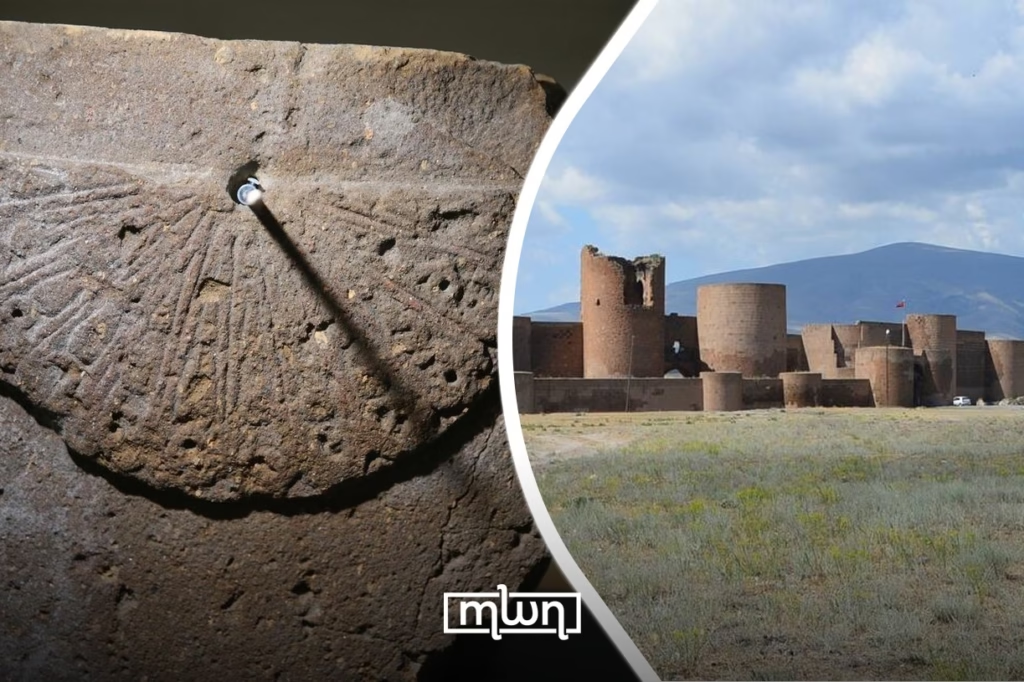
A thousand years buried in silence, until now. Fez– Archaeologists digging through the storied ruins of Ani, the ghostly medieval city in eastern Turkiye, have uncovered a rare and remarkably well-preserved sundial. It’s a quiet but powerful reminder of how deeply ancient civilizations understood time, not just how to count it, but how to shape their lives around it. The stone sundial was found in 2021 during excavations at Ani’s grand bath complex. After meticulous restoration and scientific analysis, it has finally been unveiled to the public at the Kars Museum of Archaeology and Ethnography. And it’s leaving people mesmerized. This isn’t just an old rock with a shadow, it’s one of the oldest surviving timekeeping instruments from the Middle Ages in this region. With its half-circular shape, divided into twelve segments and marked by a central metal rod, the sundial precisely measured time using sunlight and shadow. In a world without clocks, it offered structure and rhythm to daily life. Ani, often called the “City of 1,001 Churches,” sits near the Turkish–Armenian border and once served as a vital gateway between the Caucasus and Anatolia. The city was a crossroads of twenty-two civilizations, each leaving behind a layer of language, faith, and stone. Today, the ruins of Ani stretch across 85 hectares, scattered with the remains of mosques, cathedrals, palaces, monasteries, and bridges. Archaeologists believe as many as 1,500 underground structures may still lie hidden beneath its surface. Around 25 major buildings are still standing, testaments to a rich multicultural history where Armenians, Georgians, Byzantines, Persians, and Seljuks once passed through and prayed. This sundial is not just a relic. It’s a scientific treasure. It represents one of the oldest examples from the medieval period that we know of. While the Greeks and Romans had perfected sundial technology earlier, its use declined in the Middle Ages. This discovery disrupts that narrative. The sundial’s new home in the museum is part of a temporary exhibition project by Turkiye’s Ministry of Culture and Tourism. But even as a temporary exhibit, it opens a permanent window into a forgotten era of timekeeping and architectural ingenuity. After a millennium underground, this simple yet sophisticated object is finally back in the light, doing what it was always meant to do: mark time. Read also: The Role of Moroccan Sufi Orders in Shaping Spiritual Life