In the middle of a foreign city, a piece of Morocco quietly comes to life.
Fez — The call to prayer doesn’t echo through the streets. No one rushes with fresh baguettes and “chebakia” to catch the last moments before Maghrib.
This is what Ramadan feels like in a foreign country — quiet. The air doesn’t carry the scent of fried “briwat” or the sweetness of “sellou”. Yet, Moroccan expats still hold on. They hold on with hands, hearts, and memories.
For many Moroccans living abroad, Ramadan starts with a video call. Mothers show their freshly shaped chebakia, perfectly golden, stacked high in large glass jars. Sisters argue over who makes the msemen better. Even through the screen, it feels like home, almost.
In countries where fasting isn’t the norm, time drags slower. Work colleagues eat lunch at their desks, oblivious to the hunger twisting inside. But at home, every Moroccan expat builds their own little atmosphere. The kitchen turns into a miniature version of the family back home.
Mint tea perfumes the air. The table, even if it’s tiny, holds more than it should, harira, dates, boiled eggs, msmen stuffed with khlii, and always, always chebakia.
Shopping for ingredients becomes a mission. Some drive hours to find a halal butcher.
Others search online for “smen” butter or authentic ras el hanout. When they finally find a store selling something close to Moroccan sellou, they smile like they’ve found gold.
The first bite at ftour hits differently. It’s not just food. It’s a memory, a hug, a piece of the street they left behind.
Between bites, they send voice notes. “Show me your table!” “Did you make briwat or just buy them?” “What time is Maghreb prayer there?” The connection never breaks, no matter how many borders stand in between.
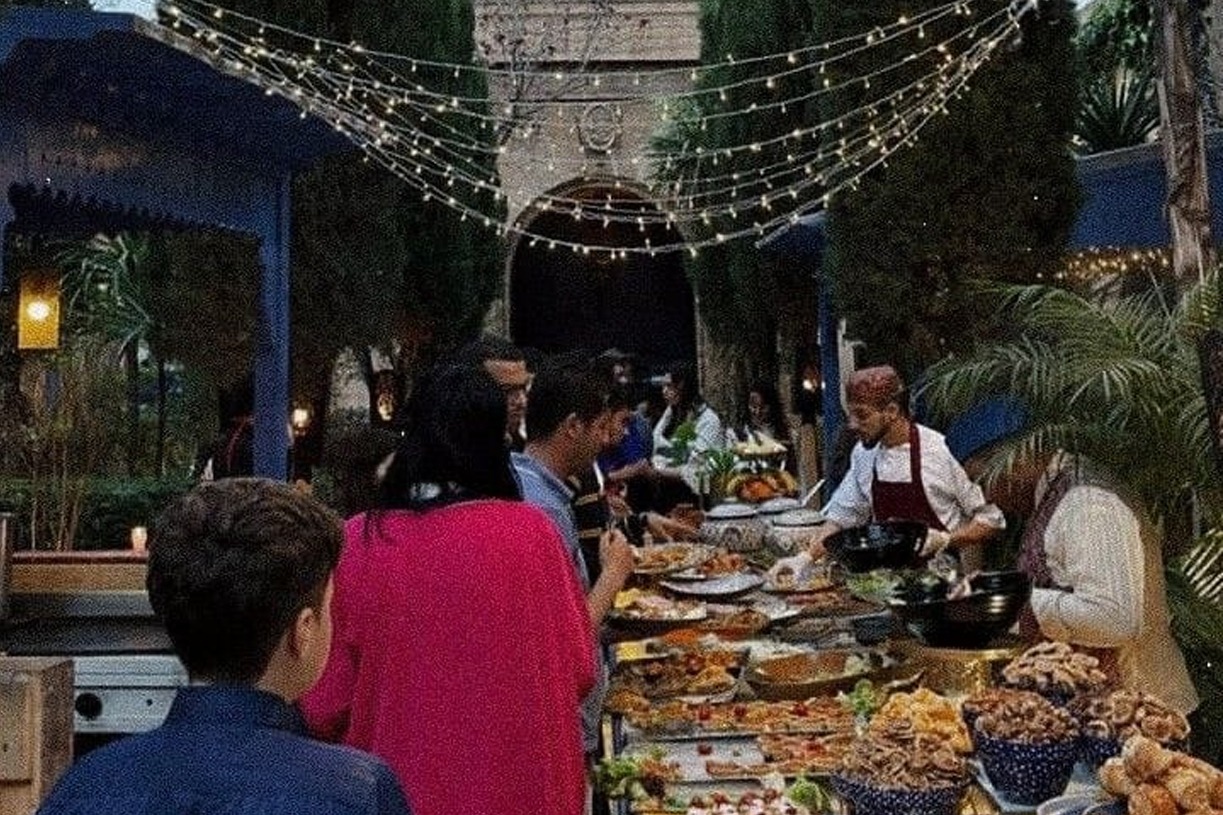
Some Moroccan expats gather with others, even if they only met once before. Ramadan does that. It makes strangers feel like family.
They sit together, laugh over how their msemen turned out too thick, and share the sweetness of dates.
Even in cities where no one knows what chebakia is, Moroccan expats keep the spirit alive. They hang small lanterns. They play nostalgic Ramadan songs. They turn their homes into a piece of Morocco, lit with warmth, love, and the quiet strength of a people who know how to hold on, even when they are far.
Because Ramadan, for a Moroccan, doesn’t live in the streets or the souks. It lives in the heart, and the heart always finds a way back home.
Read also: Tips for a Healthy Ftour During Ramadan