Fez – When “Once Upon a Time in… Hollywood” premiered at Cannes in May 2019, it was more than just a star-studded drama.
It was Quentin Tarantino’s deeply cinematic love letter to a bygone Los Angeles, one brimming with fading Western stars, neon lights, and the haunting shadow of the Manson murders.
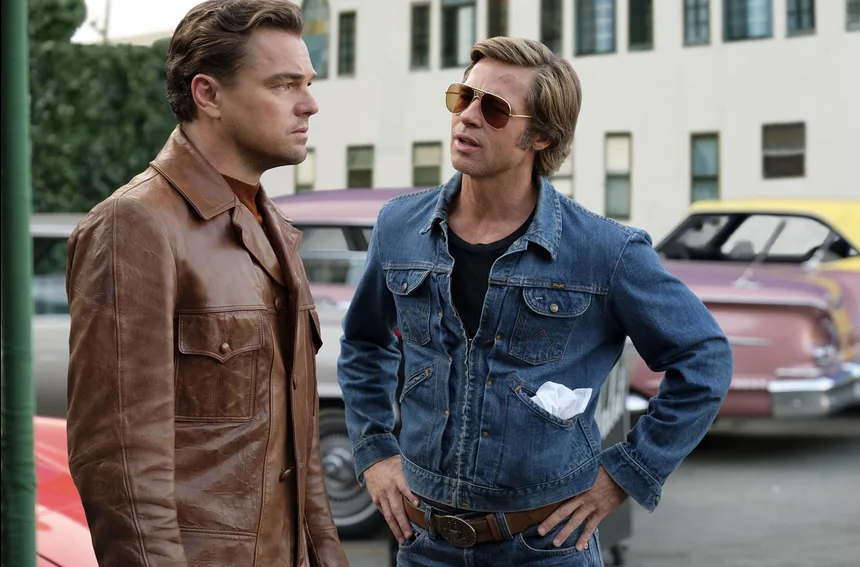
Starring Leonardo DiCaprio as aging TV cowboy Rick Dalton and Brad Pitt as his stuntman-turned-sidekick Cliff Booth, the film explores the anxiety and transformation of Hollywood at the end of the 1960s.
From sunlit boulevards to the grit of studio backlots, Tarantino recreates an era on the cusp of cultural upheaval.
The film’s backdrop includes real-life figures like Sharon Tate, Roman Polanski, and Bruce Lee. Yet its narrative diverges from history with a startling twist: a fictionalized ending in which Dalton and Booth thwart the Manson Family, sparing Tate and her friends.
The revisionist finale shocked audiences and critics alike, drawing comparisons to Tarantino’s earlier Inglourious Basterds.
But “Once Upon a Time in… Hollywood” is more than fantasy—it is an elegy. DiCaprio’s Dalton is a fading star clinging to relevance. Pitt’s Booth is loyal, lethal, and cool, embodying an older generation of masculinity.
Meanwhile, Margot Robbie’s portrayal of Sharon Tate offers a quiet, joyful counterbalance—one that emphasizes life over the tragedy that defined her legacy.
With its richly layered soundtrack, meticulous cinematography, and pacing that alternates between dreamy and electric, the film captures both the glamor and the emptiness of Hollywood mythmaking. It earned ten Oscar nominations and won two, including Best Supporting Actor for Pitt.
Even five years on, “Once Upon a Time in… Hollywood” endures as one of Tarantino’s most reflective films. It asks what cinema can preserve, what it can change, and how storytelling—when done with care—can offer not just spectacle, but healing.
Read also: Top 5 Quentin Tarantino Movies, Ranked