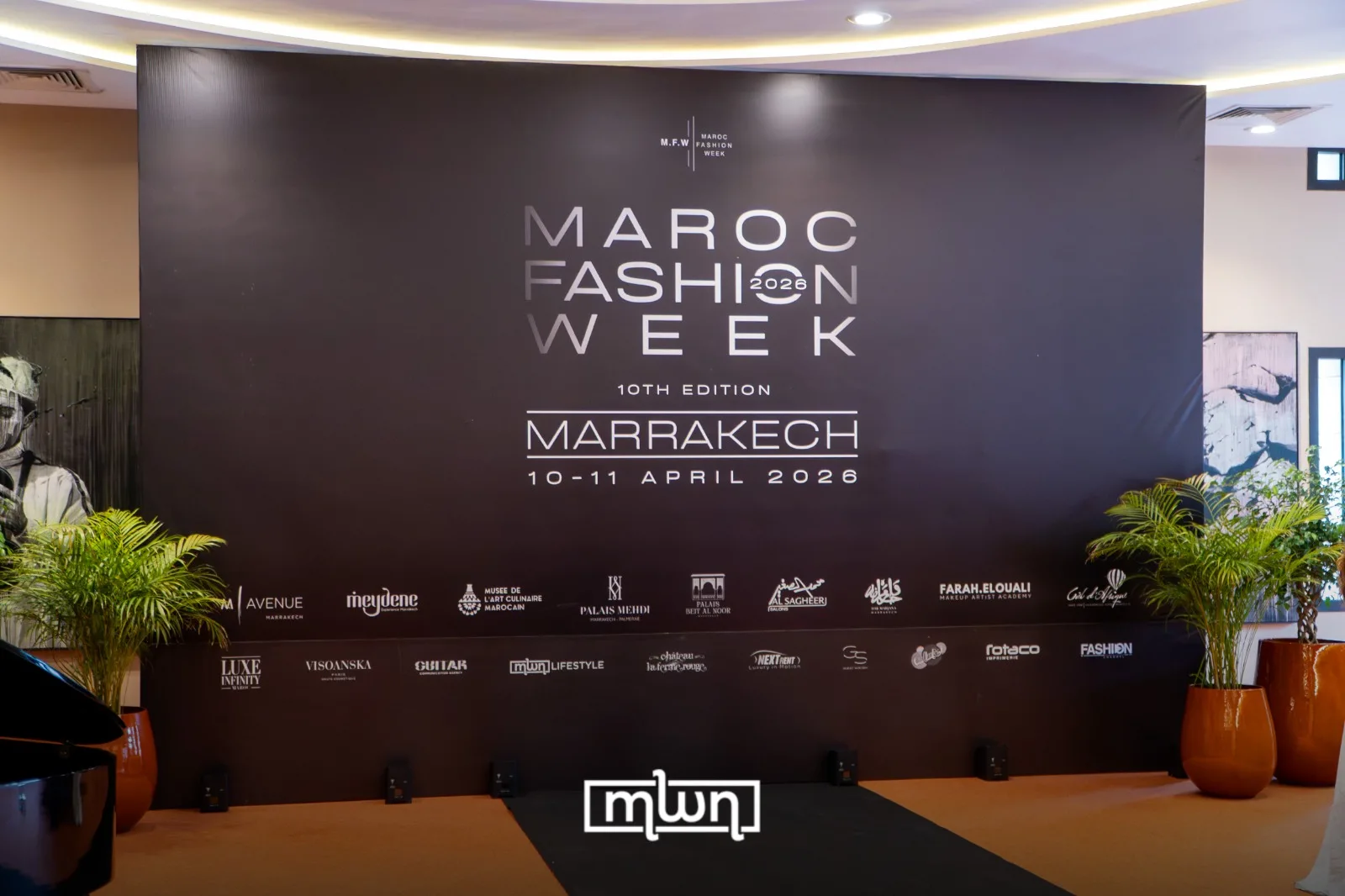
Marrakech – After a period marked by fragmented initiatives across the industry, Maroc Fashion Week (MFW) returns to Marrakech for its 10th edition, reaffirming its ambition to structure and elevate Morocco’s position within the global fashion ecosystem.
Speaking on the occasion, founder Hind Joudar described the 2026 edition as a milestone in the platform’s evolution.
“This is a full-force international edition featuring a Chinese designer, a Turkmen designer, and a French designer,” she said, highlighting the scale and diversity of this year’s lineup. “We are very happy to bring together international and national talents.”
Joudar emphasized that the foundation of Morocco Fashion Week has always been rooted in connection and exchange rather than isolation.
“As Moroccans of the world, it is very important for us to serve as a bridge between Morocco and the rest of the world,” she explained, underlining the platform’s intention to connect local craftsmanship with international markets and creative networks.
Founded in 2017 in Marrakech, Morocco Fashion Week has since evolved into a structured legal and administrative platform designed to ensure continuity, sustainability, and long-term institutional presence within Morocco’s fashion industry.
For Joudar, this evolution is essential to transforming fashion in Morocco from episodic showcases into a consistent creative economy.
She also highlighted the importance of place in shaping identity. Marrakech, she noted, remains a natural home for the event, an internationally recognized city that continues to inspire designers, creatives, and cultural industries from around the world.
At the heart of MFW’s identity remains the Moroccan caftan, a symbol that carries cultural memory and design heritage.
“The caftan is the very essence of Moroccan fashion, traditions, and values,” Joudar said, reaffirming its central place within the event’s creative direction.
This year’s edition brings together a wide international and local lineup, reinforcing the event’s cross-cultural positioning.
Featured designers include Shuxuan G., Göwher Gouvernet, and Claude Patrick, alongside Moroccan haute couture and ready-to-wear participants.
Moroccan label Molida plays a key role in this edition, presenting a couture vision that blends artisanal heritage with contemporary silhouettes.
The maison’s presence reinforces Morocco’s growing reputation for craftsmanship-driven fashion that remains globally relevant.
International brands such as Max Mara and Gérard Darel further expand the event’s reach, adding established ready-to-wear perspectives to a lineup that spans continents and creative traditions.
Each participating designer contributes to a broader narrative of exchange and dialogue, where fashion becomes a shared language rather than a geographic or cultural boundary.
From Asian contemporary influences to European design sensibilities, the runway in Marrakech becomes a meeting point for multiple creative identities.
Beyond aesthetics, this edition of Morocco Fashion Week is structured around a clear strategic vision.
Organizers emphasize four key pillars: the excellence of Moroccan craftsmanship, the positioning of Marrakech as a strategic creative crossroads between Africa and Europe, a commitment to ethical and sustainable fashion practices, and the transformation of runway visibility into tangible economic opportunities for designers and investors.
In this sense, MFW 2026 moves beyond presentation toward purpose. It reflects a growing recognition that fashion in Morocco is not only cultural expression, but also an emerging economic sector with international potential.
As the 10th edition unfolds in Marrakech, Morocco Fashion Week positions itself not just as an event, but as an evolving platform, one that connects heritage and innovation, local identity and global ambition, craftsmanship and commerce.