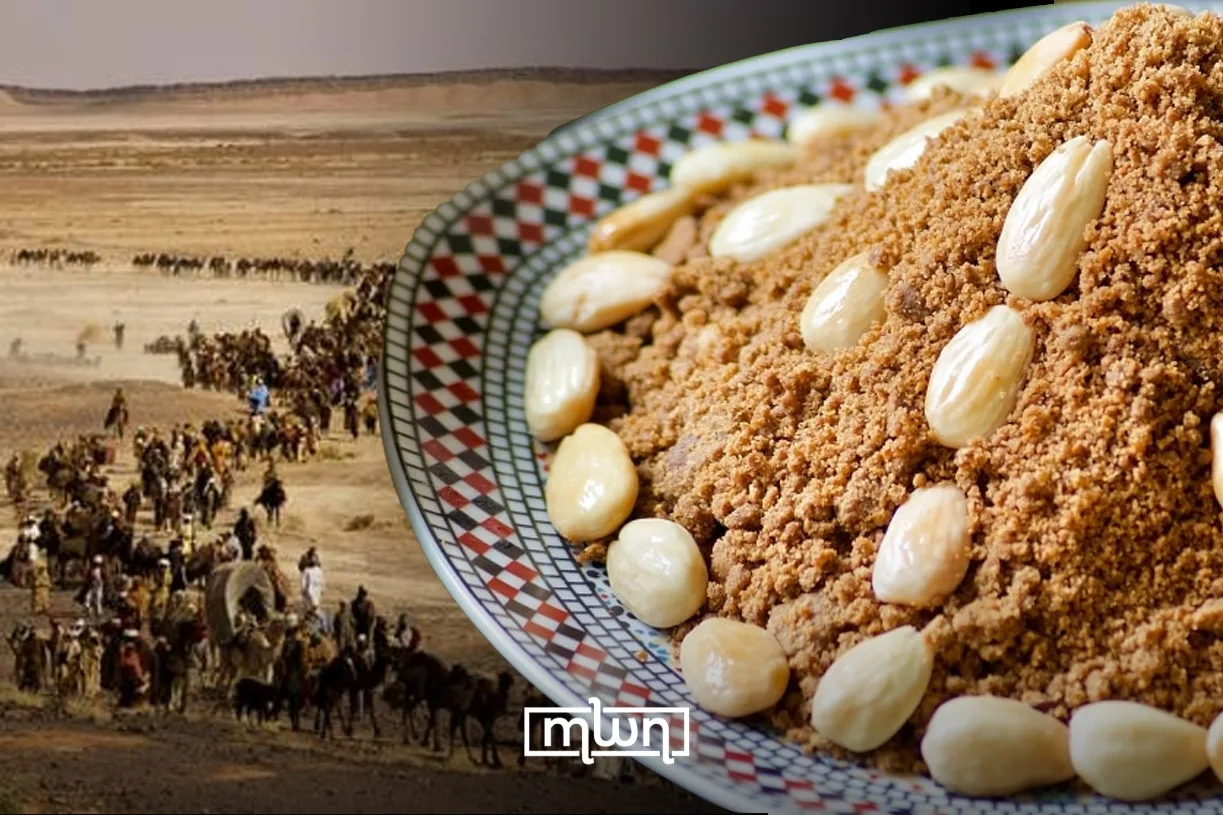
Fez — Sellou, also known in Morocco as sfouf or slilou, is often seen today on Ramadan tables, at weddings, and during celebrations for newborns. But this rich Moroccan sweet also has an older connection to travel, especially the long road to Hajj.
Made with toasted flour, almonds, sesame seeds, honey or sugar, butter, and spices such as cinnamon and anise, sellou is dense, dry, and full of energy. That is exactly why it became useful beyond the home. It could be prepared in advance, packed easily, and eaten without cooking.
Food for pilgrims
Before modern flights, Moroccan pilgrims traveled for weeks or months to reach Mecca. Families needed to send them with food that would not spoil quickly and could support them through fatigue, heat, and uncertainty.
Sellou fit that need. It is a nourishing mixture used by travelers and desert caravans for long journeys.
For families, preparing sellou for a pilgrim was not only practical. It was emotional. The sweet carried the care of the household, a kind of edible blessing packed for the road.
From Hajj roads to Ramadan nights
Over time, sellou moved from travel provisions into festive Moroccan rituals. Its ingredients still tell the same story: strength, warmth, and endurance.
That is why it works so naturally during Ramadan. After a long day of fasting, a spoonful of sellou offers quick energy and comfort. It is also served during special family moments because it feels generous, traditional, and deeply Moroccan.
Sellou’s link to Hajj may not always appear in written recipes, but it lives in memory and practice. It reminds Moroccans of a time when pilgrimage was a hard journey, and food from home helped carry believers across the road.