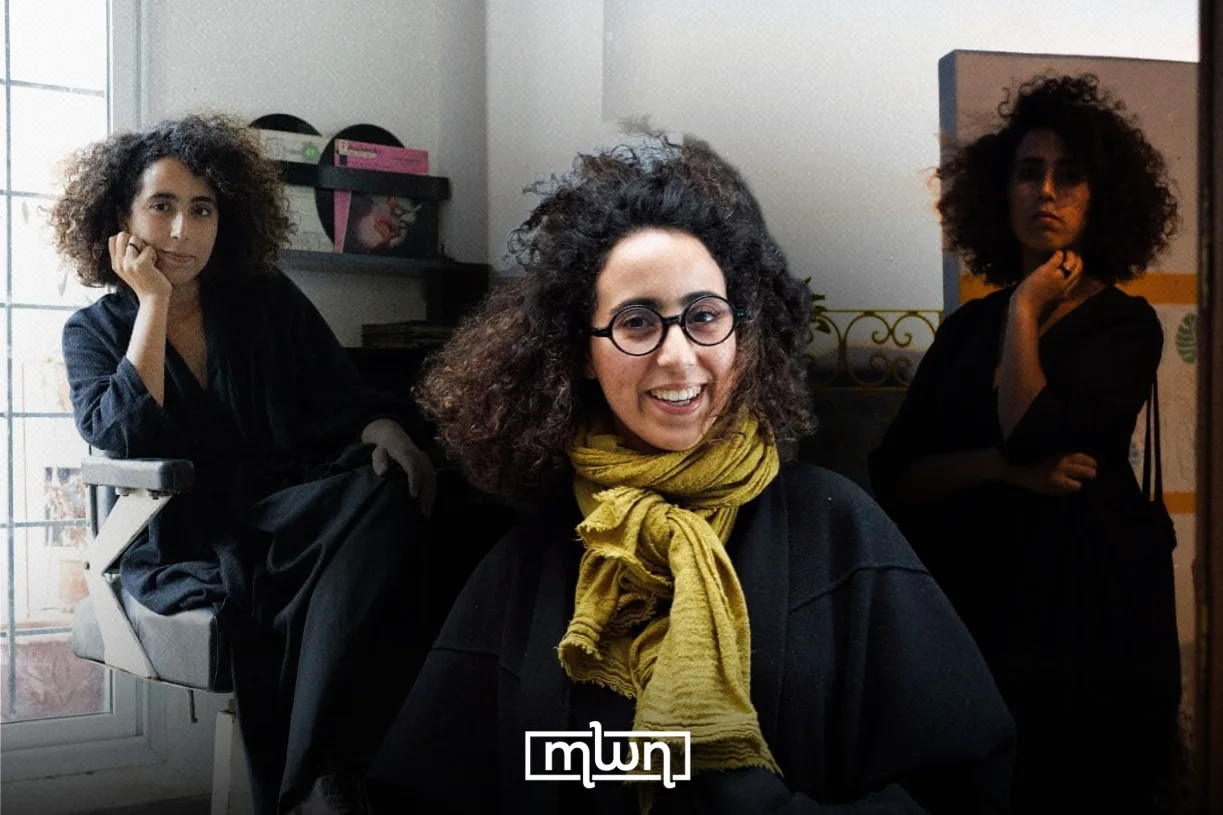
Safi – Hiba El Abkari is a Moroccan filmmaker and producer who has spent more than seven years working across cinema, cultural programming, and film funding.
In an exclusive interview with MWN Lifestyle magazine, she reflected on producing projects in Morocco, returning to her hometown, Safi, to create, and why she believes the country has to tell its own stories.
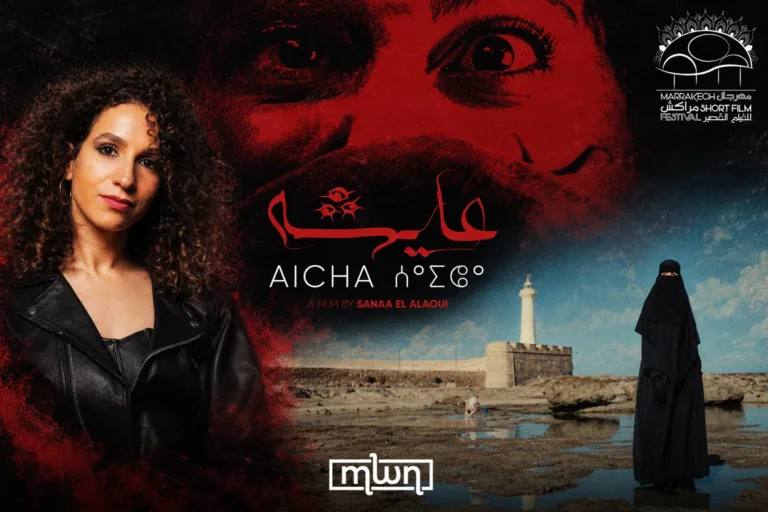
In July, the Marrakech Short Film Festival, which will return in September, named her new Head of Production and Partnerships.
Her role extends beyond the festival itself. She follows the projects presented during the event and supports the selected films through production, helping turn festival pitches into genuine co-productions between Moroccan and international partners.
“It’s a role that touches everything I believe in: structuring the sector and opening doors,” she said. “I want talent to no longer depend on chance encounters, but on a genuine professional support system.”
El Abkari does not reach for a single title, calling herself a filmmaker, a producer, and a cultural operator at once.
“I think I’m all three at the same time, a filmmaker, a producer, and a cultural operator, because in Morocco you can’t really talk about cinema without talking about cultural action, mediation, and audiences,” she explained.
Directing, though, sits apart for her. “It stays something more intimate,” she highlighted. “I need to feel an urgency, a necessity to tell a specific story.”
Seven years learning how films get made
Although El Abkari did not initially study art or filmmaking, she found her way into cinema later in life, emerging from an environment where pursuing film as a career was rarely considered a viable path.
“In our society, art and culture are often seen as a hobby rather than a real profession,” she remarked. “Many people still wonder how you can make a living from it.”
She started as a cultural operator, in communication and cultural programming, then joined organizations focused on Mediterranean dialogue and young people.
Her work has long been driven by a simple idea: how to make what happens in the big cities reach the places that are often left out.
Her journey eventually took her to cultural mediation, where she also began assisting associations in developing funding proposals that made film, art, and dance programs possible.
As she worked across the sector, she came to understand how films are truly made, uncovering the business and collaborative side of culture that contrasted sharply with her teenage perceptions.
What stood out to her was how many artists outside the big cities had never been exposed to opportunities like artist residencies, writing residencies, or creative labs.
“Seven years ago, I wasn’t aware of any of that myself,” she recalled. This year the Tamayouz Foundation‘s professional workshops helped her grasp much of what is at stake in producing and co-producing films in Morocco.
The producer as a bridge
For El Abkari, producing is a creative act in its own right, one that serves a film before it even exists.
She immerses herself in each director’s vision, relying on empathy and careful listening while drawing on her own instinct for how the film can connect with audiences.
“What fascinates me is how a director’s dream of seeing a film on the big screen is transformed through production into a series of concrete steps, budgets, and strategic decisions, without ever losing its creative essence,” she said.
Directing pulls her the other way, fully into the creation, though she admitted no one escapes the logistics entirely, because cinema remains an industry.
“It’s a question of balance,” she reflected. “Each role takes over at a precise percentage, depending on what the moment needs.”
According to her, the producer is a bridge between a director’s vision and the co-producers and funders who make a film possible.
“This bridge role also serves to protect the director, so they can stay fully dedicated to the writing and the creation,” she pointed out.
That instinct, she believes, comes straight from her own art.
“As a documentarian and artist, that sensitivity shapes every aspect of my work, including the strategic side. In many ways, it’s what enables me to better support other artists,” she said.
The hardest part of the job in Morocco is the money. Bold local films increasingly need several sources of funding at once, and the real challenge, she explained, is finding co-producers genuinely aligned with a project.
“The objective is that the film stays faithful to its identity and its Moroccan roots, while being enriched by these international collaborations.”
The fear she outgrew
El Abkari is candid that she is still early in her practice as a director, and that the work keeps getting more personal, closer to who she is and what she has lived.
At first, she chose subjects at a deliberate distance, ones that did not concern her directly, because she was not ready for the vulnerability that creation demands.
Coming from a strategic, organizational background, she was used to standing back and supporting artists rather than being one.
“There was a bit of impostor syndrome, and the fear of showing myself, of crossing to the other side and owning what I know how to do,” she admitted.
Those fears are ones she is steadily outgrowing.
A collective in her hometown
Alongside the festival and her own films, El Abkari co-founded Tassaout, an artists’ collective in Safi, with the contemporary dancer Imane Elkabli. It grew from a dream each of them carried separately before they were ready to build it together.

Her contribution leans strategic: setting a vision with Elkabli and finding the funding to grow the project in the city, close to its people and true to their intentions.
The collective plans to launch a residency that will bring together Moroccan and international artists to create in Safi, with the goal of showcasing their work beyond the city.
El Abkari wants it to be a destination, not a stopover. For years, whenever she asked artists whether they had seen Safi, the answer was the same: “Yes, but only when passing through.”
She is careful not to erase what came before her, and part of the work, she believes, is to seek out, value, and learn from it.
She said a roundtable the collective organized in Safi with Dartdachabab demonstrated that the willingness to make it happen is already there.
“Safi deserves that you stop, that you contemplate it,” she emphasized.
Returning after the floods
For the collective’s first residency, “Salty Tears,” El Abkari made an open-studio piece combining a film, a text, and a red-thread installation visitors had to cross to reach the studio, which she called “les frontières rouges” (The red borders).

“It was a way to make them physically live something of what I was going through coming back to Safi,” she remembered.
Coming back was not simple. She returned after the floods, to a medina in the middle of its own reconstruction, and walking those streets left her with a question she did not expect.
“Can you really call it a return?” she asked. “When neither the place nor the person you’ve become is quite the same?”
What the city keeps teaching her is the force of its community.
“What impresses me is this very strong community spirit,” she said. “People live, collaborate, and support one another, and when a project comes to life, the whole community rallies behind it.”
“It’s not only that I live in Safi,” she added, “Safi also lives a little in me.”
Archives for the future
At the heart of much of her work is a fascination with archives, one rooted in her personal history and the parts of her past she can no longer revisit.
“A person, like a city, like a country, needs to know what came before it,” she reflected.
For her, documentary filmmaking came almost instinctively.
“Cinema is first a matter of image,” she emphasized, “and I’ve always been drawn to it,” along with the archive, the material, and the curiosity of a place.
The films she hopes to make draw on both the present and the past to create archives for the future, ensuring the next generation doesn’t experience the same sense of loss she felt when confronted with works that had disappeared or been scattered.
That is also why she keeps returning to who gets to tell the story. “As a Moroccan, many of our stories have been told by others, with other eyes,” she highlighted.
“The challenge today is to question the way we tell our own stories, and to develop our own tools,” she stated, a goal she believes can only be achieved with the support of institutions large enough to sustain it.
So, what advice does she have for someone just starting out?
She is hesitant to offer advice, saying she still sees herself as someone who is learning.
Yet a few principles continue to guide her: learn from every person and every encounter, stay curious, and recognize that the investments you make, of time, energy, and even money, often take time to bear fruit.
More than anything, she believes in the strength of collective action.
“It’s by uniting our forces that we manage to do incredible things,” she said. “Don’t be afraid of the collective.”
She encourages aspiring creatives to break ambitious dreams into small, achievable steps, and not to fear failure or periods of doubt, seeing them instead as necessary moments of reflection that often lead to growth.
For El Abkari, the legacy she wants to leave is simple: a record of what was made, both on screen and in Safi, and an open door for those who come after her.