Rabat – Moroccan filmmaker Sanaa El Alaoui approaches cinema as both an artistic language and a way to question how Morocco, its people, and its stories have been represented on screen.
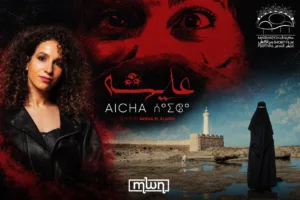
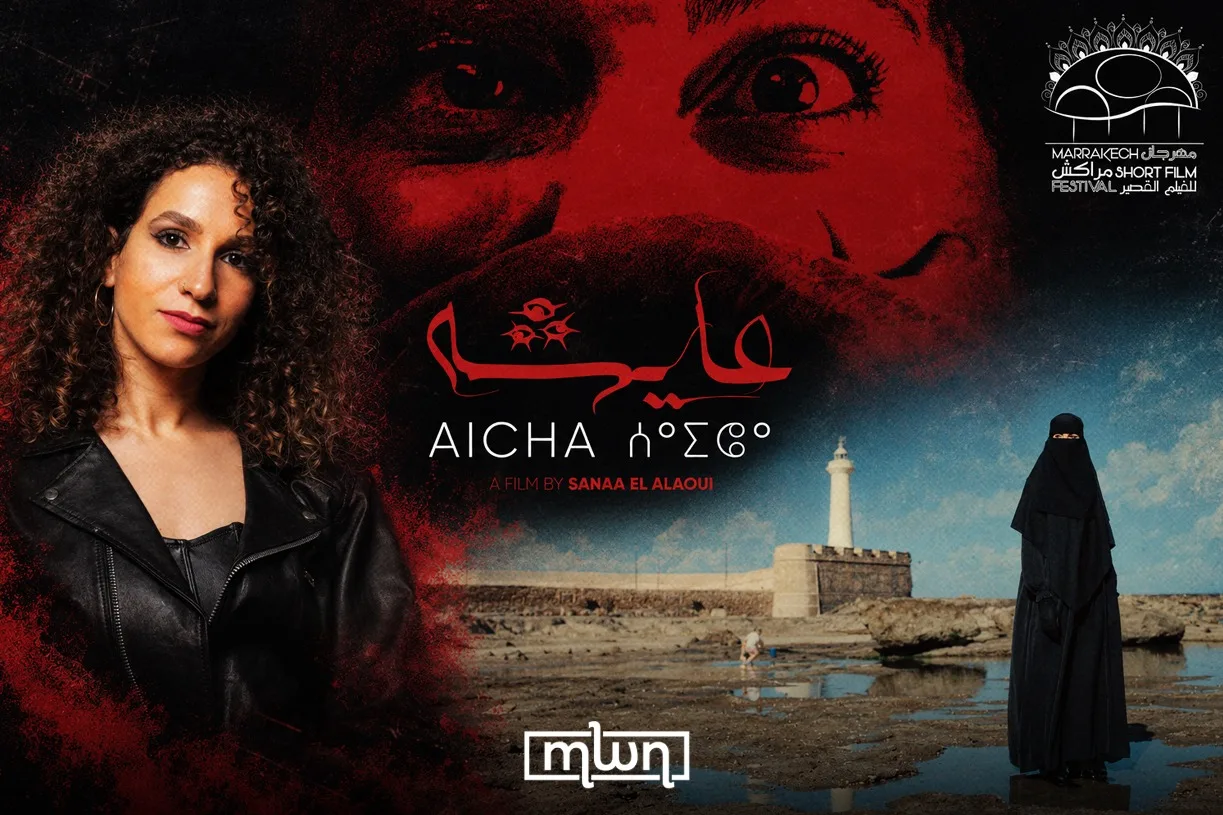
Her short film “Aicha” brings together fiction, documentary, animation, mysticism, and a fractured conception of time to tell the story of a 17-year-old girl whose relationship with her emotionally distant mother reaches an irreversible rupture after a traumatic event. In the aftermath, the mother turns to a Gnawa ceremony as she struggles to confront grief and the bond she lost with her daughter.
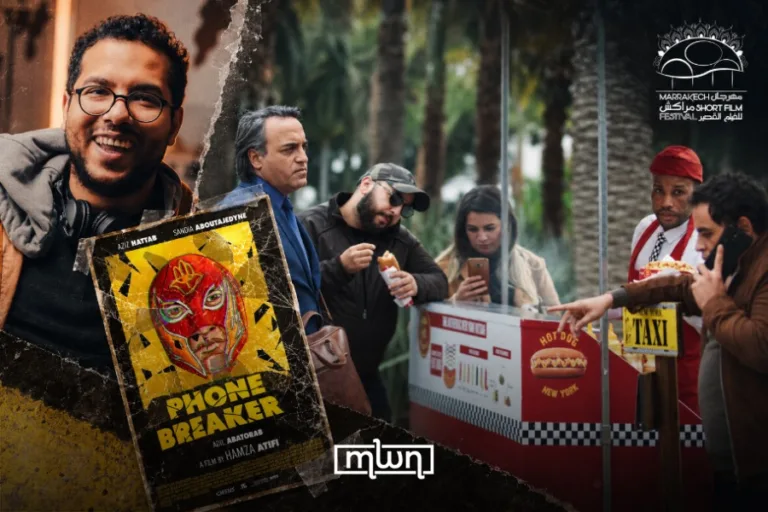
The 25-minute film has already traveled internationally and will now be presented in Marrakech as part of the sixth edition of the Marrakech Short Film Festival (MARRAKECHsFF), which runs from September 25 to 30, 2026.
For El Alaoui, “Aicha” is not simply a story about grief. It questions the cinematic language through which Moroccan stories are told and explores whether a camera shaped by Western cinematic traditions can express an indigenous understanding of memory, spirituality, trauma, and time.
El Alaoui’s academic background has strongly informed that approach. Her research into cinematic time and Moroccan cinema, from the colonial period to the postcolonial present, has shaped her interest in the relationship between filmmaking, cultural memory, and representation.
In an interview with MWN Lifestyle magazine, El Alaoui discussed the relationship between documentary and fiction, the role of Gnawa spirituality in Aicha, the politics of cinematic representation, and her decision to fracture the film’s sense of time.
Between fiction and documentary
El Alaoui does not see documentary and fiction as opposing cinematic forms. The distinction becomes particularly fluid during the Gnawa ceremony in “Aicha,” which she says was filmed as an unscripted documentary sequence.
“I don’t see a hard line between fiction and documentary,” she tells MWN Lifestyle Magazine. The scene involving Hind Dafer, who plays the mother, was not simply a performance designed to imitate a trance. According to El Alaoui, Dafer entered a real trance during the ceremony.
“She went into a real trance, we literally had to bring her out of it by splashing water on her face, after I called cut,” the director explains.
That experience reflects one of the film’s central ideas: that the spiritual world depicted in “Aicha” cannot be separated neatly from eveyday Moroccan life.
“Kandicha isn’t just a story; she lives inside every Moroccan,” El Alaoui elaborates, referring to the supernatural female figure in Moroccan folklore.
She compared Kandicha to archetypal female figures in other traditions, including the Rusalka in Slavic folklore, La Llorona in Latin American traditions, and Sekhmet in ancient Egyptian mythology.
For El Alaoui, these figures embody a form of “raw, protective rage” that crosses cultural boundaries.
Fiction, meanwhile, gave her the freedom to move beyond the limitations of observation.
“What fiction allowed me to do was shatter time and space entirely,” she adds.
Rather than use a non-linear structure as an aesthetic experiment, El Alaoui says she considered it necessary to represent the way trauma disrupts a person’s relationship with reality.
“I didn’t use non-linearity to make the film look ‘cool’ or artistically ambiguous, I actually had no choice,” she explains. “Non-linear time is our indigenous time.”
This approach also reflects her broader concern with what she describes as “self-orientalism” in the representation of non-Western cultures. Rather than reproduce an external gaze on Moroccan trauma, she wanted the film to place the viewer inside the rupture itself.
“Documentary captured the real-world ritual, but fiction gave me the freedom to break every visual rule and turn a personal trauma into a collective, anti-colonial reckoning,” she further explains.
Mysticism is an integral part of Moroccan reality
The mother’s decision to enter a Gnawa ceremony is central to the film’s treatment of grief. Yet El Alaoui rejects the idea that spirituality represents an escape from reality.
“Spirituality in Morocco isn’t a retreat from reality, it’s an understanding of our reality,” she maintains.
For the filmmaker, collective experience is crucial to understanding Moroccan approaches to trauma and healing.
“We are a ‘we’ culture, not an ‘I’ culture,” she said. “When trauma happens, we are broken together, so we have to heal together. We get broken as a collective, and we can only heal as a collective.”
That is why the mother cannot simply remain alone with her grief. She needs the communal space of the Lila, a Gnawa ritual that El Alaoui describes as a place where different dimensions of Moroccan cultural life can coexist.
“A Lila is this rare, radical space where religion, paganism, politics, and total personal freedom coexist without friction,” she says.
She describes the ceremony as a space in which people surrender their individual identities and rely on a community around them.
“It’s a space designed for you to surrender, to let your ego die entirely surrounded by strangers who will hold you when you fall,” she adds.
And El Alaoui does not see this spiritual dimension as an ornamental addition to the story or an attempt to make the film appear more distinctly Moroccan for an international audience.
“Moroccan mysticism isn’t an option or a stylistic choice for a director; it’s the very fabric of our psyche,” she says. “Without it, you can’t tell a real story about Morocco.”
Reclaiming the image of Morocco
El Alaoui’s academic research also shaped her understanding of the camera itself as a political and historical instrument.
She describes her research as an examination of the tension between the “‘I,’ the raw, authentic native cine-eye,” and the “‘other,’ which is that bad-faith, self-orientalizing gaze.”
That question became central to “Aicha”: how can filmmakers from outside the Western tradition use a cinematic technology historically shaped by Western systems of representation while expressing their own cultural memory?
Or, as El Alaoui specifies, “How do we, as non-Western storytellers, take a machine like the camera, invented within Western logic, and use it to express an indigenous memory?”
She connects this question to the history of colonial representation, arguing that visual culture played a role in how colonial powers categorized and represented African societies.
“Before guns came to Africa, the first weapons of colonialism were visual: ethnographic postcards, paintings, and early cinema used to capture us, put our ancestors and land in human zoos, and legitimize colonial rule under the guise of ‘scientific study,'” the director says.
She does not present “Aicha” as a definitive solution to that historical problem. Instead, she sees the film as an experiment in turning the cinematic gaze back toward the filmmaker’s own cultural experience.
“I don’t pretend to have the ultimate answer,” she tells MWN, referring to the work of filmmaker and theorist Trinh T. Minh-ha and her ideas about speaking “nearby” rather than “about” a culture.
“But with ‘Aicha’, I tried to turn that machine around,” El Alaoui adds. “By centering our spirituality, our myths, and the raw reality of Moroccan womanhood and grief, I used our own cultural tools to dismantle that legacy and reclaim our image on our own terms.”
The violence of silence
At the center of “Aicha” is a mother-daughter relationship marked less by open confrontation than by emotional distance.
El Alaoui deliberately chose silence rather than an explicitly abusive relationship as the source of the rupture. “Explicit abuse is easy to dramatize, but it’s a trap,” El Alaoui explains. “It turns real structural trauma into cheap cinema drama.”
For her, the absence of communication can itself become a form of harm. “Real trauma in Moroccan households lives in the unsaid,” the Moroccan director says. “Silence is a weapon, especially when it comes from parents.”
The director connects this silence to the difficulty some young people face when trying to communicate emotional distress within their families.
“Non-suicidal self-harm is everywhere, kids hiding their scars under long clothes, and parents hiding behind social shame because they don’t have the emotional vocabulary to address it,” she says.
Rather than give the audience the emotional release that can come with an explicit confrontation, “Aicha” maintains the silence.
“Confrontation gives the audience a relief valve, it lets characters express their anger. Silence deprives you of that relief,” she elaborates.
The result, she argues, mirrors the isolation experienced by young people who cannot articulate what is happening to them.
“That rupture isn’t caused by a single violent moment, it’s caused by years of quiet abandonment,” El Alaoui says.
Breaking linear time
The film’s fragmented structure is also inseparable from its treatment of trauma.
El Alaoui’s academic research into cinematic time gave her a framework for exploring the relationship between memory and chronology. Yet she approaches the idea through a distinctly Moroccan cultural lens.
She jokingly compares the concept to the Moroccan relationship with punctuality. “We’re known for being late, but it’s not out of disrespect, it’s in our DNA!” she says.
Instead of defining time only through the mechanical clock, El Alaoui points to everyday expressions that organize time around prayer, nature, and religious rhythms.
“In Morocco, you don’t say ‘let’s meet at 3:00 PM.’ You say ‘see you around Asr’ or ‘after Maghrib,'” she adds.
She sees this conception of time as fundamentally different from a strictly linear sequence. “Linear time, the strict ‘1, 2, 3, 4’ schedule, is an artificial construct used to measure productivity and control indigenous life,” she explains.
This understanding became a central cinematic device in “Aicha.” The film’s fractured chronology allows past, present, memory, and trauma to exist alongside one another rather than follow a conventional sequence.
For El Alaoui, this is particularly important when representing sexual violence. “How,” she recalls writing above her desk during the drafting process, “can the audience feel sexual abuse in the moment itself, not before, and not after?”
Her answer was to “shatter the frame like broken glass.”
In other words, she explains, “when you are a body and a foreign power forcibly penetrates you, whether that is the physical body of a woman or the sovereign land of a nation, your entire perception of reality collapses.” This means “the victim loses all control over space, time, and linearity. You are left completely lost.”
By disrupting the film’s chronology and visual language, El Alaoui wanted the audience to inhabit that experience rather than simply observe it.
“By breaking the narrative apart, I wanted the audience to inhabit that exact, disorienting rupture, making them feel that violation rather than safely observing it from a distance,” she maintains.
A Moroccan story without a translation manual
Despite the film’s strong cultural specificity, El Alaoui did not make “Aicha” with the intention of explaining Morocco to international viewers.
“Honestly, neither was my intention,” she tells MWN when asked whether she wanted to make what one could describe as the quintessential Moroccan experience more legible internationally or deliberately resist that process.
“I didn’t set out to make Moroccan culture ‘legible’ for foreigners, nor did I actively try to resist translation. I just wanted to tell an authentic, personal story.”
The director said the response to the film’s international screenings reinforced her belief that cultural specificity does not necessarily prevent emotional connection.
At the film’s world premiere at the Krakow Film Festival, she recalled seeing non-Moroccan viewers react emotionally to the story.
“Polish viewers came up to me afterward with tears in their eyes and said, ‘We have our own Kandicha,'” she says, further recalling a similar response in Ireland, where audiences connected the film’s female spiritual figure to traditions within Gaelic mythology.
To El Alaoui, these reactions demonstrate how folklore can operate across cultural boundaries without requiring every detail to be translated. “Carl Jung spoke about the collective unconscious, and cinema brings it to light,” she states.
“Language, landscape, and religion are just surface filters,” she adds. “Seeing people from completely different backgrounds weep over a story set in Morocco reminded me of our duty as filmmakers: to strip away those artificial filters and remind the world of our shared human soul.”
Bringing ‘Aicha’ home to Marrakech
“Aicha” enters this year’s Marrakech Short Film Festival as part of a selection of films from a new generation of local filmmakers, but the wider festival brings together filmmakers from Morocco and around the world.
For El Alaoui, unapologetically uninterested in imposing a single interpretation on viewers, presenting the film in Marrakech is really about allowing them to experience the film on their own terms.
She compares that experience to Marrakech’s iconic Jemaa el-Fnaa square.
“Think of it like Jemaa el-Fnaa square,” she tells MWN. “It is hyper-local, deeply chaotic, raw, and overflowing with the different spices of human roots. It’s everything, everywhere, all at once.”
A visitor to the square does not need to understand every story, rhythm, or conversation to experience its atmosphere, she explained. The same principle applies to “Aicha.”
“That is all I hope for an international audience: not to analyze ‘Aicha’ like a puzzle, but to experience it,” El Alaoui says.
And she welcomes confusion as much as interpretation. “I welcome their confusion, their questions, even their disagreement,” she clarifies. “Love it or hate it, if they step out of the cinema feeling like they walked through the living, breathing storm of that square and physically felt its pulse, then I can die happy!”