Safi – There was a version of the internet, not so long ago, that felt less like a feed and more like a bedroom wall.
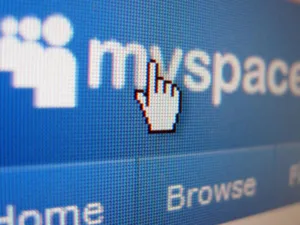
Users decorated their pages by hand, badly and gloriously, in clashing fonts, glitter backgrounds and a song that ambushed anyone who dared to click. It was called MySpace, and it may be coming back.
Its current owners, the brothers Tim and Chris Vanderhook, have confirmed plans to relaunch the platform, though they have offered neither a date nor a blueprint for how a new MySpace would work.
The revival lands in the middle of a broader MySpace moment. This year brought Myspace, Tommy Avallone’s documentary on the platform’s rise and fall, a nostalgic reckoning with the site that shaped the internet that followed.
What the brothers promise is a kind of anti-social network, with no bottomless scroll and no algorithm dictating what appears next. They say they have built an entirely new version, and that if it fails, they will simply build another.
What MySpace actually was
MySpace launched in 2003 and briefly ran the 2000s internet, drawing something like 115 million visitors a month at its peak.
A profile back then was less a page than a personality. A little HTML turned it into a diary, a mood board and a playlist at once, crowned by the notorious Top 8, the public ranking of friends that could quietly end friendships when the order changed.
Then Facebook arrived with something cleaner and identical for everyone, and the focus shifted from building a personal corner to posting inside a space the platform owned.
News Corp had bought MySpace in 2005 for $580 million (MAD 5,7 billion). Six years later it sold for $35 million (MAD 350 million), to the same Vanderhook brothers now planning its revival, with a young Justin Timberlake among the investors.
Why the comeback makes sense now
The timing is the interesting part. Personalization once meant choosing a background and a song. Now it means an algorithm selecting everything, then handing back an ever-narrower version of what a user already likes.
Researchers even have a name for the result, algorithmic fatigue, the quiet exhaustion of being endlessly, perfectly catered to.
And it is not only the generation that remembers MySpace that feels it. Younger users are drifting toward editable profiles, chronological feeds and a clearer sense of community, and even Instagram now lets people pin a song to their profile, a small and telling theft from the MySpace playbook.
None of which guarantees a comeback. A new MySpace would have to solve problems of privacy and funding that barely existed in 2003, and a familiar name carries a platform only so far.
But its return already says something about the internet of the moment. After years of feeds engineered to keep people scrolling, the appetite has quietly returned for a messier, more human web, where the song on a profile mattered more than the numbers on a post.