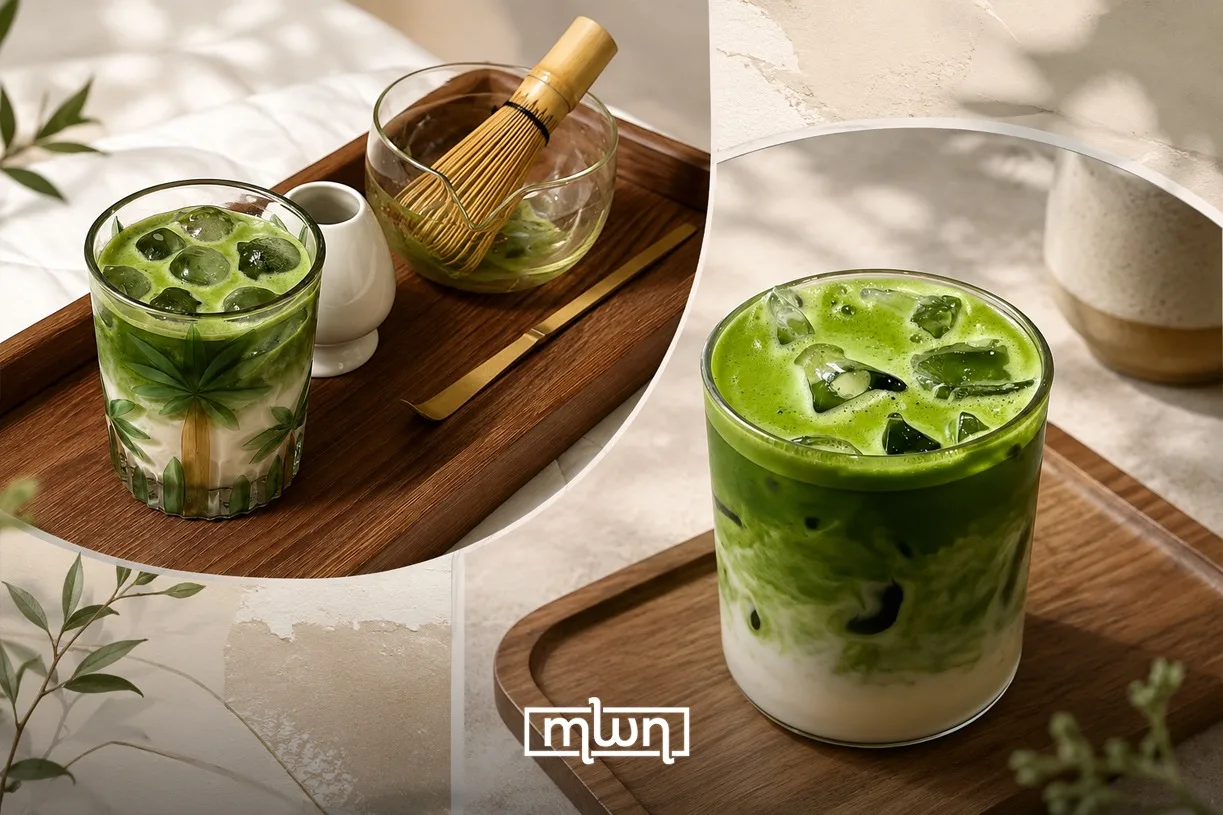
Rabat – Fueled by wellness culture and Instagram aesthetics, matcha has found its way onto Moroccan cafe menus.
The roots of matcha
Matcha is a finely ground green tea powder, traditionally whisked with hot water into a smooth, slightly bitter brew.
Unlike traditional tea, matcha is made by consuming the entire tea leaf rather than steeping and discarding it.
Its origins trace back centuries to Chinese tea traditions before being adopted and refined by Japanese Zen Buddhist monks into a meditative ritual believed to enhance focus.
Matcha, wealth, and social media
The version of matcha taking over cafes today is far removed from its ceremonial roots—fast, photogenic, and often more dessert than ritual.
Often more expensive than a regular coffee, matcha is dressed up with oat foam and pastel aesthetics, turning it into a status symbol as much as a beverage.
Wellness influencers and celebrities have fueled matcha’s rise, turning a once-quiet tea ceremony into a drink people order as much for the image as the taste.
Matcha in Morocco?
Casablanca has emerged as the heart of Morocco’s matcha boom, with dedicated cafés transforming the drink into an experience instead of a quick caffeine fix.
Maison Matcha has made the green tea its signature, attracting a steady stream of regulars as well as visitors eager to share the experience on social media.
On the other hand, spots like Caribou Coffee have pushed the drink further into the mainstream with its Coco Mango Matcha across several locations in Casablanca and Rabat.
What started as a centuries-old ceremony built on stillness has been reframed, once again, as something to sip on the go, photograph, and share; proof that even the oldest rituals can find new life in a Moroccan cafe.