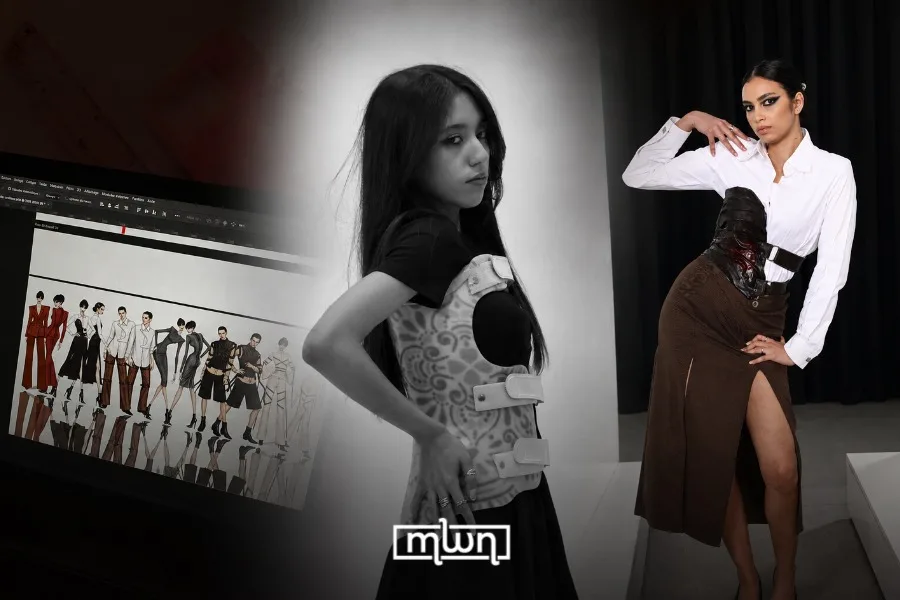
Fez — For Moroccan fashion designer Aya Zerouali, her graduate collection began with a question she had carried within herself for years, long before it took shape in silhouettes, fabrics, or a mood board.
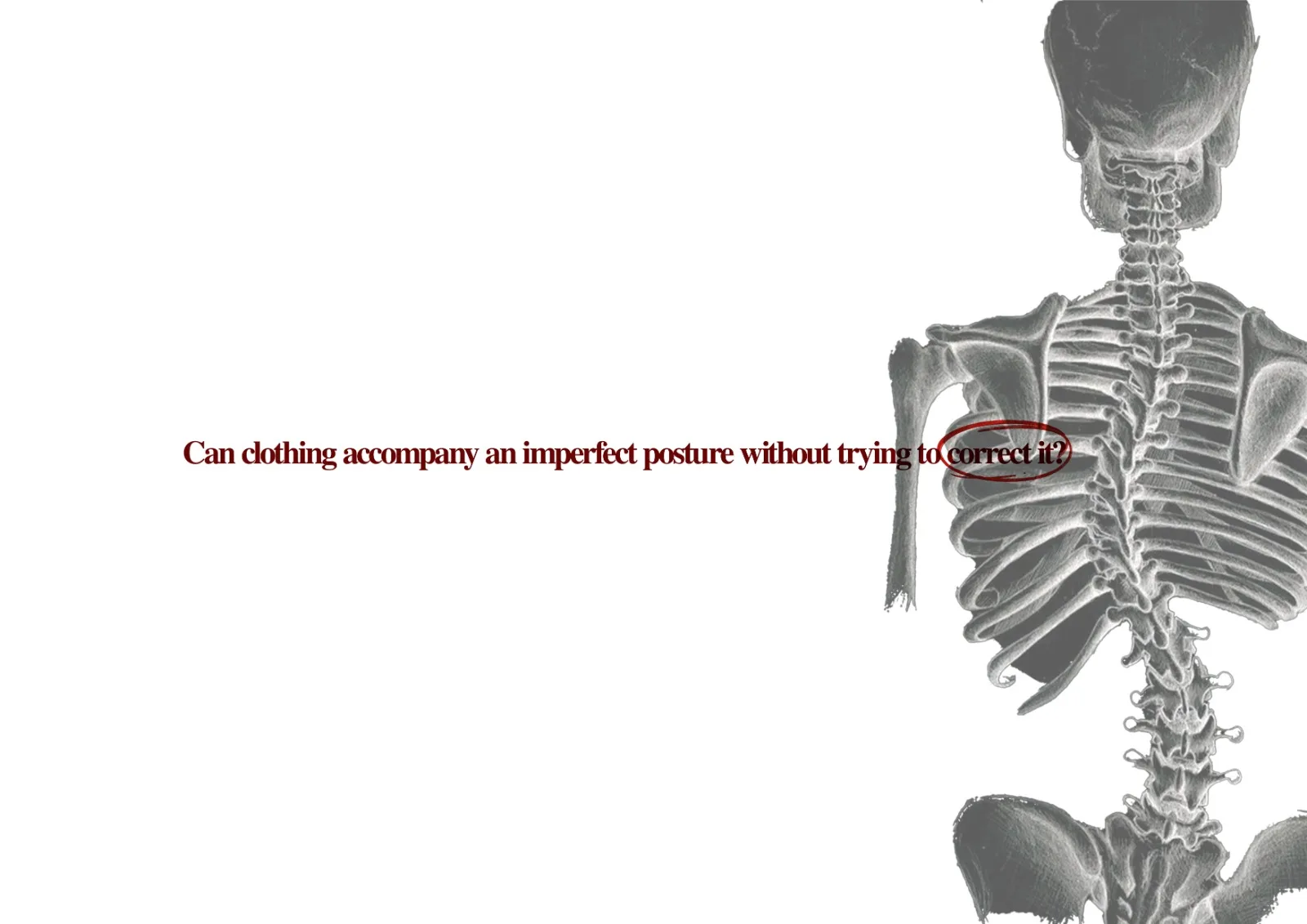
“Can clothing accompany an imperfect body without trying to correct it?”
For Zerouali, a Moroccan fashion designer now based in Paris, the question behind the “Perfectly Broken” collection is deeply personal. She was diagnosed with scoliosis at 15, and throughout much of her adolescence, she struggled with the ways her body seemed to fall outside conventional ideas of symmetry and proportion.
There were expectations about how a body should look and move, shaped by conventional ideas of symmetry and proportion.
Clothing often seemed to follow the same logic, designed to conceal, balance, or reshape whatever did not fit those ideals.
“Perfectly Broken” challenges that idea, turning it into a source of inspiration.
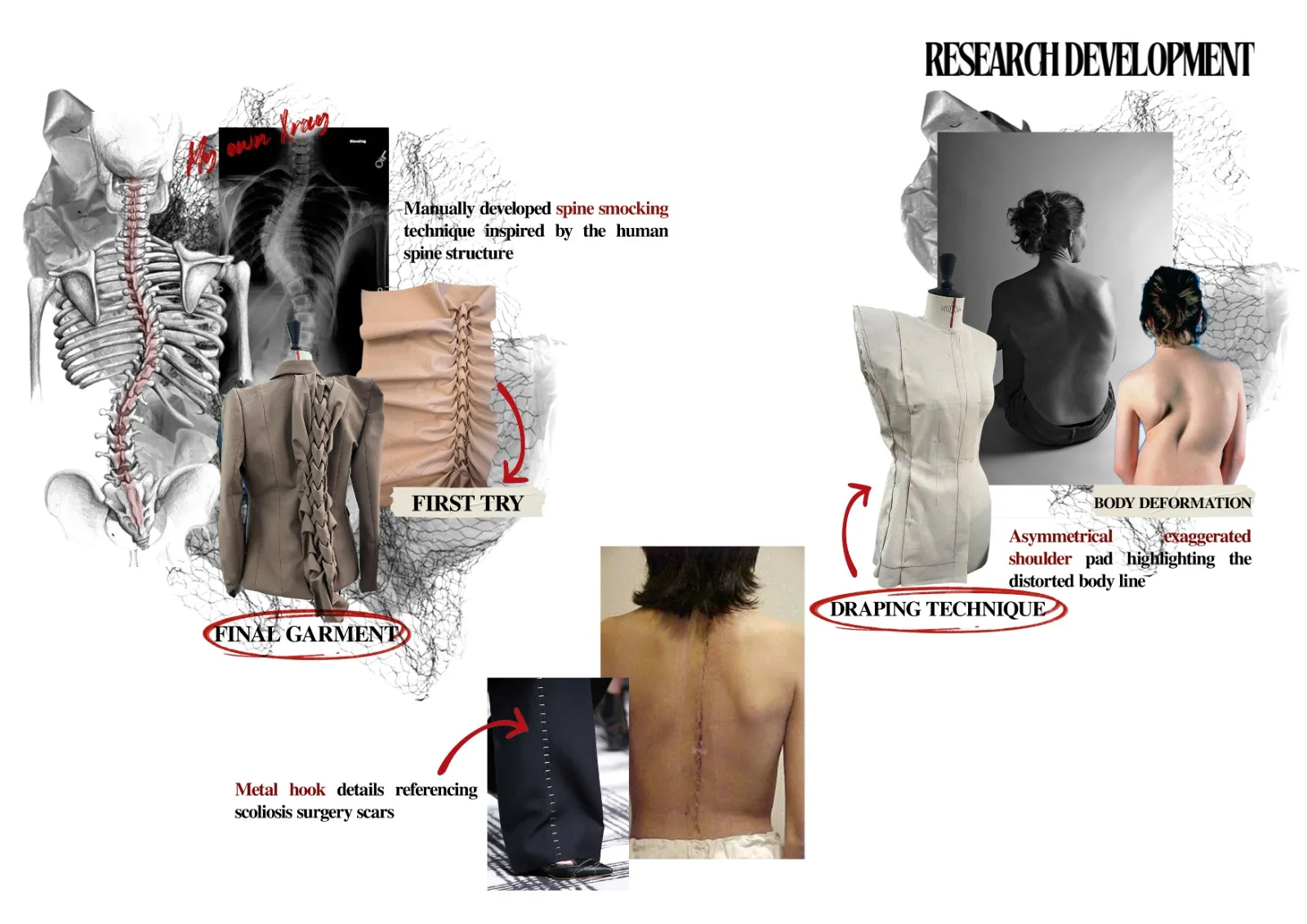
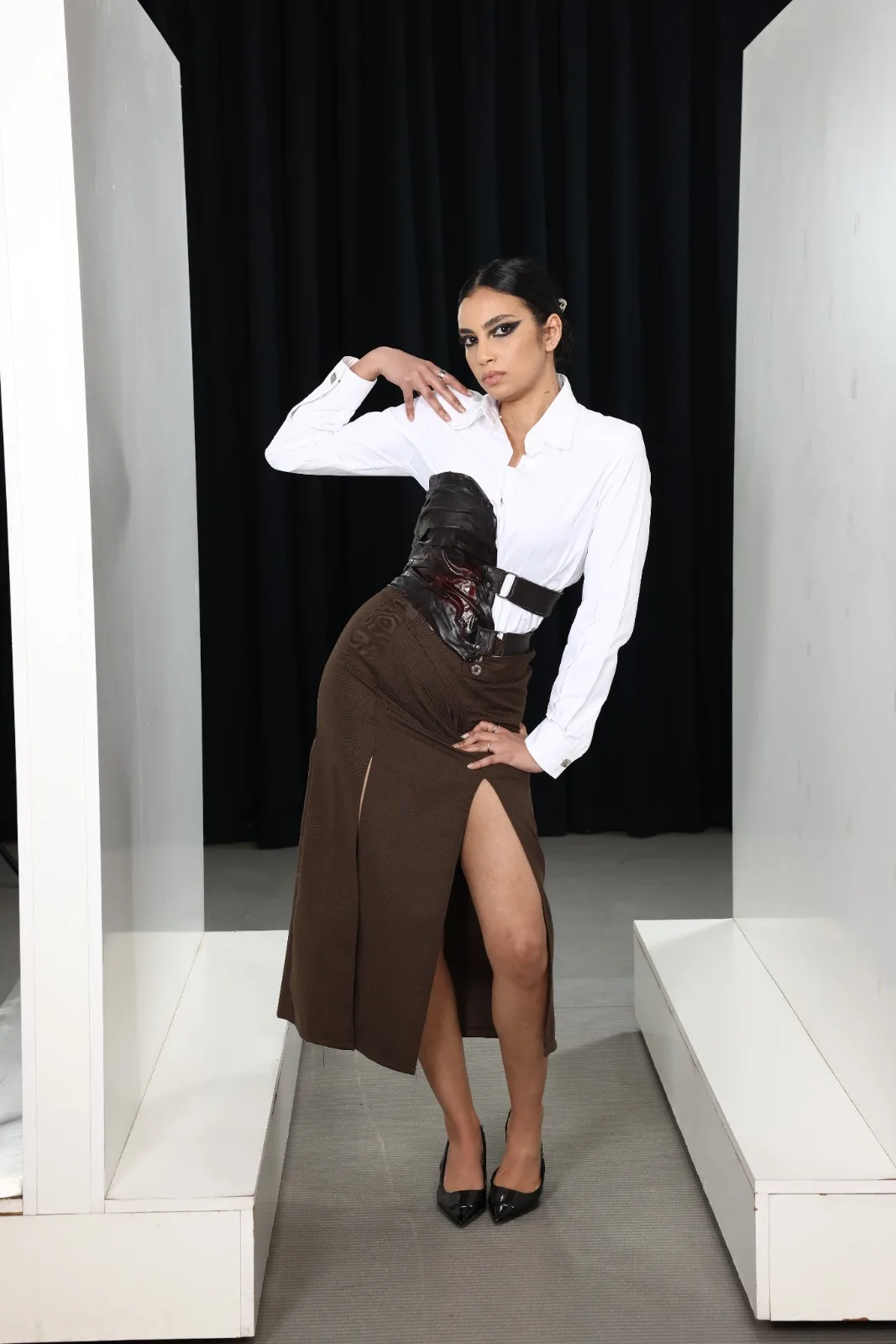
Instead of designing clothes that conceal the effects of scoliosis, Zerouali allowed her posture and experience to influence the garments themselves, where uneven shoulders become exaggerated silhouettes.
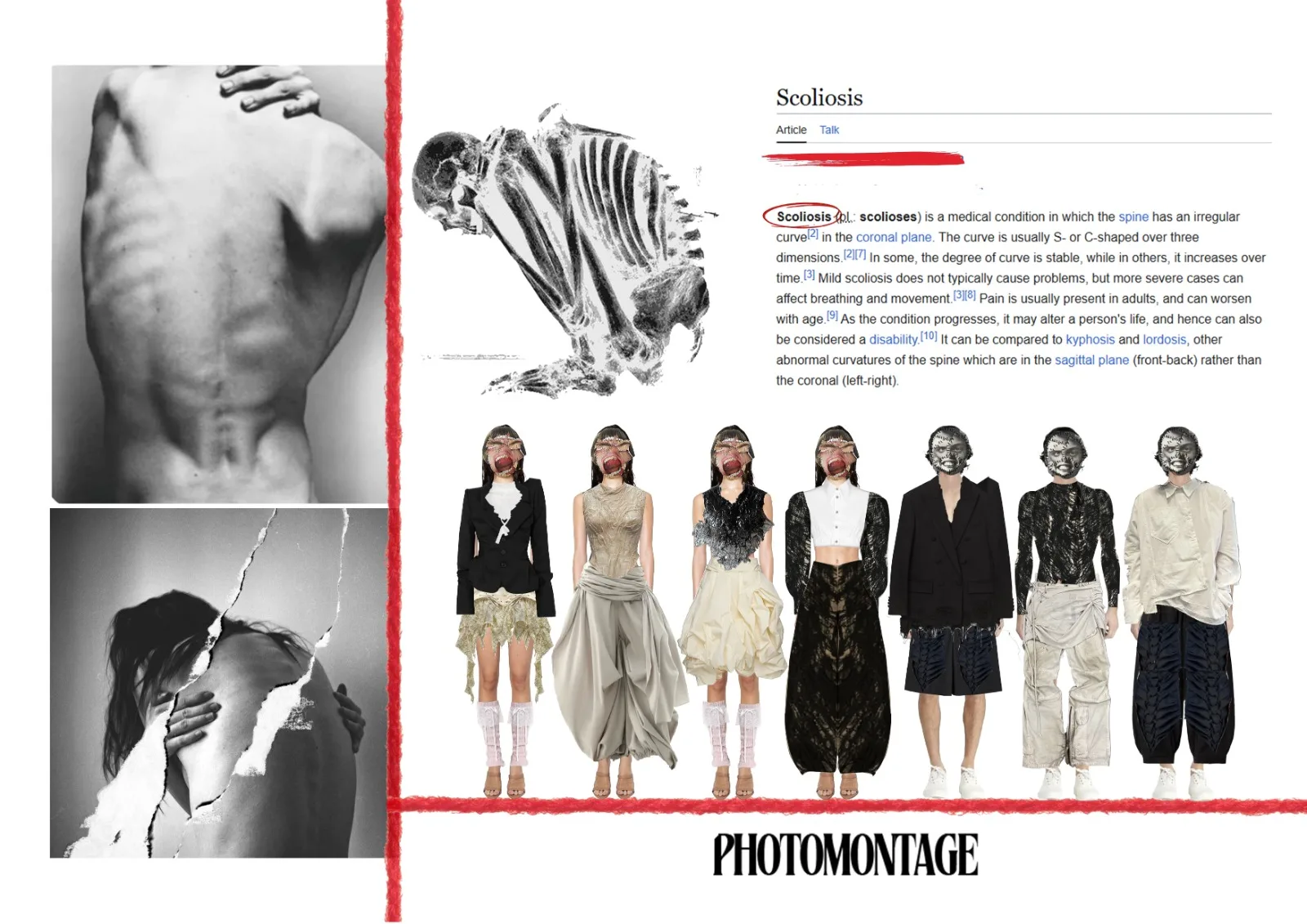
Medical supports are transformed into sculptural elements, while straps, irregular closures, corsetry, and distorted proportions become deliberate features rather than flaws to be corrected.
“I had to stop asking, ‘How can I hide this?’ and start asking, ‘How can I express this?’” Zerouali told MWN Lifestyle magazine.
Designing with the body, not against it
Zerouali said creating the collection required unlearning one of fashion’s most persistent instincts: making the body appear more balanced, symmetrical, or conventionally flattering.
Rather than forcing the body toward an imagined ideal, she wanted clothing to follow what was already there.
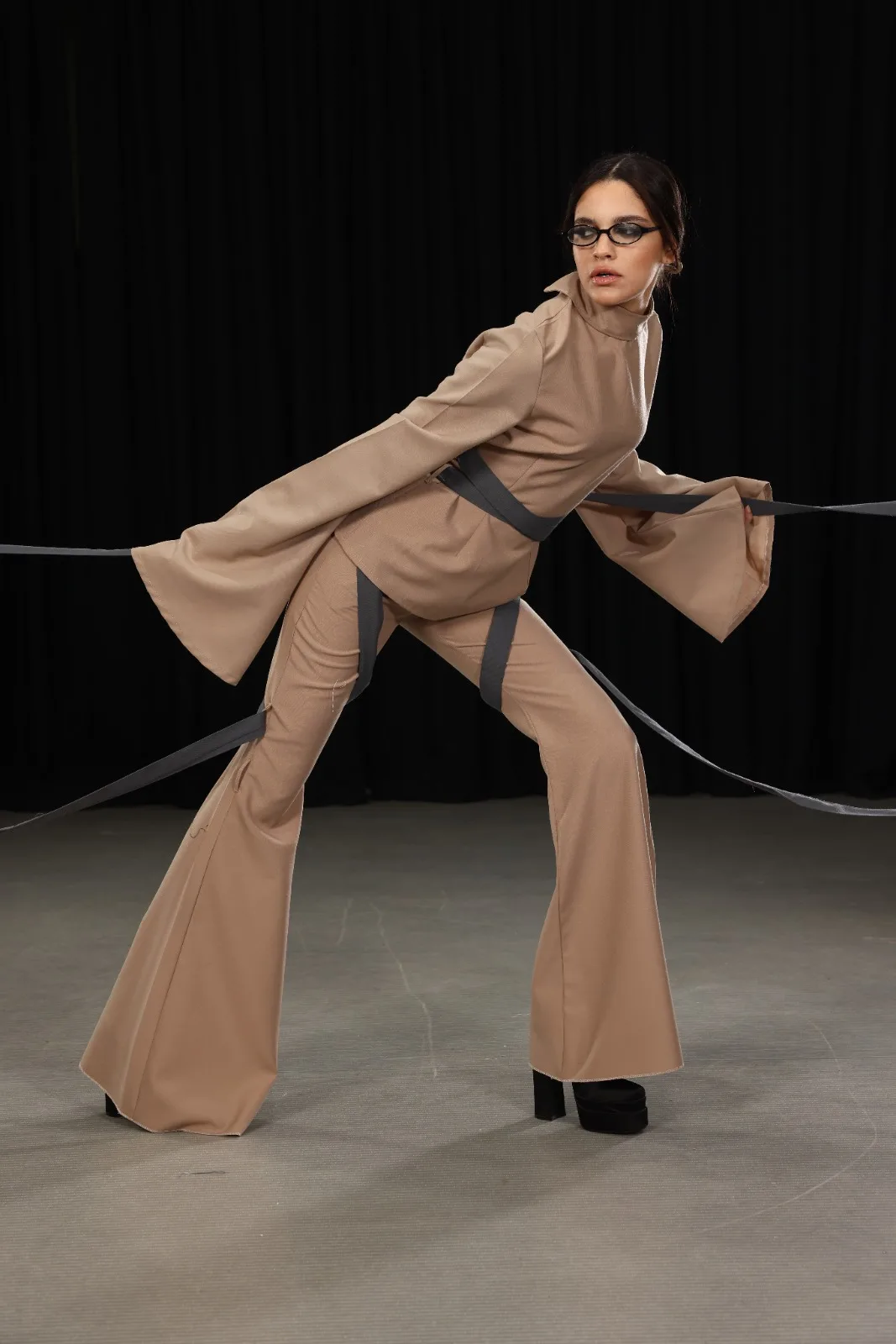
For Zerouali, asymmetry is not a sign of something incomplete, nor is distortion something that needs to be corrected. Instead, irregularity itself becomes an integral part of the design.
“I wanted the clothing to follow and communicate with the body rather than fight against it,” she said.
That philosophy appears throughout “Perfectly Broken.”
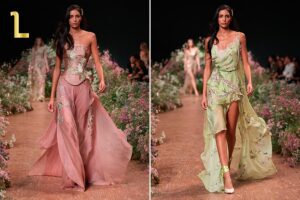
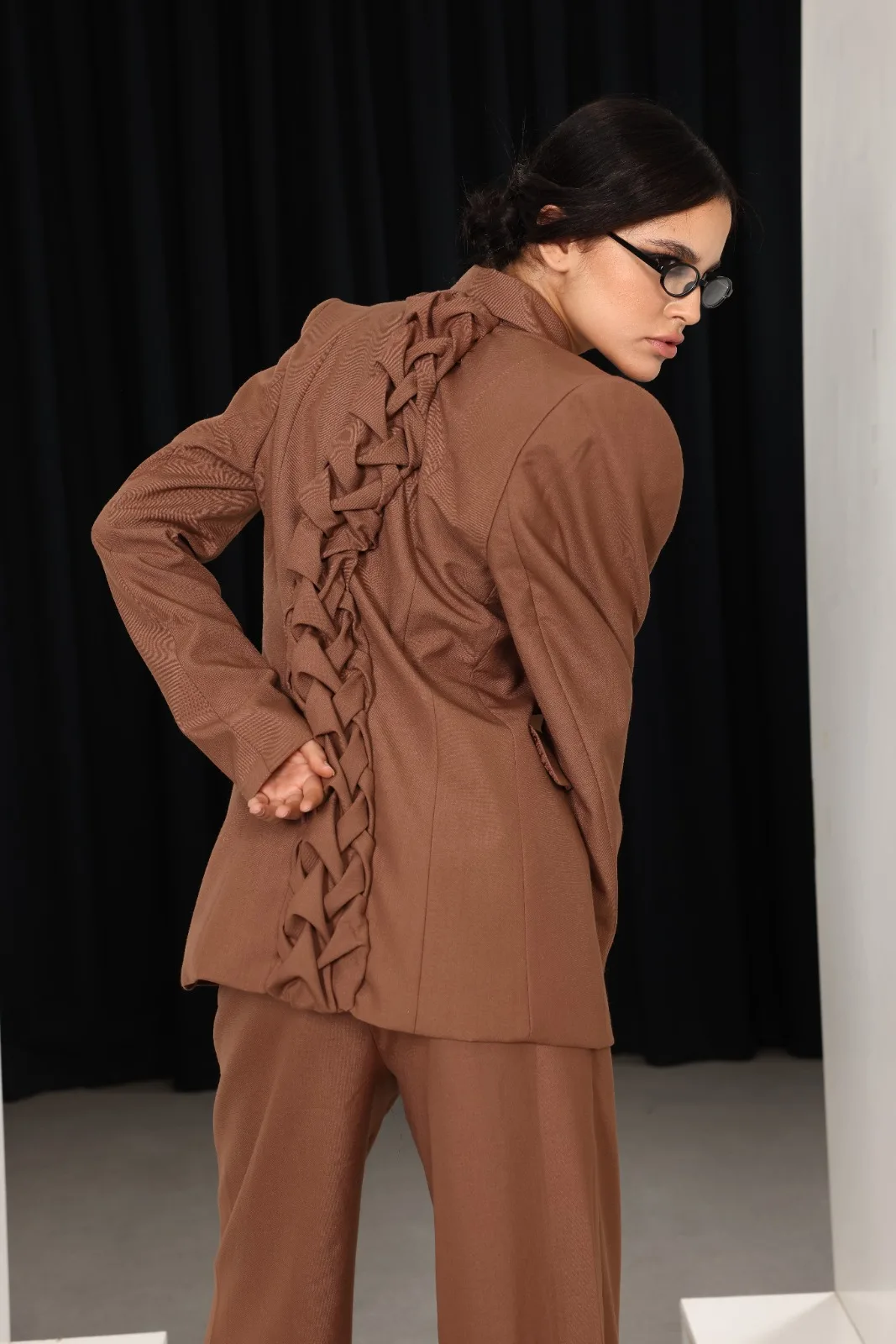
The collection uses asymmetrical shoulders, corsetry, straps, irregular closures, medical references, leather, and sculptural interventions.
Zerouali also incorporated grunge-inspired details, bringing a deliberately rougher visual vocabulary into conversation with the more controlled world of medical support garments.
Yet she was careful not to turn scoliosis into a costume.
“I didn’t want to create a literal representation of a spine,” she explained.
Instead, her physical and emotional experience with the medical condition informed both the construction of the garments and the way they interact with the body.
An exaggerated shoulder recalls the visual imbalance created by an uneven posture. A handmade material treatment evokes the spine without anatomically reproducing it.
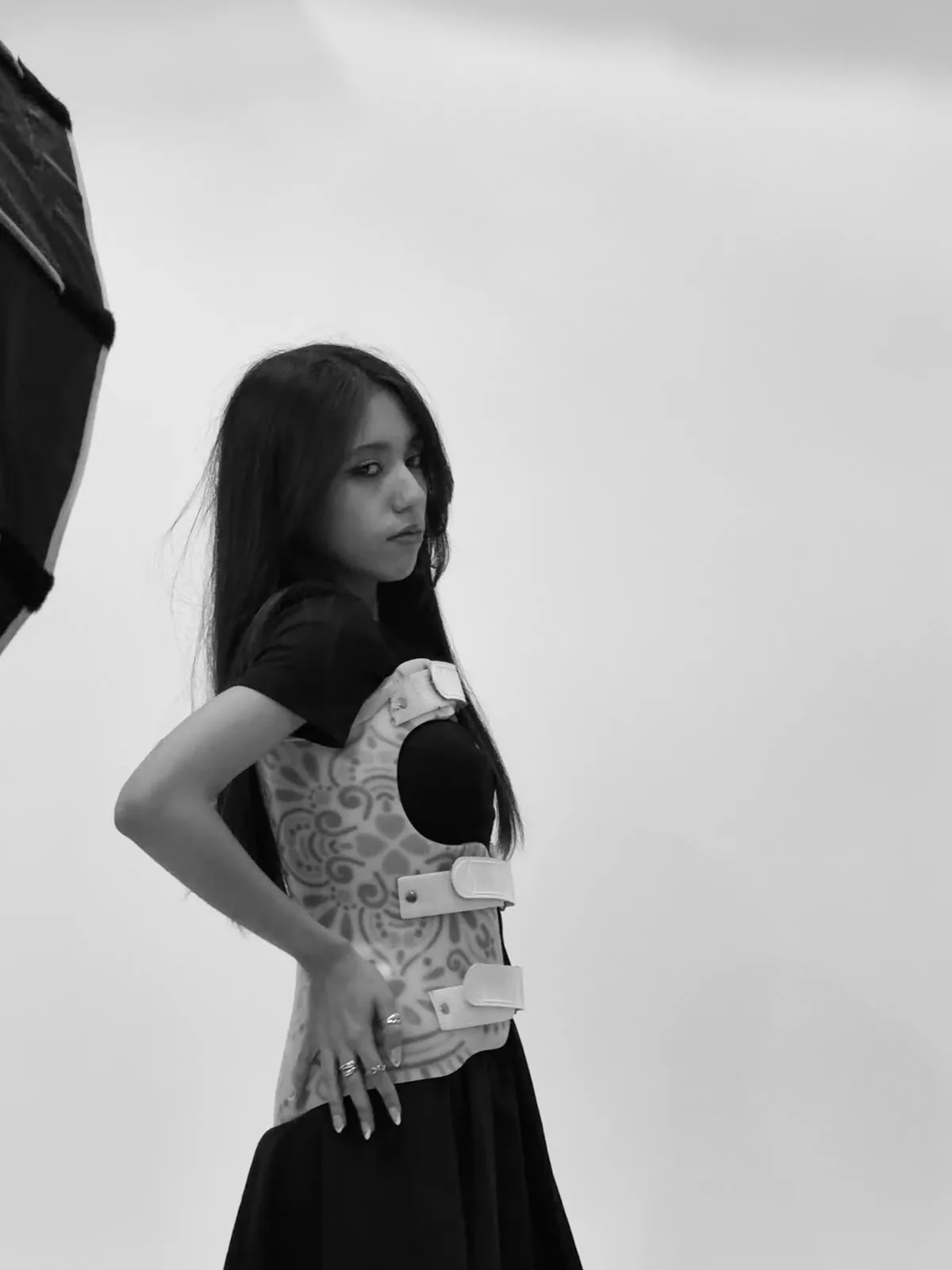
Perhaps the most personal piece in the collection is a resin corset inspired by the medical brace Zerouali wore as a teenager.
It was once an object she associated with discomfort and frustration, but years later, she revisited it through the lens of a designer.
She reinterpreted its restrictive form into something sculptural and contemporary, transforming a symbol once associated with correction into an object of visibility and expression.
Zerouali has described the piece as a sculptural resin corset that reimagines her scoliosis brace as a symbol of beauty, identity, and strength rather than something to conceal.
That shift lies at the heart of “Perfectly Broken.” Zerouali does not erase the difficult memories associated with medical treatment; instead, she reclaims their visual language and gives it new meaning.
The imperfect doll
Another part of Zerouali’s visual world began in childhood, shaped by her fascination with Barbie dolls, of which she now owns more than 70.
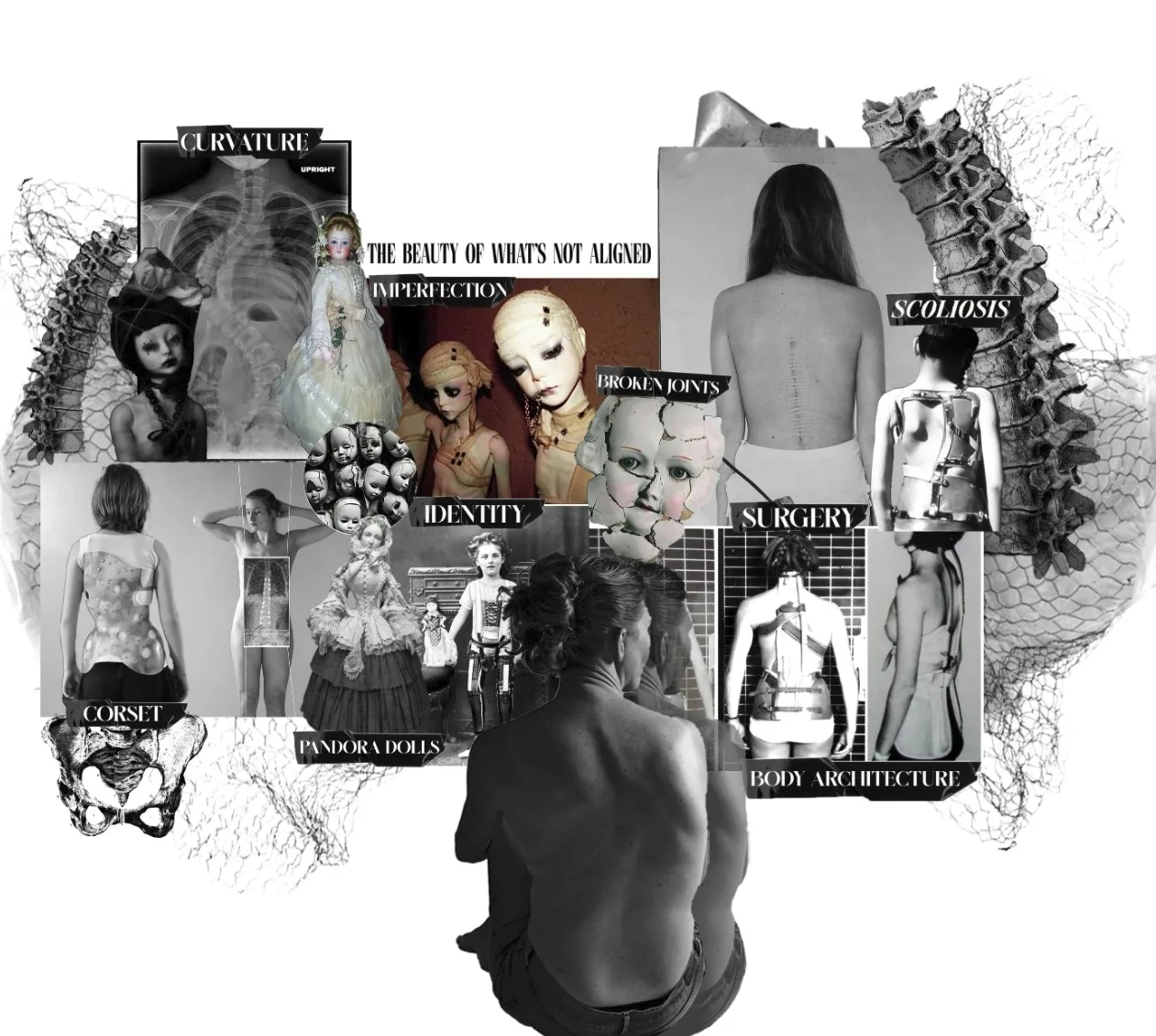
Dolls have always represented a contradiction for her, combining imagination and play with highly controlled ideas of beauty and the body.
As a child, Zerouali was drawn to a damaged doll her mother refused to buy, a moment that stayed with her and eventually grew into a fascination with what she calls the “imperfect doll,” scratched, fractured, altered, and freed from conventional symmetry.
For her, the doll became more interesting because of her damage, which represents the perfect imperfection.
“I found something beautiful in that vulnerability,” Zerouali said.
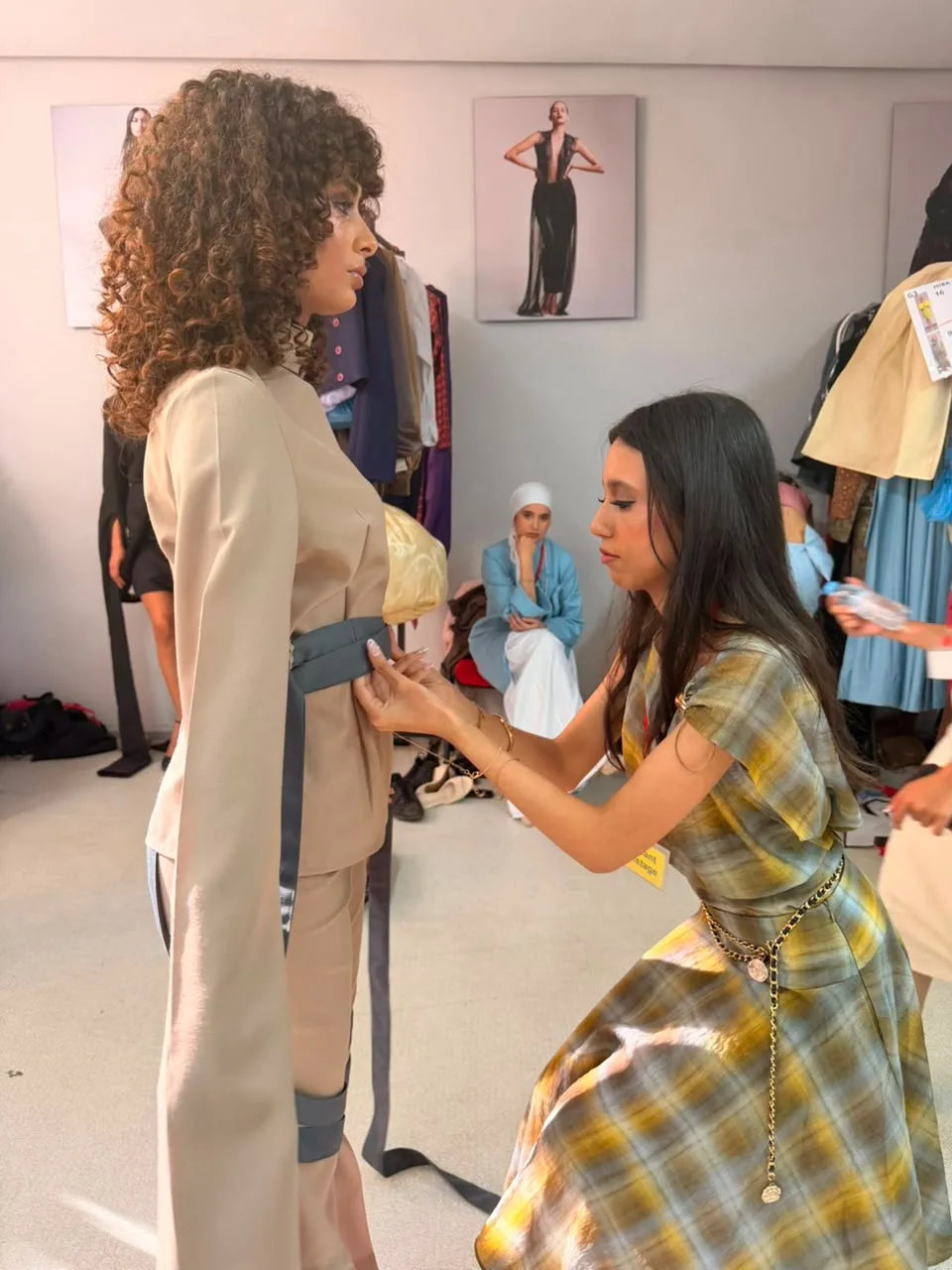
The idea led her to rethink perfection itself: something altered could still be beautiful, while its irregularities could give it history, character, and personality.
“It helped me understand that something can lose its ‘perfection’ without losing its value,” she mentioned.
She wanted “Perfectly Broken” to carry the same message, “A doll that has been through something, is still beautiful because of it.”
Rather than simply embracing flaws, the collection explores what happens when the marks of experience are allowed to remain visible.
From her Fez childhood to experimental fashion
Although “Perfectly Broken” grows from a personal medical experience, Zerouali’s Moroccan roots also find their way into the collection’s materials and construction.
Growing up in Fez, Zerouali developed an early appreciation for craftsmanship, leatherwork, clothing, and the cultural significance of what people wear.
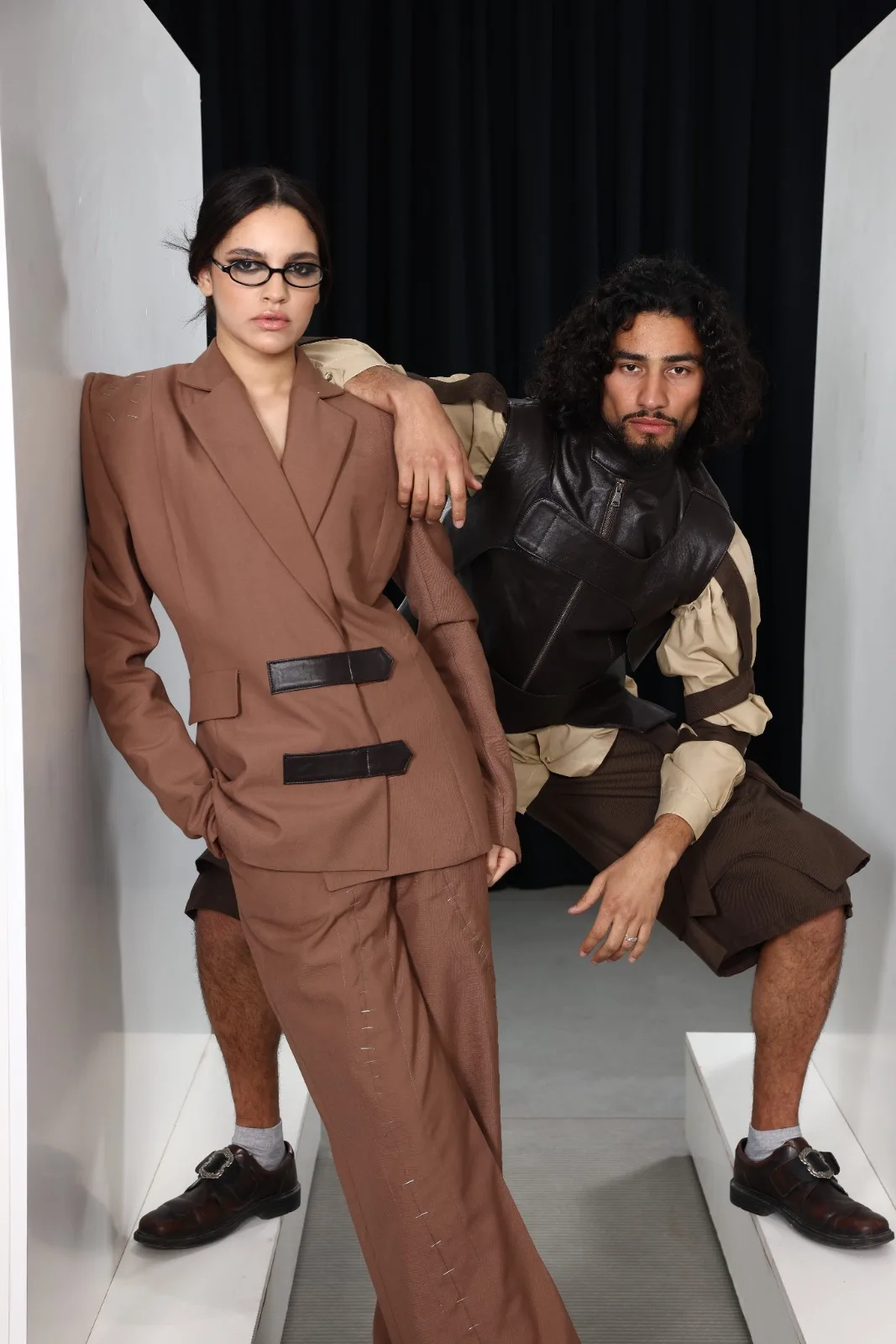
Leather consequently became one of the collection’s important materials.
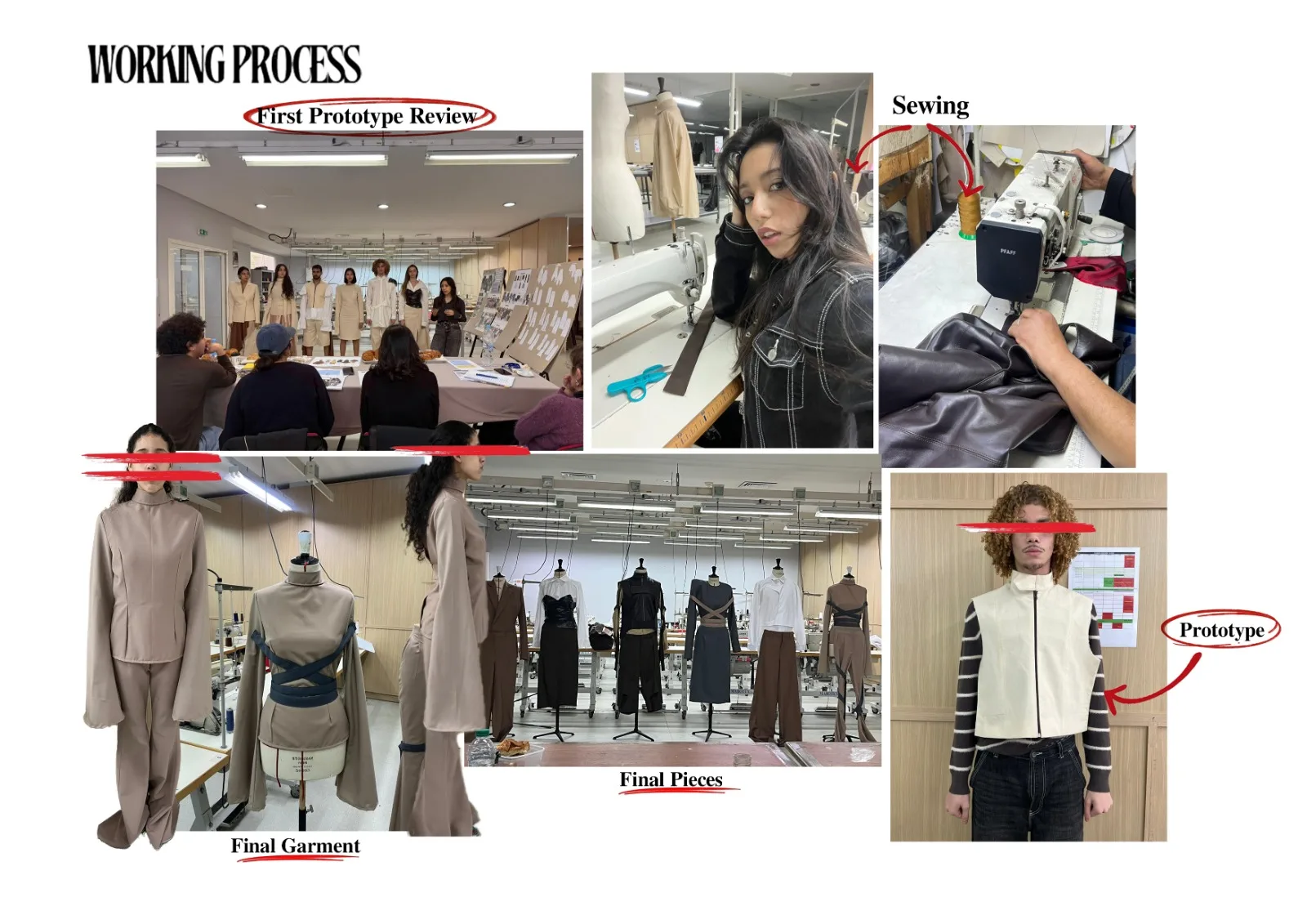
Zerouali later developed her technical skills at Casa Moda Academy, where she learned garment construction, material development, and how to translate an abstract concept into physical clothing.
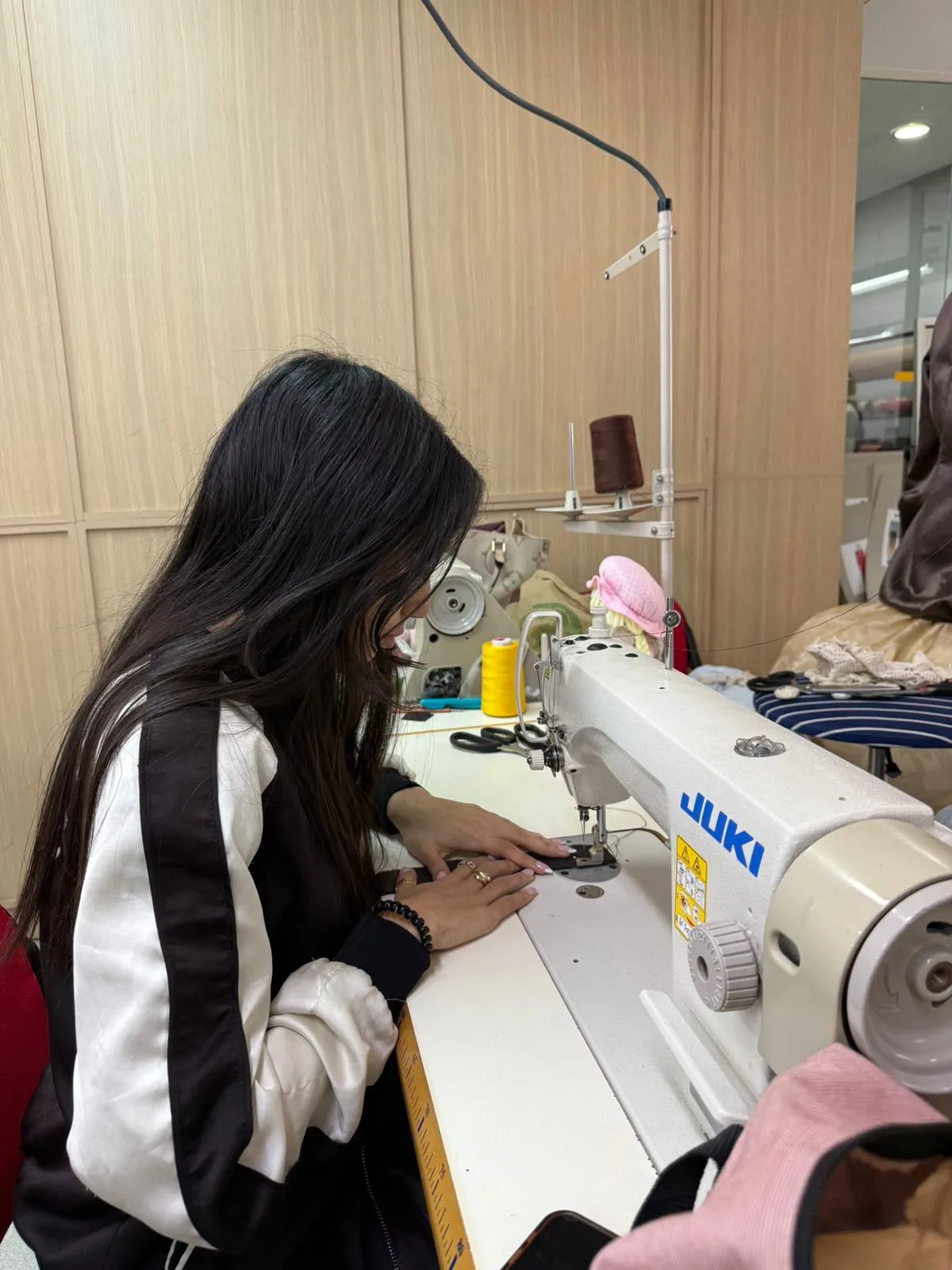
The academy describes the training as combining creative development with technical command across design, styling, pattern-making, and production.
The City of Lights showed her a different tunnel
Paris represents a different stage.
Moving to a different city has given Zerouali exposure to new perspectives while allowing her to further develop her identity as an emerging designer.
“Perfectly Broken,” she said, exists somewhere between those worlds.
It carries a technical and cultural foundation developed in Morocco while reaching toward a more experimental language she wants to pursue in Paris.
That tension also appears in her materials.
Cream, white, nude, muted brown, and restrained touches of color evoke both the skin and the clinical environment surrounding medical treatment.
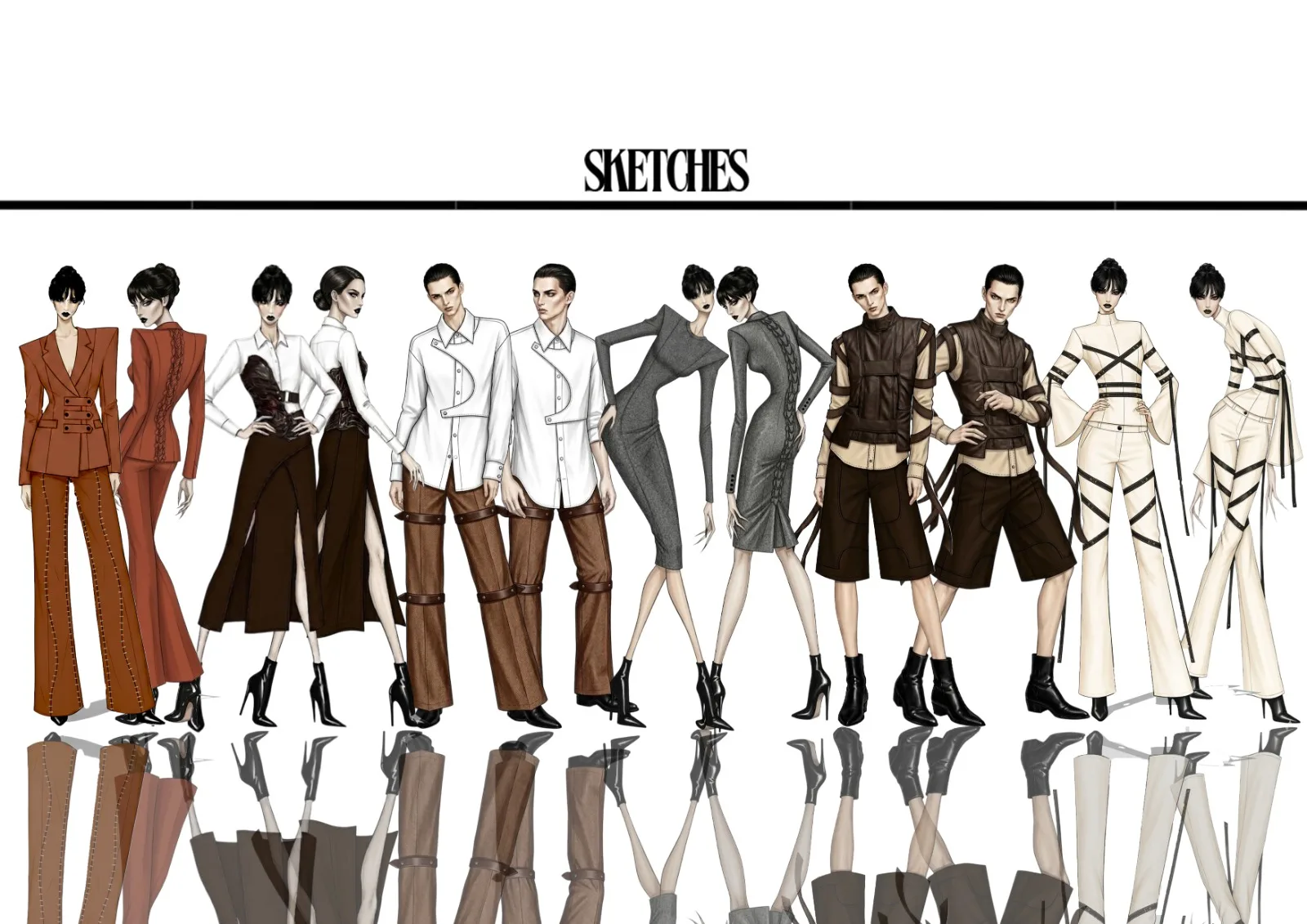
Leather and gabardine create a sense of protection, while structured pieces take on an almost armor-like quality. Softer and more transparent materials, meanwhile, offer glimpses of what lies beneath.
Zerouali wanted both feelings at once. Protection without complete concealment and strength without pretending that vulnerability has disappeared.
She describes the garments as both a shield and an expression of the body underneath.
When a personal story becomes a mirror for others
Zerouali initially created “Perfectly Broken” because of her own scoliosis journey, but the collection soon began reflecting the experiences of others as well.
Some lived with scoliosis, while others carried entirely different physical or personal challenges. What connected them was the shared experience of being made conscious of what set them apart.
Their reactions changed Zerouali’s understanding of what she had created. “It became more than a graduate collection when people with scoliosis, and even those facing different challenges, told me they saw themselves in it,” she said.
At that point, the project was no longer exclusively autobiographical.
“‘Perfectly Broken’ was no longer just my story,” Zerouali said. “It has become a conversation about acceptance, resilience, and representation.”
For the young designer, that recognition now means more than the technical achievement of completing the collection itself.
She had turned the medical brace she once hated into a fashion statement, transformed bodily asymmetry from something to conceal into a design language, and gave new meaning to the damaged doll that had fascinated her as a child.
But the collection’s deepest transformation came when others could look at it and recognize something of themselves.
Zerouali created “Perfectly Broken” to reclaim what she once understood as a limitation and give it a visual language of its own.