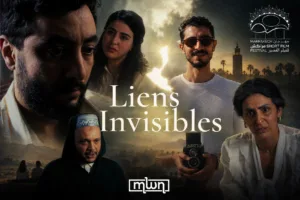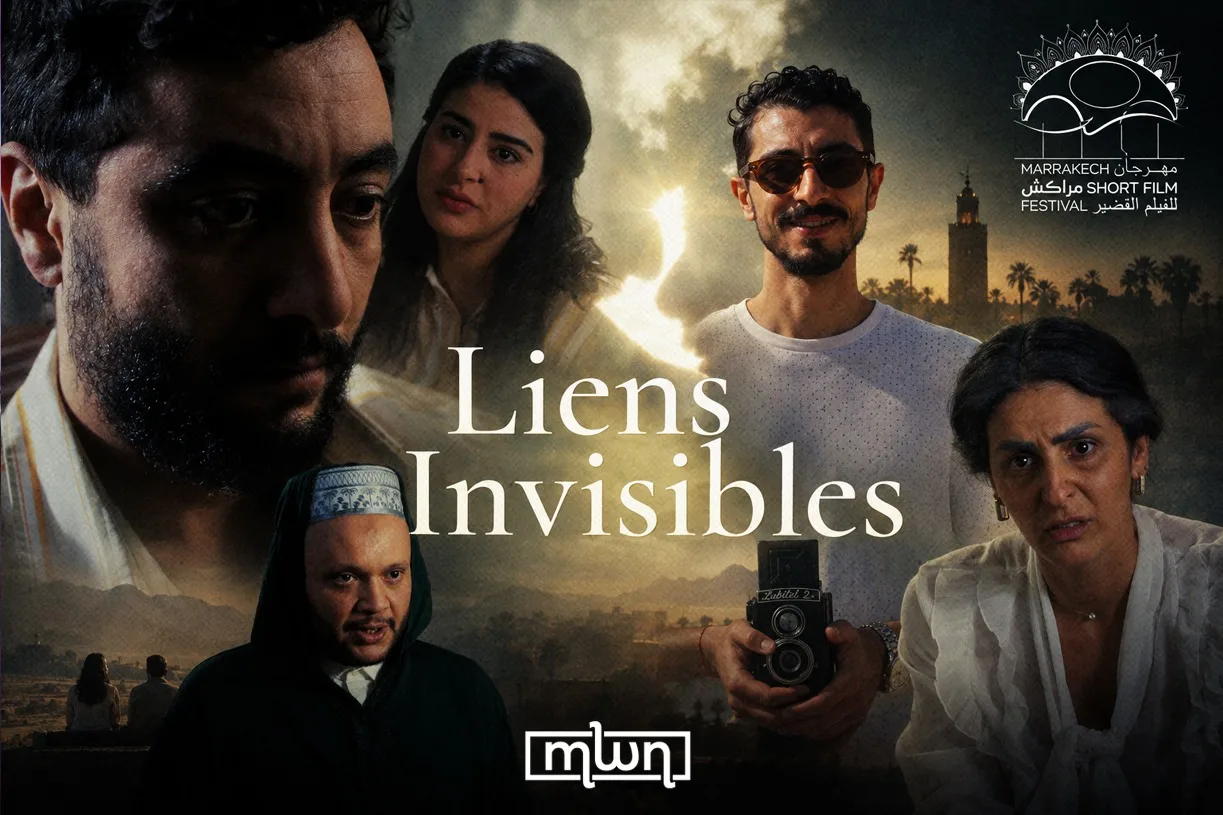
Fez – Hassan and Laila still love each other. The revelation that threatens their future does nothing to change that, which is precisely what makes it painful. In Aiman Benslimane’s “Hidden Ties,” two people discover a connection in their past that forces them to reconsider the relationship they thought they understood.
“It is a silent tragedy: nobody has done anything wrong, and yet suffering is inevitable,” Benslimane told MWN Lifestyle magazine. “I wanted to observe this intimate collapse, this moment when affection remains intact but can no longer be expressed in the same form.”
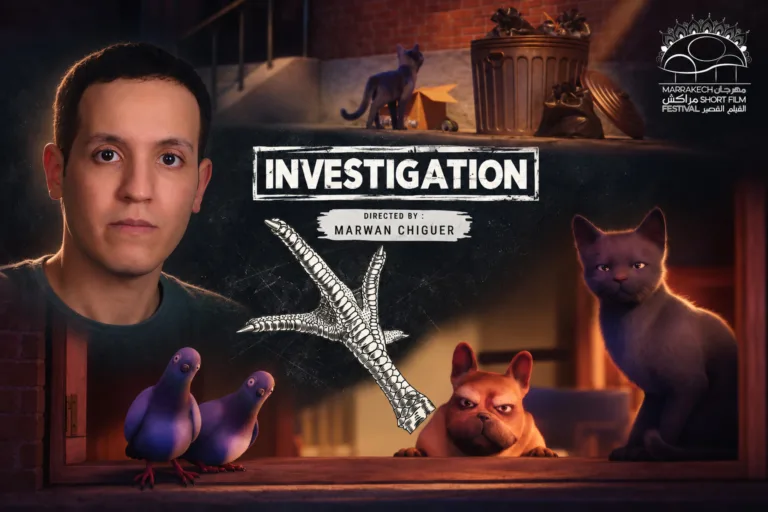
The film, also known as “Liens Invisibles,” heads to the sixth Marrakech Short Film Festival (MARRAKECHsFF), taking place from September 25 to 30. The festival has selected Sandia Tajdine among the performers competing for its Behja Prize, recognizing her work in the short.
At the centre of the story is the discovery of milk kinship, a relationship established through breastfeeding that brings an Islamic prohibition on marriage into the couple’s lives. What Hassan and Laila learn changes the possibilities before them, even as their feelings remain the same.
For Benslimane, that gap between emotional attachment and spiritual obligation was the reason to tell the story.
“What particularly interested me was exploring a conflict that does not arise from betrayal, a malicious lie, or an external antagonist,” he explained. “Hassan and Laila love each other deeply and sincerely, but they find themselves facing an invisible boundary, both moral and spiritual.”
There is no betrayal to explain the loss of their future together, and no fading affection to make separation easier. The person each loves is still there. What has changed is their understanding of the bond between them.
Benslimane’s previous work has also approached intimate lives through the circumstances that constrain them. His documentary “Débris” entered the short-film competition at Morocco’s National Film Festival in Tangier in 2023. More recently, he co-directed “Les Invisibles” with Rita El Quessar, following three Moroccan women confronting inequalities in their family and social lives.
Announcing that documentary, he described how an administrative procedure could become an intimate battle. In “Hidden Ties,” a different kind of constraint enters the private world of a couple: something that predates their love, but whose consequences they must now face.
The family history involved also crosses religious communities. Benslimane chose to make Laila and Aunt Amina Moroccan Jewish characters, placing their experiences within a shared Moroccan memory.
“Including characters of Moroccan Jewish faith or culture makes it possible to address collective memory, coexistence, and the way traditions, family memory, and spiritual rules intersect in Moroccan history,” he said.
Their identity matters to the relationships through which the past reaches the present. Family knowledge, care, and religious obligations do not exist in separate worlds here. A revelation concerning one person’s beliefs also transforms the life of someone from another community.
For the director, this is part of what allows the story to speak beyond its particular circumstances.
“The impact of family secrets and shared memory extends beyond simple community boundaries,” he explained.
Aunt Amina carries much of that memory. Played by Meryem Zaimi, she reveals the truth that fractures Hassan and Laila’s understanding of their relationship. Yet Benslimane was careful about how he wanted audiences to perceive her.
“I was determined that Aunt Amina should not be seen as an accusatory or negative figure,” he said. “Meryem Zaimi embodies a figure of memory and transmission.”
Amina has her own burden. In Benslimane’s account, she carries the weight and guilt of the past, while recognising that what she knows has consequences for people she cares about.
“In revealing this truth, she is not seeking to destroy, but to release a memory too heavy to carry, even if its disclosure leads to an inevitable fracture for Hassan and Laila.”
He also makes an important distinction about her decision to speak. Once Amina discovers the situation, her knowledge of Hassan’s religious boundaries makes disclosure feel obligatory.
That places her in a painful position. She knows enough about his convictions to understand why the truth cannot be withheld, but telling him offers no protection against the hurt it will cause.
Her role gives the film another emotional perspective alongside the couple’s. Hassan and Laila must absorb the revelation; Amina must live with being the person who delivers it. Benslimane’s insistence on treating her with sympathy keeps that responsibility from becoming a simple question of blame.
Music accompanied his exploration of these characters long before the film reached its audience. While writing, Benslimane listened to Meryem Aboulouafa’s “Ya Qalbi” and “Je me promets,” finding an emotional connection between her songs and the relationship taking shape in his screenplay.
He is clear, however, about how that connection developed.
“There wasn’t really any behind-the-scenes work or collaboration with Meryem Aboulouafa,” he said. “The process was much more organic. I am simply a great admirer of her artistic world.”
The songs became part of his thinking during the writing process. Their words and sensibility helped him engage with feelings that the characters themselves would struggle to reconcile.
“As I immersed myself in her lyrics and sensitivity, I realised how strikingly her words resonated with Hassan and Laila’s story of love, faith, and resilience,” he explained.
His account places the music within the film’s beginnings: it accompanied the discovery of the story and its emotional direction. The connection came through listening, as another artist’s work helped him recognize what he wanted to express.
The characters likewise took shape before the full cast did. Although the film brings together Zaimi, Tajdine, Saad Mouaffak, and Adil Abatourab, Benslimane says recognizable names were not his starting point.
“During the writing of the screenplay, my only priority was to write a sincere story and create truthful characters.”
Mouaffak was the first actor he contacted and the first to read the project. His immediate enthusiasm helped Benslimane begin imagining the rest of the cast.
From there, the actors became involved in refining the people they would portray. Benslimane credits their contribution during preparation with helping him develop the characters’ psychology, giving greater precision to the emotional conflicts already on the page.
“Beyond their fame, they helped me enormously to refine the psychology of the characters during preparation,” he said.
On set, he valued their restraint. A story built around enduring affection and an unavoidable fracture requires performers to communicate feelings that may coexist without resolving themselves.
“They approached the text with incredible restraint, inhabited the silences, and brought a subtlety to their performances that really elevated the film,” he said. “It was a real privilege to direct such a committed and professional team.”
That attention to silence returns to the central difficulty Benslimane wanted to explore. Hassan and Laila’s discovery changes what they believe they can do, but it cannot simply erase their tenderness. Amina’s disclosure follows a sense of responsibility, but responsibility cannot spare her the consequences.
As “Hidden Ties” heads to Marrakech, Benslimane describes a film concerned with what remains when love can no longer take its expected form. Its characters must confront a truth that gives them a new understanding of their past while making their future harder to imagine.
“Hassan and Laila love each other deeply and sincerely,” he said. The tragedy begins with the fact that this is still true.