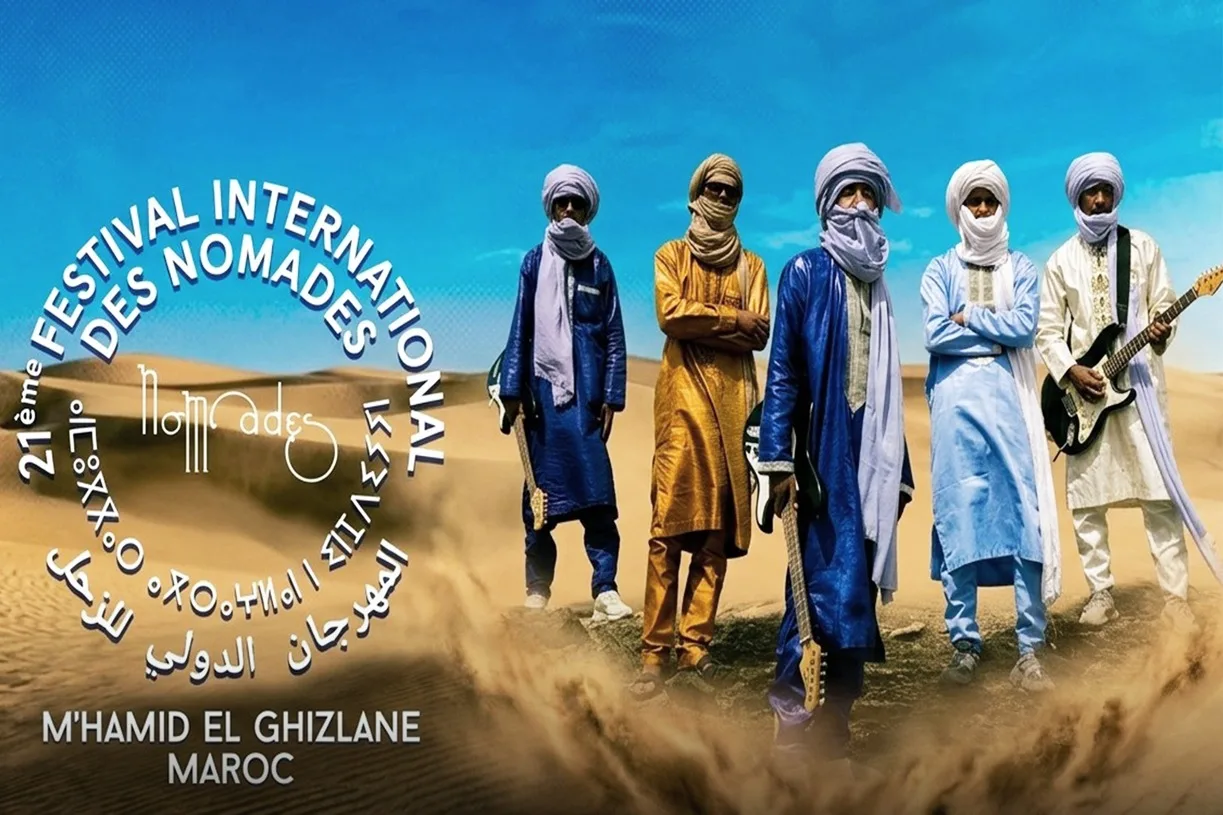
Lugano – The 21st edition of the International Nomads Festival is set to take place from April 3-5, in M’Hamid El Ghizlane, a gateway to the Sahara Desert in southern Morocco.
With a diverse lineup of activities, the festival is designed to offer something for everyone, with each experience bringing its own unique atmosphere and perspective..
On April 3, the Nomad Evening in the Desert opens with an official ceremony in the dunes, followed by the preparation of traditional sand bread.
The evening continues with traditional music and dances, inspired by the Tuareg traditions, and nomadic acoustic performances, and stargazing under the Sahara sky.
The second Nomad Evening continues the following day with traditional music and dances, as well as a camel race demonstration.
The evening concludes with acoustic performances and stargazing under the desert sky.
The festival culminates on April 5 with a Big Musical Evening in M’Hamid village, featuring world music and dance performances.
Front-stage access offers a more immersive experience, bringing together both local and international artists in a vibrant closing celebration.
Reservations for the festival’s desert events must be made in advance via this website.
About the festival
Founded in 2004, the festival has evolved into a major international platform celebrating cultural diversity and openness.
Held annually in the Drâa Valley, around 90 kilometers from Zagora, it unfolds in the heart of the desert as an open-air artistic and civic event that brings together local and international artists while highlighting the heritage of nomadic communities.
The program features a wide range of cultural expressions, including music, dance, poetry, storytelling, and traditional crafts such as weaving and embroidery.
It also incorporates culinary traditions like the preparation of mella, a traditional rustic bread, alongside demonstrations of nomadic customs such as camel racing.
In parallel, conferences, workshops, and roundtables also take place to address key themes including nomadism, environmental sustainability, agriculture, and education.
Beyond its cultural scope, the festival plays an important social and economic role by supporting local communities, fostering exchange between visitors and artisans, and encouraging dialogue and collaboration.
By bridging ancestral traditions with contemporary expression, it promotes intercultural understanding while contributing to the preservation of nomadic identity and Morocco’s cultural heritage.