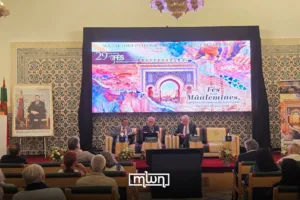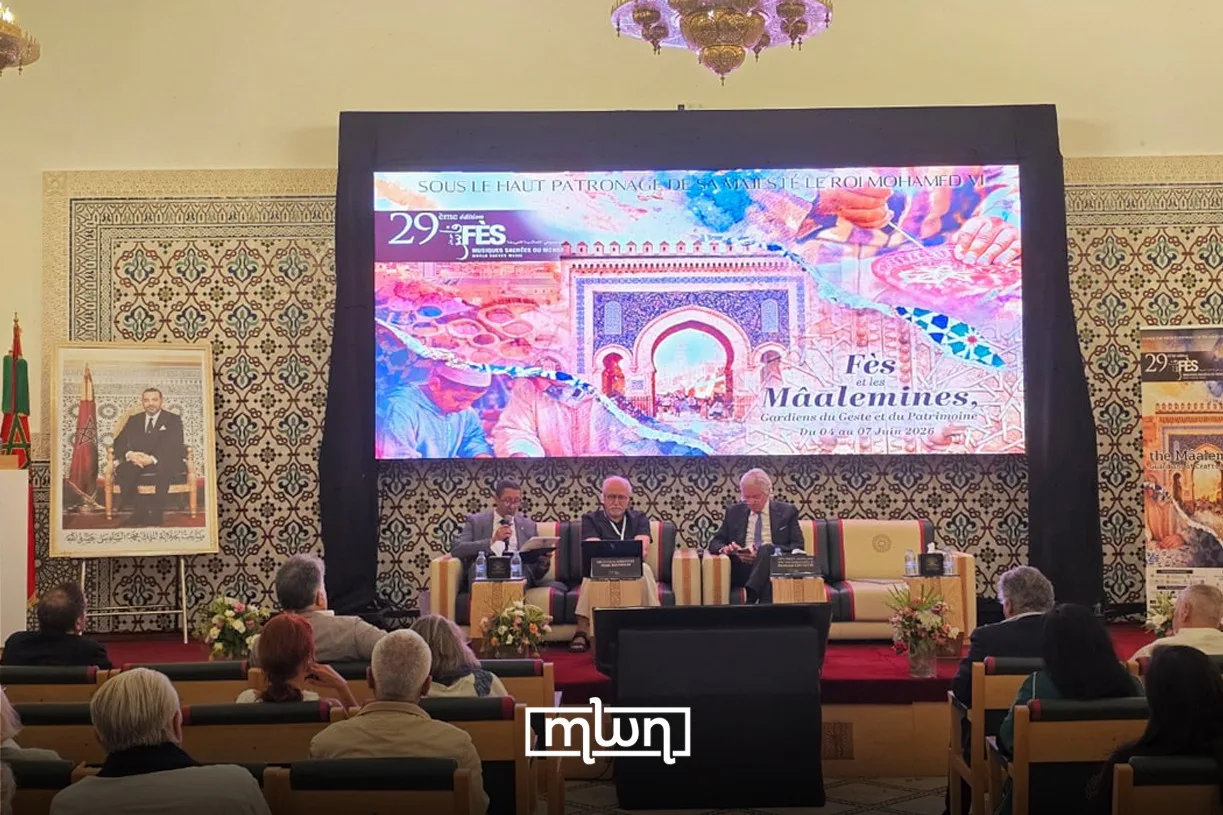
Fez– The preservation of heritage was at the heart of discussions during the Forum of the Fez Festival of World Sacred Music, where writers, intellectuals, researchers and master craftsmen gathered to examine the future of Morocco’s artisanal traditions.
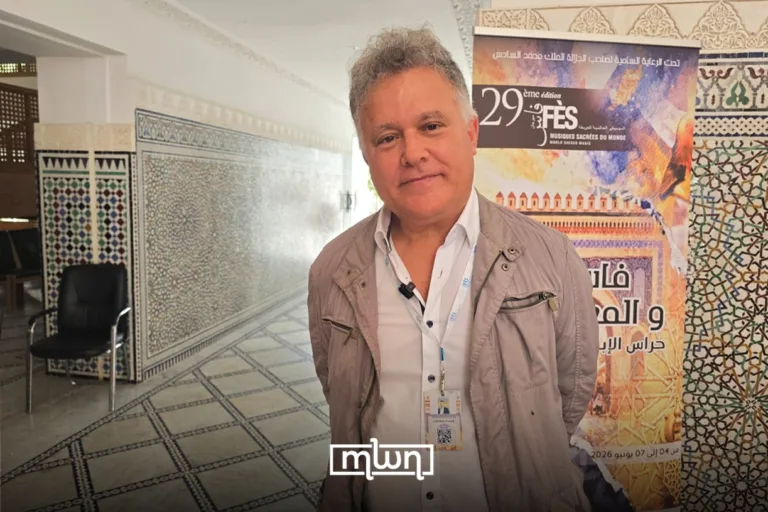
Held at the Palais des Congrès, the forum brought together prominent voices including renowned Moroccan novelist and intellectual Tahar Ben Jelloun, writer Fouad Laroui, Mustapha Ijjaali, Nabil Rahmouni, and several maâlems from Fez.
Discussions revolved around three central themes: the relationship between art and craftsmanship, the role of the maâlem as a cornerstone of creative transmission, and the increasingly complex position of artisans in a market-driven world.
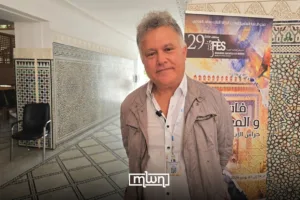
Speaking on the sidelines of the gathering, Ben Jelloun praised the forum and the festival for placing artisans at the center of the conversation, emphasizing their essential contribution to Morocco’s cultural identity.
“For us, what matters most today is that these traditions continue to be preserved with authenticity and seriousness,” he said in an interview with MWN Lifestyle magazine.
The celebrated author shed light on the importance of recognizing artisans not simply as producers of objects, but as artists whose work shapes everyday life and sustains collective memory.
“The festival has done something important by highlighting artisans,” he noted.
“They are true artists who work on the realities of life and everyday living.”
His remarks echoed one of the forum’s central concerns: how to ensure that craftsmanship remains a living creative practice rather than a tradition reduced to repetition or commercial reproduction.
Throughout the discussions, participants returned to the question of transmission, examining the role of the maâlem as a guardian of knowledge and a link between generations.
For Ben Jelloun, preserving heritage is not only a matter of safeguarding techniques and traditions.
It is also about protecting a vision of Morocco rooted in authenticity and cultural continuity.
“It represents a Morocco that I love and support,” he said.
Yet the conversation extended beyond craftsmanship and culture.
As one of Morocco’s most influential literary voices, Ben Jelloun also reflected on the broader challenges facing society, arguing that some of the most difficult issues are not necessarily those that are unknown, but those that people are reluctant to discuss openly.
“The most difficult subjects to address are social norms and customs,” he observed.
While acknowledging that societies inevitably evolve, he suggested that public discourse often struggles to keep pace with changing realities.
According to Ben Jelloun, many issues remain trapped between lived experience and public silence.
“There are many things that happen under the hypocrisy we know exists in Morocco,” he said, adding that people often feel unable or unwilling to speak about them openly.
His comments introduced a wider reflection on transparency, social change and collective self-examination.
For the novelist, one of the central challenges facing contemporary society is the persistence of appearances over honest dialogue.
“We do not yet have a society that speaks openly,” he remarked. “It is a society that conceals, pretends and keeps up appearances.”
The intervention offered a striking complement to the forum’s discussions on heritage.
If artisans work to preserve and transmit cultural knowledge, Ben Jelloun suggested that societies must also find the courage to confront their own realities rather than hide them.
As the Fez Festival continues to celebrate dialogue between cultures, spiritual traditions and artistic expressions from around the world, the forum provided a space for a different kind of reflection: one that linked the preservation of heritage to the necessity of openness, critical thought and public conversation.
In Ben Jelloun’s view, safeguarding tradition and embracing honesty are not opposing ambitions.
Both are essential to ensuring that culture remains alive, meaningful and connected to the society it seeks to represent.