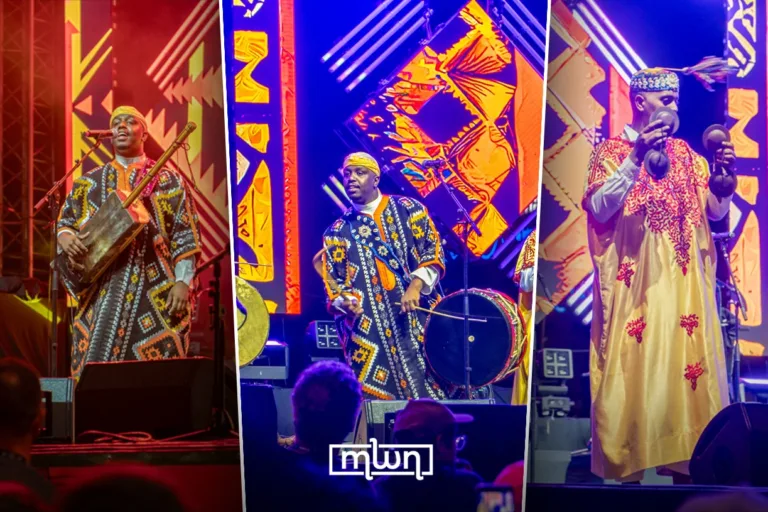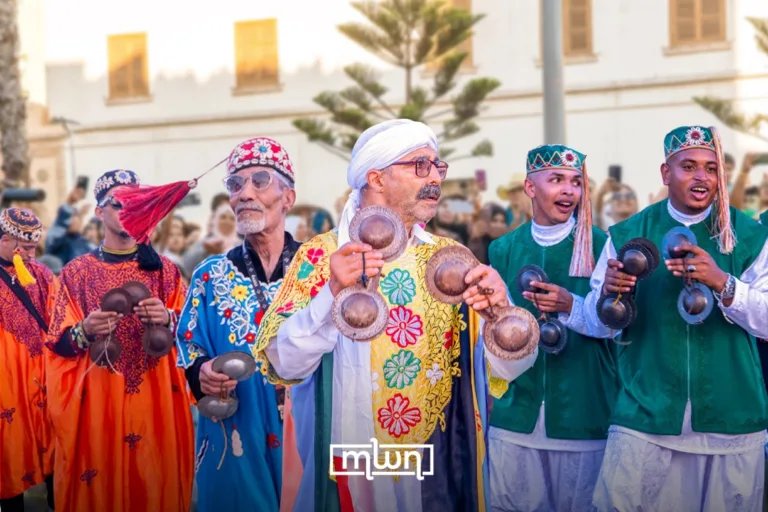
Rabat – At the heart of Essaouira’s annual celebration of rhythm, heritage, and spirituality, one voice stood out this year, not only for its music, but for what it represents.
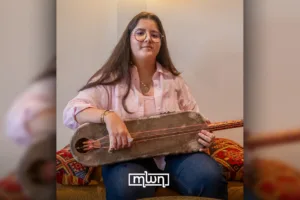
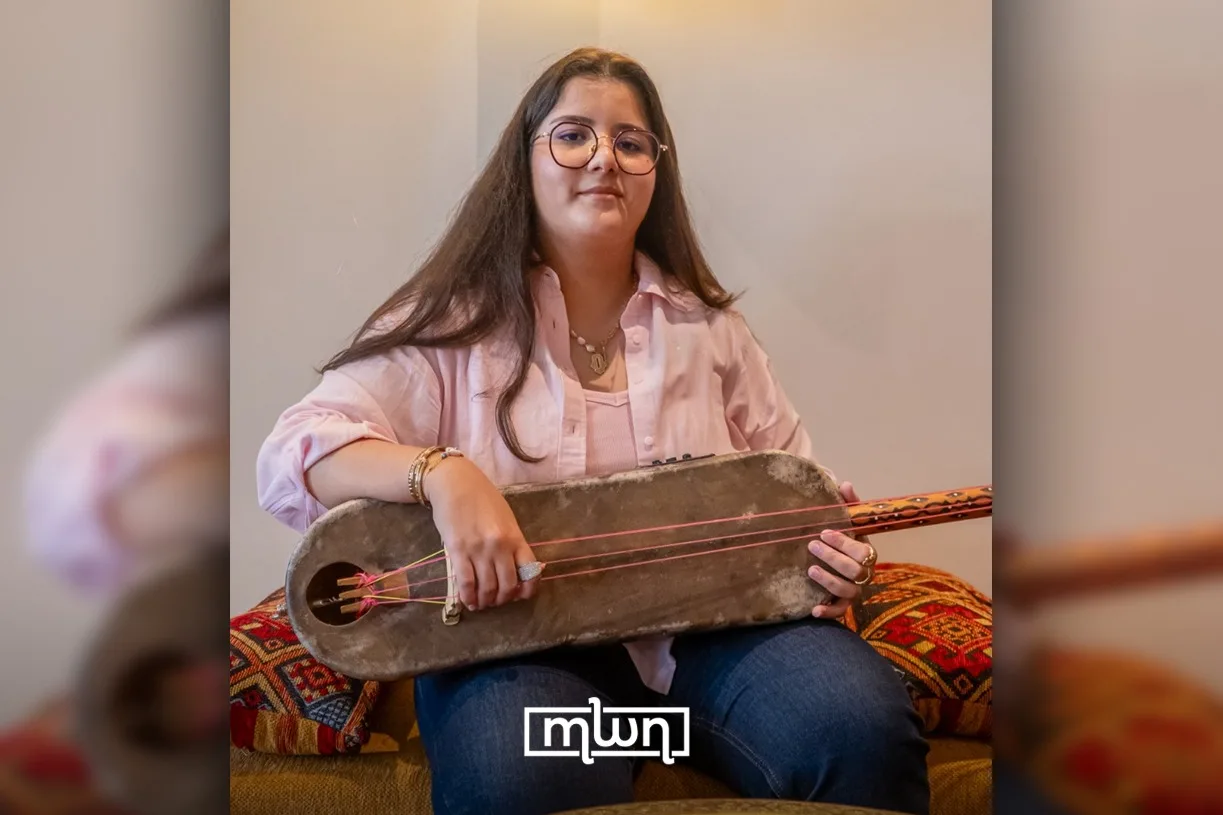
For Fatima Zahra Jebali, artist, Gambri player, and Gnaoua music devotee from Essaouira, performing at the 27th edition of the festival marked more than another appearance on stage.
It was a moment of recognition in a tradition where women have historically remained on the sidelines.
“It’s an honor,” she told MWN Lifestyle magazine. “And it’s a representation for the position of women within this field, which is generally dominated by men.”
For Jebali, Gnaou is not simply a genre. It is a living heritage, one deeply rooted in spirituality, culture, and transmission.
“First of all, Gnaoua music represents a very important cultural, spiritual, and musical heritage,” she explained.
“It is very rich and diverse, whether from the point of view of rhythm, cultural richness, and a whole set of rules and codes to follow and respect.”
She speaks of the responsibility tied to preserving that tradition, emphasizing the importance of passing it down with precision and respect.
“These are requirements that must be transmitted from one generation to another with expertise,” she said, “to ensure continuity parallel to what the elders, the great ones, have ensured in transmitting this culture.”
That continuity, she notes, is already visible.
“We now see girls and boys who are passionate and occupying major stages.”
Entering a male-dominated space
But stepping into that world was far from easy.
Jebali recalls the resistance she faced when first deciding to pursue Gnawa music, particularly as a Gambri player.
“At the beginning, generally, it was very difficult for me,” she highlighted. “Especially for my surroundings, to convince them to integrate into this musical world.”
Her challenge was made even greater by the symbolic place of the Gambri itself.
“It’s not easy to integrate into a field dominated by men, especially to play the Gambri,” she added. “Because the Gambri is an instrument that we can say is sacred.”
Traditionally, women have always been present in Gnaoua culture, but in different roles.
“The woman had other roles in this music, whether as “Mkadma,” or as organizer of the Lilas and spiritual events,” she explained. “But not as much as a musician.”
“She did not integrate into the musical direction of this culture.”
Inspired by the festival itself
For Jebali, the very festival she now performs in was once the place where her dream first took shape.
“I can say that the festival is the event that influenced me the most,” she emphasized. “Because I have attended every year since I was very young.”
Growing up in Essaouira, she witnessed the exchanges between legendary Maalems and musicians from around the world, moments that planted the idea that she, too, could be part of this legacy.
“I saw this magic between the great Maalems and musicians from all over the world,” she recalled. “And I said, why not be among them?”
More importantly, she saw herself as part of the chain of preservation.
“To be among the people who will ensure this transmission and put this culture in the spotlight.”
A slow but determined journey
Learning Gnaoua was not immediate. Like many young artists, Jebali had to balance her passion with education and other responsibilities.
“Generally, it took me a lot of time to learn,” she said. “Also to integrate into this field, because I also had several concerns with studies.”
That meant she couldn’t fully dedicate herself at first.
“I did not have the capacity to integrate 100% into this field.”
But today, her commitment is clearer than ever.
“Currently, I am trying to integrate with courage, passion, and above all sensitivity.”
‘Spirituality is the main pillar of Tagnawit’
At the center of Jebali’s understanding of Gnaoua lies one defining element: spirituality.
“For me, spirituality is the main pillar of Tagnawit.”
Even when Gnaoua blends with other sounds on stage, she said that spiritual essence remains intact.
“Even on stage, when we have the integration of another music apart from traditional music, we feel the strength of Tagnawit. That is spirituality for me.”
And for her, nowhere is that force stronger than in the Gambri itself.
“Personally, I feel spirituality in the Gambri,” she explained. “Because it has an extraordinary force.”
Its simplicity, she says, is part of its power.
“With simply its three strings, it allows an incredible sound that attracts attention and goes straight to the heart.”
Whether for Moroccans or international audiences, that connection remains universal.
A music that brings the world together
Jebali believes that this spiritual power is exactly what has allowed Gnaoua music to survive and grow on a global stage.
“That’s why we see at the festival people from different ethnicities, different nationalities,” she emphasized.
For her, the festival is proof of music’s ability to unite.
“It’s an event that brings together people from different backgrounds, and that’s what allowed this music to have success and ensured its survival.”