Fez — A rug can warm a room, decorate a wall, or mark a family home. In Mina Abouzahra’s upcoming exhibition in the Netherlands, it can also function as a letter.
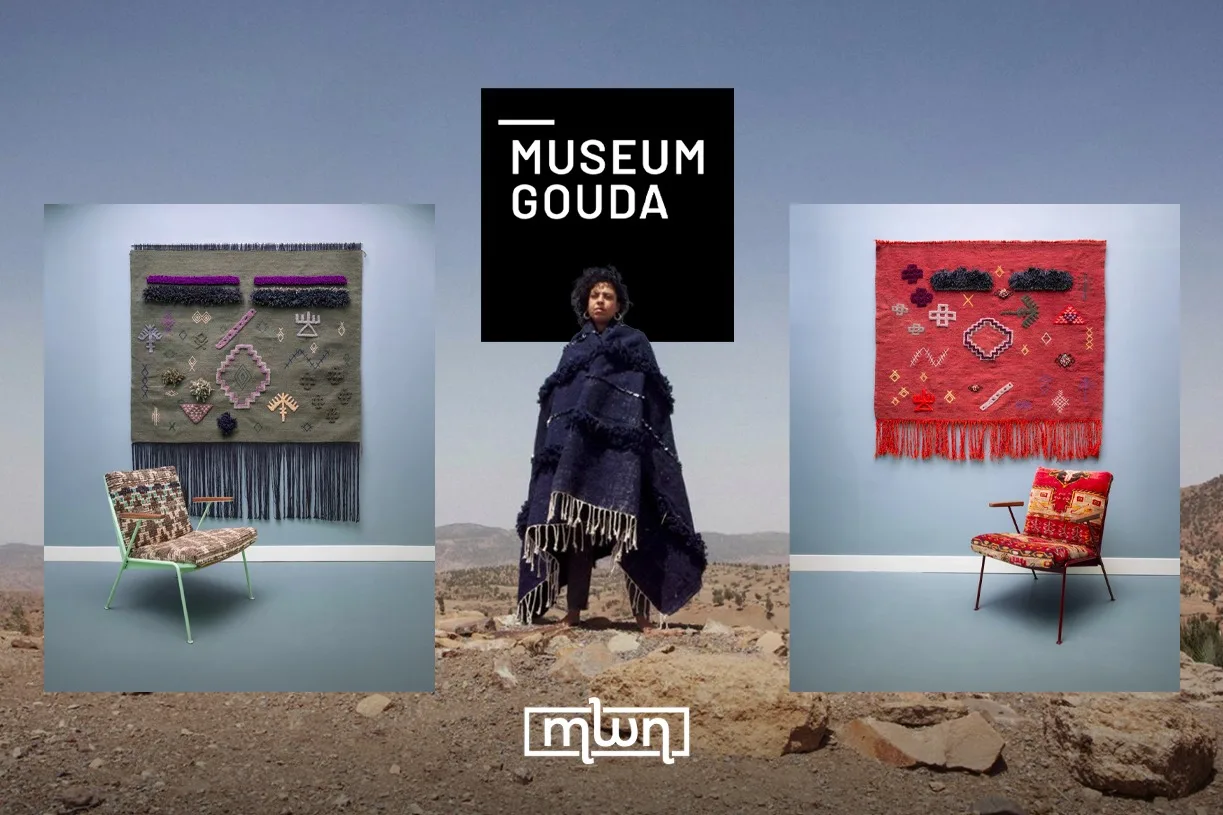
The Moroccan-Dutch designer will open “Woven Letters” at Museum Gouda on September 26, bringing together furniture, rugs, and newly created textile works shaped by Moroccan craftsmanship and Dutch design.
The museum describes the presentation as Abouzahra’s first solo museum exhibition. It will feature a room filled with objects carrying both personal and cultural stories, including a new cabinet with textile panels covered in symbols.
But the exhibition’s title comes from something much older than contemporary design.
When a carpet carried the message
According to Museum Gouda, an Amazigh weaving tradition inspired the idea behind “Woven Letters.”
The museum explains that, within this tradition, a young woman who married and left her family home would spend her first year without direct contact with her relatives.
During that period, she could weave a carpet using colors and symbols to communicate how she was doing.
Her father would later visit and carry the carpet back to her mother, who could “read” the woven message through its visual language.
The story transforms the rug from decoration into something closer to a personal document.
Symbols woven into Amazigh textiles can communicate ideas connected to family, femininity, marriage, protection, fertility, and different stages of life, according to material accompanying the Gouda exhibition.
For Abouzahra, that relationship between textile and memory fits directly into her own experience between Morocco and the Netherlands.
Born in the Netherlands to Moroccan parents, she grew up between the two cultures. During her studies, she spent time in Morocco and became increasingly interested in its craft traditions.
“Through my work, I keep my cultural heritage alive and give shape to my Moroccan identity,” she said in material published by the museum.
From Taznakht to Gouda
Abouzahra has operated her design studio since 2013, working between the Netherlands and Morocco.
In Taznakht, a major weaving center in southern Morocco, she collaborates with women-run weaving cooperatives.
Her studio states that it works directly with women artisans, avoiding middlemen and aiming to provide fair compensation while helping preserve traditional rug-making knowledge.
The rugs are hand-knotted in Morocco using locally sourced wool, while Abouzahra combines those techniques with contemporary forms and Dutch design.
That exchange will become even more visible in Gouda.
“Woven Letters” will run alongside “Wonder Walls,” an exhibition exploring Gouda’s own historic weaving industry.
For the project, Abouzahra is working with communities in Gouda to create contemporary cushions that are woven in Taznakht and reinterpret historic Dutch guild cushions.
The pairing creates an unexpected conversation between two textile histories separated by thousands of kilometers.
It is particularly relevant in Gouda, where nearly one in ten residents has roots in the northern Rif region and Amazigh culture, according to the city’s tourism platform.
Abouzahra’s work has also entered several museum collections, while she received a Dutch Creativity Award and a European Design Award in 2022.
“Woven Letters” is scheduled to remain at “Museum Gouda” through March 29, 2027.
The exhibition ultimately asks visitors to look at Moroccan weaving differently. A carpet may contain color and pattern, but it can also preserve separation, affection, identity, and memory.
In that sense, Abouzahra is not simply bringing Moroccan craftsmanship into a Dutch museum. She is showing how threads once used to carry messages between women can continue speaking across countries and generations.