Rabat – Beneath the Ismaili city of Meknes lies a world where mystery and history intertwine. Qara prison invites visitors into a world of enigmatic architecture and mysterious stories.
Dating back to the reign of Sultan Moulay Ismail, Qara has long captivated the imagination of historians, travelers, and curious explorers.
The prison is believed to be named after a former Portuguese prisoner who allegedly earned his freedom by agreeing to design an immense underground prison for Sultan Moulay Ismail.
Yet, beyond the legend, questions remain about the site’s original purpose.
Some historical interpretations suggest that the site served mainly as a vast food storage facility; later, and upon the king’s orders, it turned into one of the scariest prisons in Moroccan history.
The architecture of Qara prison
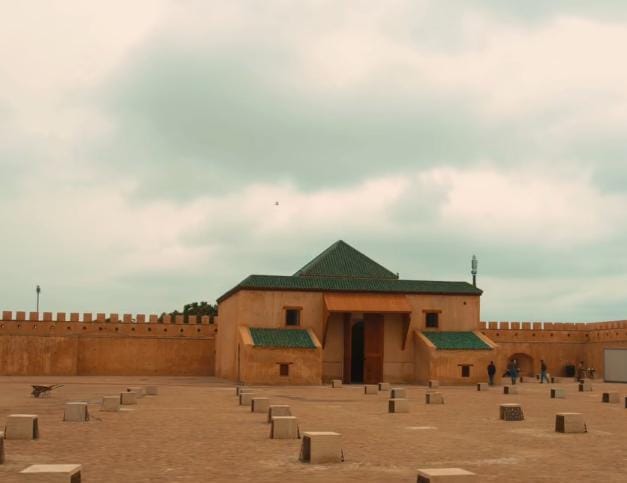
From above, the site reveals a little of what lies beneath; a seemingly deserted vast square conceals an underground world that has long inspired speculation.
A few ceiling openings allow light and air to chambers and are also associated with stories of how the prison was accessed and supplied; legends say that the ceiling openings served as food channels and prisoners’ intake.
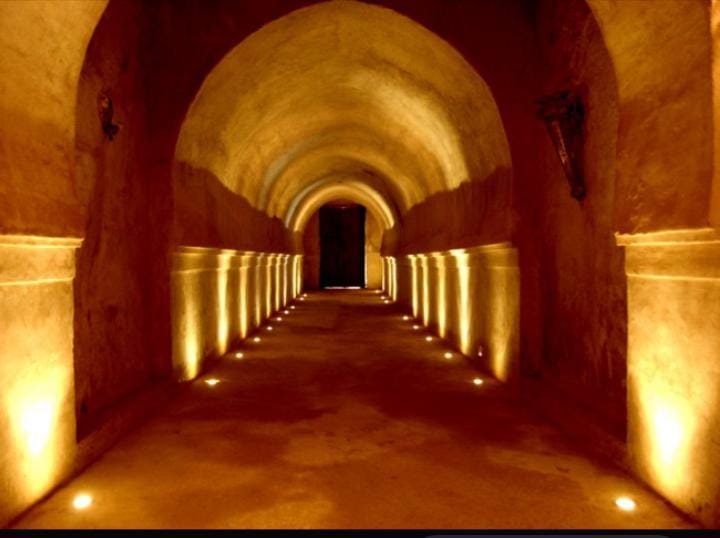
Inside, the architecture evokes a sense of loss; intersecting chambers, shadowy passages, and absence of obvious layout reveal a lot about how the prison once functioned.
Common accounts have attributed extraordinary dimensions to Qara, some suggesting that it extends far beyond Meknes to reach Taza or even Marrakech.
Historical tourist attraction
What is intriguing about Qara is the tension between what is known and what is uncertain.
The site is an important tourist attraction that represents an interesting record of Meknes imperial history.
Last attempt to discover the site
According to legends, the last attempt to discover the mysterious site was recorded during the French protectorate, when a group of French explorers with modern tools and gear entered the prison on a mission to chart the site’s true extent.
The group disappeared under mysterious conditions and was never heard of again.
Later, the French protectorate authorities blocked access to secondary gates using concrete for safety reasons.
Preparation for reopening
After years of silence behind closed doors, Meknes is preparing to return life to one of the city’s most intriguing tourist attractions.
Qara prison has been closed for rehabilitation for fourteen years; according to locals, reconstruction operations are complete, and only a few arrangements remain before the official opening.