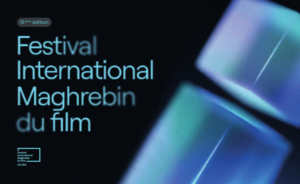
Fez — The International Maghrebi Film Festival of Oujda will return from October 16 to 21 for its 15th edition, bringing filmmakers, actors, and cinema professionals from across Africa, Europe, and the Arab world to Morocco’s eastern region.
Organised by the Ciné Maghreb Association, this year’s festival will celebrate the United Arab Emirates as its guest of honour, while presenting an international selection of feature films and shorts, tributes to prominent cinema figures, and discussions about the future of filmmaking.
Under the slogan “When the World Grows Dark, Cinema Shines,” the festival aims to strengthen cultural dialogue and promote Oujda as a meeting point for international cinematic exchange.
The organisers will host the opening ceremony on Friday, October 16, at 8 p.m. at Mohammed VI Theatre, with the closing ceremony and awards presentation scheduled for October 21.
Five cinema figures to receive tributes
The festival will honour five personalities whose careers have contributed to cinema across Morocco, Africa, and the Arab world.
Egyptian actress Sabreen will receive recognition for her extensive career in television and cinema, including her portrayal of legendary Egyptian singer Oum Kalthoum.
Moroccan actress Noufissa Benchehida will also receive a tribute. Her career spans film and television, and she won the Golden Sotigui award in 2017.
The organisers will additionally honour Tunisian actor Moez Toumi, whose career encompasses theatre, film, and television, alongside Burkinabé actress and producer Georgette Paré, who has advocated for the development of African cinema.
Moroccan film distributor Mohamed Khouna completes the list of honorees. His work in film distribution and cinema investment has contributed to the development of Morocco’s theatrical exhibition sector.
Moroccan filmmakers lead the international juries
Moroccan director and screenwriter Nour-Eddine Lakhmari will preside over the feature film jury.
The filmmaker, known for his work on Moroccan productions such as “Casanegra” and “Zero,” will lead a panel that includes Senegalese filmmaker Amélie Mbaye, Tunisian actress and director Sanaa Youssef, Chinese-born actress and filmmaker Mi Kwan Lock, and French actor and screenwriter Stan Thiébaut.
Moroccan director Adil El Fadili will chair the short film jury, alongside Congolese actress Diane Uwamahoro and Italian actress, screenwriter, and director Valentina Carnelutti.
The festival will also welcome Moroccan screenwriter and director Abdeslam Kelai, who will lead a screenwriting workshop, and screenwriter Abdelkader Mansour, who will supervise the “Voices of the Oriental” programme.
International films compete across six days
The official programme brings together films from Morocco, Egypt, Tunisia, France, Senegal, Sudan, Palestine, Saudi Arabia, Mauritania, Jordan, India, and other countries.
Screenings will begin on October 17 with “The Stories” by Egyptian director Abu Bakr Shawky, alongside French filmmaker Romain Epstein’s “Le temps d’une prière” and Egyptian director Shaymaa Tafish’s “The Hopscotch.”
Emirati director Majid Al Ansari will also participate through “Hoba,” offering audiences a look at contemporary cinema from this year’s guest-of-honour country.
On October 18, the competition will continue with “Dead Dog” by Sarah Francis, an acclaimed Lebanese filmmaker, alongside “Long Live Grandpa” by India’s Samar Jain.
The same programme includes Tunisian director Khouloud Mathlouthi’s “Human 2*1” and Jordanian filmmaker Hasan Khamaiseh’s “Size 42.”
Moroccan director Ali Benjelloun will present “Goundafa,” adding a Moroccan production to the competition.
The October 19 programme will feature “Promised Sky” by Tunisian-French director Erige Sehiri, Saudi filmmaker Mohamed Beder’s “A Shadow from the Past,” French director Ismael Lakehal’s “Gazé,” and Palestinian director Tamer Shawamra’s “Restricted.”
French filmmaker Lila Pinell will also participate with “Shana.”
On October 20, Sudanese filmmaker Suzannah Mirghani will bring “Cotton Queen” to the festival, alongside Moroccan director Hicham Amal’s “Miroir à vendre” and Mauritanian filmmaker Boubekrine Ibrahim El Mamy’s “Anima.”
Saudi director Shahad Ameen will present “Hijra,” completing the programme’s final day of official competition screenings.
The festival will also offer public screenings outside the competition, including “Love in Dakhla” and “Oujda, la ville où je suis né,” alongside a programme for younger audiences.
Cinema, memory and the future of Moroccan filmmaking
Beyond the screenings, the festival will organise academic discussions on cinema’s relationship with history, collective memory, and cultural identity.
An international conference titled “Cinema as a Space for Memory, Resistance and Hope” will examine how filmmakers preserve historical experiences and respond to contemporary political and social challenges.
Professor Mustapha Ben Larbi Slaoui of Mohammed First University will moderate the discussion, which will bring together academics and cinema professionals, including Italian filmmaker Valentina Carnelutti, Egyptian journalist and film critic Nahed Salah, researcher Asmae Hilal, and professors Yahya Amara and Jamal Eddine Serraj.
Another roundtable will tackle the relationship between quantity and quality in Moroccan cinema.
The discussion will examine how the country’s film industry can reconcile increasing production with artistic ambition and audience expectations.
Researcher Mohamed Belghouat, former director of the Higher Institute of Audiovisual and Cinema Professions (ISMAC), will coordinate the conversation.
Participants will include Nour-Eddine Lakhmari, film critics Khalil Damoun and Mohamed Chouika, filmmaker Abdelilah El Jaouhari, and academic Abdelrazak Zaher.
Workshops explore screenwriting and artificial intelligence
The festival will also offer practical opportunities for young filmmakers and students interested in cinema production.
Moroccan director Abdeslam Kelai will lead screenwriting workshops from October 18 to 20, while Abdelkader Mansour will guide the “Voices of the Oriental” initiative, which supports aspiring cinema professionals from the region.
Moroccan philosopher and academic Noureddine Affaya will deliver a masterclass exploring contemporary transformations and the relationship between culture and society.
The programme will also feature a documentary filmmaking workshop led by director Ibrahim Saber.
Beninese filmmaker Chouaib Fawaz Yekini will conduct a session examining artificial intelligence and audiovisual creativity.
Scheduled for October 20 at the Iklyle Cultural Centre, the workshop will explore emerging technologies in filmmaking and include a screening of a film created with AI assistance.
The festival will additionally host book presentations, including works by Moroccan filmmaker Abdelilah El Jaouhari, researcher Yahya Amara, and lawyer Salima Faraji.
New partnerships to support regional cinema
The festival will use this year’s edition to strengthen cooperation between cultural organisations and academic institutions.
The Ciné Maghreb Association plans to sign an agreement with Mohammed First University in Oujda and ISMAC to support cinema education and professional training.
The organisers will also establish a partnership with the Dakhla International Film Festival, creating opportunities for collaboration between cultural events in different Moroccan regions.
Most activities will take place at Mohammed VI Theatre, Mohammed First University, and the Iklyle Cultural Centre.
Through its international screenings, tributes, educational programme, and emphasis on cultural diplomacy, the festival seeks to reinforce Oujda’s place in Morocco’s cinema landscape while encouraging new exchanges between filmmakers from Africa, Europe, and the Arab world.