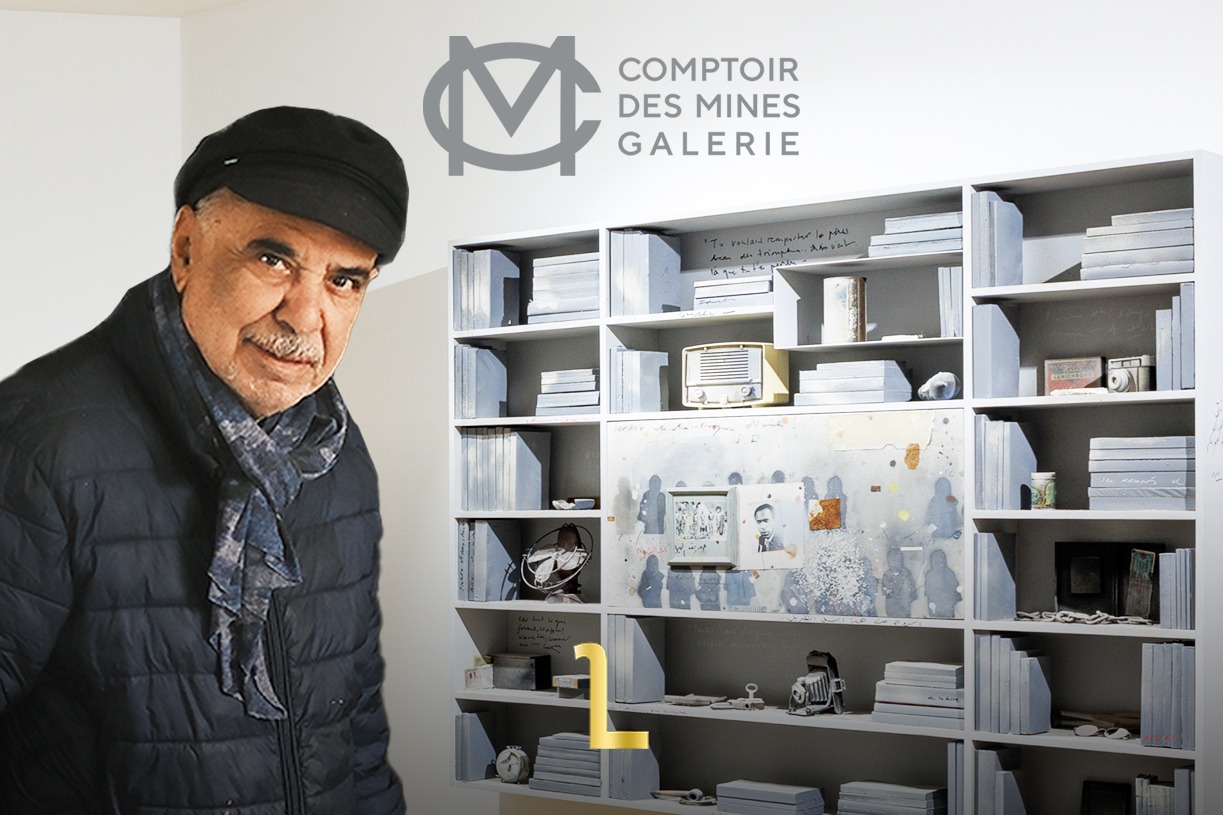
Fez — Moroccan artist Hassan Bourkia will transform books, abandoned objects, and fragments of everyday life into reflections on memory and cultural preservation in his upcoming exhibition, “Les sentiers de l’intranquillité” (The Paths of Restlessness).
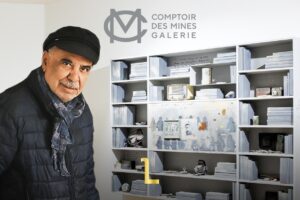
Starting October 23, Comptoir des Mines Galerie in Marrakech will present the exhibition, which examines how literature, material objects, and personal histories preserve the traces of societies undergoing profound cultural and political transformations.
Through assemblages featuring books, typewriters, radios, cameras, and discarded objects, Bourkia explores the relationship between knowledge and collective memory. His work also addresses exile, censorship, violence, and the intellectual struggles that have shaped the modern world.
When books become witnesses to history
At the heart of the exhibition stands the library, an object Bourkia transforms into both an artistic medium and a symbol of cultural change.
Once a central feature of domestic life and intellectual exchange, the traditional library has gradually lost its prominence as digital screens reshape how people access information and engage with literature.
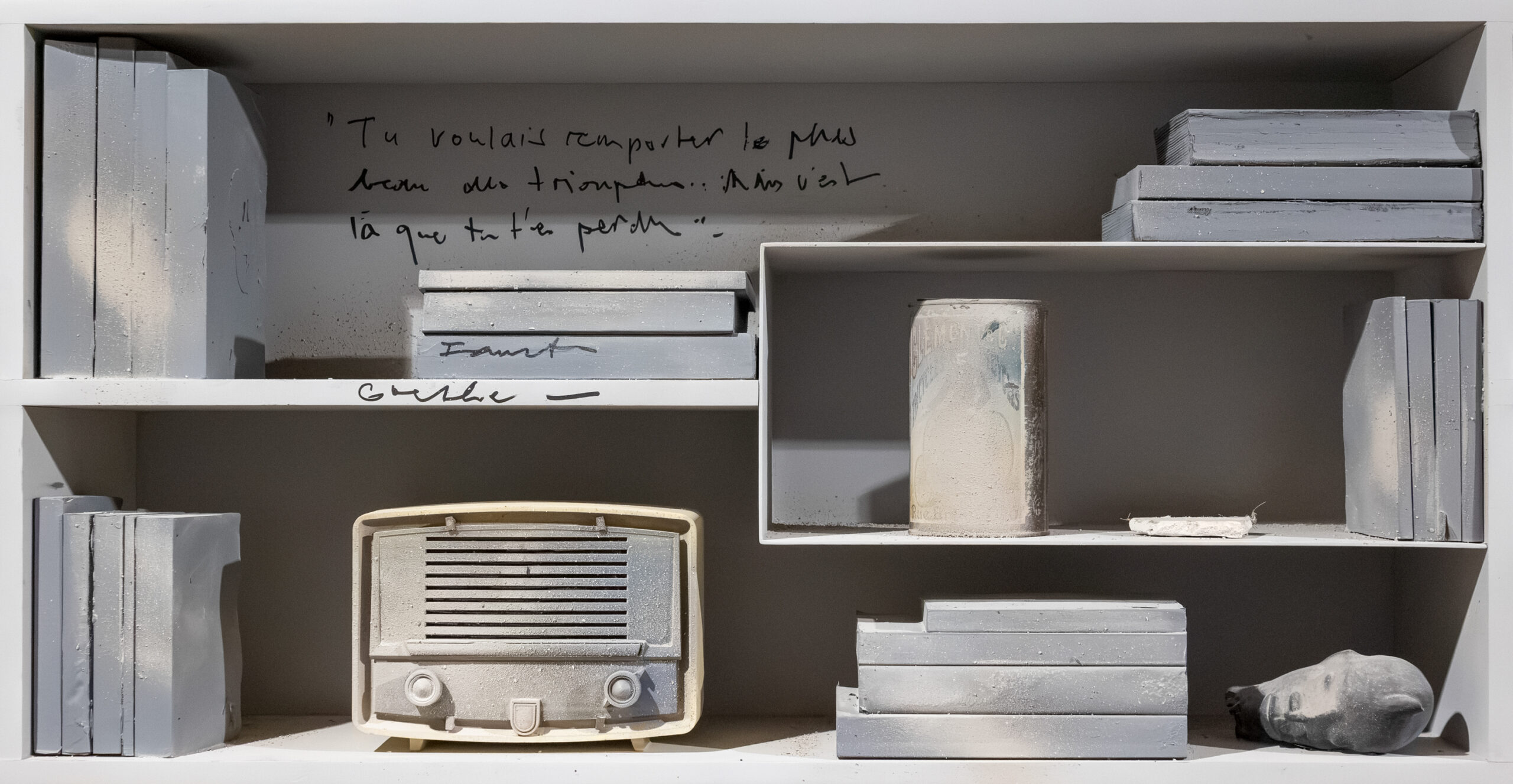
Bourkia questions what happens to cultural memory when the physical objects that once preserved knowledge lose their original purpose.
His installations bring together books, handwritten fragments, and obsolete technologies, allowing seemingly ordinary objects to evoke the people, ideas, and historical events that shaped them.
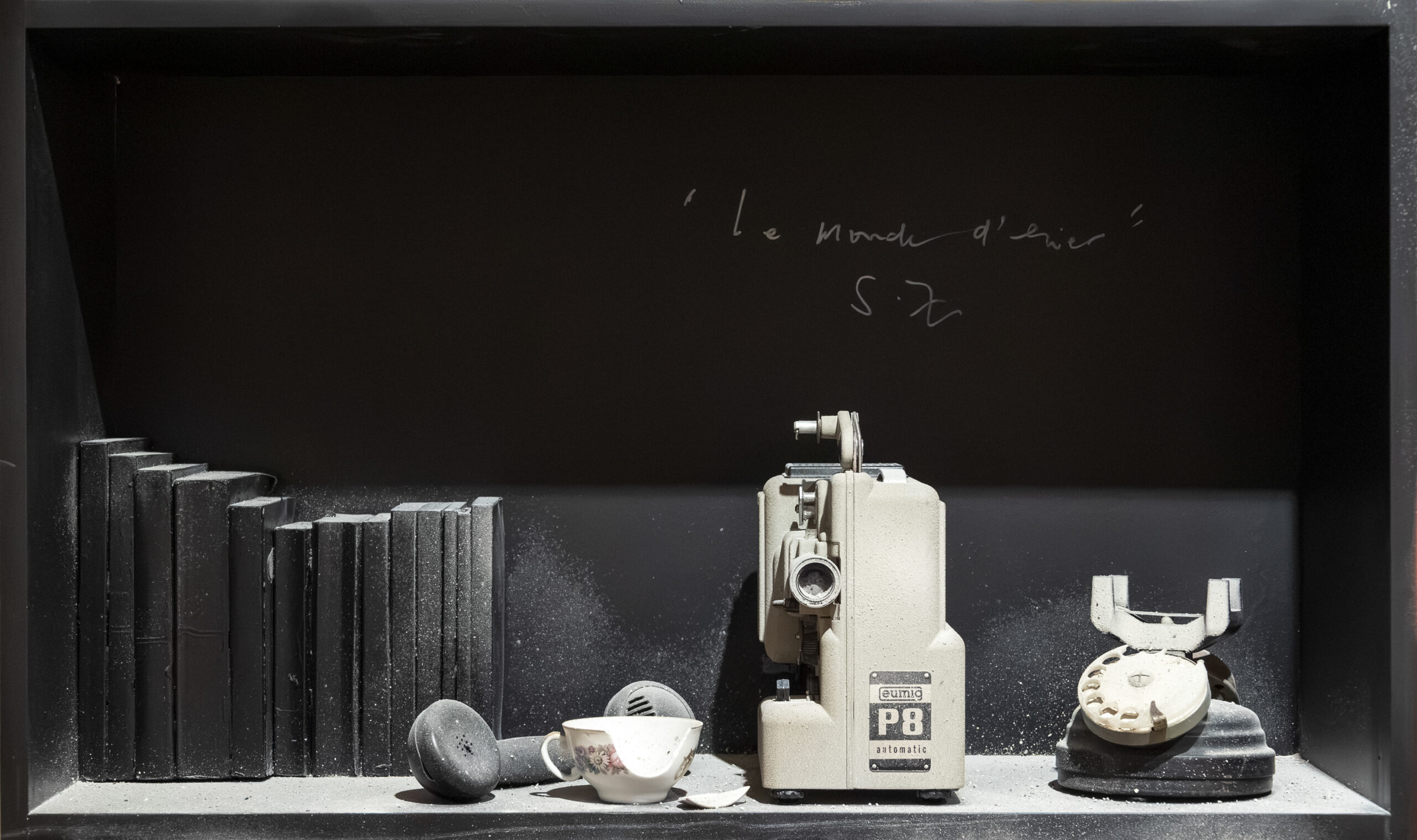
Literature plays a particularly important role in this exploration. Bourkia draws inspiration from writers whose experiences of exile, isolation, censorship, and political violence reflect the tensions of their respective eras.
From destruction to remembrance
Ash also occupies an important place in Bourkia’s artistic language.
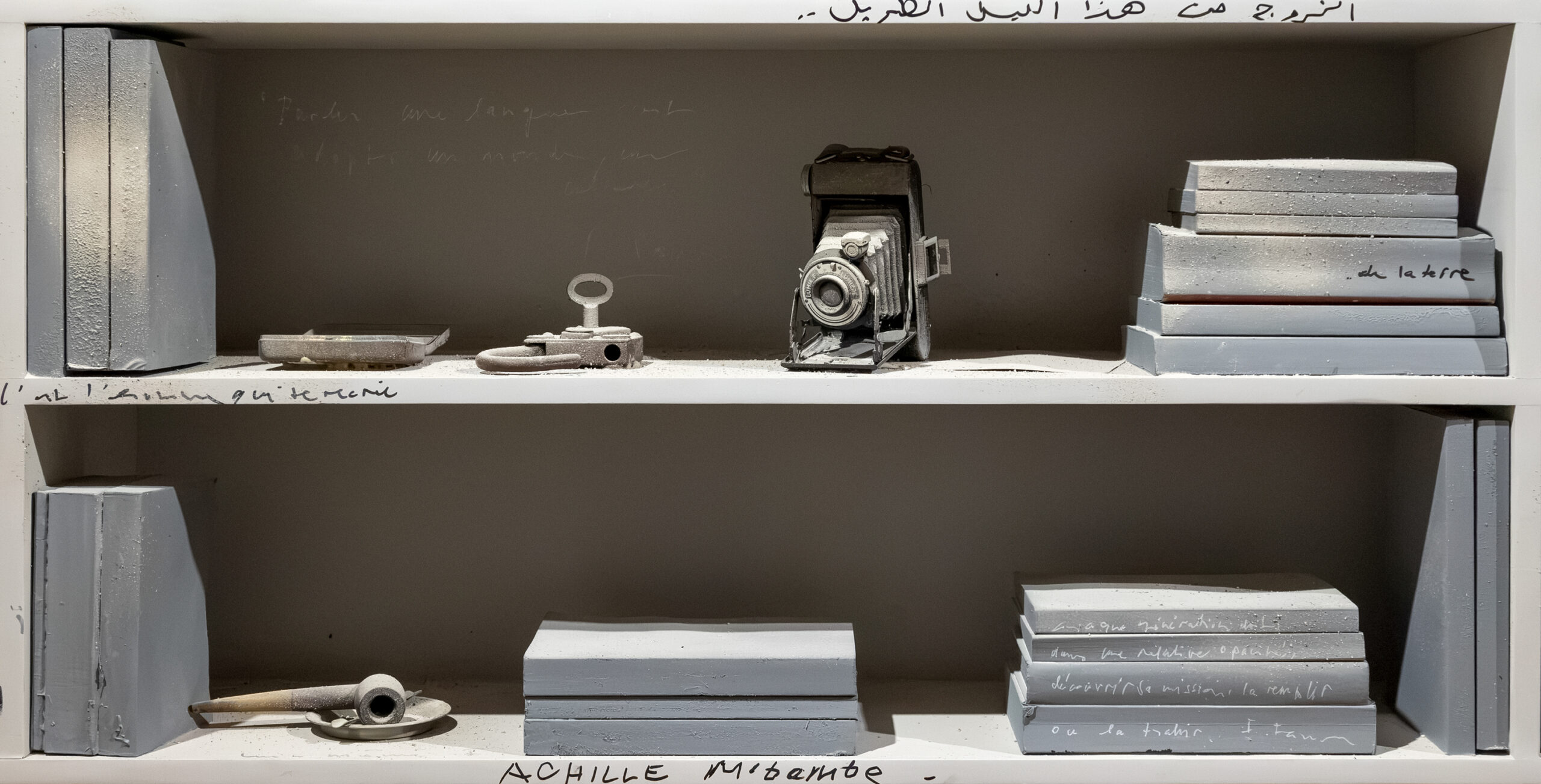
The material evokes book burnings, destroyed libraries, and historical attempts to suppress intellectual expression. Yet Bourkia approaches ash as more than evidence of destruction.
It also represents what survives violence: fragments, traces, and remnants that allow individuals and communities to reconstruct their memories.
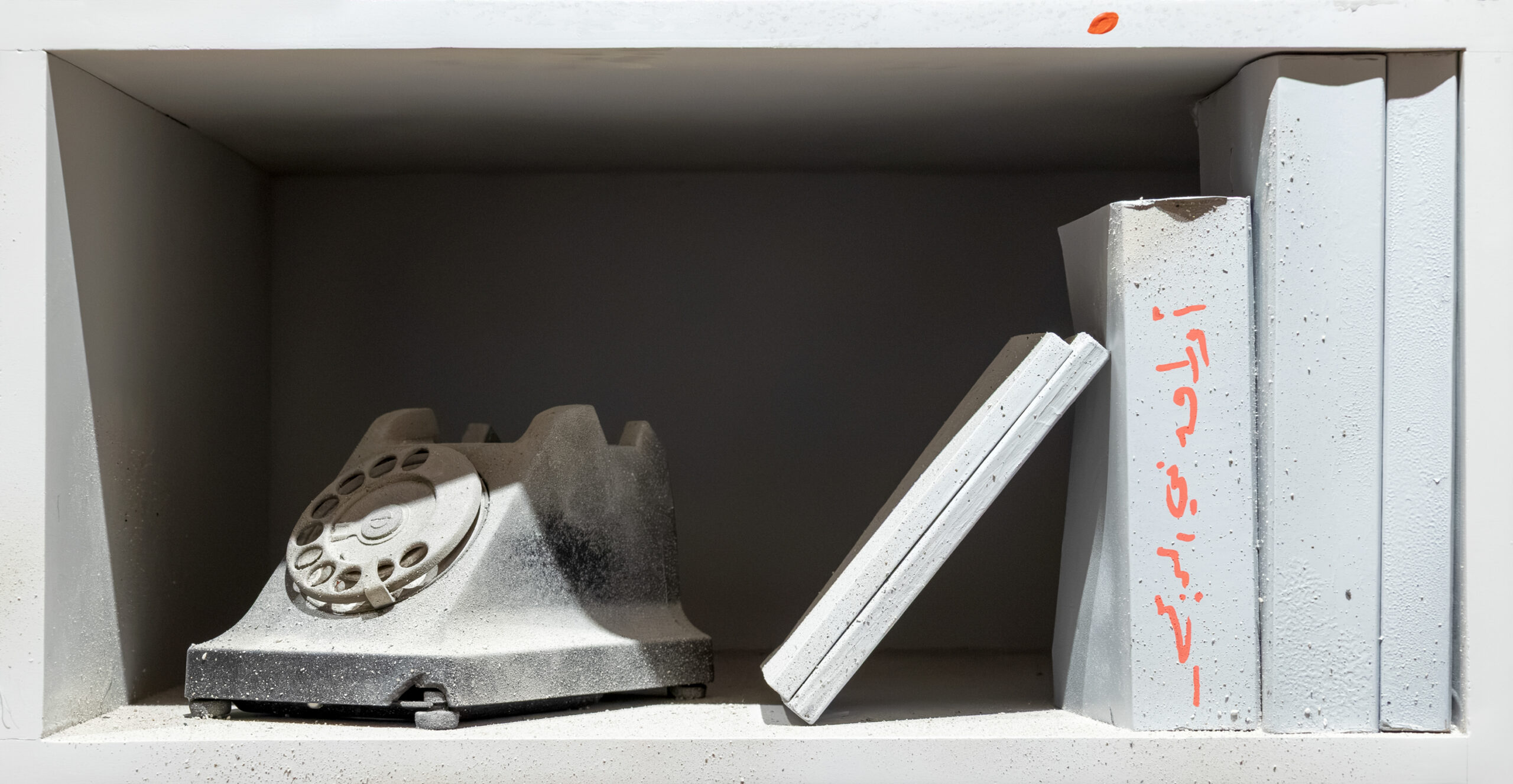
The concept of restlessness extends beyond personal anxiety. In Bourkia’s work, it reflects an awareness of political, social, and ideological tensions that continue to shape contemporary life.
An artistic practice rooted in memory
Born in 1956, Bourkia has developed a multidisciplinary career that combines visual art, literature, and translation.
The artist has exhibited since the early 1990s and previously taught literature. His work frequently examines migration, conflict, personal trauma, and the relationship between individual experience and collective history.
He lives and works between Beni Mellal and Marrakech, and his artistic practice often draws on archives, fragments, and materials that carry historical and emotional significance.
His earlier exhibitions include “Au Nom des Miens” at Comptoir des Mines Galerie in 2020 and “Flammes et Cendres” at the National Gallery Bab Rouah in Rabat in 2006.
Visitors can discover Bourkia’s artistic journey through a body of work that connects personal experiences with broader questions about history and cultural identity.
“Les sentiers de l’intranquillité” opens on October 23 at Comptoir des Mines Galerie, located at 62 Rue de Yougoslavie in Guéliz, Marrakech.
The gallery welcomes visitors Tuesday through Saturday, from 10 a.m. to 1:30 p.m. and from 3 p.m. to 6:30 p.m.