Summer Escapes Through the Eyes of Brach Madrid

High above the lights of Gran Vía, the rooftop of Brach Madrid becomes the final stop of the night.
‘Quiet elegance’: Inma Linares’s Vision for Building a Cohesive Fashion Brand

Much like her brand is not about immediacy; it’s about returning, observing, and refining.
Tangier’s Dar Niaba Hosts a Tribute to Spanish Master Mariano Fortuny

Through layered processes and multiple proof states, Fortuny constructs images that balance density and light, where contrast becomes a narrative tool as much as a visual one.
Essaouira Strengthens Ties With Spanish Tourism Market
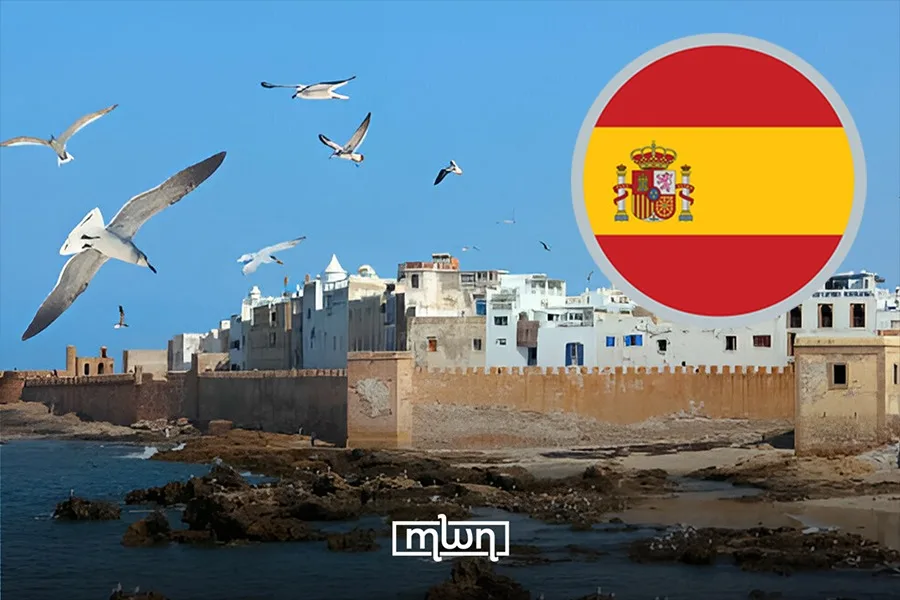
More than 60 Spanish travel industry leaders gathered in Essaouira as the city moves to reinforce air links and boost arrivals from Andalusia and Catalonia.
Abderrahmane Aferdi Wins Rain-Soaked 37th Santurce–Bilbao 15.4K in Under 43 Minutes

Moroccan runner Abderrahmane El Aferdi claimed a standout win at the 37th Santurce–Bilbao road race in Spain, clocking 42:41 over 15.4 km and confirming his form on a rain-soaked day in the Basque Country.
Spain Temporarily Closes Beaches After Rare ‘Blue Dragon’ Sea Creature Spotted

Forget sharks, Spain just closed beaches over a creature no bigger than your fingertip. Fez– In Spain’s sunny southeast, swimmers were asked to stay out of the water this week after an unusual visitor appeared on the shoreline, and it’s far smaller, stranger, and more dangerous than its mythical name suggests. Authorities in Guardamar del Segura, a coastal town in Alicante province, temporarily closed all local beaches after spotting two tiny sea slugs known as “Glaucus atlanticus”, or the “blue dragon.” The order came on Wednesday, when local police posted an urgent warning on Facebook citing public safety concerns. Despite its delicate, almost otherworldly look, the blue dragon is anything but harmless. Measuring barely three centimeters long, it floats upside down on the ocean surface, feeding on venomous creatures like the Portuguese man-o’-war. In an impressive trick of marine chemistry, the slug stores and concentrates its prey’s toxins, giving it the ability to deliver a far more potent sting than its size would suggest, enough to paralyze prey hundreds of times larger than itself. “Physical contact with this animal can be dangerous and may cause painful skin burns,” the Guardamar police wrote, urging beachgoers not to touch any strange-looking creatures they might see washed ashore. Even gloves are no protection, they added, since the venom can pass through fabric on contact. The ban on swimming was lifted by Thursday, but authorities remain on alert. Mayor José Luis Sáez asked residents and tourists to report any new sightings immediately and to avoid handling the creatures altogether. Those stung are advised to rinse the affected area with seawater, not fresh water, and seek medical attention if symptoms persist. Otherworldly and dangerous Although these slugs look like mythical beasts that slipped out of a fantasy novel, they are real animals that drift with ocean currents in temperate and tropical waters. They’re rarely seen in the Mediterranean, making this week’s discovery especially unusual. Most sightings occur in the Atlantic, Pacific, and Indian Oceans, where warm waters and steady winds push them toward the surface. The beaches around Alicante are usually known for sun-soaked holidays rather than dangerous wildlife. The region’s rugged cliffs, clear Mediterranean waters, and long sandy stretches make it one of Spain’s most popular tourist destinations. While jellyfish occasionally interrupt summer swimming, a blue dragon encounter is almost unheard of. Experts say these slugs don’t actively seek swimmers; they simply go wherever the tide carries them. But their striking appearance, shimmering silver on one side, electric blue on the other, often tempts curious beachgoers to pick them up, a mistake that can lead to an excruciating sting. For now, life in Guardamar del Segura has returned to normal, with swimmers back in the water and lifeguards watching closely. But the brief closure was a reminder that even Europe’s most familiar coastlines can hold surprises. The incident also hints at broader changes in marine ecosystems. Scientists are studying whether shifts in ocean currents, rising sea temperatures, or other climate-related factors are carrying rare species into new habitats. While there’s no evidence yet of a lasting pattern, these unusual sightings are becoming more frequent across Europe’s coasts. So, if you find yourself on Spain’s Mediterranean shore and spot what looks like a tiny dragon gliding on the tide, admire it from a distance.
Morocco’s Temps’Danse Steals the Show at 2025 Dance World Cup in Spain

It was a visual statement, fusing street dance, contemporary, ragga, and hip hop into a bold, breathing portrait of the Moroccan woman in transformation.
When a Moroccan Sultan Ran for the Spanish Throne
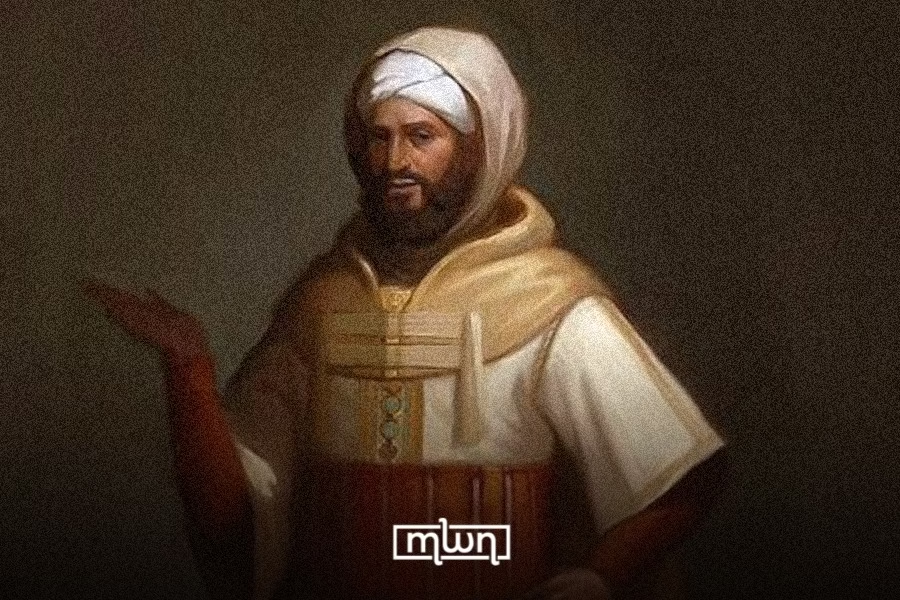
When Spain opened the throne to applicants, Sultan Mohammed IV of Morocco made an unexpected bid. Fez – In the long and often overlooked history of Moroccan-European relations, some events seem almost unbelievable. One of the most fascinating among them is the time a Moroccan sultan officially put himself forward as a candidate for the throne of Spain. The year was 1870. Spain had just overthrown Queen Isabella II following a major political uprising in 1868. The monarchy had collapsed, the queen was exiled in France, and the country was governed by a provisional government facing one major challenge: no one wanted to be king. The parliament refused to declare a republic, but no royal candidate seemed fit or willing to accept a drastically reduced monarchy, one with symbolic powers and little real authority. In this unusual political vacuum, Spain did something unprecedented in European history: it opened applications for the role of monarch. The only condition was that no one from the Bourbon dynasty “Isabella’s family” would be considered. Several royal candidates from across Europe submitted proposals. Among them was one that surprised everyone in Madrid: Sultan Mohammed IV of Morocco, also known as Sidi Mohammed ben Abd al-Rahman, submitted a formal request to become King of Spain. The Moroccan sultan came forward with a clear and symbolic vision: to unite both sides of the Strait of Gibraltar under one rule. He argued that history supported this idea. After all, North African rulers had once governed large parts of Spain. The most famous example was Yusuf ibn Tashfin, founder of the Almoravid dynasty. In his proposal, the sultan suggested that a shared monarchy would bring peace between the two regions, something sorely needed after the bloody Hispano-Moroccan War of 1859–1860. But the Spanish government, though intrigued, quickly rejected the idea. Religion was the first and strongest obstacle: Spain was a Catholic country, and the thought of a Muslim sultan as king was politically unthinkable. Additionally, no candidate could legally hold two thrones at once. The Spanish military elite, still viewing Morocco as a potential colonial target, strongly opposed the proposal. In the end, Spain chose an Italian prince, Amadeo of Savoy, who became king in 1871. But he resigned only two years later, unable to manage Spain’s deep political divisions. The monarchy was eventually restored under the Bourbon family with King Alfonso XII. Ironically, just four decades after Sultan Mohammed IV’s rejected candidacy, Morocco itself fell under colonial rule. In 1912, France and Spain divided control over the country. Spain governed the north, including the Rif region, while France took the larger central and southern areas. The descendants of the sultan who once dreamed of ruling Spain now lived under its rule. This episode, now forgotten by many, reveals the complexity of Mediterranean history, full of shared ambitions, rivalries, and cultural entanglements. It reminds us that the idea of uniting both sides of the Strait of Gibraltar, politically, culturally, or economically, has deep roots. Read also: Professor Mohamed Hilout and the Astrolabe’s Quiet Revolution
The Intricate Bonds Between Moroccan and Spanish Cultures
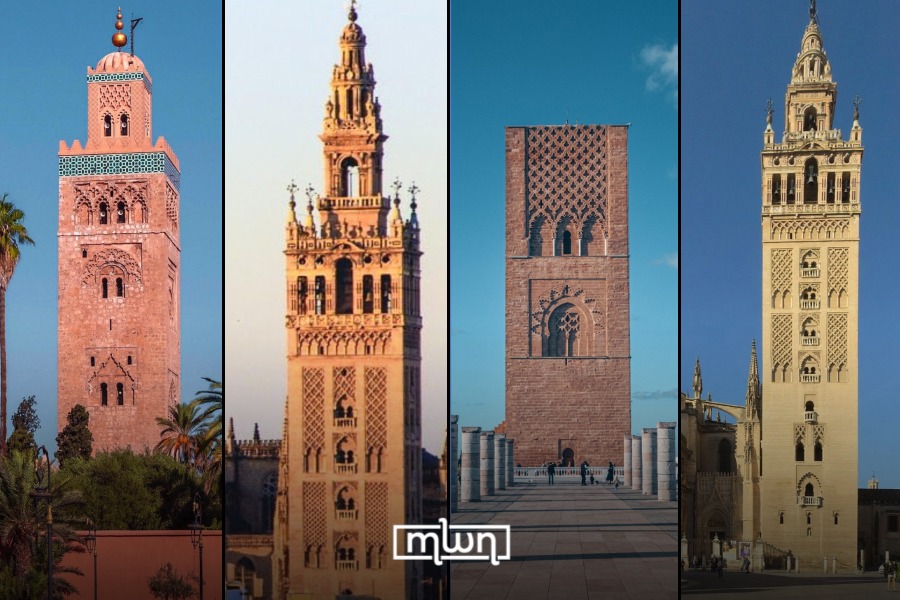
The relationship between Moroccan and Spanish cultures is a story of deep-rooted connections that span centuries. Fez – Situated just across the Strait of Gibraltar, Morocco and Spain share d a rich history of mutual influence, that shapes each other’s art, architecture, language, cuisine, and traditions. These ties are evident not only in the historical records but also in the cultural landscapes of both nations. The connection between Morocco and Spain dates back to the 8th century when the Moors crossed into the Iberian Peninsula. For nearly 800 years, they ruled much of Spain, creating a civilization known as Al-Andalous. This era was marked by significant advancements in science, philosophy, and the arts, heavily influenced by Islamic and Moroccan traditions. One of the most iconic remnants of this period is the Alhambra in Granada, a stunning example of Moorish architecture. Its tile work, Arabic calligraphy, and geometric designs mirror the craftsmanship seen in Moroccan cities like Fez and Marrakesh. Similarly, the Great Mosque of Córdoba, with its forest of arches, exemplifies the blending of Islamic and Andalusian styles. Architectural resemblances The architectural dialogue between Morocco and Spain is one of the most visible examples of their shared heritage. Cities such as Seville, Granada, and Córdoba in Spain bear striking similarities to Moroccan cities like Fez, Chefchaouen, and Rabat. The use of horseshoe arches, ornate mosaics, and lush courtyards reflects a shared aesthetic that continues to influence modern design in both countries. For instance, the medinas of Morocco, with their labyrinthine alleys and vibrant souks, find echoes in the historic neighborhoods of Andalusian cities. The Alcázar of Seville, originally built by Moorish rulers, remains a testament to this interconnectedness, blending Islamic art with later Christian elements. Linguistic and culinary influences The cultural exchange is also evident in language and cuisine. Many Spanish words, particularly those related to science, agriculture, and daily life, have Arabic origins. Terms like “aceituna” (olive) and “azúcar” (sugar) have their roots in the Arabic words “azaytoun” and “asukar,” reflecting the period the Moors worked in these agricultural industries. Culinary traditions further show this exchange. Spanish dishes such as gazpacho and paella share common elements with Moroccan tajines and harira, both including the use of saffron, cumin, and preserved lemons. The tradition of tapas in Spain mirrors Morocco’s love for small, flavorful dishes served during gatherings. A shared passion for music and art Music and art have also served as bridges between the two cultures. Flamenco, a quintessentially Spanish art form, has roots in Andalusian music, which itself was shaped by Arabic and Amazigh influences. Similarly, Andalusian classical music, still performed in Morocco, reflects the enduring legacy of this shared history. Today, the cultural bond between Morocco and Spain remains strong. Cities like Tangier and Tarifa serve as gateways between the two countries, fostering vibrant exchanges of ideas and traditions. Festivals celebrating Andalusian heritage are held in both nations, teaching attendees about their merged histories. These shared elements remind us of a time when cultures flourished together, creating a legacy that continues to inspire and connect. This unique relationship, built on mutual respect and admiration, is a testament to the power of cultural exchange in shaping our world. Read also: Introducing You to Different Types of Couscous