Fez — Bab Makina is not just the main venue of the Fez Festival of World Sacred Music. It is the place where the festival feels largest, most theatrical, and most connected to the city’s layered history.
Located in Fes el-Jdid, near the Royal Palace and the New Mechouar, Bab Makina opens onto Dar al-Makina, a former arms factory built in the late 19th century during Morocco’s military modernization efforts. The complex is known for its vast vaulted spaces and its monumental gateway, whose architecture carries strong European, especially Italianate, influence.
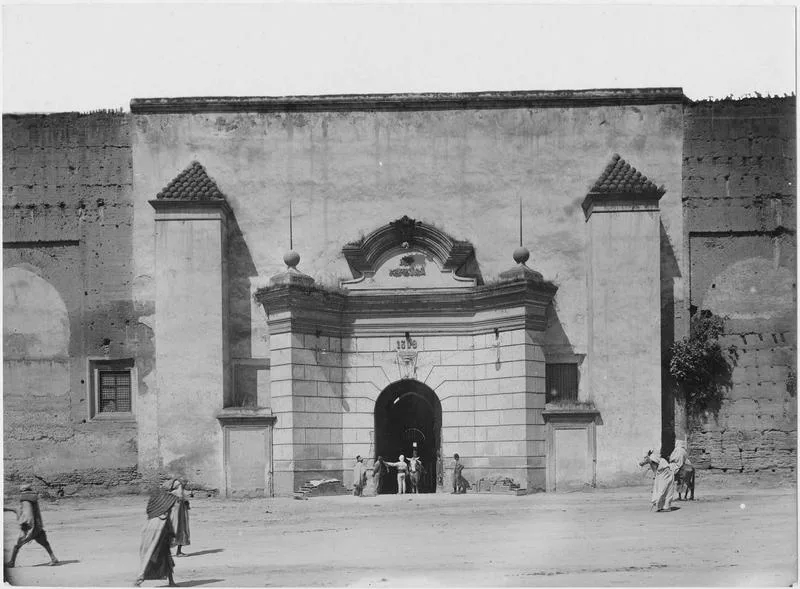
That history gives Bab Makina a special tension. It was once linked to power, machinery, and military production. Today, during the festival, the same space becomes a stage for sacred music, Sufi chants, world traditions, and cultural fusion.
A venue built for scale
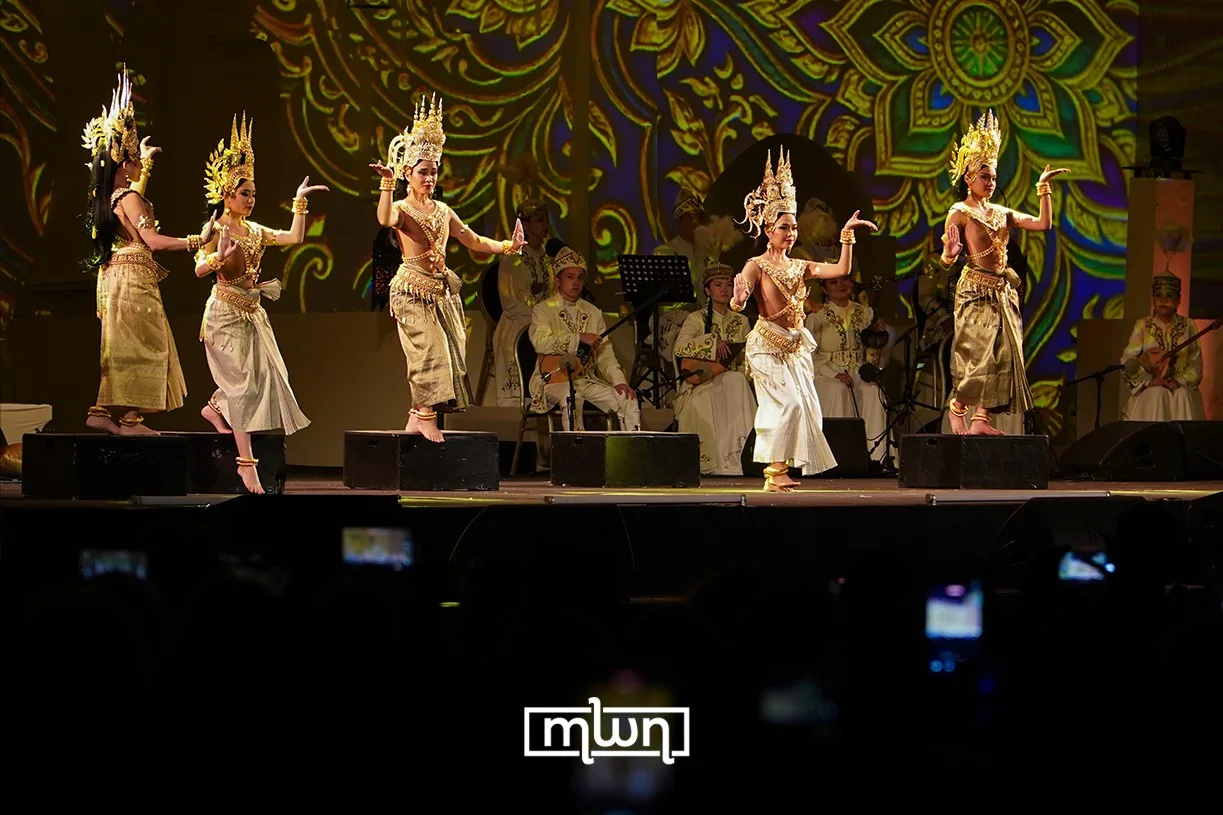
Bab Makina works because it gives performances both grandeur and gravity. Its high walls, open-air layout, and palace-side setting create a natural stage for large productions. Projection mapping, lighting, choreography, and orchestral arrangements can expand across the space without overwhelming it.
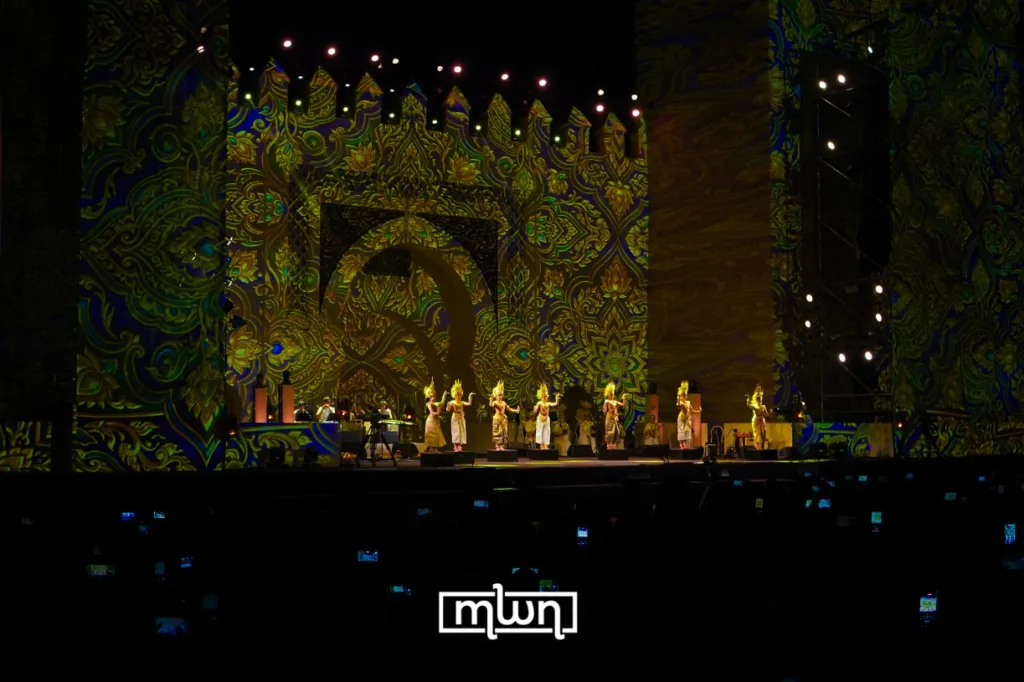
The venue also carries the visual weight that a festival like this needs. Sacred music is not only heard there. It is seen against stone, shadow, gates, and sky. The audience enters with the feeling that the concert is happening inside a historical frame, not a neutral performance hall.
The projection work at Bab Makina is built around the venue’s architecture from the beginning. The visual teams spend months developing mapping that fits the gate’s exact layout, using its columns, arches, surfaces, and depth as part of the composition. Each image lands on a specific part of the structure, allowing the visuals to tell a rich, parallel story beside the music.
The gate shape gives it a mystical quality, working like a portal that one can lose themselves to. Its arches, columns, and depth make the projections feel like they are opening inside the performance.
The scale of the gate allows large symbolic images to unfold, while its architectural details give the projections texture, rhythm, and meaning. Only Bab Makina can carry that kind of visual storytelling with the same power, precision, and emotional impact in Fez.
That is why it became the natural home for major evenings.
The main stage for sacred music
The 2026 edition made that role clear again. The festival opened there with “Anima Ex Materia – From Heaven to Earth,” a large poetic and choreographic creation celebrating Fez’s artisans and the sacred gesture of craft.
The show turned fire, water, earth, air, silk, iron, movement, and projection into a story of matter becoming spirit. Without Bab Makina’s “portal-like” quality, those transitions between the fire dimension to the air and water dimensions wouldn’t have had the same hypnotic impact.
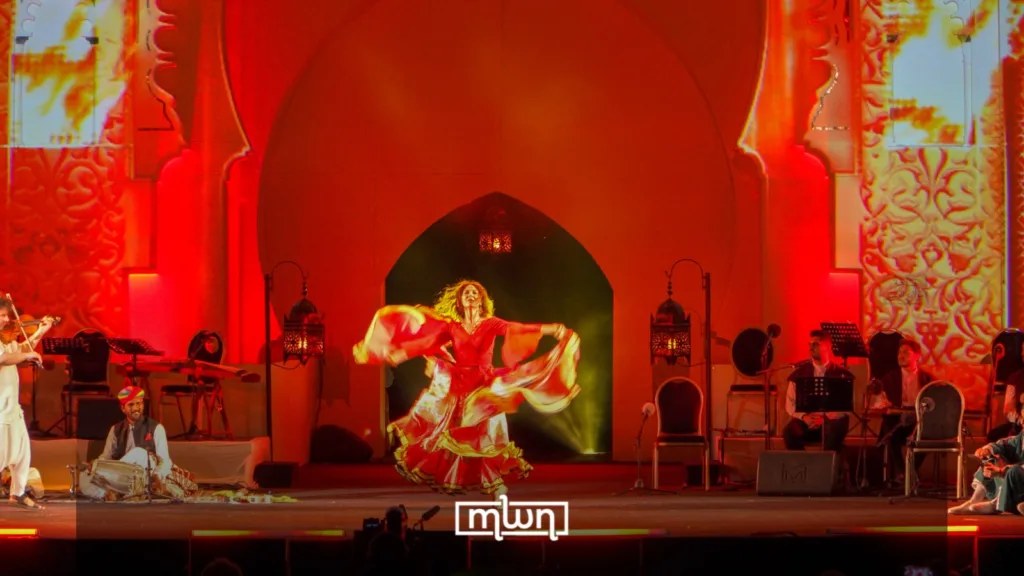
Later in the week, Bab Makina hosted “Hymns, Women’s Voices of East and West,” bringing together Ghada Shbeir, Nabyla Maan, Kaushiki Chakraborty, Kat Frankie & Bodies, and Ahwach Isaffen from the High Atlas. The night gave the venue a different energy, built around women’s voices, poetry, and traditions moving between Morocco, the Arab world, India, Germany, and the Atlas mountains.
Sami Yusuf then turned Bab Makina into one of the emotional centers of the festival. His Saturday, June 6 sold-out concert brought a meditative and mystical atmosphere to the venue, while the closing night, “Sami Yusuf and the Night of Samaa,” gathered him with the Konya Metropolitan Sufi Music Ensemble and major Moroccan Samaa voices. Only Bab Makina can hold such a number of devoted fans.

What makes Bab Makina perfect for the Fez Festival is this ability to hold contrast. It can carry spectacle, but also silence. It can host global stars, but still feel deeply tied to Fez’s identity and history. It can turn old walls into a screen, a sanctuary, and a spiritual portal.