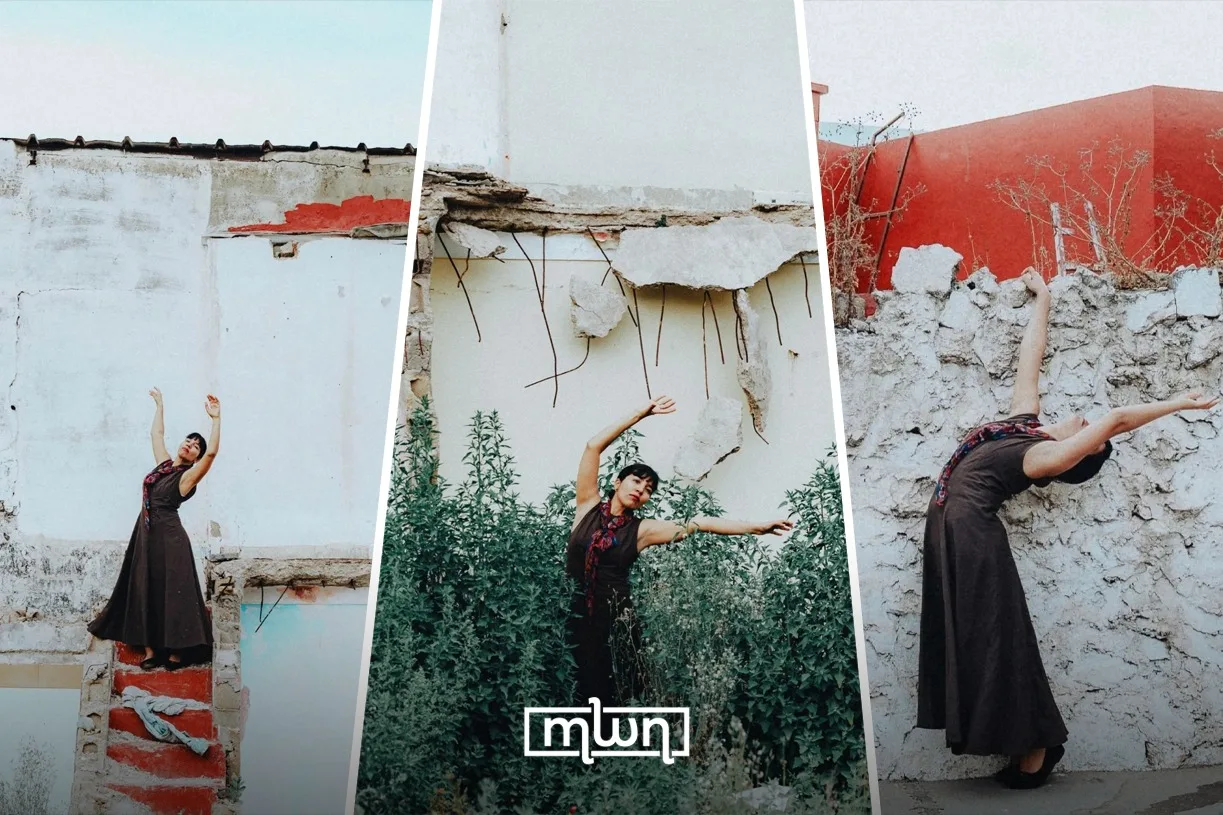
Safi – Imane Elkabli is a Moroccan contemporary dancer, choreographer, and philosophy graduate whose work has carried her across Morocco and beyond.
In an exclusive interview with MWN Lifestyle magazine, she offered a window into a world she has built almost entirely on her own terms.
According to her, that world begins with instinct rather than strategy.
She calls herself a sensitive artist who loves to make something out of nothing, and she settles on a single word above all her many titles.
“I am a creator, first and foremost,” she said. “I love making something out of nothing, and exploring every possible way of being human.”
She describes herself as deeply emotional, driven by art, and guided by an instinct to create and build.
That journey began with philosophy, though almost by accident.
She had planned to study psychology in Rabat, but life took her to Marrakech instead, where she earned a philosophy degree at Cadi Ayyad University, a field she says taught her to question her own existence.
For years, she felt an urge to move, though she couldn’t quite explain it. That changed when a friend told her about a four-day contemporary dance class, introducing her to the art form that would shape her future.
“I had no idea what contemporary dance even was, but the moment I stepped into that room, I knew this was it,” she remembered.
She never sees philosophy and dance as separate paths. Every project she creates starts with a philosophical question, while dance, she says, merely gives her ideas a new language and herself a new identity.
The craft still demanded formal training, which she pursued through classes and masterclasses with Moroccan and international choreographers, convinced that technique is almost impossible to master alone.
She had her mother’s blessing, but under one condition.
“You’re free, just don’t lose sight of your studies,” she told her.
Recognition did not come overnight. Fresh out of university and without a job, Elkabli often struggled to explain what she did, even to her closest friends. It took time before the people around her truly understood her work.
The prize that opened doors to Europe
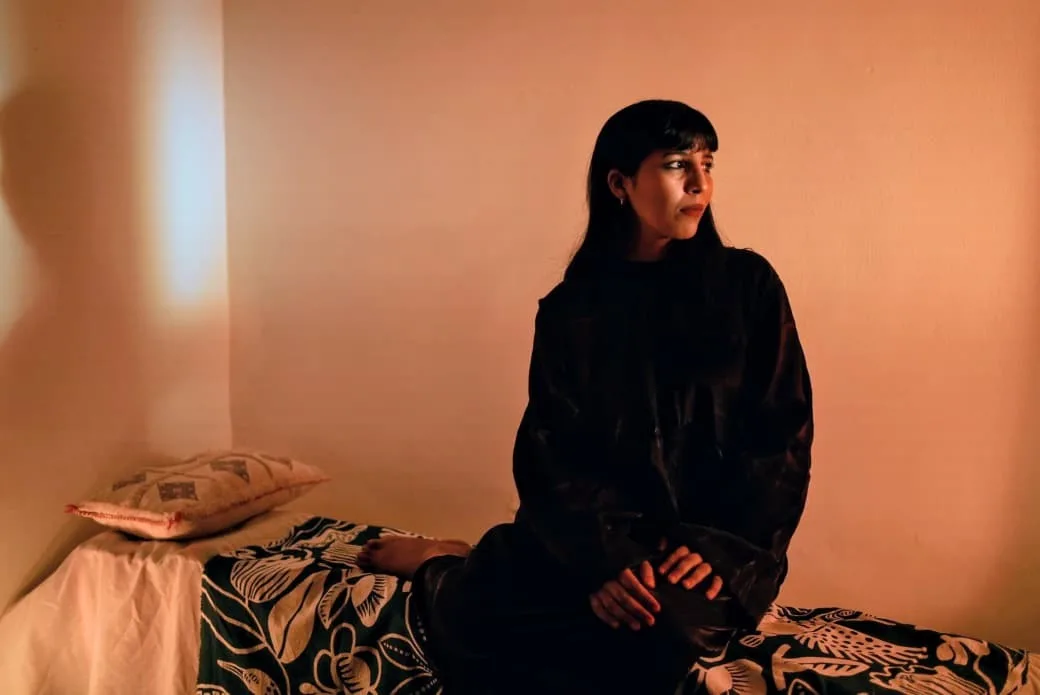
Her breakthrough arrived in March 2023, when she became one of six recipients of the inaugural Taklif Prize, awarded during Marrakech’s On Marche Contemporary Dance Festival.
Winning the prize paved the way for a series of artist residencies across Europe, giving her the space to develop both her artistic practice and her professional journey.
One of those residencies brought her to La Bellone in Brussels in January 2025, an experience she considers among the most meaningful of her career. It was there that she developed her solo piece, “Ait Al Awda.”
A year earlier, at the Youmein festival in Tangier, she had faced a very different challenge: creating the performance “World War Water” with Aida Jamal and Lori Kharpoutlian in just 48 hours.
The project marked both her first collaborative creation and her first purely performative work, and she now remembers the pressure with surprising fondness.
“A beautiful, demanding beginning, and that tension is exactly what made it powerful,” she remembered, describing a piece that carried real weight for her.
Alongside her own performances, Elkabli has served since 2022 as general coordinator of the Marrakech Short Film Festival, a role she took on at the invitation of its founder and director, Ramia Beladel.
It was her first job of the kind, and nothing she had studied for. Curiosity carried her through, she noted, along with the trust the organizers placed in her. Today, she considers it one of the richest experiences of her life.
‘Aita’ is her ballet
Ask Elkabli about her training, and she won’t name a European academy. Instead, she credits Morocco’s Aita tradition.
She finds her rhythm in the earthy sung poetry of Morocco’s plains. Her heroes are the Chikhat, the women who have safeguarded Aita for generations, despite living with the contradiction of being both admired and marginalized by society.
That contradiction has become the heart of her work.
Moroccans, she said, celebrate Aita and admire the strength of the Chikhat while the music plays, only to stigmatize them once it ends. To her, it reflects a society unwilling to confront its own contradictions.
“The Chikha is our mirror,” she explained. “In truth, we’re shaming ourselves and our own identity, because we don’t accept joy, the free body that dances without borders. We live in shadows, in introverted realities.”
A studio the size of the world
Her free body has since travelled far beyond Morocco.
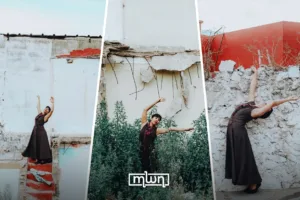
In the capsule series “The Body Exists in the Space,” Elkabli transforms every destination into a stage, dancing everywhere from Brussels to Demnat before sharing each film on her performance account , Al Jassad.

The places were never selected in advance, she said. Somehow, they always chose her.
Constantly touring and balancing multiple projects, Elkabli rarely has the luxury of a permanent studio. Instead, she has come to treat the world as her rehearsal space, dancing wherever she feels a pull, a connection, or a calling.
What began as a personal practice has grown into an ongoing series shared each month through “Al Jassad.”
Along the way, it has connected her with artists from Morocco, Washington, Ecuador, Germany, and beyond, extending the conversation across borders through movement.
Not every project follows a schedule. Her piece “ ” has been three years in the making and remains unfinished, a pace she has learned to embrace rather than resist.
“Every piece has its own timeline,” she reflected, adding that she would rather honour her own rhythm than produce merely to meet expectations. Now, she said, the work finally feels close to its finished form.
Why Safi? Why now?
Lately Elkabli has turned that same instinct toward Safi, the Atlantic port city where she was born and has spent much of her life, and which she still considers profoundly inspiring, carrying the weight of its history.
She could easily have based her next project in Marrakech, where she already works with a wide circle of artists and collectives, but the ease of it is precisely what put her off.
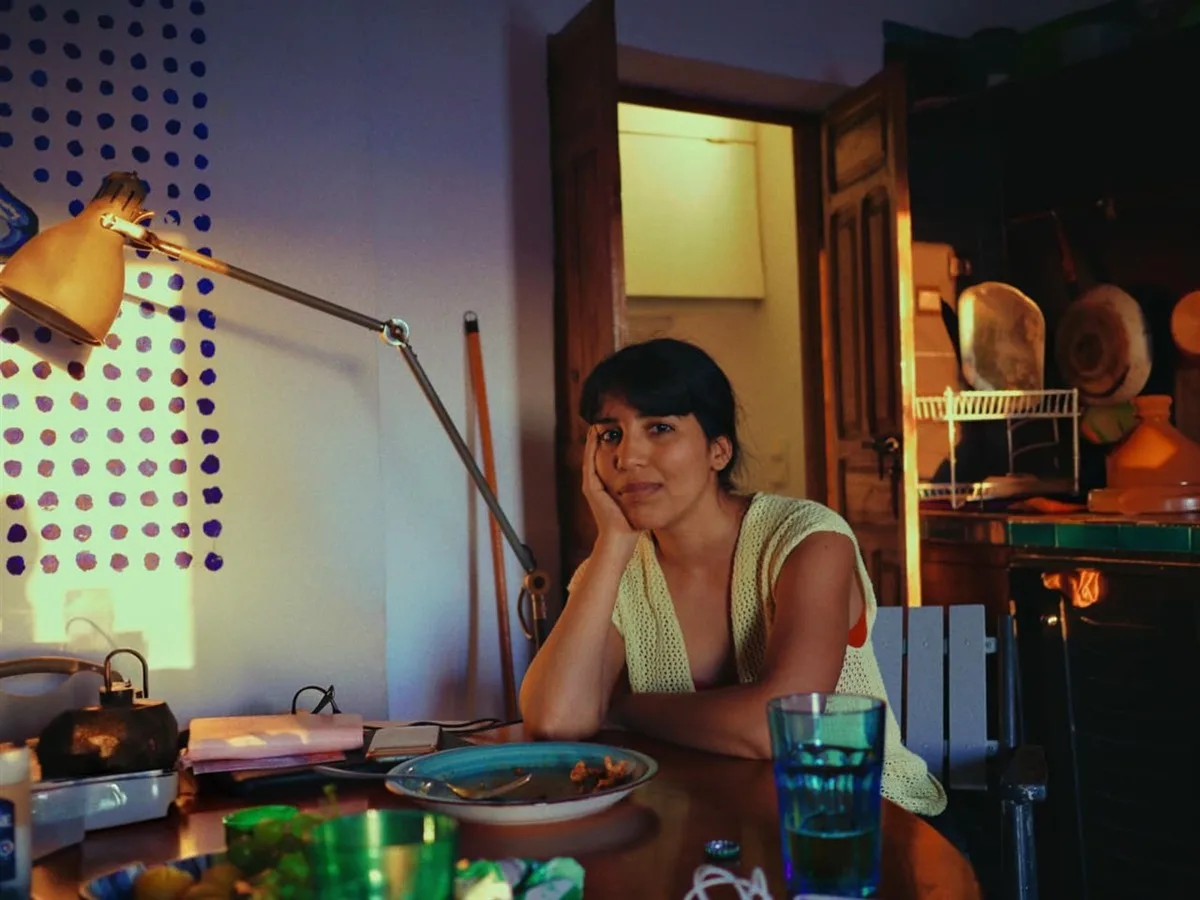
“Building this in Marrakech would be easy for me, and that doesn’t make much sense to me,” she highlighted.
“The real challenge was to create outside my comfort zone, to tell different stories.”
The familiar refrain “Asfi ma fiha walou” (Safi has nothing) carries a different meaning for her.
Rather than a verdict, she hears an invitation: the beauty of starting from zero. Yet she rejects the idea that Safi lacks anything.
According to her, the city has all the ingredients it needs; what is missing is the collective effort to bring its potential to life.
Building a creative collective
She founded Tassaout alongside documentary filmmaker Hiba Elabkari, a collective that brings together creative voices and shared visions.
Both describe it as an artistic space for gathering and building a community through long-term projects destined to open room for questions about art and culture in Safi, and to link the coastal city to others in Morocco and abroad.
Choosing a collective, rather than a company or an association, was deliberate.
What a young scene needs first, she argues, is simply a space for conversation and debate, because a problem cannot be addressed until people first sit down and name it together.
A traditional structure, she suggested, would have placed budgets and paperwork ahead of the creative exchange itself.
She was not looking for a co-founder, let alone another dancer.
“I didn’t really choose to work with Hiba. I believe the project chose us to be together,” she said.
She is many things besides a dancer, she added, and loves creating alongside people from other disciplines.
The two arrived at Safi from different paths: Elkabli left for Marrakech after school, while Elabkari had already spent years building connections with local communities and associations.
What brought them together was a shared desire to give back, rooted in what Elkabli calls a blend of duty and love.
For her, a project of this magnitude cannot exist in isolation; it needs the energy, questions, and support of others as much as it needs a vision.
The story behind Tassaout’s name
The name itself emerged from the sea.
While filming a capsule near the lighthouse at Cap Beddouza, outside Safi, Elkabli began exploring the history of the area and discovered Lalla Tassaout, a local figure remembered as a protector of the coast and its sailors.
The lighthouse stayed with her since a childhood visit with her mother, when cloud and fog transformed it into a cinematic atmosphere. The nearby shrine left an equally lasting impression.
It also troubled her, as its striking architecture remained neglected, cared for by passing fishermen but largely overlooked by the city.
She felt something she could not quite explain, a sense of the figure’s baraka, or blessing.
There is also a river called Tassaout that descends from the mountains, but the collective takes its name from Safi’s saintly figure.
They chose “Tassaout” over “Lalla Tassaout” for its feminine strength, its Amazigh roots, and the mystery it carried, as well as for the image of a woman who once watched over the coast now standing behind their work.
‘Salty tears’
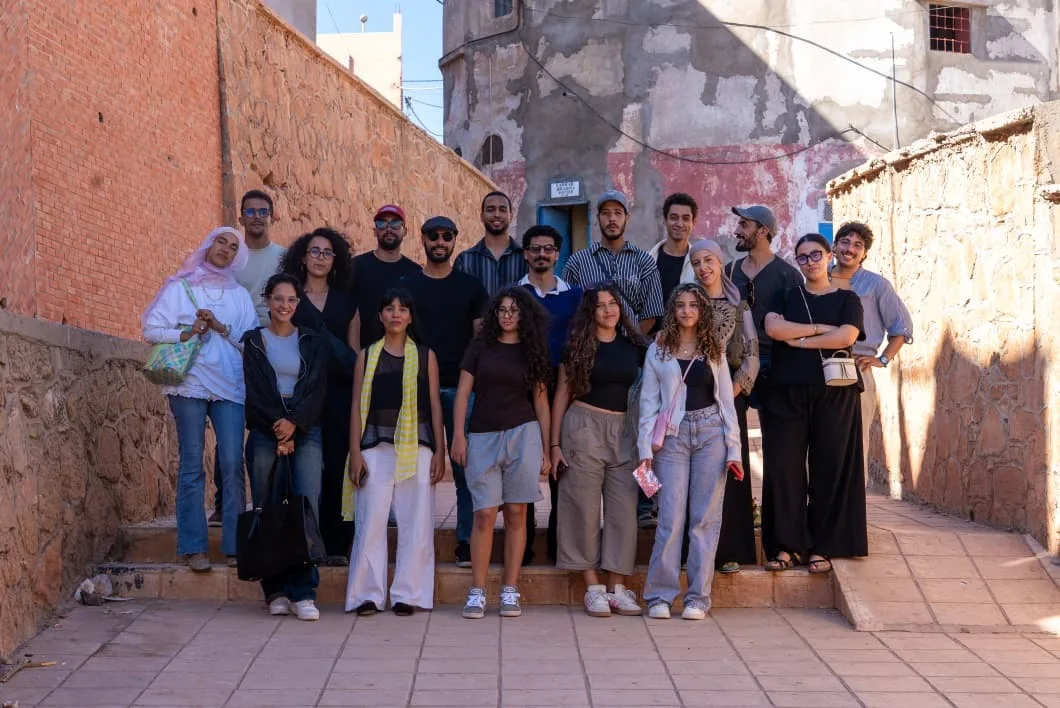
The collective’s first edition carried the title “Salty Tears,” self-funded by the two founders with help from partner venues.
Elkabli said the name came from the sea and from Safi’s grief after deadly flooding, a moment when the city seemed to her to be weeping.
She was careful, however, not to turn that grief into spectacle or remain trapped in it. Instead, she looked to what salt water could teach her.
She pointed to two moments that reveal something about being human: the child who first tastes her own tears, and the swimmer who accidentally swallows the sea and recognizes the same taste.
Both, she reflected, are moments of self-discovery rather than sorrow.
“That’s the difference between crying and awareness,” she said. “One collapses into itself, the other opens outward, toward understanding.”
In this project, tears stand for presence and awareness, instead of defeat.
At the heart of “Salty Tears” was a roundtable on decentralizing Morocco’s cultural scene, the very issue that gave rise to Tassaout in the first place.
Elkabli and her collaborators, she emphasized, grew tired of the concentration of opportunities in major cities.
They want art to reach every corner of Morocco and every young person, not just a fortunate few.
To her, it is unfair that a handful of cities continue to absorb most opportunities while others are left with the same limited offerings.Few of the concerns raised that afternoon came as a surprise to her. After all, she knows her city intimately.
What frustrates her, she admits, is the tendency to look outward for solutions instead of taking the initiative locally.
What genuinely moved he was the beauty, purity, and generosity of the people around her.
Building a cultural scene
Elkabli believes cultural scenes are built not from the top down, but through small, independent efforts.
According to her, private associations and individual initiatives tend to serve art better because their aim is momentum rather than profit or publicity.
Public institutions do what they can and she does not place blame on them. Yet their impact can sometimes remain largely symbolic, reflected more in figures and photographs than in meaningful engagement with emerging artists.
Unlike a formal institution, a collective begins by listening. Through that first roundtable, she said, Tassaout opened a conversation with Safi’s young artists and began discovering the city’s own desires and needs.
Water, meanwhile, keeps rising through everything she makes, from “World War Water” to a collective named for a saint of the coast to “Salty Tears,” a pattern she long ago stopped resisting.
“I truly believe I am a daughter of the sea,” she said, and having been born in an Atlantic city, she finds water forever working its way into her art.
What’s next?
After “Salty Tears,” a second residency is in the works, one that will be larger than the first.
She sees the debut not as an endpoint, but as a checkpoint, and hopes the next one will bring in more artists and spark wider conversations.
For now she is content to let the project grow slowly rather than reinvent it, trusting in what she describes as its purpose: “We won’t necessarily change things, we’ll develop them.”
In a city its own people say has nothing, she has quietly decided that nothing is exactly where a person begins.