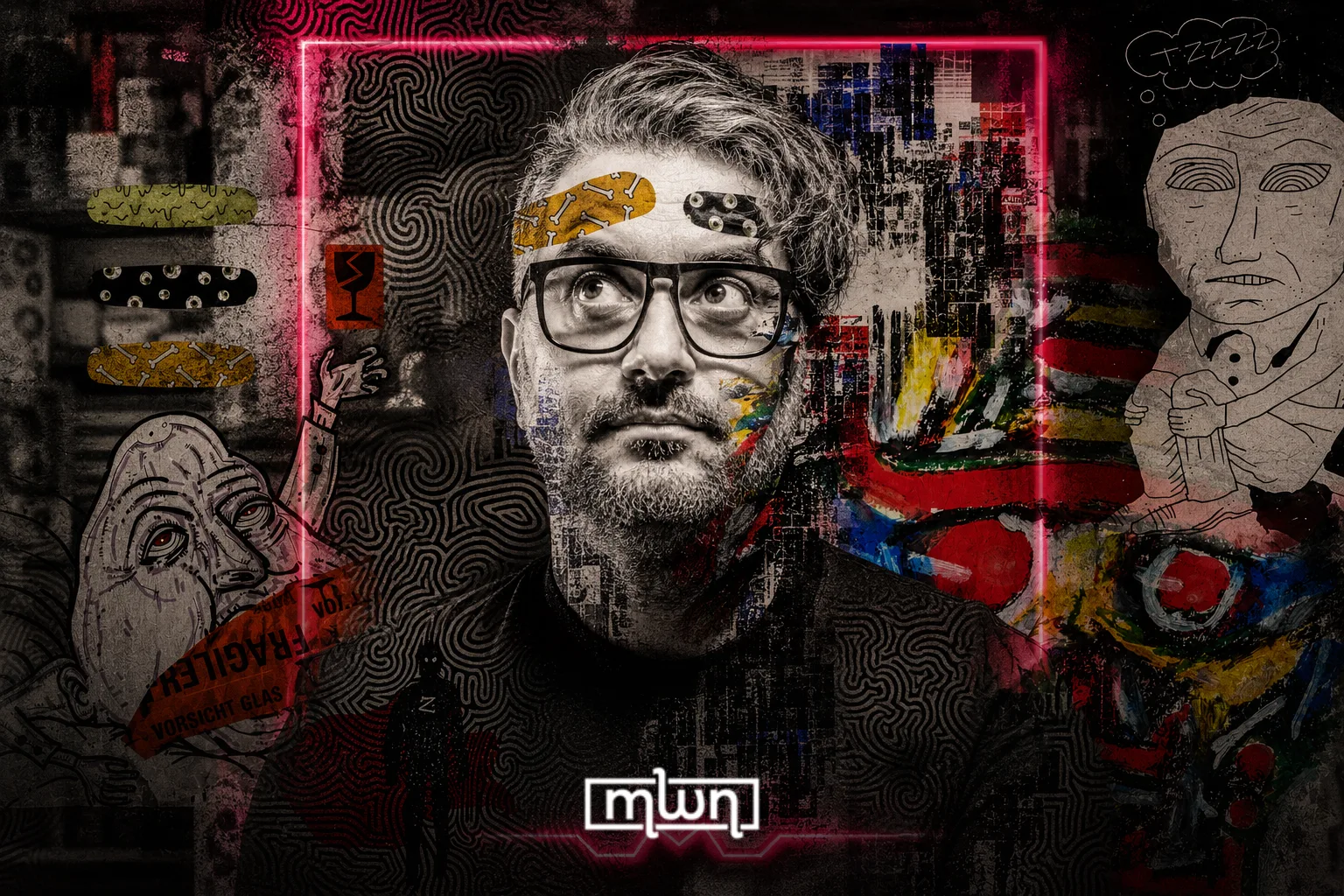
Fez — Hicham Lasri’s recent flood of paintings across social media may look like the beginning of a new artistic chapter. For the Moroccan filmmaker, writer, and graphic artist, however, there is no clean break.
“I have always drawn,” Lasri told MWN Lifestyle magazine, describing the paintings as a continuation of a visual practice running alongside his films, books, and graphic novels.
This summer, Lasri and his team began posting roughly one work every day. The selection is deliberately loose and nonchronological. Pencil drawings can sit beside paintings, collage, work on paper, canvases, graphic experiments, and pieces incorporating stamps or administrative visual language.
The result, he said, is a “virtual gallery” showing movement rather than a polished, fixed identity.
His influences come from cut-up, collage, Pop Art, Warhol, comics, painting, and other hybrid traditions. What connects them for him is not an aesthetic but their capacity for transformation.
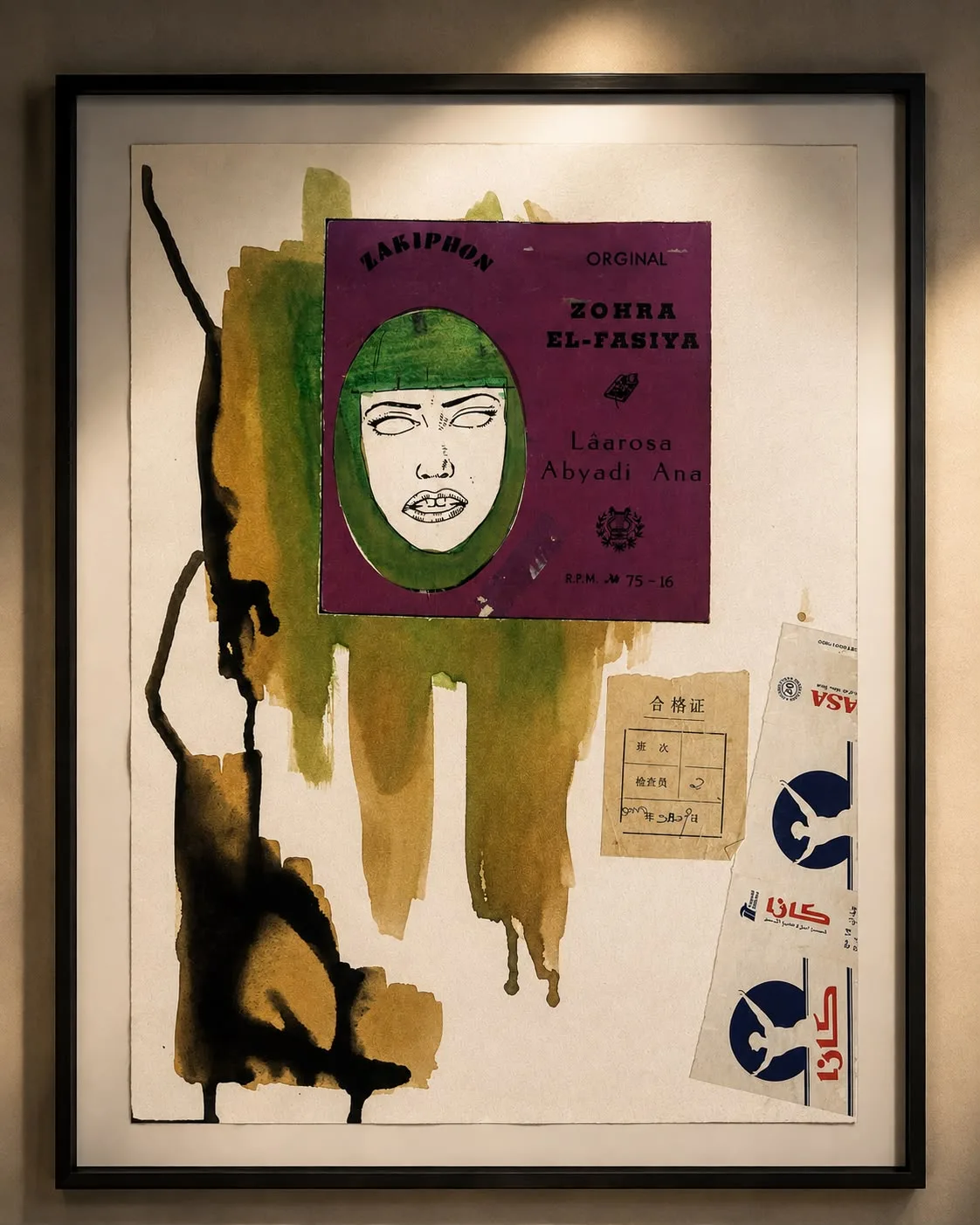
“I do not try to have a style,” he said.
That resistance to a single style is hardly new. His 2017 graphic project “Fawda” similarly broke conventional comic-book structures through collage, overlapping narrative levels, text, and images. The project was explicitly conceived around Casablanca and its fragmented urban life.
His 2023 exhibition “Bonheur factice” (Manufactured Bliss) continued that preoccupation through drawings confronting the values of a society shaped by digital self-display.
An Instagram gallery without the gatekeepers
Lasri’s decision to turn Instagram into a gallery is not simply about reaching more people. It also reflects a much sharper dissatisfaction with Morocco’s art establishment.
He described much of the gallery circuit as commercial and short on what he called “breathing spaces,” arguing that artists can become trapped by recognizable gimmicks that are easy to package and sell.
Lasri was equally critical of the gatekeeping surrounding recognition. In his view, being taken seriously can depend on entering the right circles and receiving approval from established cultural actors. He cited one of Morocco’s leading contemporary art magazines, while describing a system in which artists can feel pressured to “show their credentials” before being accepted.
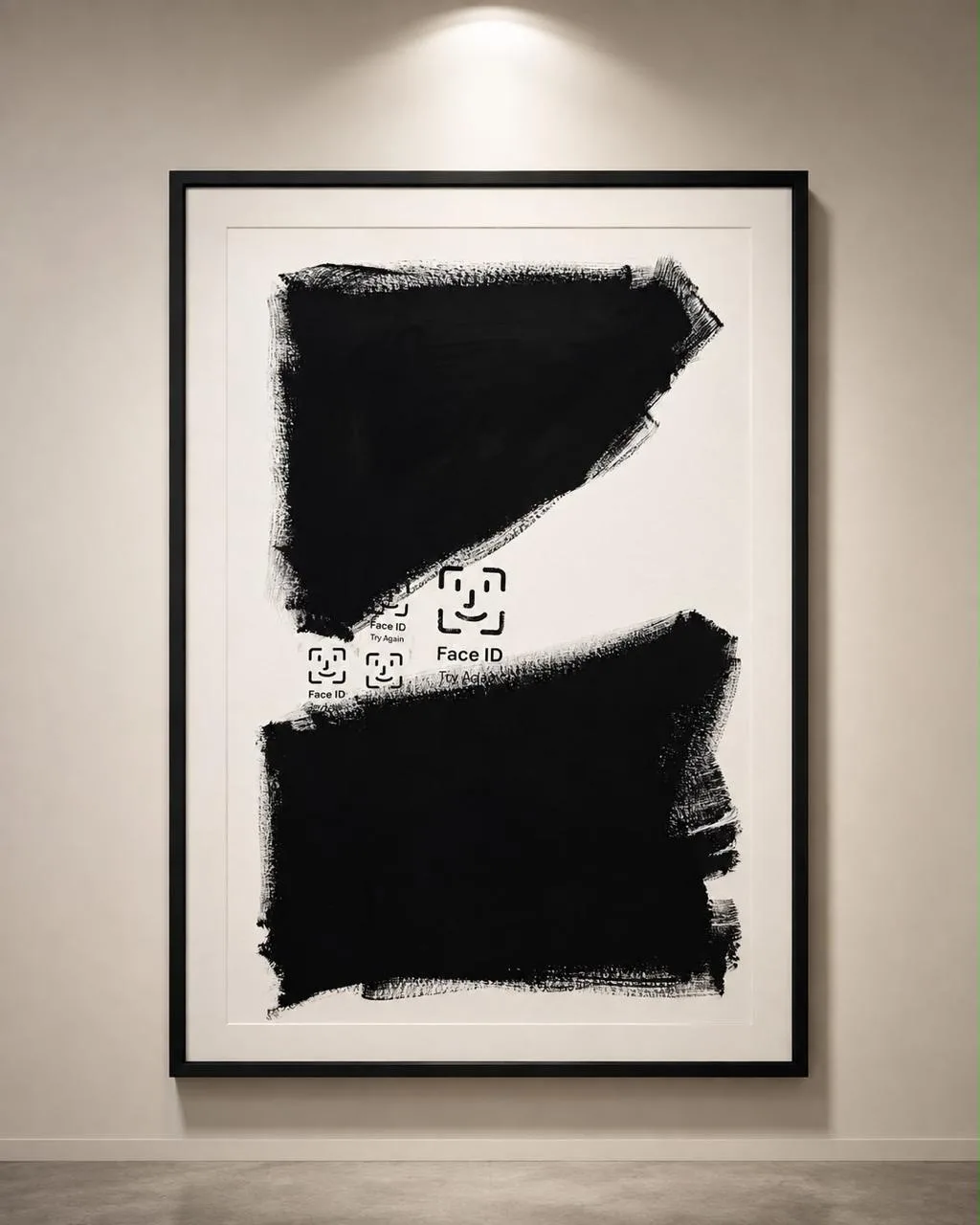
It reminded him, he said, of entering Moroccan cinema and finding no obvious space in which he recognized himself.
His response then was not to adapt. Lasri said he pursued an alternative cinema before eventually establishing himself “at the heart of the system” through personal work, without compromising with what he called the “merchants” or “guardians of the temple.”
He sees his visual practice in similar terms. Lasri even mocks the expectation that seriousness in painting requires monumental scale. He calls oversized canvases “painting doors,” contrasting them with his own A4 and A3 work rooted partly in comics and sequential art.
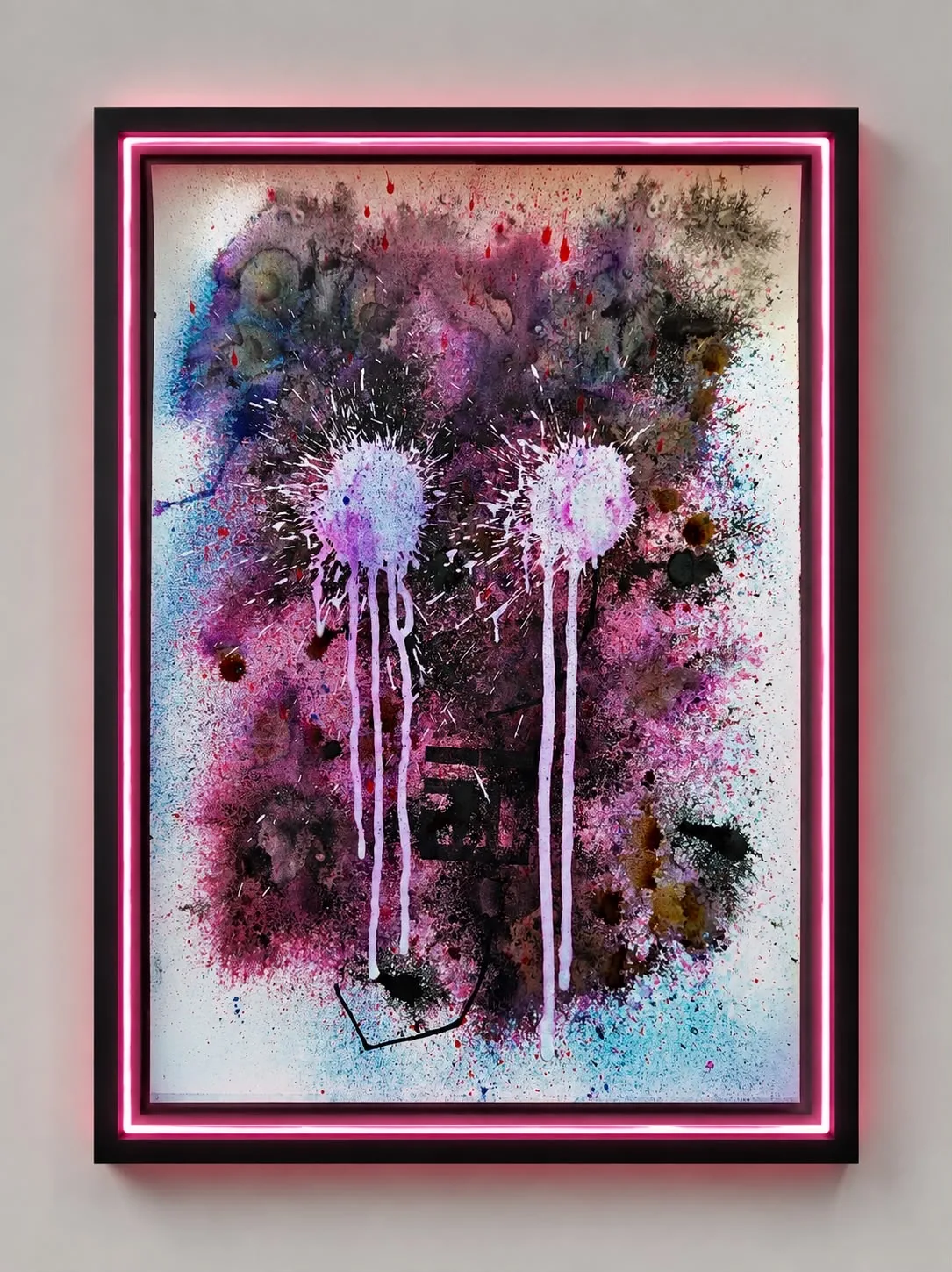
Instagram therefore offers more than convenience. It allows him to bypass the architecture of validation itself.
“Who needs a gallery with its walls and its bad lighting?” he asked.
The irony, he said, is that putting the work online has already generated interest from people wanting to buy it. But commercial demand remains secondary to the freedom of showing drawings, paintings, collage, stamps, paper, canvas, and changing styles without first making them conform to a gallery identity.
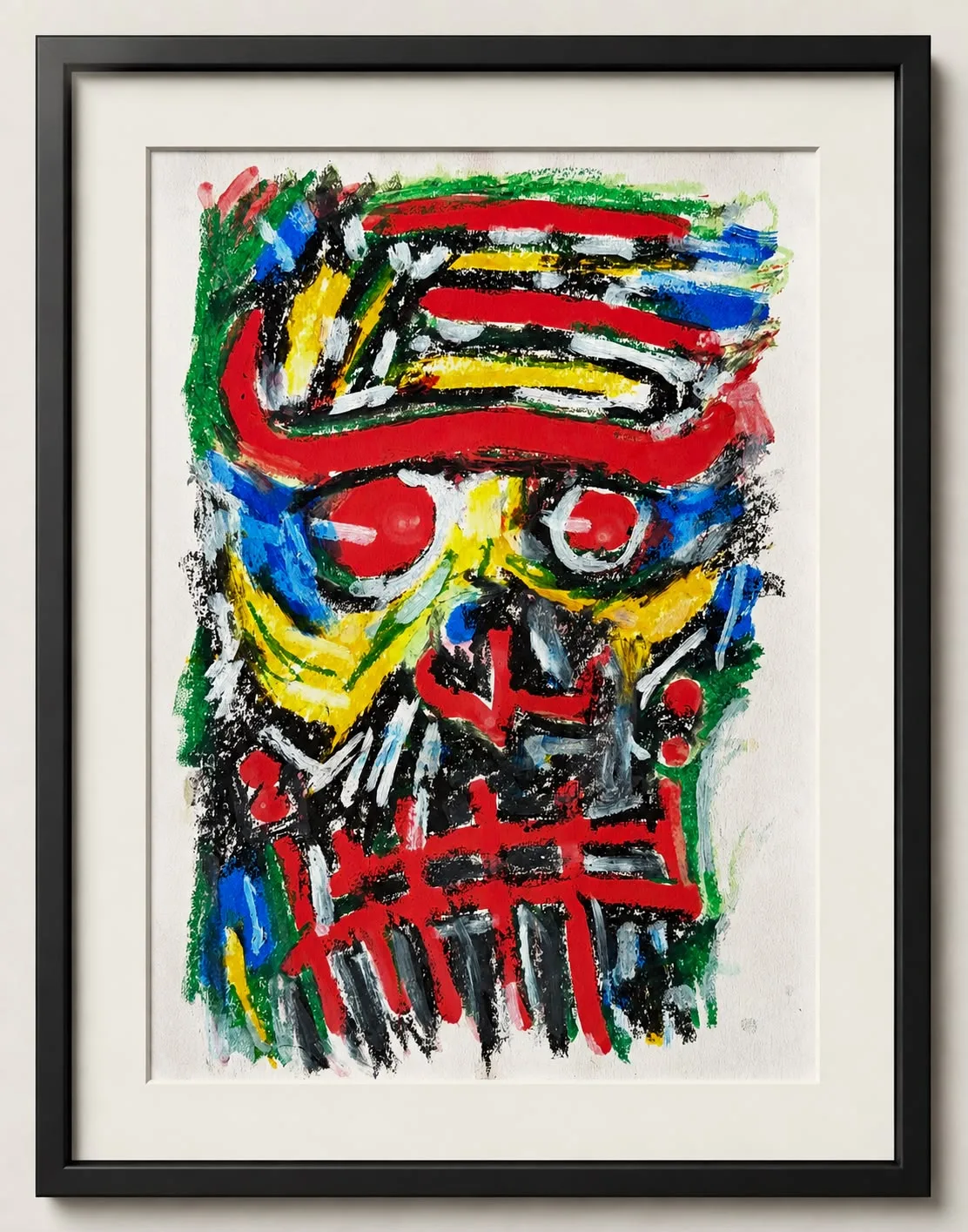
Lasri’s criticism extends beyond galleries. While discussing “Wecacablanca,” a distorted fictional version of Casablanca he created, he turned toward the cultural institutions he believes often confuse infrastructure with cultural life.
He described some foundations and institutions as “empty shells” and, more colorfully, as “empty refrigerators”: impressive containers that, in his view, do not necessarily contain enough ideas, programming, or people capable of animating them.
Among the institutions he mentioned were the Villas des Arts. The comparison is deliberately provocative. The Villas des Arts themselves describe their Casablanca and Rabat spaces as centers for contemporary art, education, exhibitions, cinema, literature, and performing arts, with a mission of making Moroccan artistic heritage accessible to wider audiences.
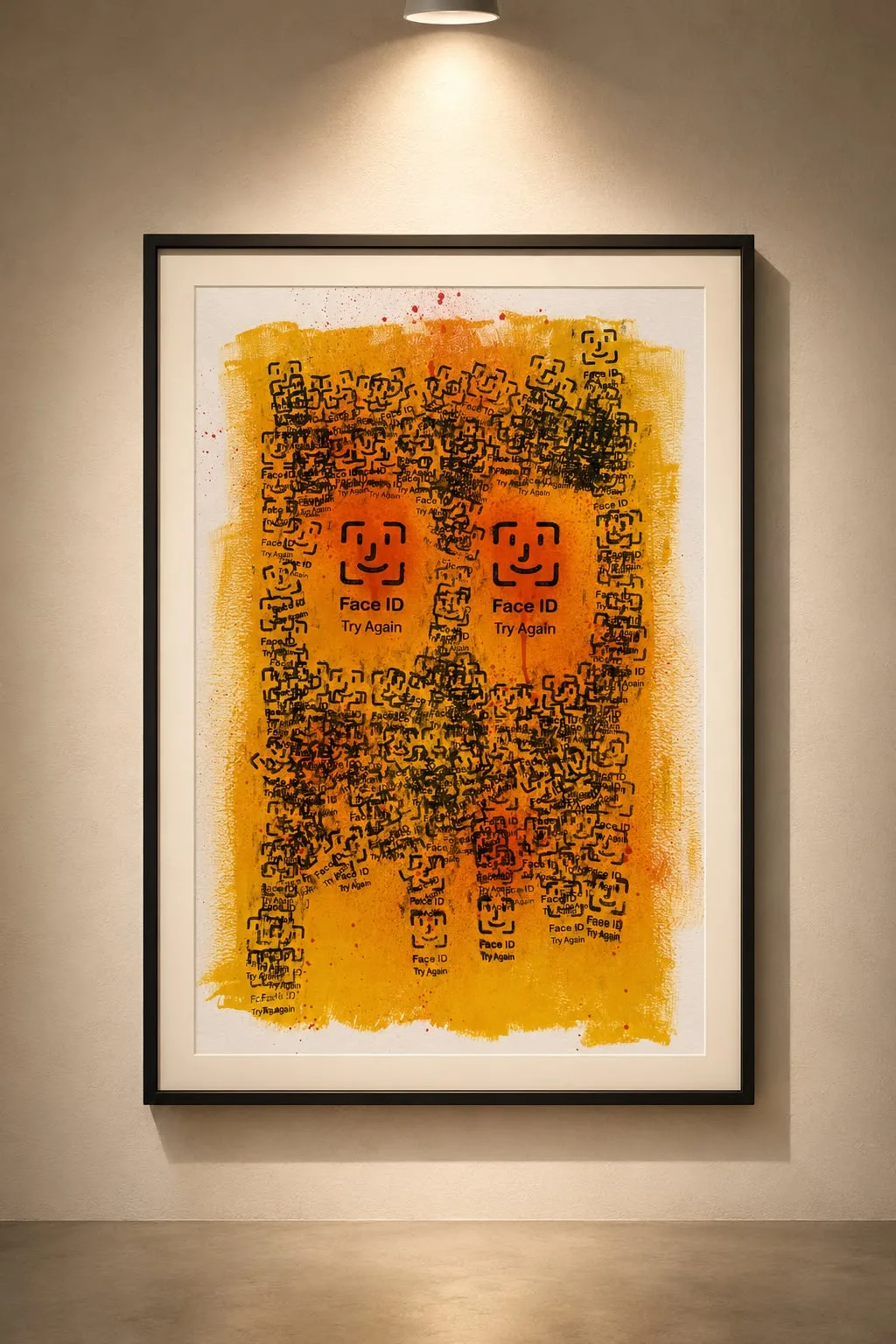
Lasri’s argument, however, is broader than whether a particular building hosts events. His concern is what happens when investment in cultural infrastructure is not matched, in his view, by investment in citizens, intellectual curiosity, education, and people capable of giving those spaces what he calls an “âme” — a soul.
His view of the cultural marketplace is similarly unforgiving. Lasri said conversations around painting can become dominated by prices, professional maneuvering, and anecdotes rather than curiosity about the work itself.
He compared that experience with cinema, where industry conversations can drift toward money and conflict instead of films, and publishing, where he complained of finding “paper sellers” rather than genuine editors.
At his most caustic, he compared that mentality to waiting for crops to ripen or livestock to become valuable enough to sell: culture treated primarily as inventory.
Yet Lasri insists that opposition itself is not his artistic identity. “It is much more important to be free than to be in conflict with an establishment,” he said.
That distinction runs through the paintings now appearing online. His objective is not to manufacture the image of an outsider fighting institutions. It is to remain mobile enough that institutions, markets, styles, and expectations cannot determine what he makes next.
From ‘جIFA-MAN’ to absurdity
Among the works is “جIFA-MAN — Protecteur de Wecacablanca,” an mixed-media piece using painting, spray paint, and stamps. Lasri presented it publicly as something between a graphic novel and a painting.
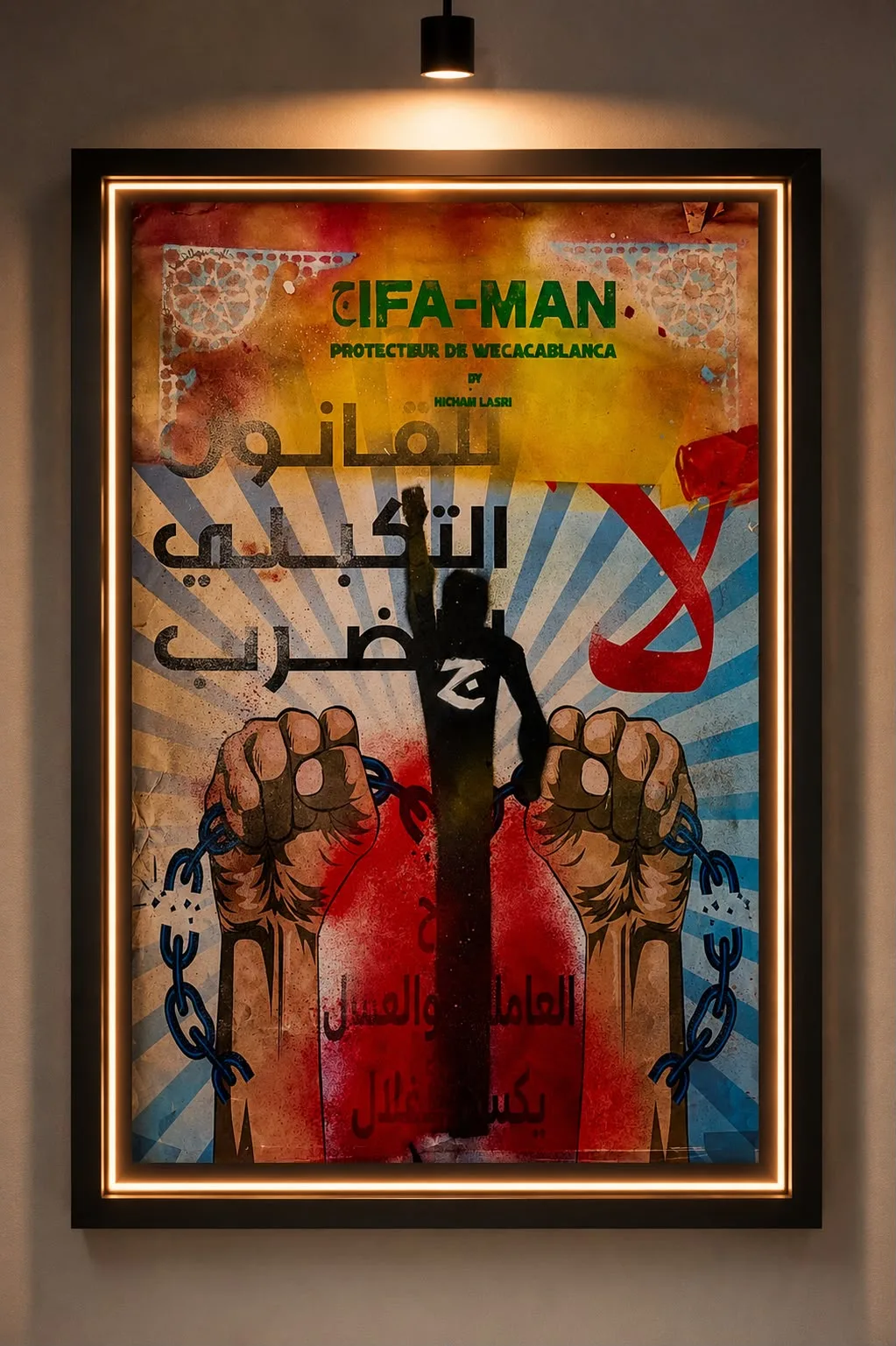
Jifa Man Lasri’s warped answer to the superhero. He possesses extraordinary strength but has one humiliating weakness: he is allergic to water. He therefore smells, attracts flies, and becomes an object of ridicule despite possessing near-Superman abilities.
“He is almost the equivalent of an African Superman, except that he is allergic to water, and so he stinks,” Lasri explained.
His institutional life is equally absurd. Lasri imagines him attached to an incompetent administration that struggles to find meaningful work for someone supposedly capable of saving the world.
“He has all the powers in the world, he is indestructible, he is very strong and all that, except that he is affiliated with a sort of administration of broken arms that keeps sending him to save easy things, and in fact they cannot find a place for him,” Lasri describes.
The joke creates an antihero who has power but no place. Lasri said he is developing prose stories around the character, rather than taking the more obvious route of producing a superhero comic. The wider project could eventually move between literature, painting, comics, and cinema.
Another recent work, “T-ZZZZ,” goes in a deliberately sillier direction. Its accompanying text suggests that when life becomes stupid, responding with stupidity can itself become an artistic gesture.
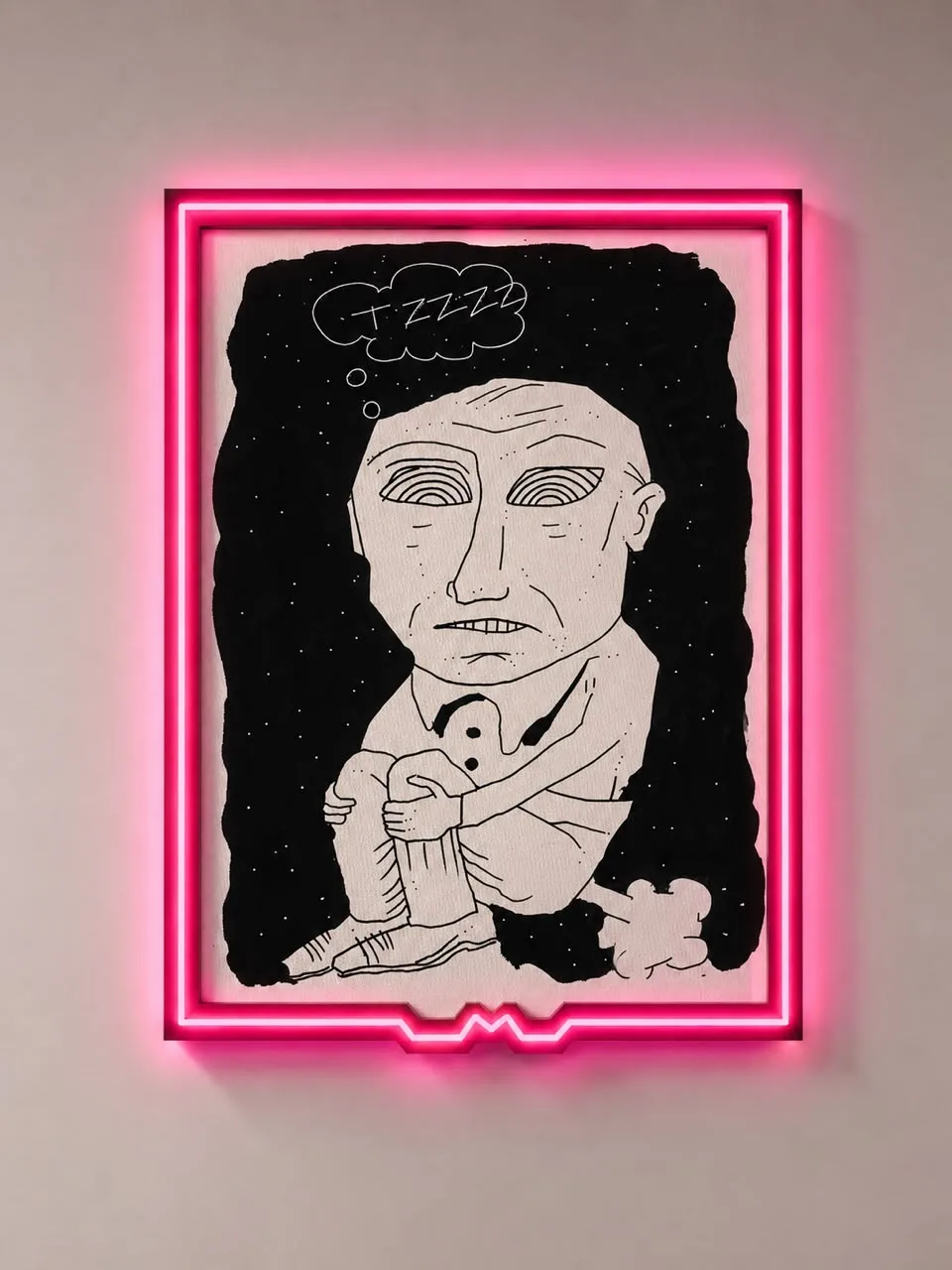
That movement between dense and accessible work is intentional. Some paintings should require effort, Lasri said. Others can simply make viewers laugh. He rejects the idea that every piece must obey one aesthetic formula.
His influences include cut-up, collage, Pop Art, comics, and Warhol’s practice of appropriating existing imagery. Bureaucratic materials can therefore sit beside caricature, abstraction, digital references, or crude humor.
The only recurring requirement is storytelling. For Lasri, even a painting without words should suggest possibilities, emotions, and unfinished stories. He wants the viewer to participate rather than merely “consume” an image.
Welcome to Wecacablanca
The strangest recurring character in Lasri’s work may actually be a city.
“Cacablanca” is his invented mutation of Casablanca, a name he has already used in his literature. It allows him to create an alternative city shaped by aggression, bad manners, construction, absurdity, beauty, and urban exhaustion.
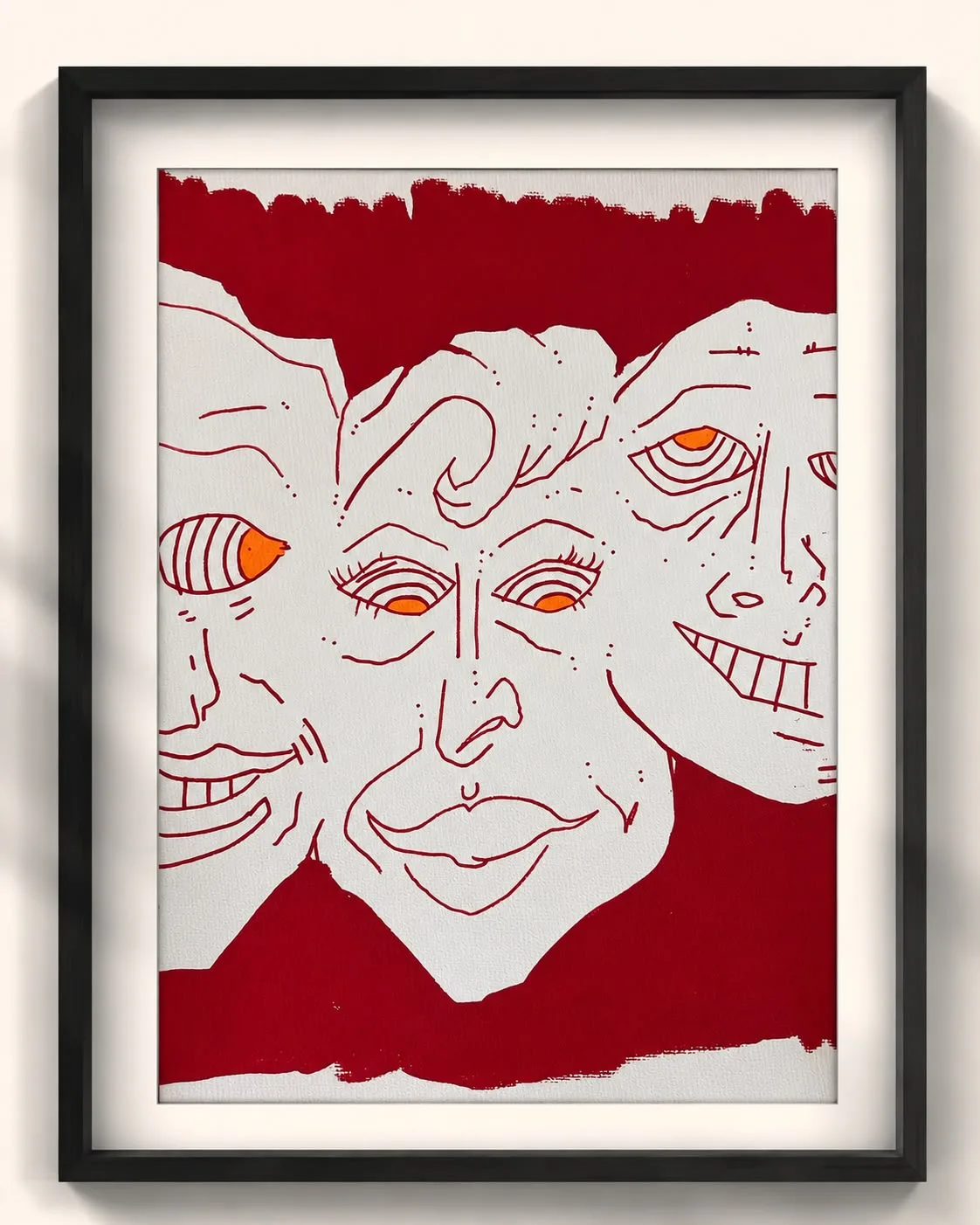
The provocation comes from affection. Lasri describes Casablanca as his muse and, repeatedly, as the central character running through his work. He is interested in taking what appears ugly, vulgar, or ignoble and transforming it through artistic attention.
Lasri imagines the city as capable of exposing people. Someone centered and calm can survive its pressure, he said; someone already angry or fragile can be swallowed by it and become one of the “zombies,” “NPCs,” or “brain rot” figures populating his language.
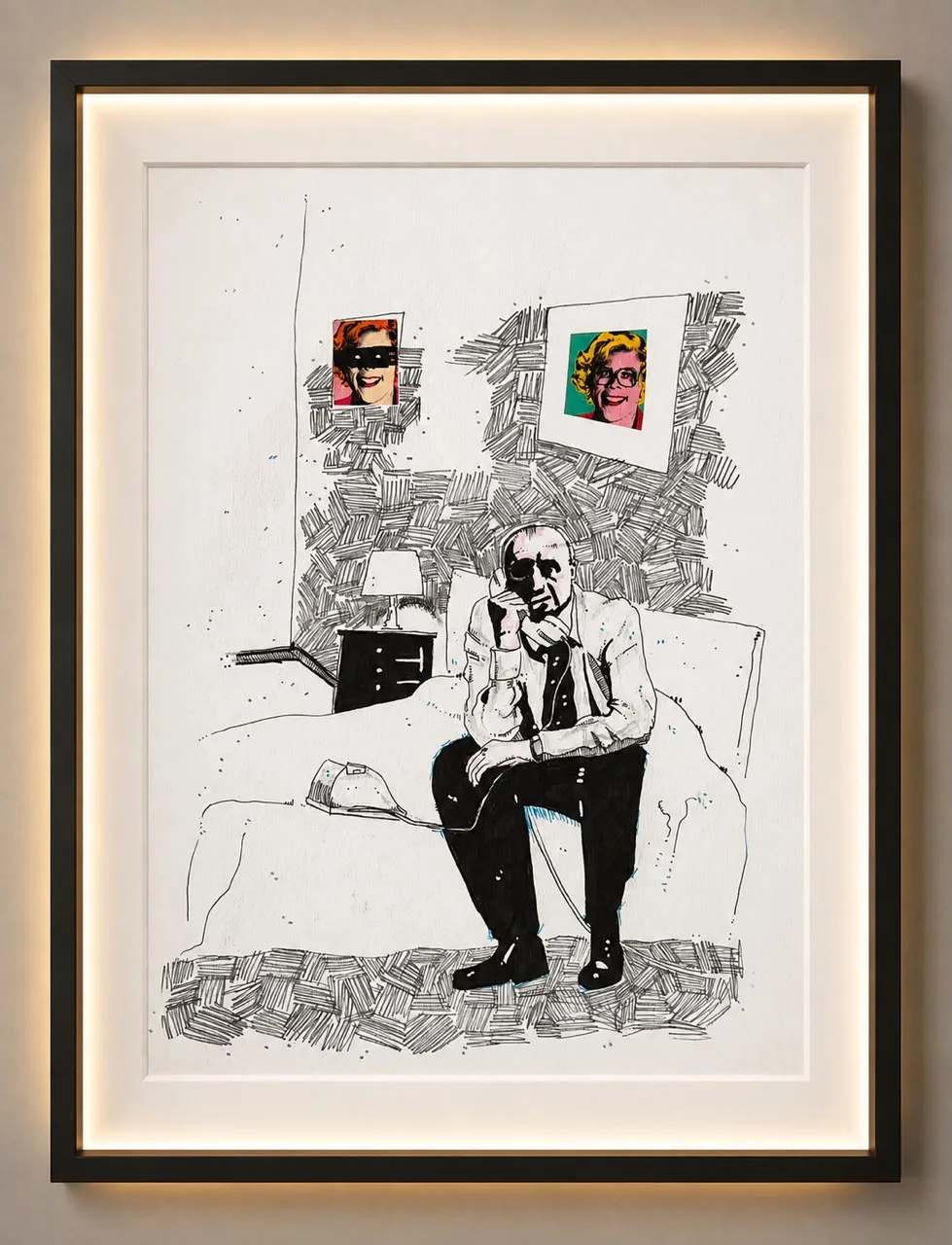
“Wecacablanca” pushes that city into a larger fictional system populated by superheroes, administrative absurdity, social decay, and recurring questions about citizenship.
It is a place where superhero mythology can collide with broken administration, everyday hygiene, civic behavior, political frustration, and the strange electricity of Casablanca’s streets.
For Lasri, criticism of the city also opens a wider conversation about institutions. He argued that impressive cultural buildings mean little without people, programming, curiosity, and education capable of giving them an inner life.
Painting an age of anxiety
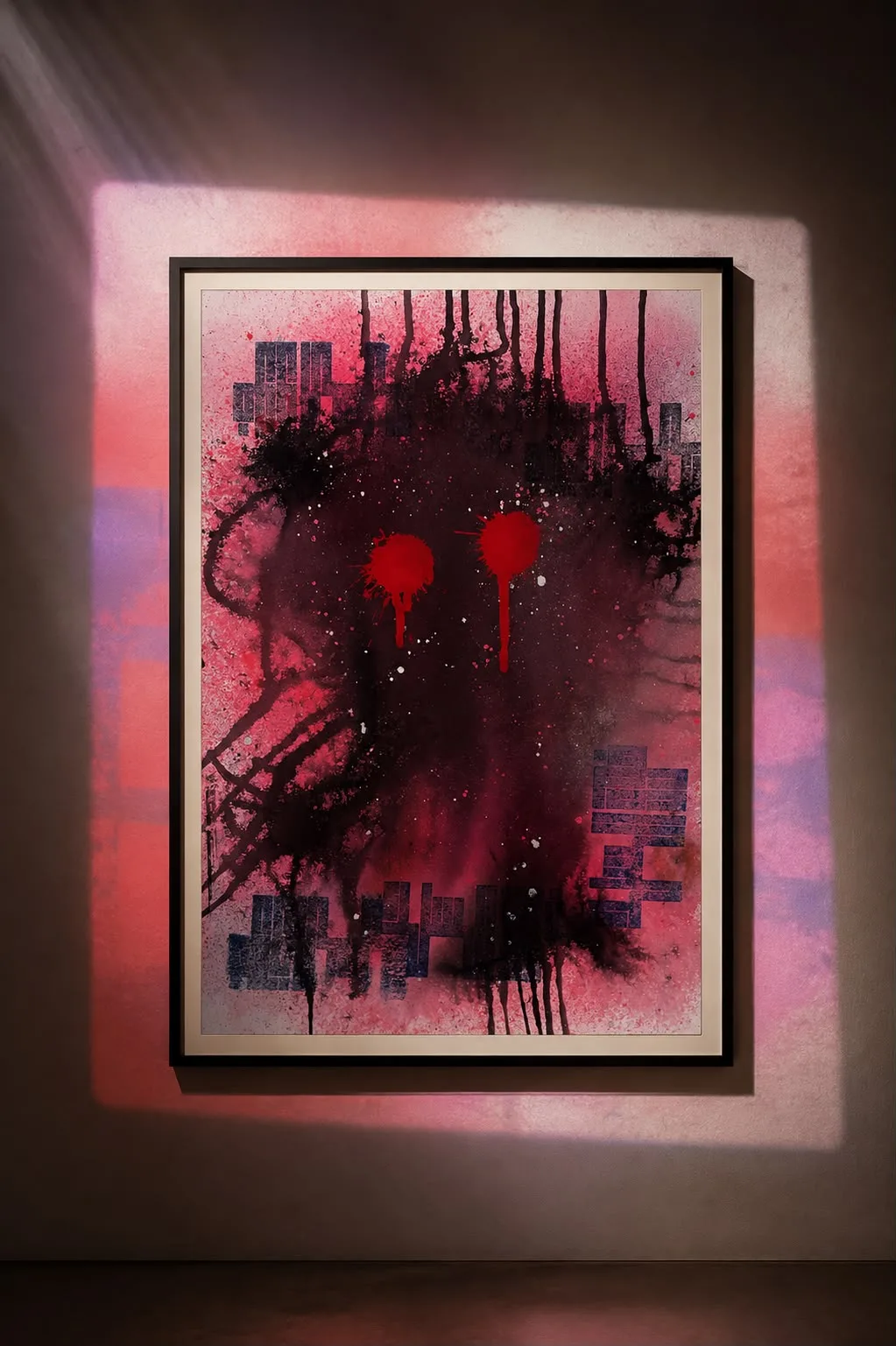
Behind the jokes, Lasri’s current visual work carries a darker political and emotional current.
He described the contemporary world as frightening, pointing to wars, Gaza, political violence, post-truth, and leaders including Donald Trump, Vladimir Putin, and Benjamin Netanyahu.
He is particularly defensive of younger generations. His affinity with younger audiences also shapes his idea of an elite. Lasri has little interest in conventional cultural prestige. His own definition is simpler: the elite are people “who have heart.”
Lasri rejected narratives portraying Gen Z as unintelligent, confused, or excessively fragile. Instead, he pointed to young people mobilizing internationally for Palestinians as evidence of political courage and empathy.
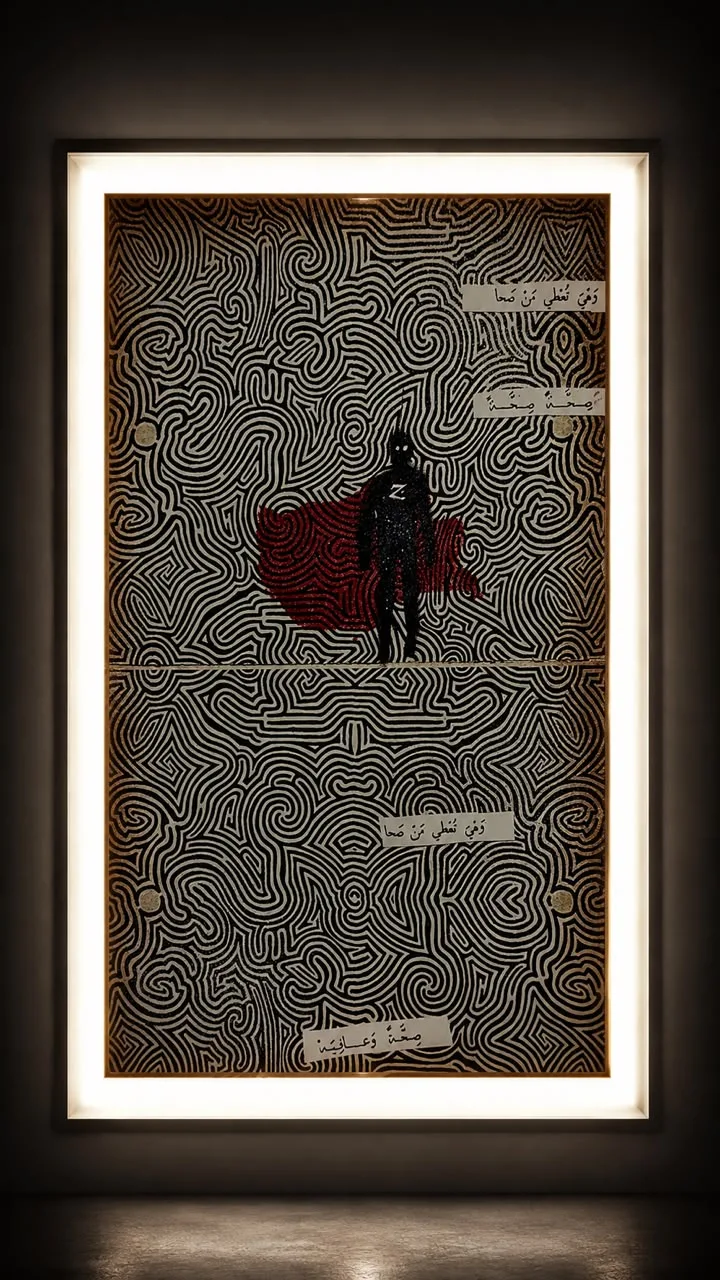
He also sees artistic creation as another form of resistance. Rather than spending his time publishing commentary about every political event, Lasri said he prefers leaving artistic traces. Future audiences, he argued, should be able to see that resistance also existed through images, stories, films, and books.
That humanist concern has long intersected with his cinema. His film “They Are the Dogs,” for instance, connected memories of Morocco’s 1981 Casablanca unrest with the atmosphere surrounding the 2011 protest movement.
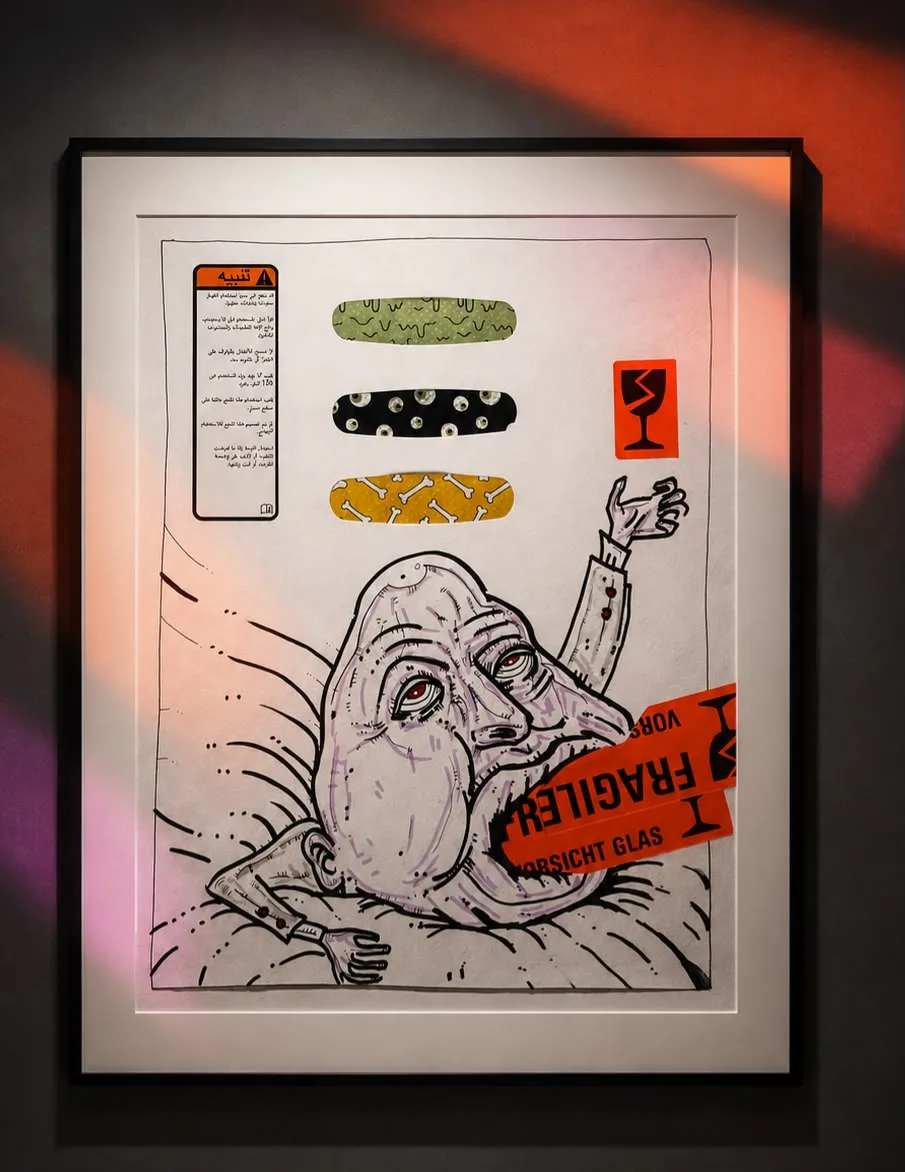
His paintings extend the same instinct inward. Lasri spoke about anxiety, trauma, vulnerability, and the importance of transforming difficult experiences rather than hiding them. A recent piece titled “FRAGILE,” for example, depicts a body suspended between exhaustion and resistance through drawing and collage.
Yet he rejects the romantic image of the tortured artist. He says he creates through pleasure/joy.
Once an image becomes clear in his mind, painting can happen quickly. Other ideas require repeated attempts, changing colors, textures, or light until the emotion finally appears.
He is also drawn to the apparent effortlessness of Japanese and Arabic calligraphy. Even when the subject is violent or punk, he wants the physical gesture itself to contain grace.
There is no fixed plan for where the current stream ends. Individual works gradually reveal recurring motifs. Those motifs become larger territories to explore.
Eventually, Lasri expects another physical exhibition, structured not as a collection of repeated products but as a narrative with chapters.