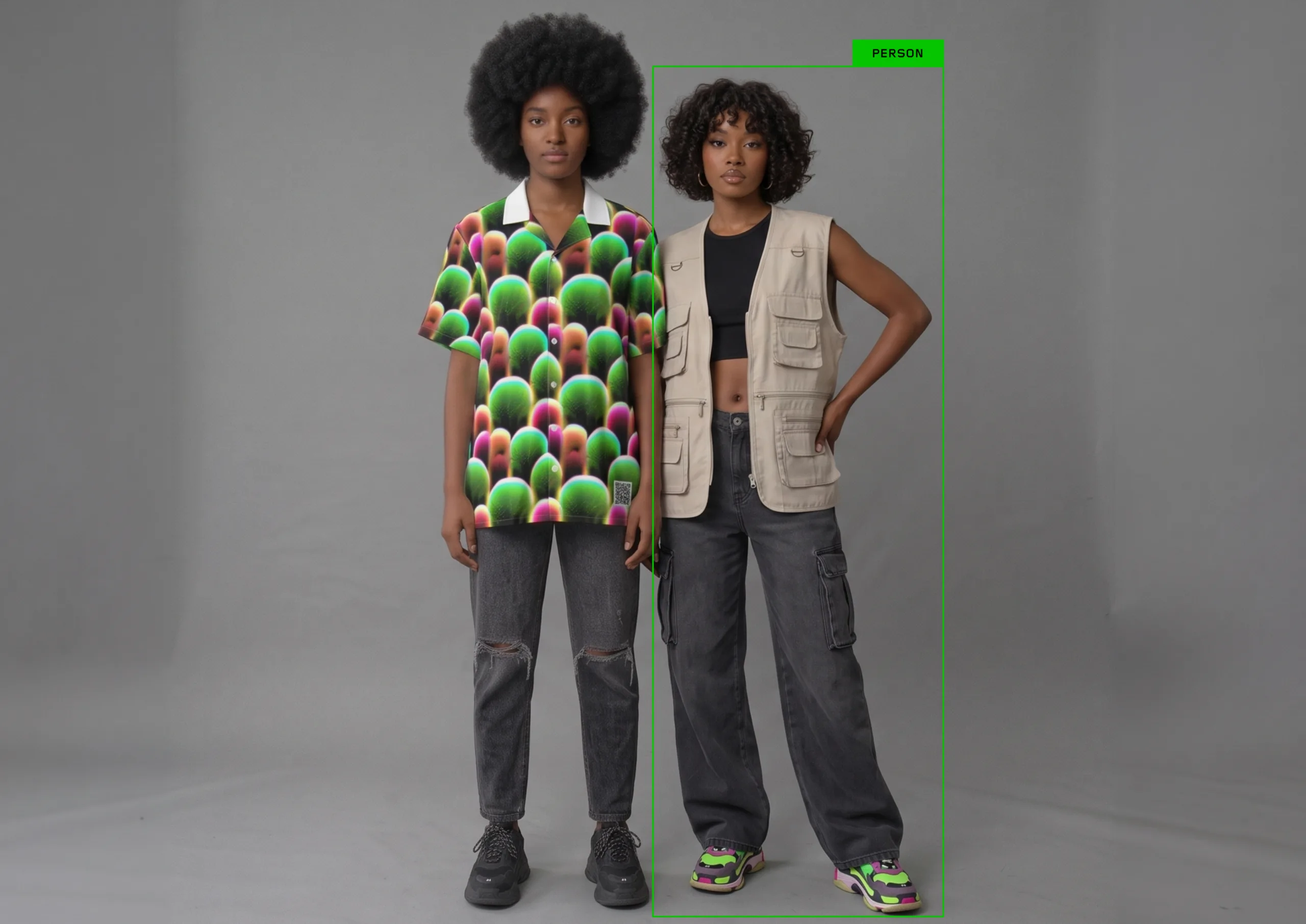
Fez — A brightly patterned shirt created by Berlin-based artist Simon Weckert is drawing attention for an unusual feature: humans can see it perfectly well, but some artificial intelligence systems cannot see the person wearing it.
Called “Digital Camouflage,” the garment uses an adversarial pattern designed to interfere with computer-vision systems that identify people in video footage.
In demonstrations shared by Weckert, an open-source YOLO object-detection model places boxes around pedestrians walking through a public space. The person wearing the shirt, however, can pass through the frame without being identified as a person.
The effect resembles an invisibility cloak, but only from the perspective of a particular kind of machine.
How can a shirt confuse AI?
Computer-vision models do not understand a human body in the same way people do.
Instead, object-detection systems learn statistical patterns from large collections of images. They analyze features such as shapes, edges, colors, textures, and their relationships before calculating whether an object is likely to be a person, car, animal, or something else.
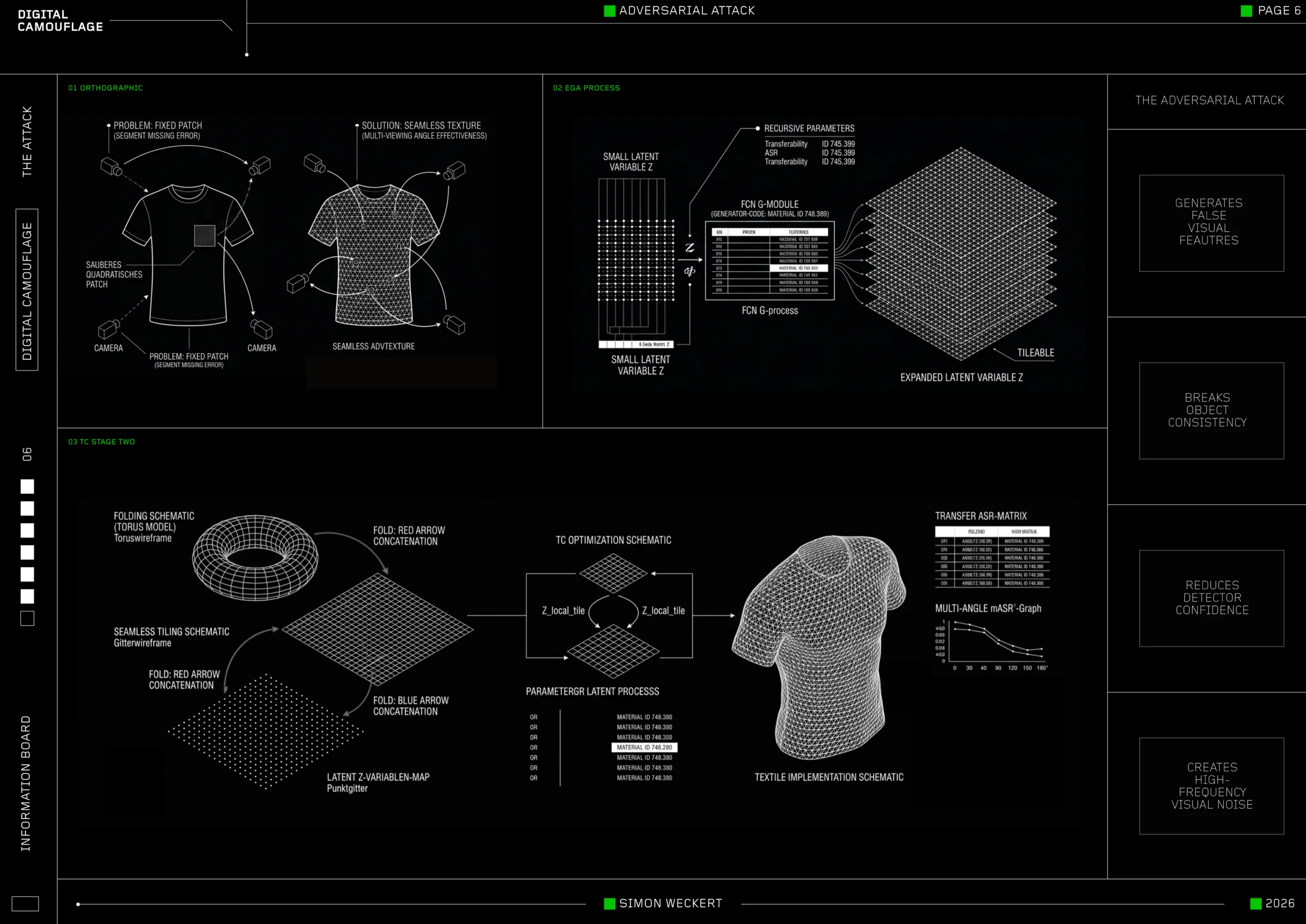
“Digital Camouflage” attempts to interfere with that process.
Its colorful abstract pattern is an example of an adversarial attack, in which visual information is deliberately manipulated to cause a machine-learning system to make a mistake. Weckert says the pattern targets features that person-detection models typically use when searching for a human figure.
The idea is not limited to his project.
Researchers have spent years studying adversarial clothing capable of reducing the accuracy of person detectors. A 2023 study demonstrated clothing textures designed to evade detection from multiple viewing angles, while research published in August 2026 reported an 86.2% average attack success rate for a new experimental adversarial camouflage method tested across several detectors.
Not an invisibility cloak for every camera
There is an important catch.
The shirt does not make its wearer universally invisible to surveillance, nor does it necessarily defeat facial recognition.
Weckert’s demonstrations use a generic open-source YOLO object-detection system. He explicitly states that “Digital Camouflage” makes no claim about defeating any specific government surveillance technology or guaranteeing anonymity.
Person detection and facial recognition are also different processes. A system can first locate a human figure in an image and then use separate technology to analyze or identify a face.
The distinction matters because headlines describing the shirt as a way to disappear from all AI cameras overstate what has actually been demonstrated.
Fashion meets the surveillance debate
Weckert developed the project as Berlin expands its experiments with AI-assisted video monitoring.
German authorities began testing AI-supported cameras around Berlin’s Kottbusser Tor in August. The pilot is designed to recognize potentially dangerous situations and behavior rather than identify people through facial recognition, according to German public broadcaster Tagesschau.
That context turns “Digital Camouflage” into more than an unusual piece of clothing.

Weckert presents the shirt as an artistic challenge to the growing role of automated systems in public spaces, particularly when the public may have little ability to inspect or test the algorithms interpreting their behavior.
The result sits somewhere between fashion, technology, and protest. It also exposes a strange reality of the AI age: a person can be clearly visible to everyone standing nearby while, under the right conditions, becoming far harder for a machine to recognize.
As computer vision becomes more common in cities, stores, transportation, and everyday devices, “Digital Camouflage” raises a broader question about how much confidence society should place in machines that can sometimes be confused by something as ordinary as the pattern on a shirt.