Fez — Before Omegana became a fashion project, it was simply a name people used for Omaima ahyaoui.
Friends and people around her had called her Omegana when she was younger, and the nickname stayed close enough that, when the time came to create something of her own, inventing another identity felt unnecessary.
“Omegana actually started with something very personal. When I was younger, people around me started calling me Omegana, and over time, the name became connected to me and to the people who knew me,” the 20-year-old Agadir creative told MWN Lifestyle magazine.
For Omeganart, which is the name she prefers to go by now, keeping it also meant carrying a little of that early support into whatever came next.
“It felt natural to keep it because it carried a part of my personal story and the support of the people who had known me from the beginning.”
She had already been thinking about fashion for years. After studying art in high school and earning her baccalaureate in Arts, she moved into graphic design, sharpening the visual instincts that would eventually feed into her own clothing and styling concepts.
Omeganart became the more exploratory side of that world. Omeganabrand gave those ideas somewhere more tangible to go.
“I wanted it to be more than simply a clothing brand. I wanted every piece or drop to have its own idea, feeling and visual identity,” she said.
Omeganart is interested in clothes, but she is just as interested in the people wearing them, the place around them, the photograph that eventually captures them, and the story holding all of those things together.
When the image leaves the page
Omeganart still describes herself as an artist before a stylist, though the line between both is becoming increasingly difficult to separate.
“For me, fashion didn’t replace art. It became another way of making art,” she explained.
Graphic design could give her an image. Styling gave that image a body.
With a person inside the clothes, other things start interfering in useful ways. Posture changes the idea. Movement changes it again. A facial expression, a location, or even the way someone decides to wear a piece can pull the finished image somewhere she did not originally expect.

“The body, the movement, the attitude, the environment and even the way someone wears a piece can completely change how the idea is perceived,” she said.
That realization gradually shifted the way she worked. Creating a visual on its own was no longer enough.
“I realised that I wasn’t only interested in creating the visual itself. I was interested in seeing the visual exist through a person.”
Skaters and street culture entered that world naturally, as did Agadir itself. Rather than separating fashion, photography, art, and graphic design into different practices, ahyaoui treats them as materials that can meet inside the same idea.

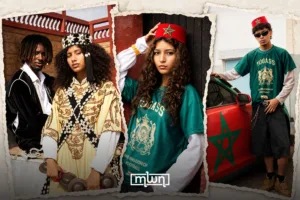
Her recent Gnawa project tested that approach in a more complicated way.
Getting close enough to know when to step back
Omeganart had listened to Gnawa music before deciding to build a visual project around it. What changed during the process was not simply how much she knew, but how she understood the relationship people within the community had with the culture.

Conversations with Gnawa musicians and performers kept returning to childhood.
“Something that stayed with me was that many of them told me they had been doing Gnawa since a very young age,” she recalled.
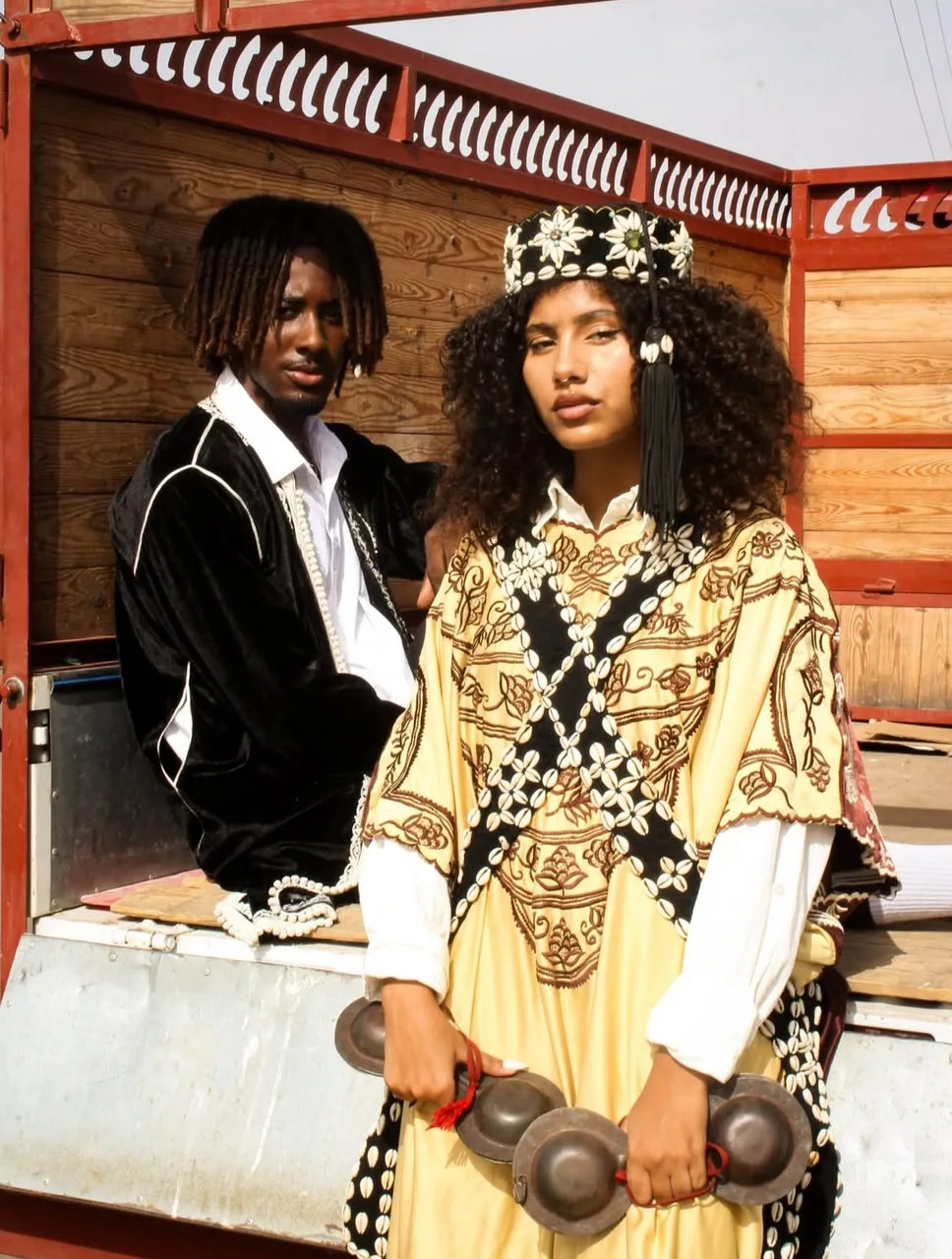
That detail made the culture feel less like something performed on specific occasions and more like something embedded in a person’s life.
“I realised that for them, Gnawa isn’t simply a job, a performance. It is something they have grown up with and something that has been part of them from the beginning. You can feel that connection when they play, dance, and express themselves.”
It also complicated the usual creative temptation to transform everything.
Reviving heritage through contemporary art styles
Fashion projects built around heritage can easily become exercises in taking a recognizable cultural element and making it look newer, stranger, or more contemporary. Omeganart began moving in the opposite direction.
“I wanted the styling and photography to bring attention to the culture rather than change its identity,” she said. “The project became less about my interpretation of Gnawa and more about presenting something that already has its own history, feeling and identity.”
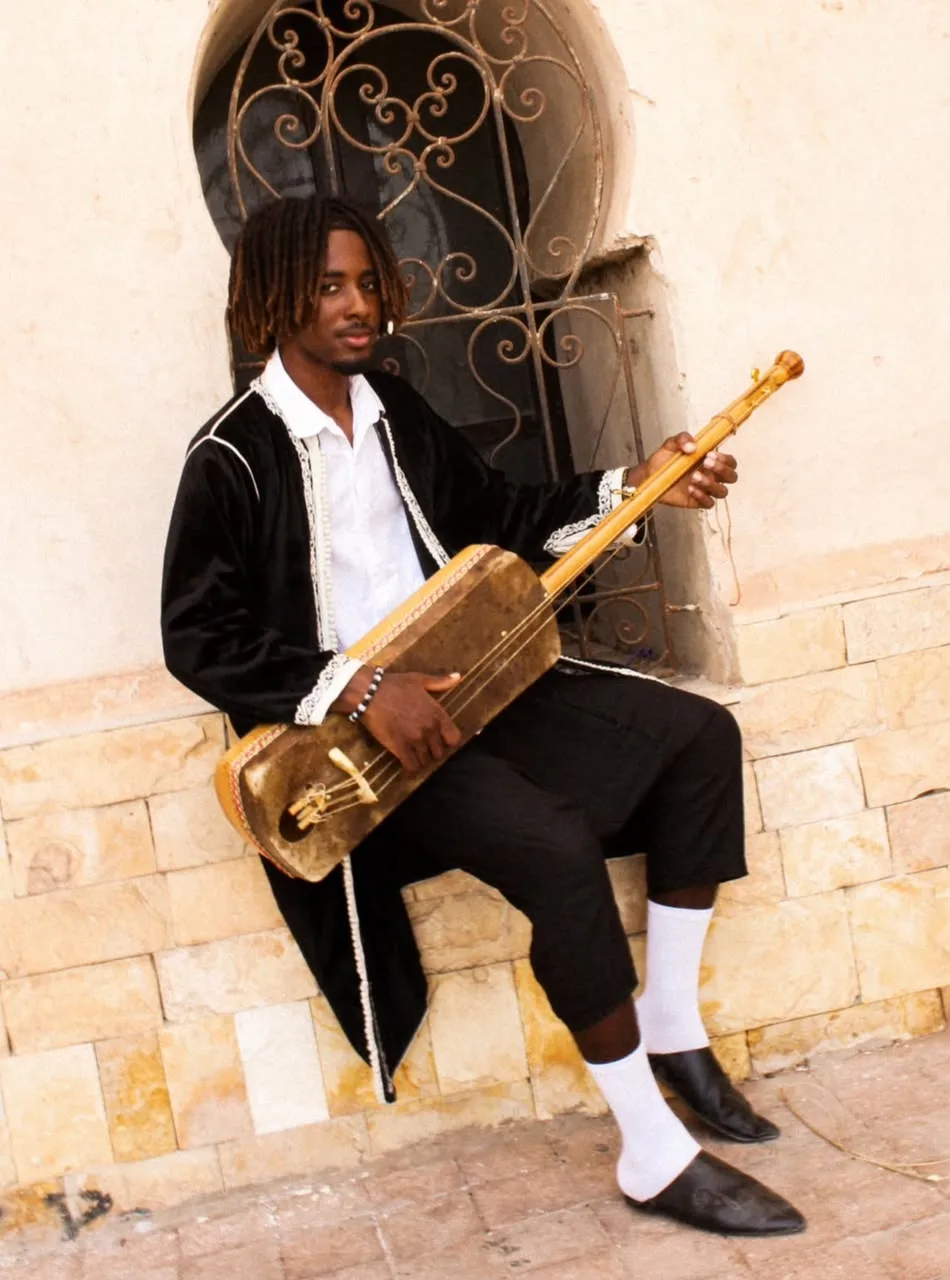
The more she learned, the more important restraint became. “For me, the first step was understanding that not everything needs to be reinterpreted just because I am approaching it through fashion.”
She kept certain cultural elements as they were. Others disappeared from the project entirely once she felt she did not understand them well enough to manipulate them responsibly.
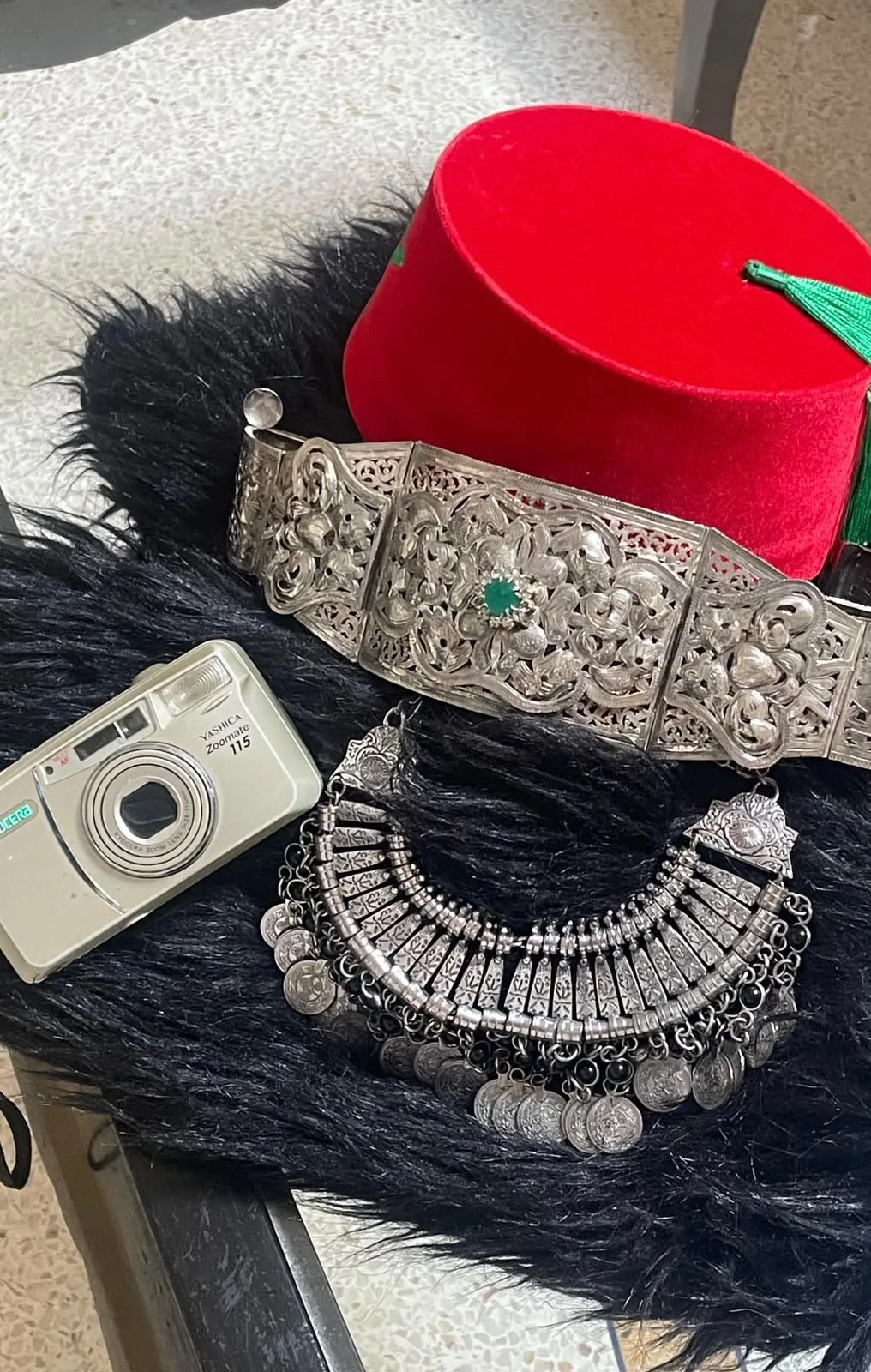
“What I left out was mainly anything I felt I didn’t understand enough to reinterpret responsibly,” she explained.
She does not see that as creativity being restricted. “That wasn’t a limitation on my creativity. It was a choice. Sometimes respecting a culture means knowing when not to change something.”
The Moroccan home inside the frame
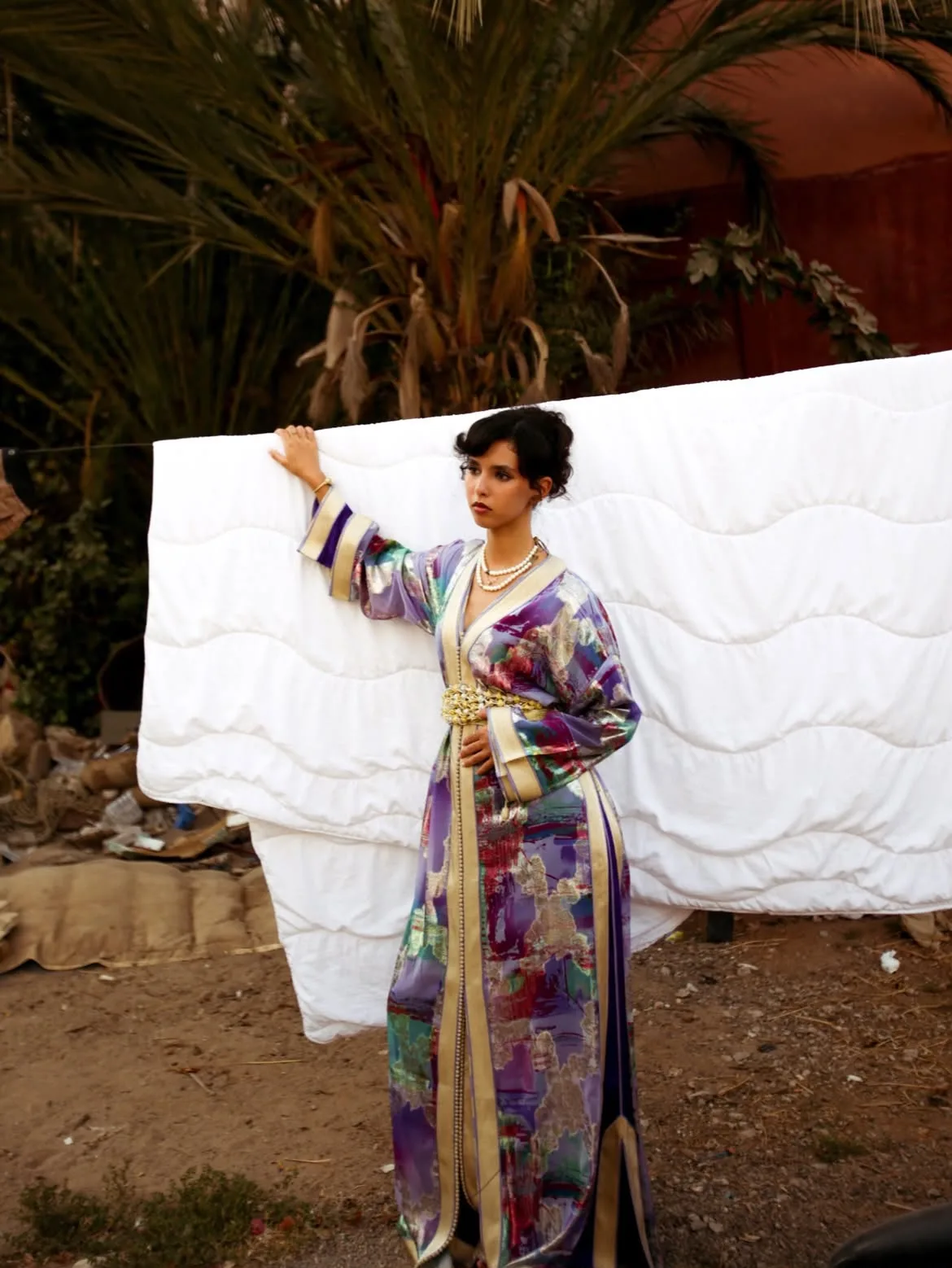
One of Omeganart’s favorite looks from the project places a female model against stacked mattresses and blankets.
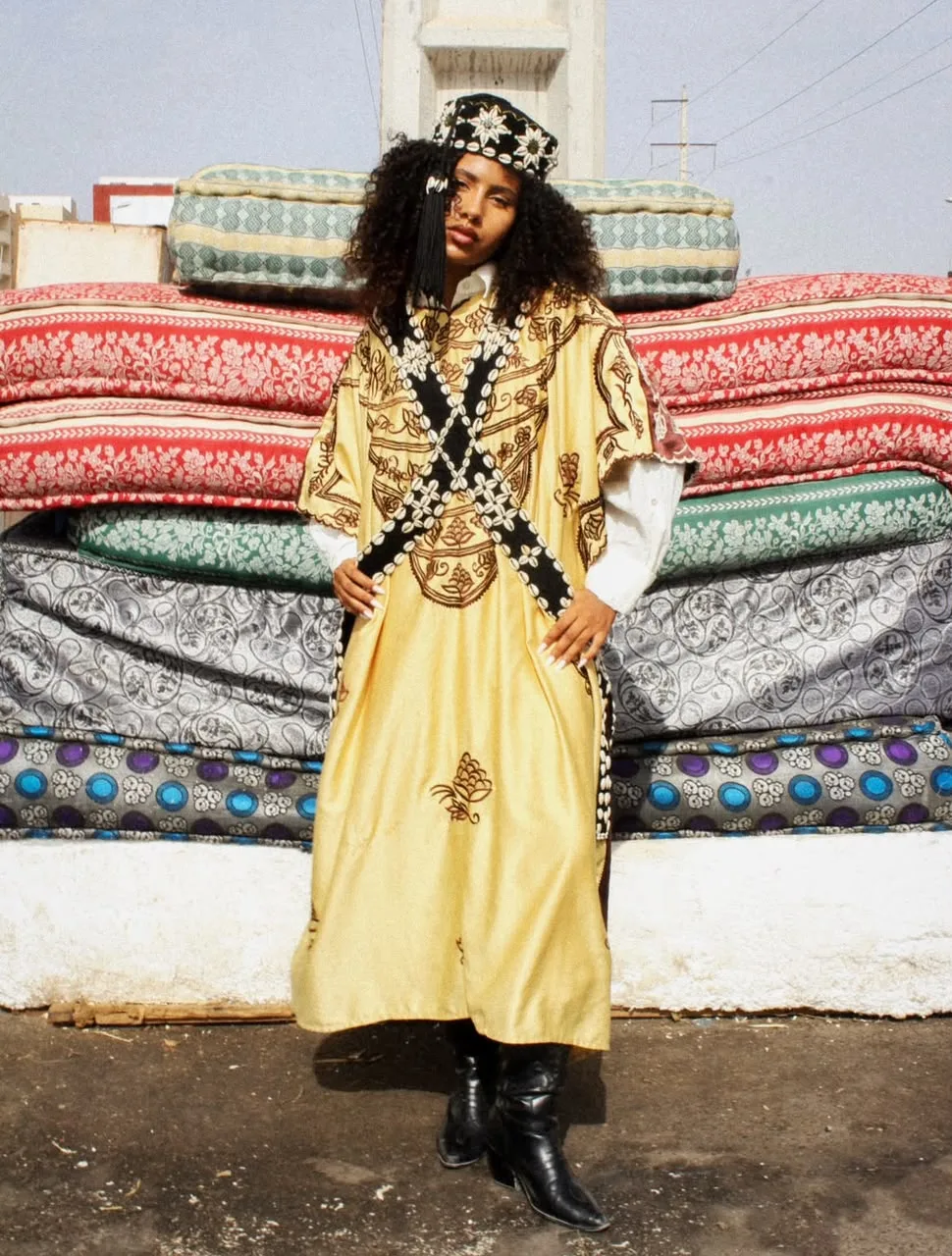
For someone unfamiliar with the visual language of Moroccan homes, they may simply register as pattern and color. For Omeganart, that background was doing as much work as the clothes.
“The background is very familiar to me. It represents home, Moroccan homes, the colors, patterns and objects that we can grow up seeing around us. Then the clothing represents the culture,” she said.
What interested her was the meeting point between both.
“When you put those two things together, the idea becomes bigger than simply creating a beautiful image. It becomes culture coming from home. Something that belongs to us, surrounds us and is already part of our everyday life.”
That thought says quite a lot about where “Omegana” is heading.
Culture does not need a makeover
Omeganart does not appear especially interested in treating Moroccan culture as something distant that needs to be recovered and displayed. In her images, it can already be sitting in the room, folded into a stack of blankets, carried in clothing, heard through music, or absorbed from the people around you.

“I think someone could easily scroll past the image and only see the colors of background, the styling or the composition,” she said. “But for me, that relation between the background and the outfit is the detail that carries the most meaning.”
The Gnawa project eventually grew beyond her own hands. Omeganart brought the concept to creative team “Theideaon,” then worked with models and other collaborators to turn it into a complete visual story.
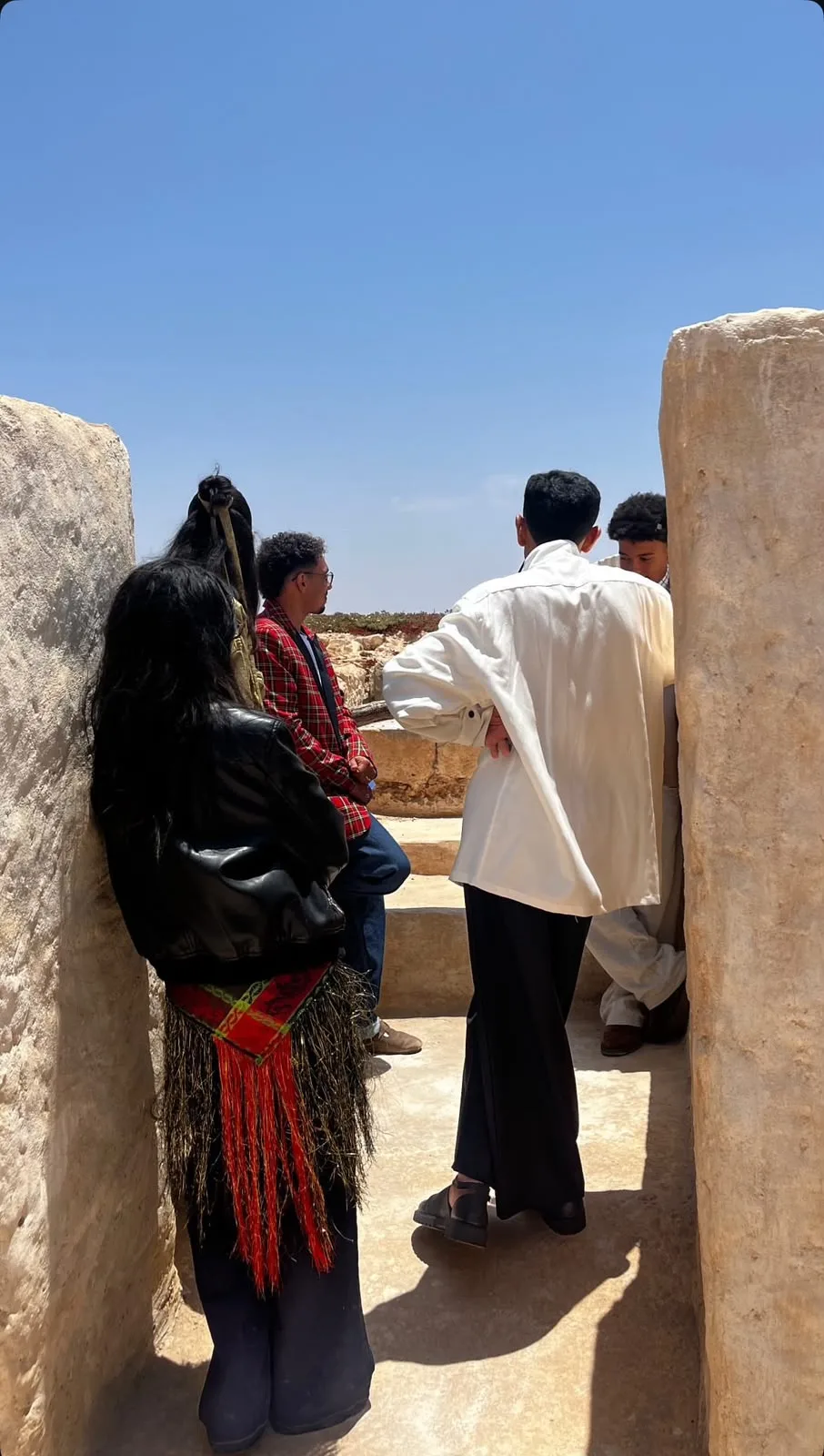
That collaborative part feels fitting for someone whose brand name itself came from other people.
At 20, she is still figuring out exactly what Omegana will become, but her work is already moving beyond the idea of simply designing things to wear. The more interesting question for Omeganart seems to be what a garment can carry with it once a body, a place, a memory, and a camera enter the picture.
For now, one principle seems to guide that process better than any fixed aesthetic.

Culture does not always need to be reinvented to feel contemporary. Sometimes the sharper creative decision is recognizing what already has enough life of its own.