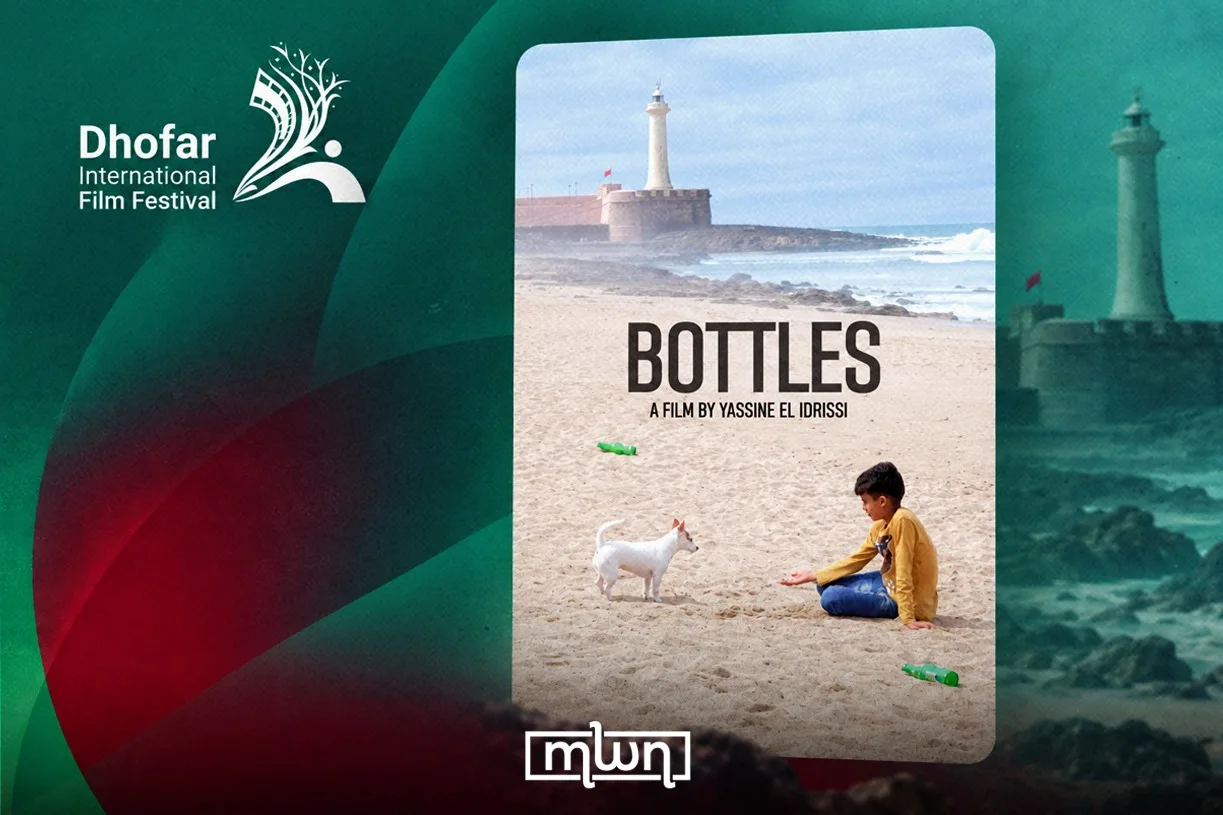
Fez — Moroccan filmmaker Yassine El Idrissi’s short film “Bottles” has won the Special Jury Prize at the Dhofar International Film Festival in Salalah, Oman, adding another distinction to the film’s growing international run.
The second edition of the festival concluded on September 9 after four days of screenings and activities, with 32 films from 16 countries competing across its main categories. “Bottles” received the Special Jury Prize in the fiction competition.
The 2024 short follows Said, a 13-year-old boy living in Rabat’s old Medina who collects empty beer bottles and sells them to buy food for a dog he secretly cares for. His small routine becomes complicated when his closest friend tells him what he is doing is “haram,” forcing the boy into a quiet conflict between compassion, friendship, and religious expectations.
In an interview with MWN Lifestyle magazine following the Dhofar win, El Idrissi said he believed in the emotional strength of the story but never knew how far it would travel.
“It was always a mix of hope and doubt. When making a film, every filmmaker hopes to connect with as many people as possible, regardless of their background, and to reach them through emotions and ideas.” El Idrissi said, “I believed in the story, but of course, you never know how an audience will receive it. So, yes, seeing Bottles travel this far and connect with people in so many different places has been a beautiful surprise.”
A small story that keeps traveling
According to figures shared with MWN Lifestyle magazine, “Bottles” has now traveled to more than 140 festivals and collected over 20 awards and distinctions.
Its earlier recognition includes the Best Short Film Award in the Mohaq category at the 2024 Ajyal Film Festival in Qatar, while Morocco’s national cinema records also list a Young Audience Prize from the International Film Festival of Lakes and Lagoons in Côte d’Ivoire.
For El Idrissi, the film’s ability to cross borders comes partly from placing a child at the center of the story.
“What is special about making a film with children is that their stories can be understood by people of all ages. Every old person was once a child,” he said.
He also sees that universality as a way of bringing Moroccan culture to international audiences without turning the film into an explanation of itself.
“I also hope to share and promote our culture with audiences everywhere without having to over-explain it. Finding that balance is difficult, but it is something I try to explore in all my projects.”
Each new festival selection or award still matters to him for the same reason.
“For me, the most important thing is that a personal, small story can become universal if it is told well. So every new selection or award still makes me happy, because it means that this small story has reached someone somewhere.”
A story built from childhood memory
The world of “Bottles” is closely tied to El Idrissi’s own childhood.
“The film comes from my own memories. The house where we shot the film belonged to a friend of mine. I used to play there with him and other friends when I was a child, and the sea was simply part of our daily life,” he explained.
That personal connection gave the film its setting, but El Idrissi credits much of its emotional force to the performances.
“I think what makes the film strong is also the performances, especially Youssef, the main actor,” he said.
Youssef Benmamoun plays Said, while the cast also includes Hind Dafer and Rabii El Fakih. The production credits also include cinematographer Matteo De Angelis.
Then there was Felix, the little Jack Russel Terrier who played Milo/Alexi. El Idrissi said, “working with animals is never easy! But both of them brought something very natural and alive to the film.”
That natural quality has helped a small story rooted in childhood memories of Rabat find audiences far beyond Morocco.
The Special Jury Prize in Dhofar is another stop on that journey, but for El Idrissi, the larger achievement remains simpler. A story drawn from one childhood, one neighborhood, and one boy’s act of compassion continues to make sense to strangers elsewhere.