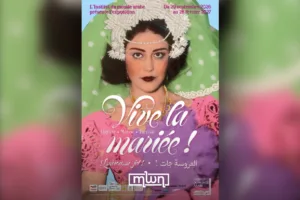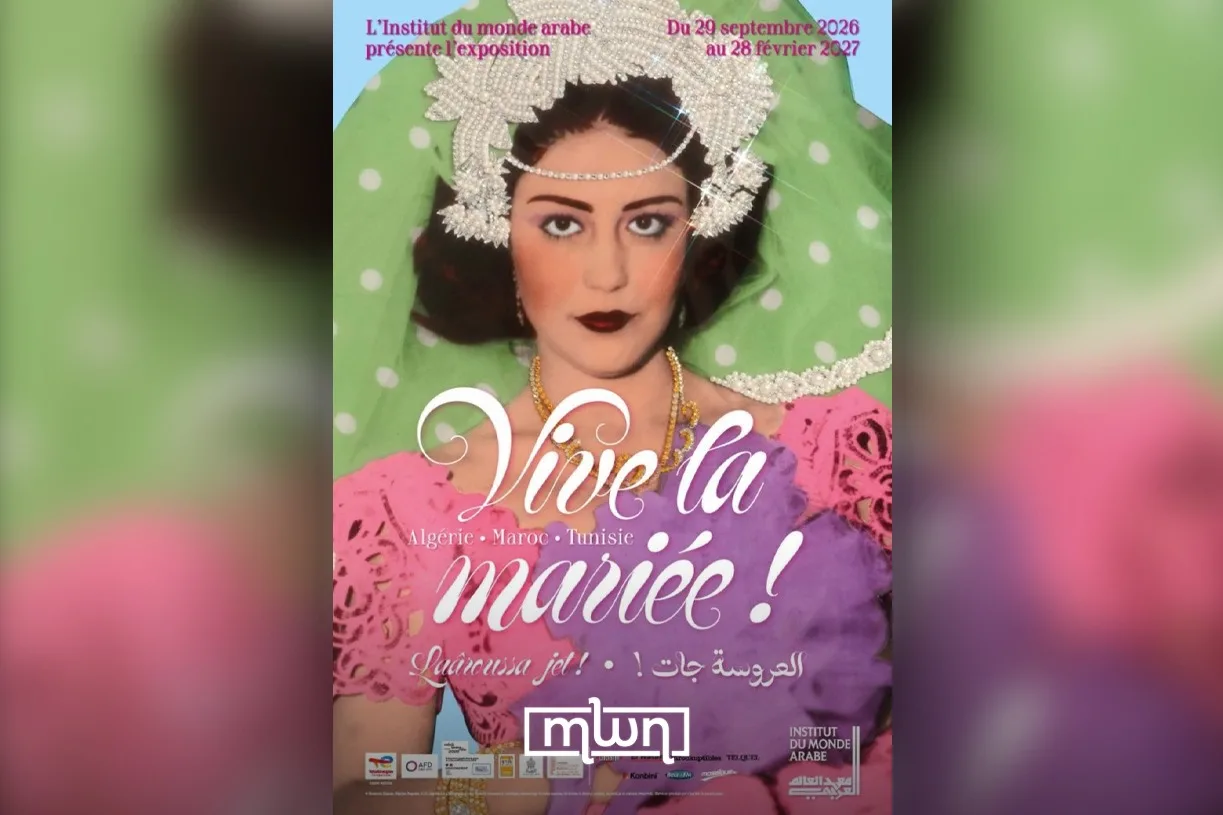
Rabat – Paris is gearing up for a new exhibition titled “Vive la mariée!” (Long Live the Bride!), where wedding-related objects, garments, jewelry and contemporary art from Morocco, Algeria and Tunisia will find common ground from September 29, 2026, to February 28, 2027.
Before a bride ever walks down the aisle, there is already a story woven around her. Fabrics are chosen, jewelry is passed down, and generations of women leave their mark through traditions where every detail carries meaning.
It takes more preparation than a coronation, and arguably just as much drama. This September, the Institut du monde arabe in Paris is putting that story on display with “Vive la mariée!,” an exhibition that treats the wedding not as an event, but as a record of culture, identity, and memory.
But the ceremony itself is not really the point. It’s everything the ceremony is asked to carry, from identity and craftsmanship to family, gender, and the quiet work of preserving cultural memory.
The Moroccan way
Morocco offers one of the richest threads in that story. Among the pieces on display is a “Touqida,” a ceremonial wedding headdress paired with a bridal gown from Rabat, dating back to the 19th-20th century and drawn from Morocco’s National Museum of Adornment.
Together, the pieces make an old point in a new setting. Moroccan bridal dress has never just been only about beauty. Every stitch was a symphony on its own.
And if all roads lead to Rome, perhaps every Moroccan wedding eventually leads to the heart of Moroccan culture.
Bridal traditions also shift from one region to another, creating different cultural dialects through embroidery, jewelry, and colors. What a bride wears can reveal where she comes from and the traditions she carries with her.
The bride, in other words, doesn’t simply enter the room. She arrives carrying centuries on her shoulders, and somehow still manages to look like she’s floating.
Algeria and Tunisia sit at the same table with Morocco, and what emerges isn’t a contest over whose wedding is more elaborate, it’s a portrait of a region that has always shared more than its maps admit. Cultural exchange, it turns out, never bothered to check anyone’s passport.
The exhibition doesn’t stop at historical pieces. Contemporary works bring the conversation into the present, exploring changing ideas about marriage, women’s roles, social expectation, and what it means to be part of a Maghrebi community living in France, caught between inherited ritual and invented identity.
Beyond nostalgia
At the Institut du monde Arabe, the bride becomes more than a symbol of celebration. She becomes a way into the history of the Maghreb, where clothing preserves what archives forget, jewelry carries what language can’t, and a single wedding reveals an entire society when looked at closely enough.
“Vive la mariée!” is ultimately less about one wedding than the many weddings stitched into it, and the generations of women who made sure their traditions would not be forgotten.