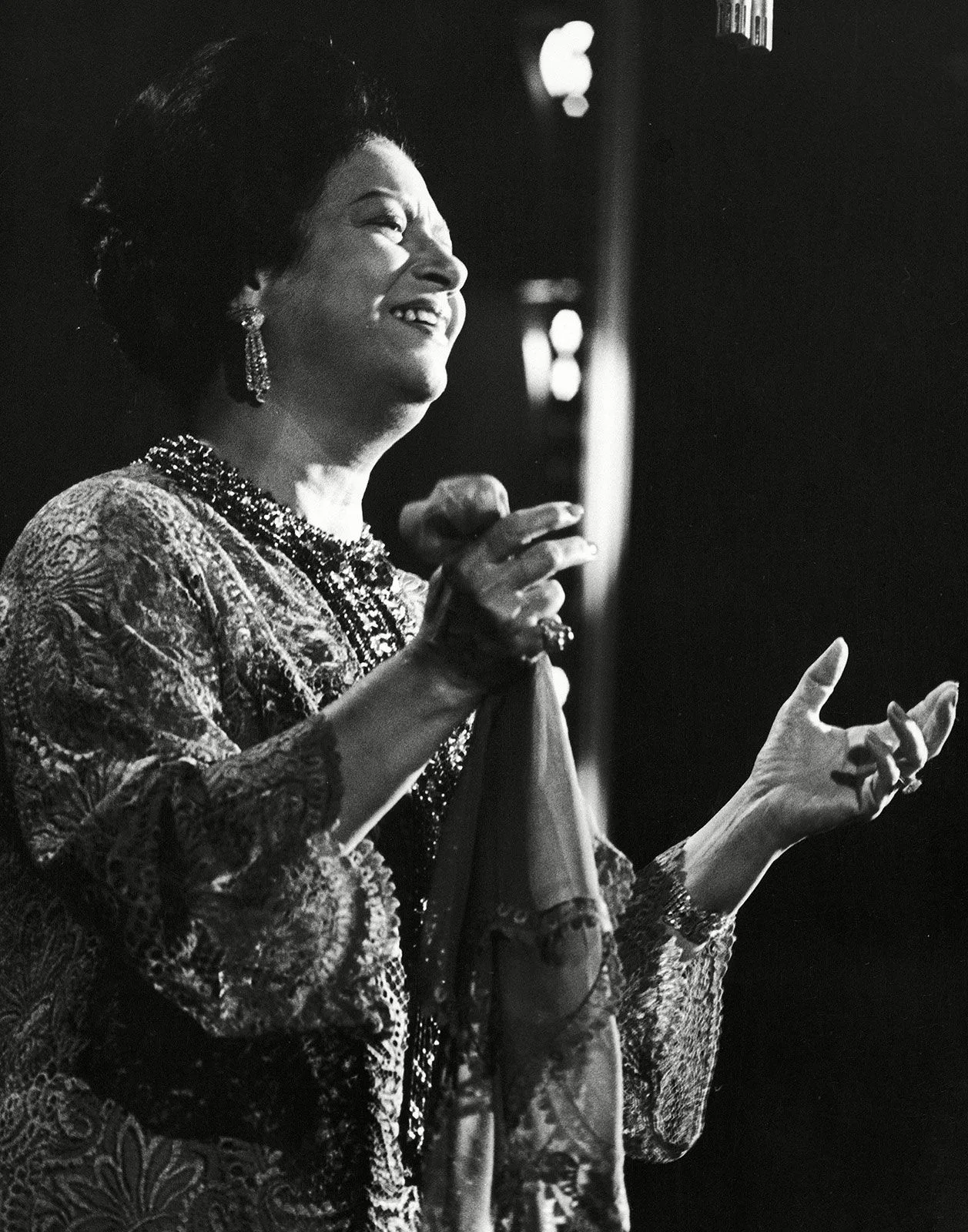
Rabat – We can all recall the magical feeling Umm Kulthum inserts into our hearts while listening to any of her songs. Despite the fact that you may not personally relate to a song, being amazed by her vocal abilities and emotional expression is inevitable.
The talented Umm Kulthum began her journey from childhood. She started religious chanting with her father in the village of Tamay Ez-Zahayra in Egypt and learned the Tajweed rules and technicalities required for chanting, such as mastering and controlling the pronunciation of words.
Umm Kulthum would gather in her village and perform beside her father and brother. The religious chanting experience shaped a new music form – turning the musical experience to a spiritual one.
Features that distinguish Umm Kulthum’s style
The interaction Umm Kulthum has with her audience emits a sense of improvisation in her songs. She does not rely on fixed melodies or rhythms, but rather on her strong voice and choir. Her musical intelligence produces beautifully mixed melodies.
Umm Kulthum has unique vocal abilities which enable her to switch from high to deep notes. She has a magical control over her pitches, and can move between pitches gracefully.
Umm Kulthum is famous for the repetition of verses, which vary in rhythm and repetition. She captures her audience, keeping them on their toes.
Umm Kulthum as a national voice for Egypt during crisis
During the July Revolution and the Suez crisis, Umm Kulthum shared songs like “Allah Ma’ak” and “Rajeen Beqowat El Selah” through which she expressed the collective feelings of Egyptians and motivated them to overcome the crisis.
After the war, Egypt experienced an economic crisis. Umm Kulthum felt an overwhelming responsibility towards her country to defeat the spiritual loss: she donated significantly to the Egyptian state treasury – including 2 thousand pounds of gold – and encouraged gold traders to donate.
Umm Kulthum facilitated gatherings for Egyptian Women to support war affairs like collecting donations and nursing injured soldiers. She launched a musical tour which included 24 concerts in 24 cities with an aim to donate all the revenue to the state. Her first concert generated almost three times the revenue she received before the war, and pursued this mission in the Arab world and beyond.
Umm Kulthum is a vivid example of a perceptive artist. She combines generational musical tastes, and her legacy remains prominent in the world of arts.