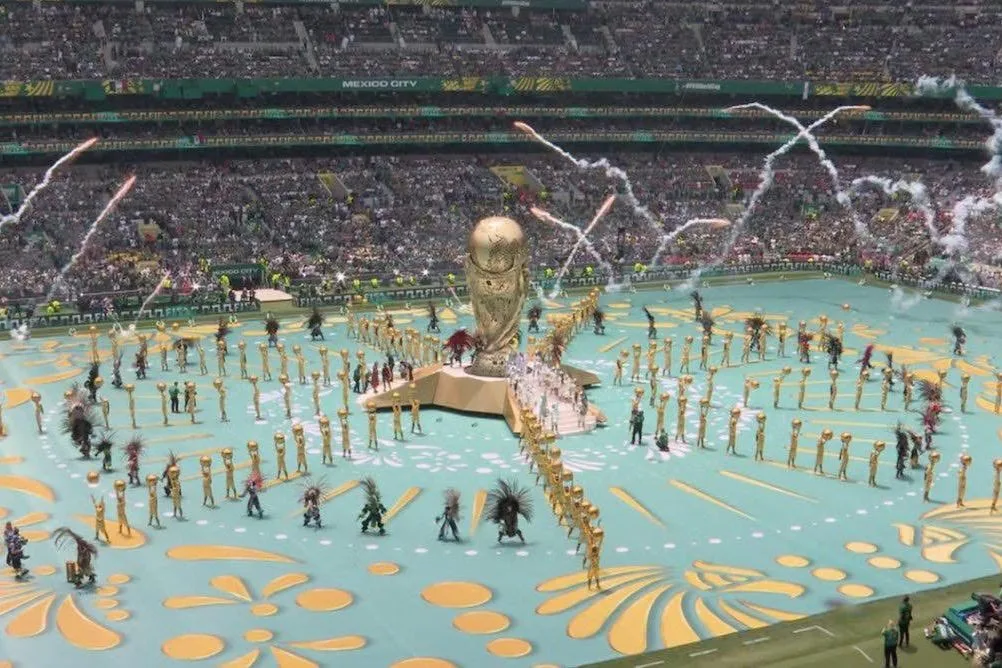
Fez — The 2026 FIFA World Cup opened today in Mexico City with a ceremony that turned Estadio Azteca into a bright, loud, and symbolic stage for the world’s biggest football tournament.
The show came before Mexico’s opening match against South Africa, launching the first 48-team World Cup and the first edition hosted across three countries: Mexico, the United States, and Canada. Mexico’s ceremony was the first of three opening shows planned across the host nations.
The presenter framed the night around a simple message, saying “football unites us all,” before the ceremony moved into a rush of color, drums, dancers, fireworks, and large stadium visuals.
The production leaned heavily on Mexican identity, with Indigenous-inspired imagery, ceremonial patterns, bright costumes, and movement across the pitch that made the stadium feel like a living canvas.
A global show with Mexico at the center
The ceremony balanced Mexican sound with global pop. Alejandro Fernández brought the ranchera weight of “Mi México Lindo,” giving the show one of its most openly national moments. Lila Downs added a folk and Indigenous-rooted voice, connecting the performance to deeper cultural memory.
Los Ángeles Azules and Belinda carried the cumbia-pop side of the show with “Por Ella,” while Maná represented Mexican rock. Danny Ocean added a lighter Latin pop register with “Partidazo,” and J Balvin pushed the ceremony into reggaeton and urban music.
Tyla, dubbed the Queen of Popiano, brought South African energy into the show, a fitting presence before Bafana Bafana faced Mexico in the opener. Her performance also connected the ceremony to the wider tournament soundtrack, which features artists from several continents.
The biggest reaction came near the end, when Shakira and Burna Boy performed “Dai Dai,” the official World Cup song. Shakira returned to a space she knows well, commanding the stage with the confidence of an artist whose name has become tied to World Cup music across generations. Burna Boy gave the song its Afrobeats force, adding weight and rhythm to a track built for stadiums, fan zones, and global streaming.
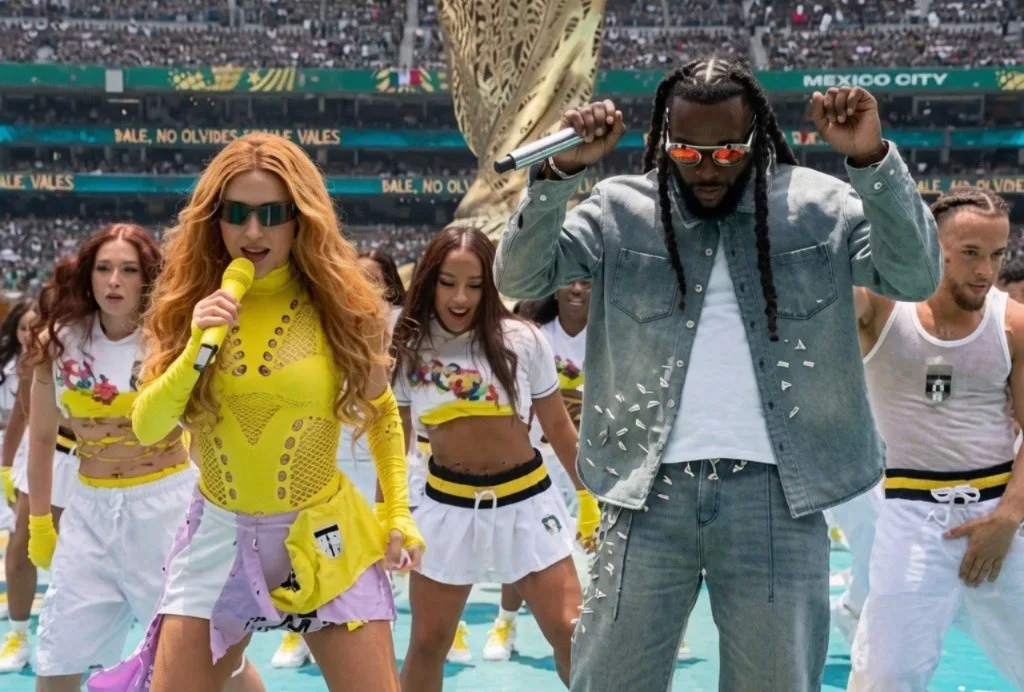
Visually, the ceremony worked hardest during the transition into its final act. Fireworks rose over the stadium, dancers filled the field in sharp formations, and the Indigenous-inspired projections gave the event a sense of history before the pop spectacle took over.
The opening also carried historic weight for the venue. Estadio Azteca has now become the first stadium to host World Cup matches in three different editions, after 1970 and 1986.