Fez — A carpet pattern, a handmade button, or a piece of carved plaster can contain skills accumulated across generations.
But some Moroccan crafts now have so few expert practitioners that losing one master can mean losing part of the technique itself.
Morocco is trying to prevent that through its “Moroccan Traditional Arts Treasures” program, developed in partnership with UNESCO.
The fourth edition selected 12 master artisans across 10 endangered crafts to pass on their skills to 120 young apprentices through structured practical instruction and educational support.
Ten traditions under pressure
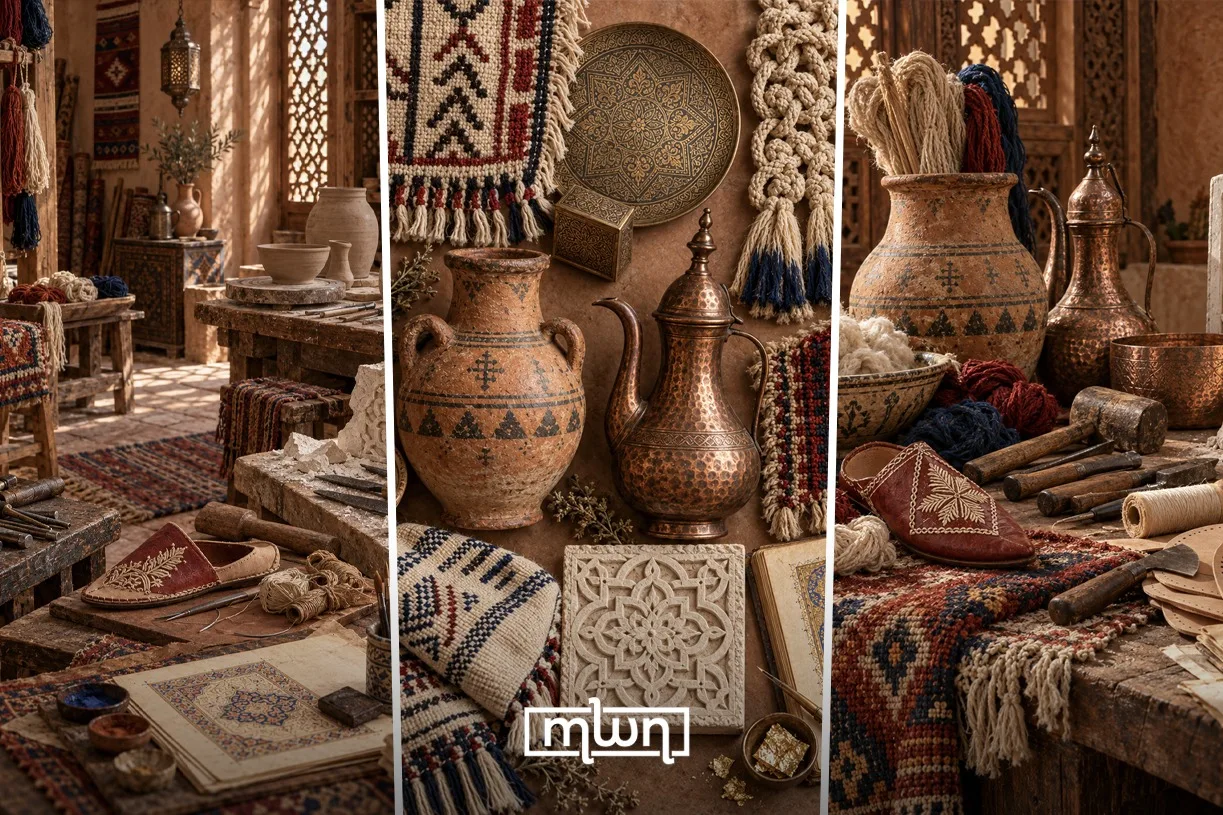
The 2026 edition focuses on Zemmour carpet weaving from Khemisset and damascene metalwork from Meknes.
It also covers “aqad,” the intricate knot-and-button craft associated with traditional Moroccan clothing, particularly in Sefrou.
Traditional “cherbil” slipper-making, women’s rural pottery from the Al Hoceima region, and copperwork from Ighrem are also included.
The remaining traditions include Rahamna carpets, Beni Znassen textile work, “mreboua” carved plaster decoration from Casablanca and Marrakech, and manuscript gilding and binding traditions.
The ministry first identified these crafts during its call for master artisans earlier this year.
Candidates had to demonstrate rare knowledge, previous involvement in documenting their craft, and willingness to train young people inside their workshops.
Knowledge that cannot simply be downloaded
The preservation effort began through a 2022 agreement with UNESCO.
Its basic idea is straightforward: documenting a craft is useful, but video and written instructions cannot replace years spent beside someone who knows the material by touch.
Earlier editions show how the model works.
The program has now covered 42 traditional crafts. Seventeen have already gone through preservation efforts, while 32 master artisans have received official recognition.
More than 400 trainees have participated, with 150 completing their training so far.
The ministry also launched a new “Moroccan Craft Ambassadors” initiative this year to increase public awareness around endangered skills.
Morocco’s craft heritage is often celebrated through finished objects displayed in homes, souks, museums, and fashion.
The harder task is preserving the invisible knowledge behind them.
Without someone learning how the button is tied, the metal is engraved, or the plaster is cut, the object may survive while the craft itself disappears.