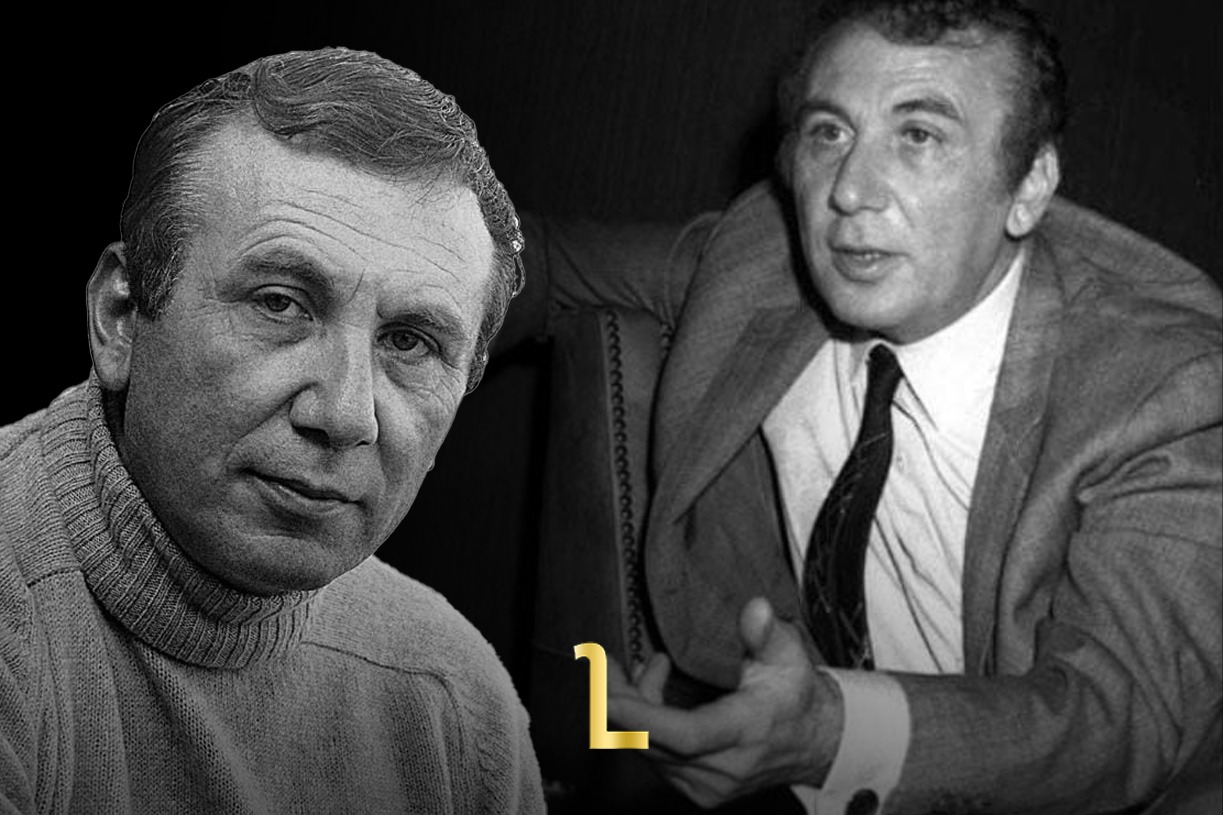
Rabat – Nizar Qabbani may no longer be among us today, but his legacy continues to influence Arab contemporary literature and the music industry.
From the beginning of his career, Qabbani adopted a simple, yet emotionally intriguing style, allowing him to be among the most prominent figures in Arab literature. Translating his emotions into candid words, he transformed his personal sufferings and experiences into shared moments and stories that resonated with millions around the globe.
Qabbani spoke of love, intimacy, and desire with unmatched courage; he challenged conventions and broke major taboos in the Arab world.
Qabbani made his poems a means to voice the struggles of marginalized women, making his poems more than mere written words , but an everlasting record of years of oppression.
Profound simplicity, lyrical elegance, and honesty constituted Qabbani’s unique signature.
Nizar Tawfiq Qabbani was born and raised in Syria in 1923 to a middle-class family during the French mandate of Syria. His father, Tawfiq Qabbani, funded the Syrian resistance against the French mandate, which resulted in several imprisonments. These conditions shaped Nizar’s personality and triggered his sense of rebellion.
At the age of 18, Qabbani joined the University of Damascus and pursued a career in Law.
During his university years, he published his first controversial book entitled “The Brunette Told Me” in 1944. The book, marking the beginning of Nizar’s career as a poet, invited severe criticism given its boldness and sensually explicit themes.
In “ The Brunette Told Me”, the Syrian poet rebelled against the conventional eloquence of Arabic discourse in describing women and celebrated their beauty with unmatched courage.
After graduating with a degree in Law, Qabbani launched his career in politics and joined the Syrian Ministry of Foreign Affairs as a diplomat, serving several missions in London, Cairo, Istanbul, and Beirut until his resignation in 1966.
Marital life
Qabbani got married twice in his lifetime; his first marriage was to Zahra Akbik, whom he married during his mission at the Syrian embassy in Cairo. Their marriage lasted for 6 years (1946-1952); the couple later divorced.
Nizar met his second and last wife, the diplomat Balqis al-Rawi, at a poem recital in Baghdad. Balqis died in 1981, following a bombing of the Iraqi embassy in Beirut. After her tragic death, Nizar wrote a poem entitled “Balqis” as a tribute to his wife, where he expressed his unconditional love for her and blamed the Arab nation for her death.
Mourning the sad loss of his beloved wife, he wrote:
Thank you.
Thank you.
After Balqis’s death, Nizar moved between Paris and Geneva; he eventually settled in London, where he died in 1998 at the age of 75.
Qabbani’s poems on women
Qabbani is among the first voices who spoke against patriarchal practices and advocated for women’s liberation.
Dedicating a big repertoire to address sensitive causes relating to women, the Syrian poet was later called “ poet of women”. His poems include “Letter from a Stupid Woman”, where he was the voice of millions of women living in patriarchal societies mainly in the Middle East and North Africa region (MENA); the linguistic choice of stupid reflects existing stereotypes and not Nizar’s point of view.
Talking of oppression, Qabbani wrote :
I am frightened to tell you my thoughts
I am frightened – if I did –
that the heavens would burn
For your East, my dear Master,
confiscate blue letters
confiscate dreams from the treasure chests of women
“Say I Love You”, “A Woman is Moving Within Me”, “This is My Last Letter”, and “My Love” are all poems where Qabbani celebrated women’s female beauty and agency.
Some of his poems were later adapted into legendary Arab songs like “Do You Have Any Doubt ?” by Kadim al-Sahir, and “The Fortune Teller” by Abdelhalim Hafez.
Qabbani ’s poems on wars
Throughout his career, Qabbani wrote for love, grief, and war; his transition from romance poems to war poems was triggered by the defeat of the Arab States coalition in the Six-Day War in 1967.
Some of his poems on war include “Verse” and “Al-Sultan,” where he criticized Arab authorities and spoke against oppressors.
My grieved country,
In a flash
You changed me from a poet who wrote love poems
To a poet who writes with a knife
28 years following his death , Qabbani is still one of the prominent contemporary figures in Arab literature.
His poems illustrate the power of language,and emphasize that one can still stand for the causes he believes in whenever and wherever he is.