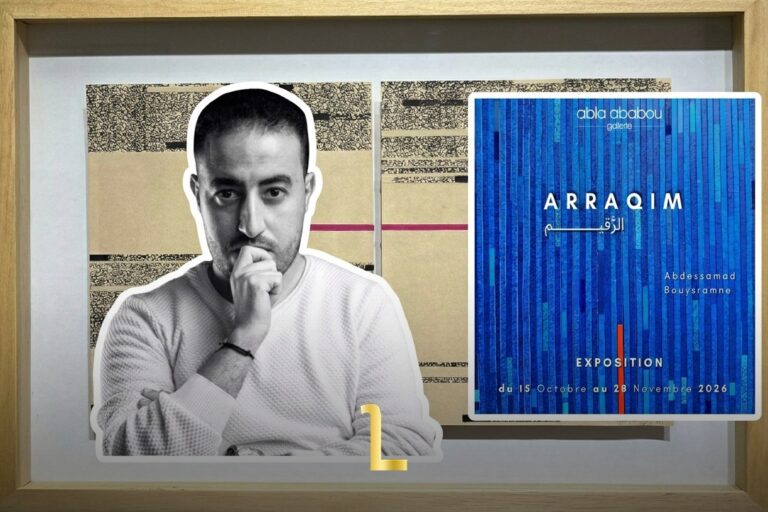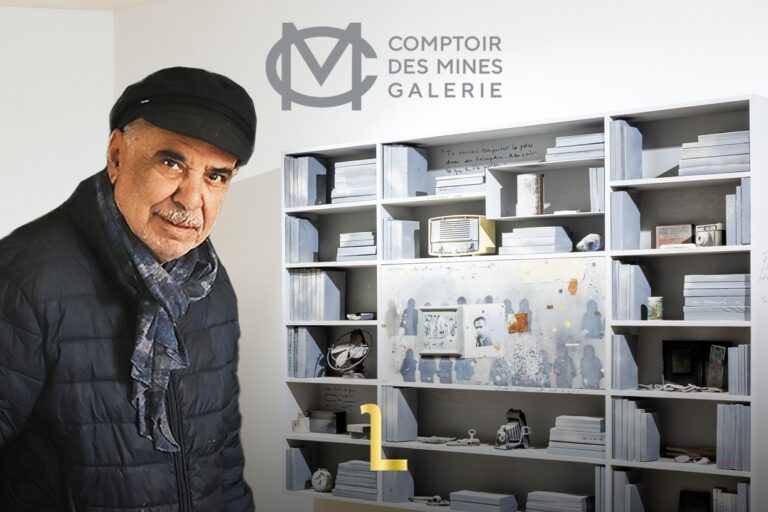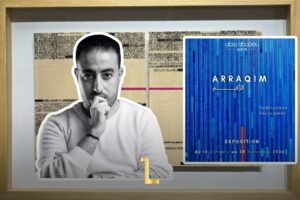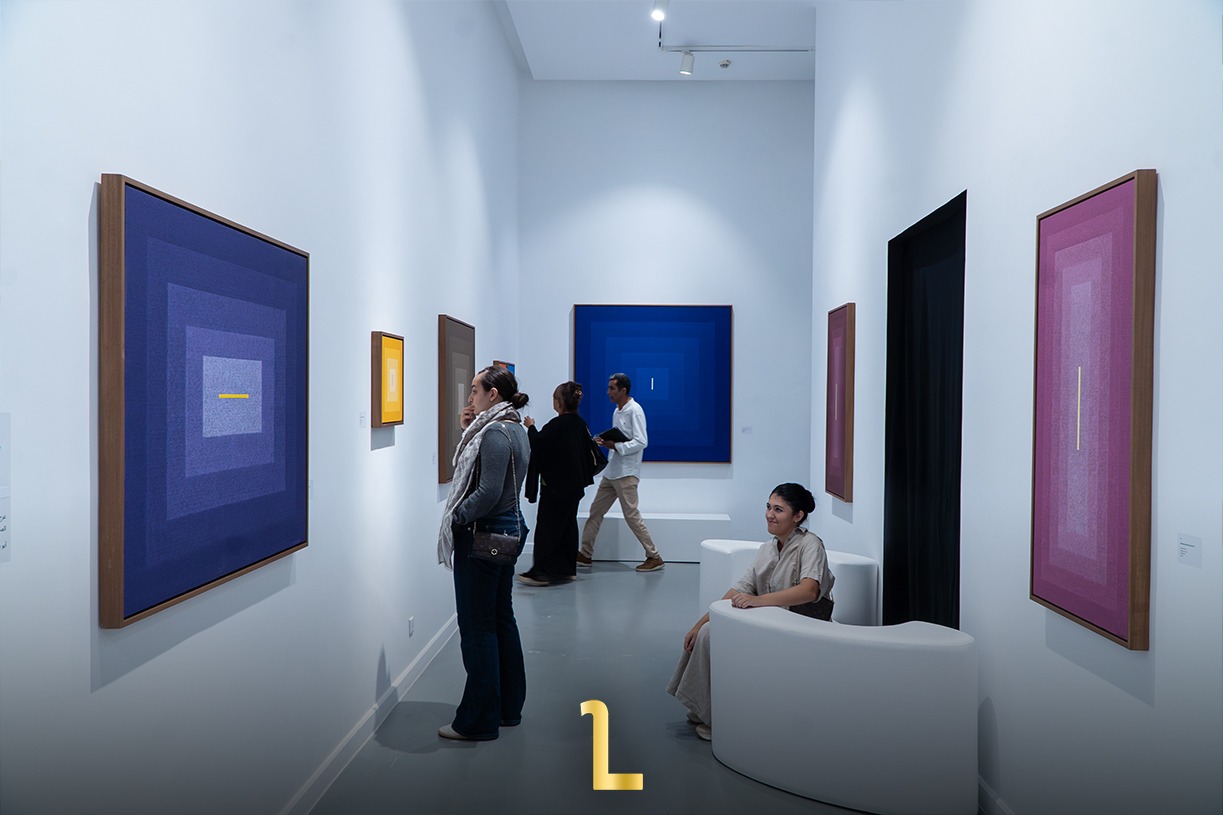
Rabat — Abla Ababou Gallery in Rabat unveiled Abdessamad Bouysramne’s solo exhibition on October 15. Titled “Arraqîm,” the exhibit explores writing’s relationship to time and memory.
Bouysramne was influenced by the ancient manuscripts his father studied when the artist was a child.
Inspiration drawn from the past
Abdessamad Bouysramne’s father was an Islamic scholar and teacher in Marrakech. The artist first encountered the art of calligraphy when looking at ancient manuscripts that his father studied.
One of Bouysramne’s students said the artist’s childhood memories were one of the most important things in his life. Speaking with Lifestyle magazine, Bouysramne agreed that the past was his inspiration.
Bouysramne’s childhood surrounded by manuscripts gave him a lifelong interest in the act of writing, particularly traditional calligraphy. Naturally, calligraphy was destined to be a springboard for Bouysramne’s art.
Art for the present and future
Bouysramne may have begun in the past, but his art does not stay there. Abla Ababou, the owner of Abla Ababou Gallery, told Lifestyle magazine that Bouysramne “transforms calligraphy, the ancestral art of manuscripts, into a completely contemporary visual language.”
Bouysramne described the exhibition as a “bridge, a connection between the past, the present, and, of course, the future.”
A reflective experience
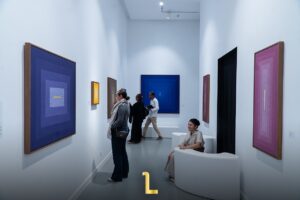
The exhibition space is wide and white. Bouysramne’s multimedia pieces deck the halls.
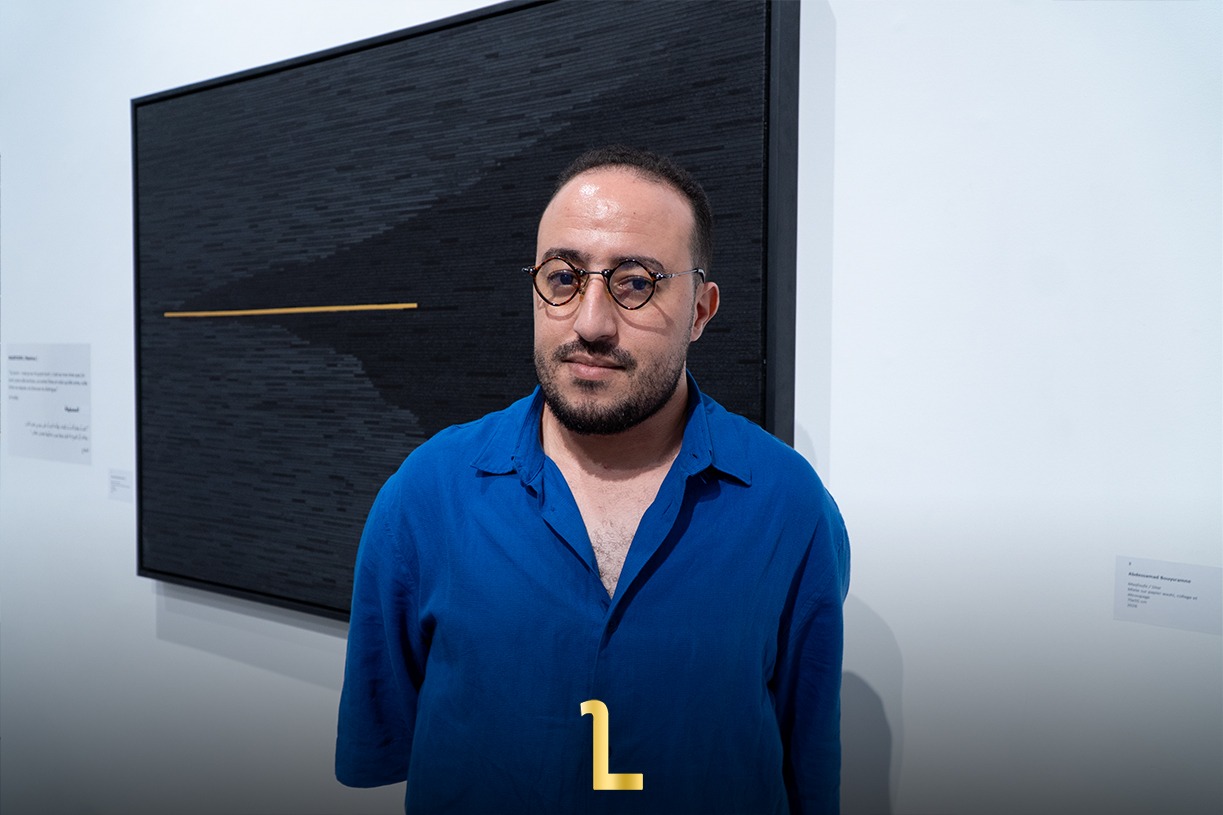
Many of the artworks bear horizontal lines, a kind of Morse code. However, calligraphy is notable in all of them.
In the middle of the room, the calligraphy is gold. That area has black walls. Spotlights shine from above and below on a black object surrounded by smaller white stones.
One of Bouysramne’s students spoke about the importance of turning, admiring Turkish whirling dervishes for their constant motion. He suggested that Bouysramne’s art was also meant to encourage motion.
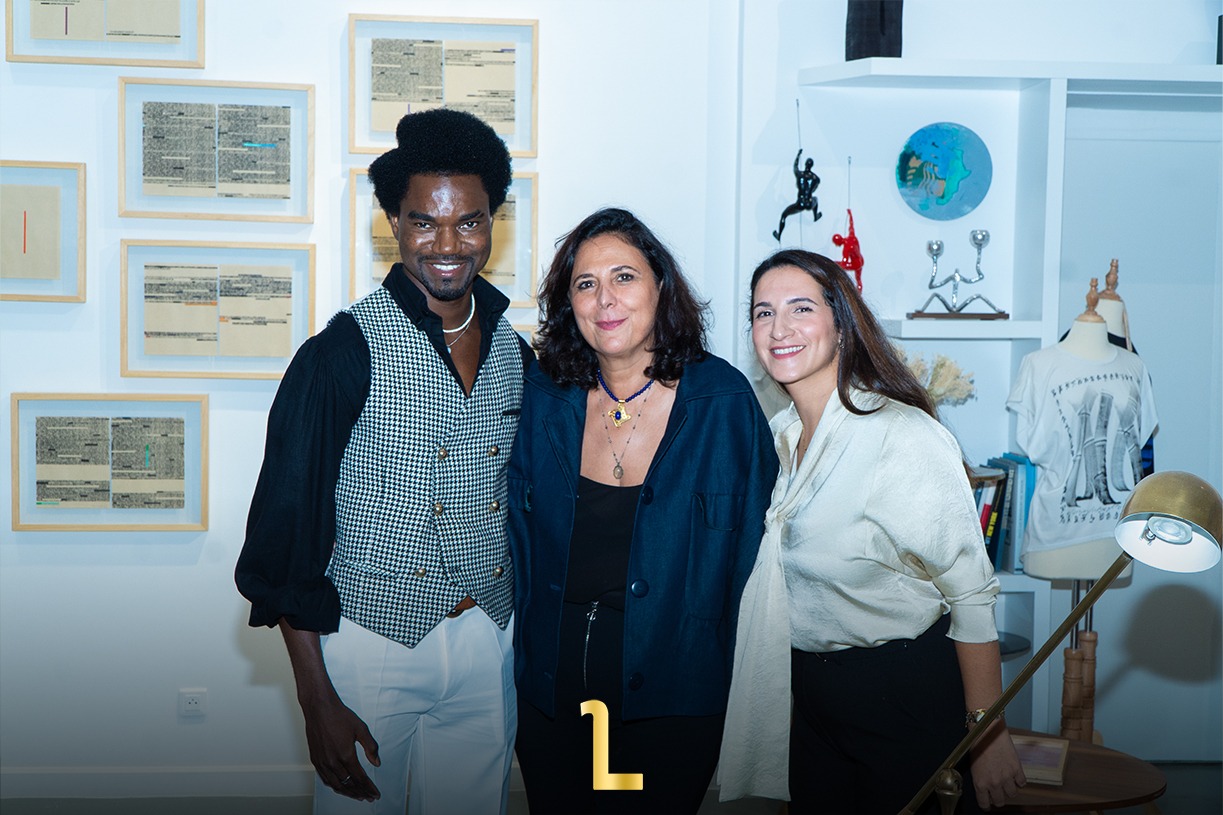
Guests spoke and laughed in multiple languages. The art encouraged one couple to talk animatedly about the love letters they write each other every month.
Funnily enough, although the exhibition centered on words, many found it hard to describe the art in words. Many attendees at the gallery did not have the words to talk about the art’s impact.
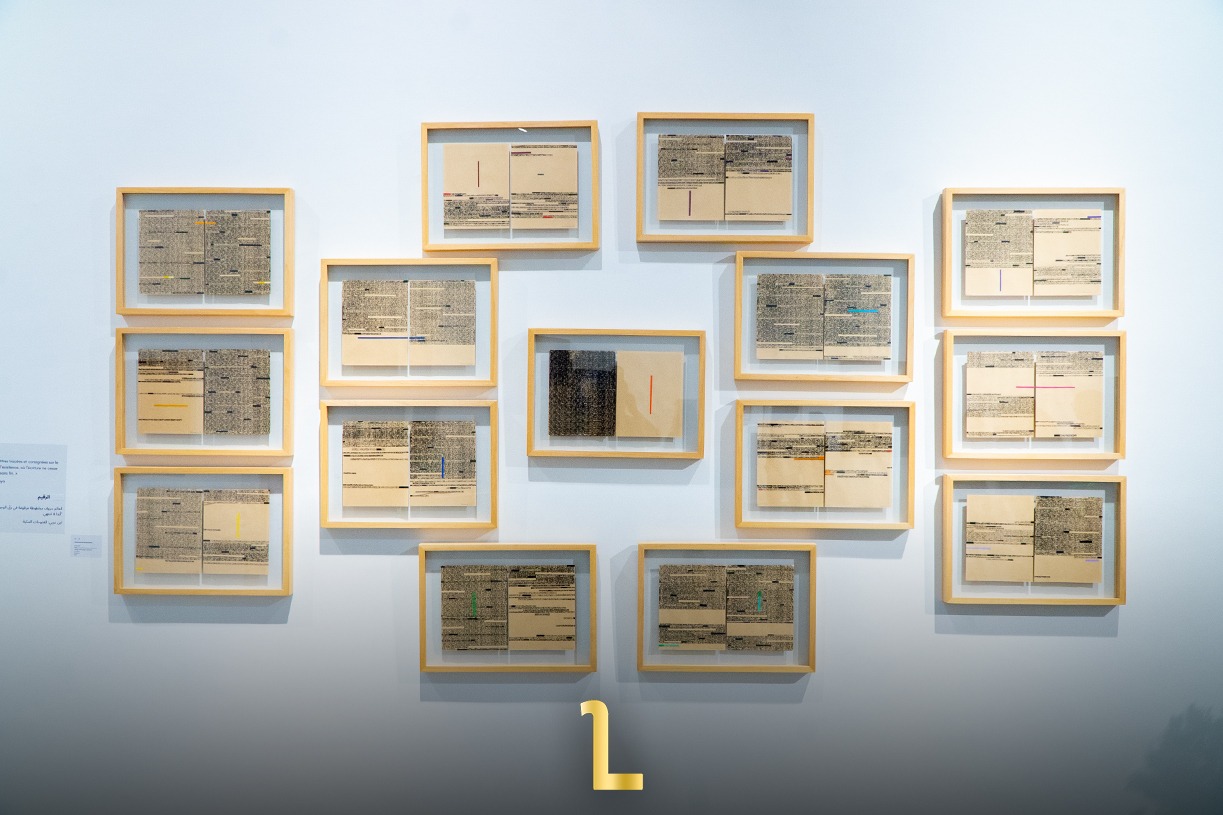
Hope for old and new to coexist
The exhibition is titled “Arraqîm.”
It refers to a tablet, or louh, on which writings from the past are engraved. But like much of the artwork, there is a double meaning. The title also references raqm, meaning number in Arabic, signifying digital language.
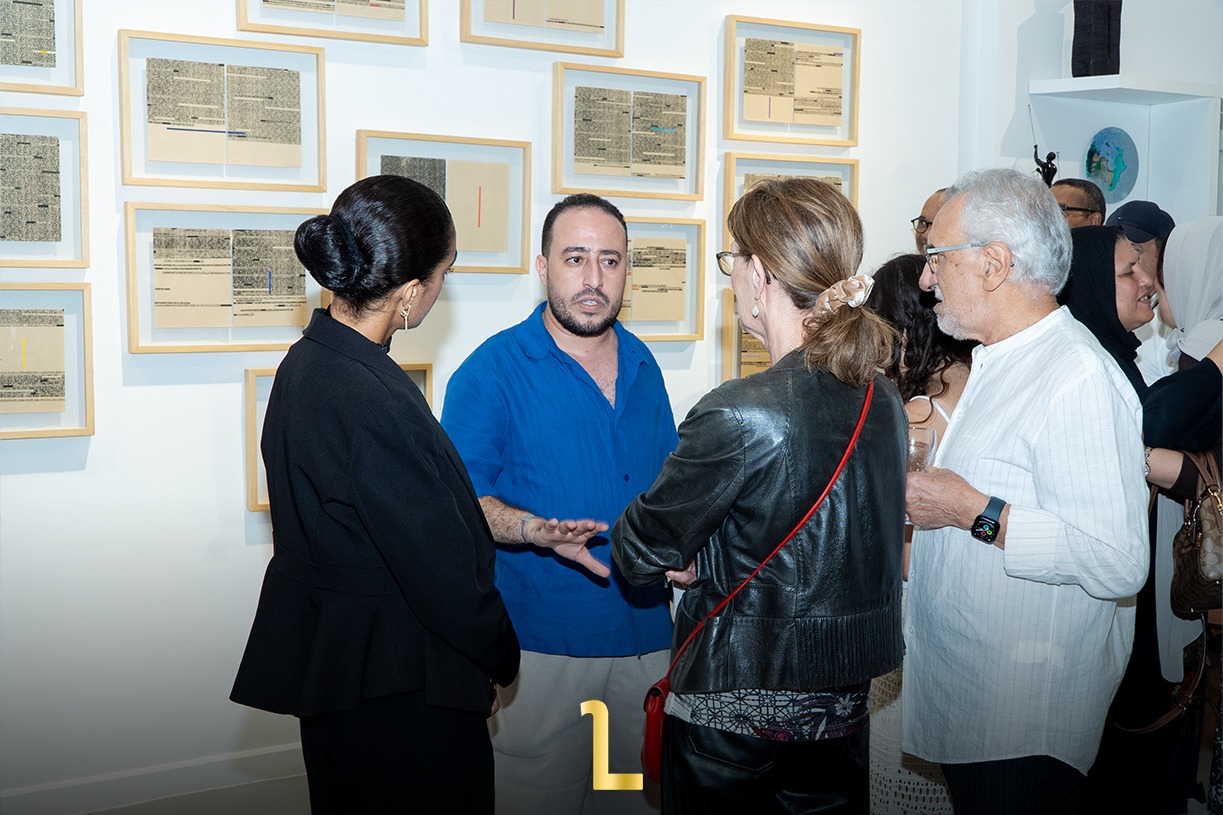
The past, present, and future all exist together in Bouysramne’s work. Ababou put it aptly, saying that his work is striking with its “harmony between modernity and tradition.”
When Lifestyle magazine spoke to Bouysramne, one of his students came up and tapped the artist on the shoulder. The student said that Bouysramne was always joking and having fun. Bouysramne made art in spite of his laughter, or maybe because of it.
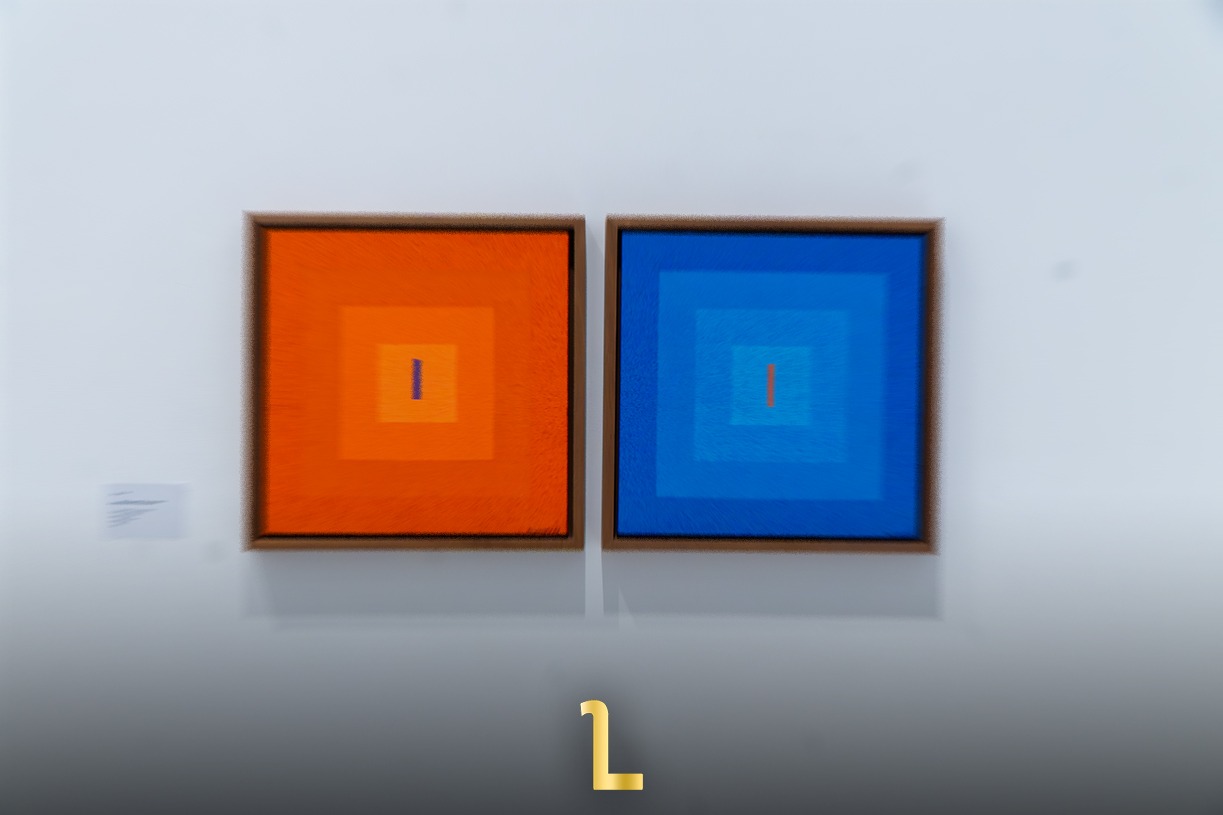
Even as Bouysramne explored his past through the exhibition, the teacher was passing on knowledge to his students. For Bouysramne, art is just like writing. It creates connection.
The exhibition was a tribute to the victims of the Al Haouz earthquake, especially those from Bouysramne’s village.