Elie Saab’s “New Court” Fall 2025 Collection Was A Regal Escape from Minimalism
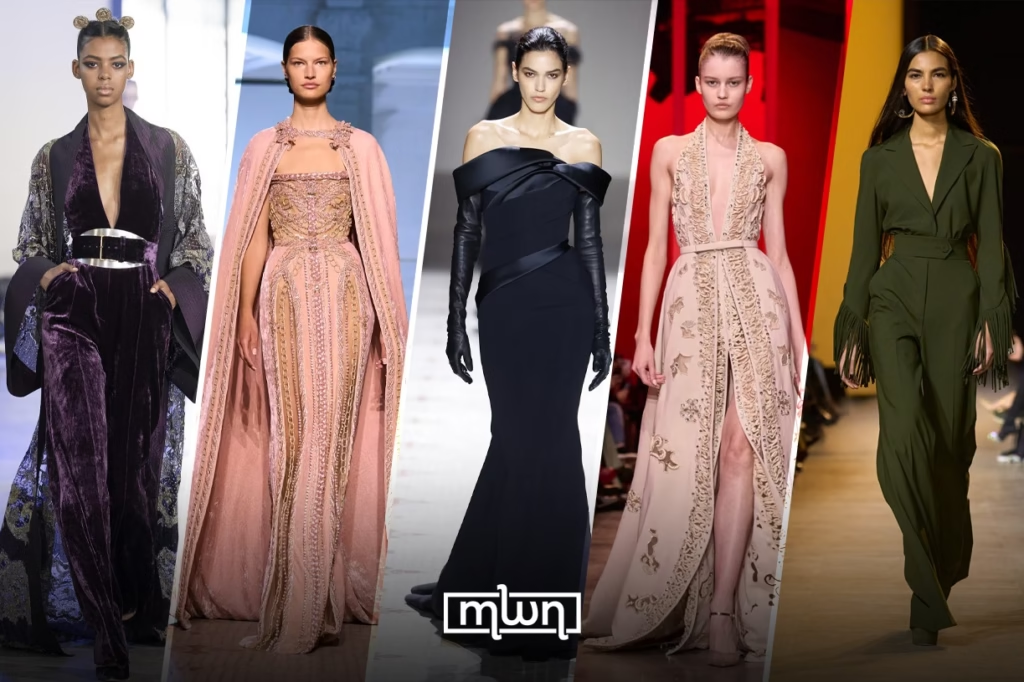
Yesterday, the renowned Lebanese designer brought Paris back to its fashion roots of royalty, presenting a collection inspired by the over-the-top ballroom looks inside Versailles. Rabat – Elie Saab showcased his Fall 2025 collection yesterday, June 9, at the heart of Paris. The collection, named “The New Court,” was eccentric at its core, a true test to royalty. The Lebanese designer asserted that women are deviating away from the era of minimalism. “After all the simpler things before, now they really want pieces with new volumes, with a truly exceptional flair,” he said to Women’s Wear Daily. “The New Court” designs took heavy inspiration from the golden age of Versailles, specifically an ode to the times of Marie Antoinette herself. The signature of femininity in Elie Saab’s designs was very present, with a collection featuring gowns, floral touches, volume, and long train dresses in macaron shades. Saab’s collection can almost be described as a romantic maximalist one, fusing both styles and delivering feminine and playful looks. The designer shared his vision on Instagram: “Regal yet effortless… Beautifully hand-crafted and full of precious embellishment, this evocative collection summons an enchanting realm where pleasure, power and playfulness rule.” Fans flooded the post with admiration and support. One commenter wrote: “Beautiful dresses! I was captivated by the richness of details! I loved the dynamic nature of the models, conveying power and softness.” In a far contrast from basic fashion trends, Elie Saab continues to impress with his creativity, making designs that flatter women’s silhouettes and bring a more romanticized and beautiful vision of femininity into the fashion industry.
Chanel Fall 2025: A Collection in Waiting
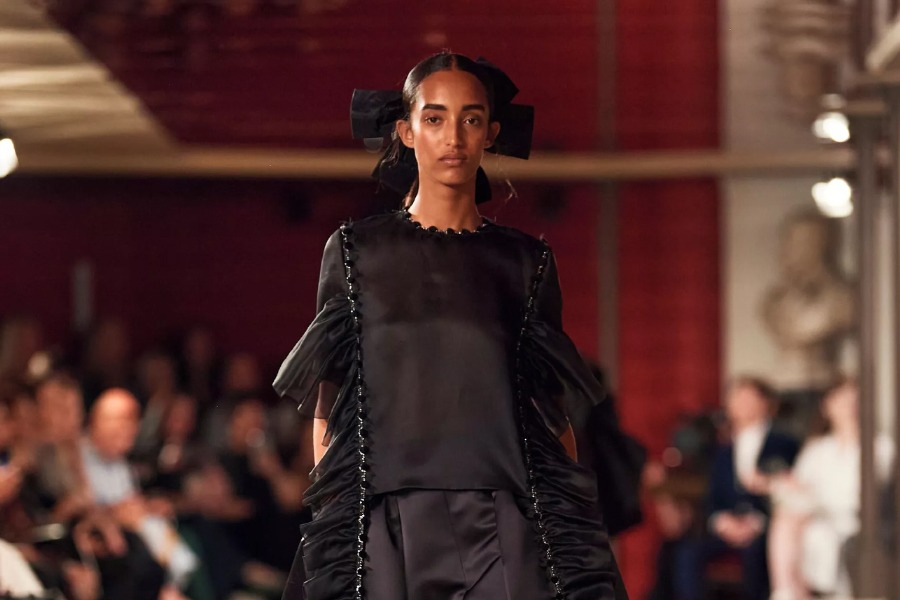
Chanel played it safe this season, delivering a collection steeped in tradition, but missing the spark of transformation. Fez– Chanel closed out Paris Fashion Week with a collection that felt like a waiting room: elegant, refined, yet unmistakably in limbo. With Matthieu Blazy set to take the creative reins next month, the house played it safe, delivering a collection that leaned on heritage rather than pushing boundaries. The runway’s central motif was evident from the moment invitations arrived, adorned with a neatly boxed satin bow. That same bow dominated the show’s set as a monumental black ribbon spiraling toward the Grand Palais ceiling. It was a fitting metaphor for a brand caught in transition, looping back on itself while waiting for a new chapter to unfold. Chanel’s in-house design team worked within the brand’s signature codes, presenting a lineup that balanced military precision with romantic flourishes. Satin ribbons trimmed an anthracite tweed jacket, while sheer black organza tunics billowed with balloon sleeves tied by delicate bows. A trio of dresses featured a swirling ribbon print that echoed the house’s interlocking Cs, while playful pearl-trimmed bow cutouts adorned sweaters and skirts. While polished, the collection felt predictable. The real intrigue lay in its experiments with scale and optical illusion. Layers of illusionary tulle created ghostly outlines over classic tweed suits — for instance a pink short-sleeved jacket and shorts layered beneath a sheer, ankle-length skirt. A cherry-red tweed ensemble, comprising a jacket, wrap skirt, and flared pants, extended its reach into accessories, with matching hats, gloves, handbags, and boots forming a head-to-toe monochromatic statement. Some elements had a distinctly Karl Lagerfeld touch, his signature ability to weave pop culture into Chanel’s DNA. Accessories played with proportions: a minaudière shrunk to the size of an egg, while pearl necklaces were exaggerated into oversized crossbody bags. Boots with giant pearl heels were an instant collector’s item, a nod to Chanel’s legacy of playful luxury. Among the guests were Indian twin influencers Snehal and Jyoti Babani, known for their perfectly coordinated outfits. Their aesthetic found an uncanny mirror in a duo of reverse monochrome twinsets, proof that Chanel still knows its audience. But as the show progressed, the collection lost momentum. Sack-like Pierrot smocks and oversized sweater dresses felt at odds with the season’s obsession with sensuality, from Stella McCartney’s pole dancers to Duran Lantink’s prosthetic-breasted designs. For Chanel’s elite clientele, comfort-driven luxury may be enough. But in today’s hyper-competitive fashion landscape, heritage alone doesn’t sustain a brand. The industry thrives on reinvention, and recent Chanel collections have lacked the unexpected creative clashes that bring a house to life. Blazy’s arrival signals a chance to shake things up. If his past work at Bottega Veneta is any indication, where he paired $8,400 leather bags with stuffed animal bean bags and Beverly Hills “90210” nostalgia, Chanel’s future may be anything but predictable. And that’s exactly what it needs. Read also: The Influence of Moroccan Royalty on Modern Elegance
Isabel Marant’s New Collection Sparks Accusations of Cultural Appropriation
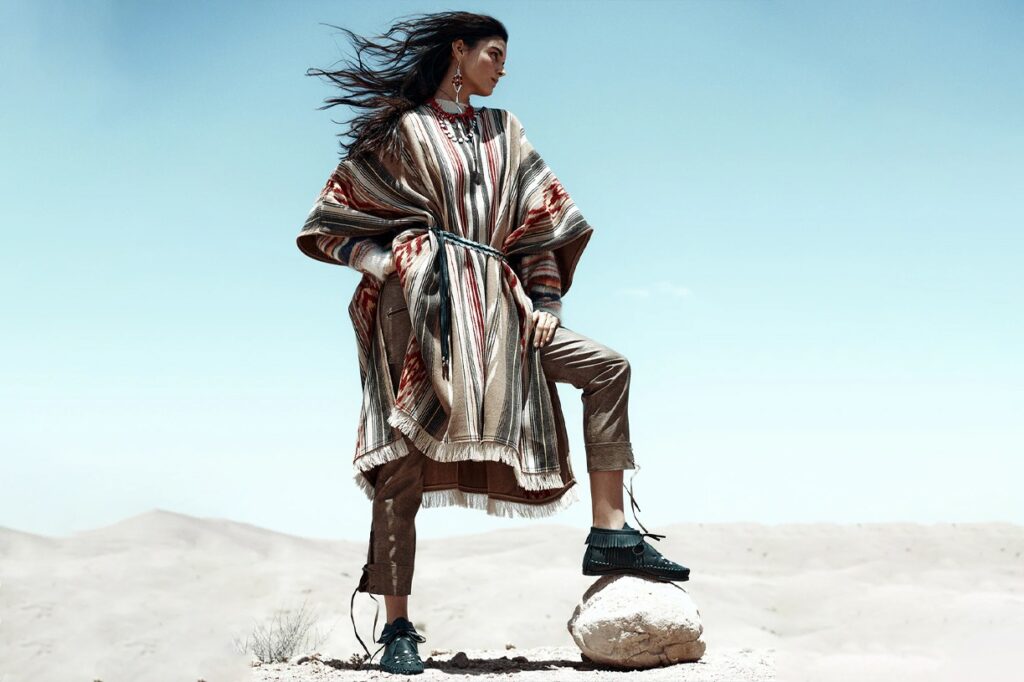
A new spring collection by a famous French brand is raising questions about inspiration, culture, and proper credit where it is due. Fez – Isabel Marant, a well-known French fashion brand, is facing strong criticism after launching its new Spring collection Marant Étoile. The collection features clothing and accessories that look heavily inspired by Moroccan culture. From traditional Moroccan fabrics to Amazigh jewelry and iconic jackets, the influence is clear. However, the brand failed to mention Morocco anywhere in its official campaign. The collection’s description on Isabel Marant’s website uses vague terms like “craft-inspired motifs” and “folk spirit,” but it does not name the source of these inspirations. Instead, the text describes the collection as having “stripes evoking the horizon” and “coral jewelry,” avoiding any reference to Morocco’s rich cultural heritage. This is a clear example of cultural appropriation – the act of taking cultural elements from a group, and using them for profit without credit or respect. Morocco, with its long history of craftsmanship, traditional textiles, and unique jewelry, has often been a target of such practices by Western fashion brands. Even the photos used to promote the collection appear to have been taken in Morocco, although the brand did not confirm the location. This silence, combined with the clear Moroccan elements in the designs, has angered many in Morocco and beyond. Social media users are calling out Isabel Marant for ignoring the culture that inspired the collection while still profiting from its beauty and uniqueness. This is not the first time Moroccan culture has been used specifically by luxury fashion brands without proper credit. In recent years, Moroccan patterns, fabrics, and symbols have frequently appeared in high-end collections, often without any mention of the artisans, traditions, or cultural significance behind them. As global conversations about cultural appropriation grow louder, brands like Isabel Marant shall face increasing pressure to give proper credit and respect to the cultures they borrow from. Acknowledging the source, collaborating with local artisans, or supporting cultural preservation efforts would be a more ethical way to engage with global fashion inspirations. For now, Isabel Marant has made no public statement about the accusations, leaving the Moroccan community and cultural advocates waiting for answers. Read also: The Art of Slowing Down in Ramadan