Rabat — What can the disappearance of a plant tell us about the way humans have changed the natural world?
Moroccan artist Fatime Zahra Morjani explores this question in her upcoming exhibition, “Biosphaerae,” which will open at Galerie Shart in Casablanca on October 15 and run until November 14.
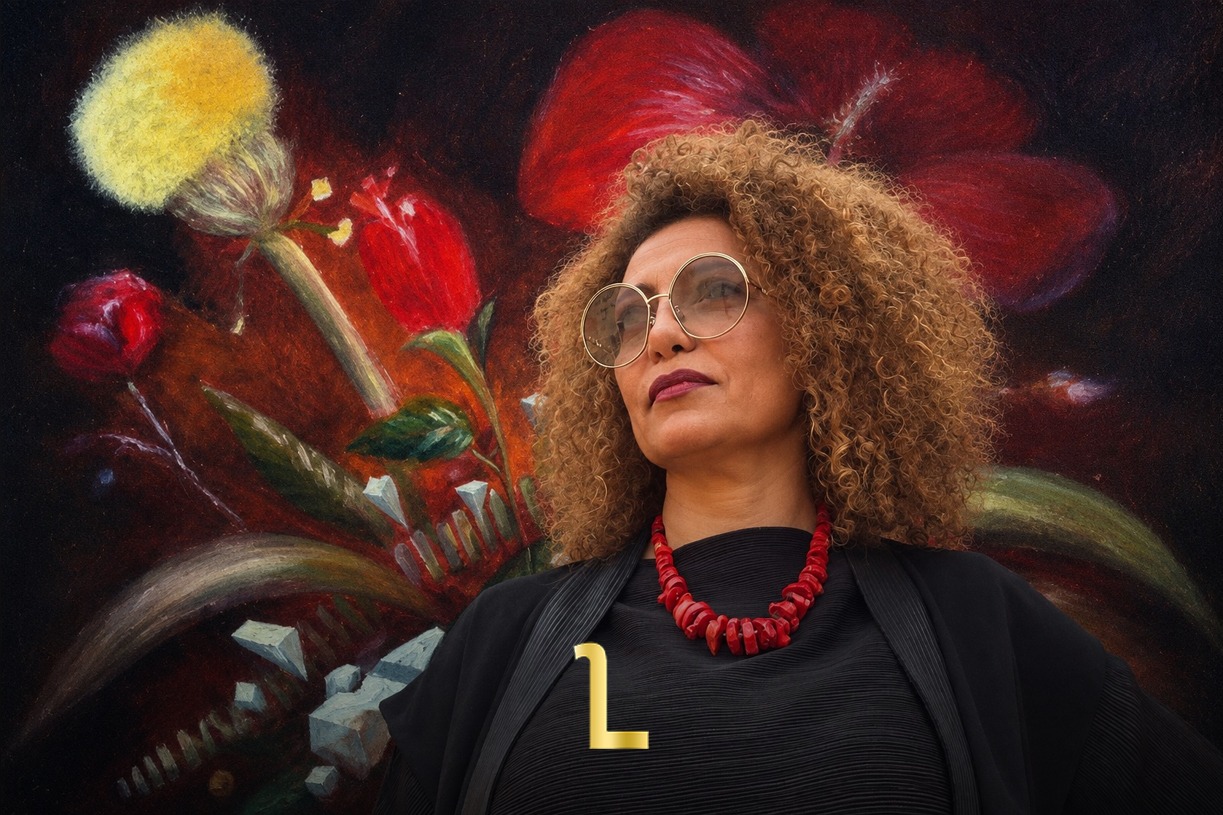
The exhibition takes inspiration from the silphium, a plant that grew in ancient Cyrenaica, in present-day North Africa, and disappeared thousands of years ago. Morjani imagines what the extinct plant might look like if it returned to today’s cities through oil paintings and a temporary installation.
Rather than presenting the silphium simply as a species from the past, the artist places it in modern urban settings, where it appears between paving stones and in spaces between buildings. The work imagines nature slowly returning to places that have been transformed by human activity.
A plant once worth its weight
Silphium was highly valued in the ancient world, particularly for its medicinal and culinary uses. Its importance was reflected in the coins of Cyrene, which featured an image of the plant.
Historical accounts suggest that the plant disappeared around the time of Roman Emperor Nero. Its disappearance has often been linked to the heavy use of the resource and changes to its natural environment.
For Morjani, the story of the silphium raises questions about resources, human power, and the consequences of exploiting nature.
Therefore, “Biosphaerae” brings this ancient story into the present, asking what happens when human activity pushes a species out of existence and whether nature can eventually find a way back.
From disappearance to survival
Silphium is not the only plant featured in the exhibition. Morjani also brings in the fern, an ancient plant that has survived across different periods of Earth’s history.
The two plants represent opposite ideas. The silphium stands for disappearance, while the fern suggests survival and continuity.
Their presence together reflects some of the exhibition’s central themes, including memory and forgetting, loss and survival, and human control and nature’s ability to return.
“Biosphaerae” also asks viewers to think about what happens to the memory of species after they disappear. Morjani said she recreated the plant based on descriptions from antiquity and imagined how it might have changed after two thousand years of absence.
“A species can disappear and continue to live in stories and landscapes,” Morjani stated in a press release sent to Lifestyle magazine, explaining that placing the silphium back into the city allows her to question how humans use nature and whether living things can return to places where they are no longer expected.
Exploring the relationship between humans and nature
Morjani, who was trained as an architect, was born in Morocco and is based in Rabat. Her artistic practice combines several forms, including painting, drawing, cyanotype, experimental photography, and installation.
Her experiences in Morocco, Ethiopia, and Poland have also influenced her interest in landscapes, mythology, and the relationship between people and their surroundings.
One of the ideas associated with her work is what she calls “landscape taxidermy.” The approach involves collecting and preserving plant forms before placing or recomposing them on painted or light-sensitive surfaces.
Through these techniques, plants serve as materials, records of memory, and a way to examine changes in society and the environment.
“Biosphaerae” follows her earlier exhibition “Analogies,” which was also presented at Galerie Shart in 2024. The new exhibition uses the plant as a way to connect the ancient world with the present, bringing together questions about extinct and surviving species, changing landscapes, and the impact of human activity on the natural world.