Rabat – Chanel has taken full ownership of Charvet, the storied French shirtmaker that has been dressing Parisian gentlemen since 1838.
The deal ends nearly 190 years of independent ownership for Charvet, which is widely considered the world’s oldest dedicated shirtmaker.
Founded by Joseph-Christophe Charvet, whose father served as Napoleon Bonaparte’s personal dresser, the label has operated from a single address on Place Vendôme for generations, dressing figures including Marcel Proust, Winston Churchill, John F. Kennedy, and even Count Robert de Montesquiou.
From runway collaboration to acquisition
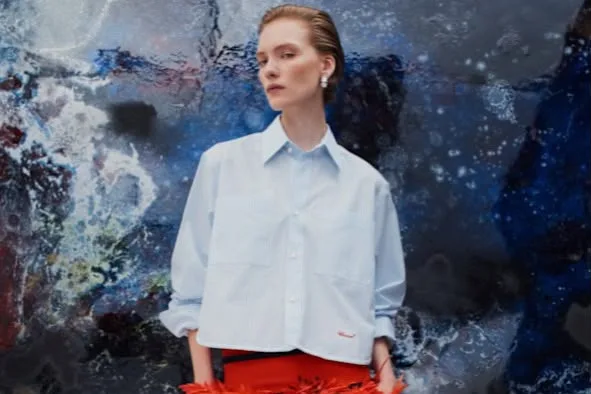
The roots of the deal trace back to Matthieu Blazy’s debut collection for Chanel last October, marking his first as the house’s artistic director.
Chanel timed the announcement carefully, dropping it just ahead of its autumn couture show.
The move brings Charvet under Chanel’s roof after more than sixty years under the ownership of the Colban family.
The goal, however, is not to absorb the historic shirtmaker but to preserve its craftsmanship, identity, and day-to-day independence.
According to Chanel, that collaboration sparked the conversations that ultimately led to the acquisition.
Bruno Pavlovsky, president of fashion activities at Chanel and of Chanel SAS, described the connection in an interview with WWD as an organic pairing between a house built around women and one built around men.
As he stated in an interview, “Now we have a name, Chanel, for women, and a name for men, Charvet.”
He described the acquisition as a natural next chapter for both brands’ shared story rather than a conquest.
Part of a broader menswear push
Chanel previously acquired Orlebar Brown, the British resortwear label known for its swim trunks, in 2018, followed by the acquisitions of the Scottish cashmere knitwear house Barrie and French glovemaker Causse in 2012.
The family also took a minority stake in The Row, the label founded by Mary-Kate and Ashley Olsen, roughly two years ago.
Unlike those deals, however, Charvet is expected to play an outsized role in Chanel’s long-term strategy, effectively becoming the house’s answer to menswear alongside its long-established womenswear history.
Pavlovsky pointed to rarity, rather than scale, as the driving force behind the deal, arguing that true luxury depends on offering a distinctive experience rather than growing volume.
The announcement came just days before Blazy’s second haute couture show for Chanel, adding a major business milestone to what was already shaping up to be a closely watched moment for the house’s new creative era.