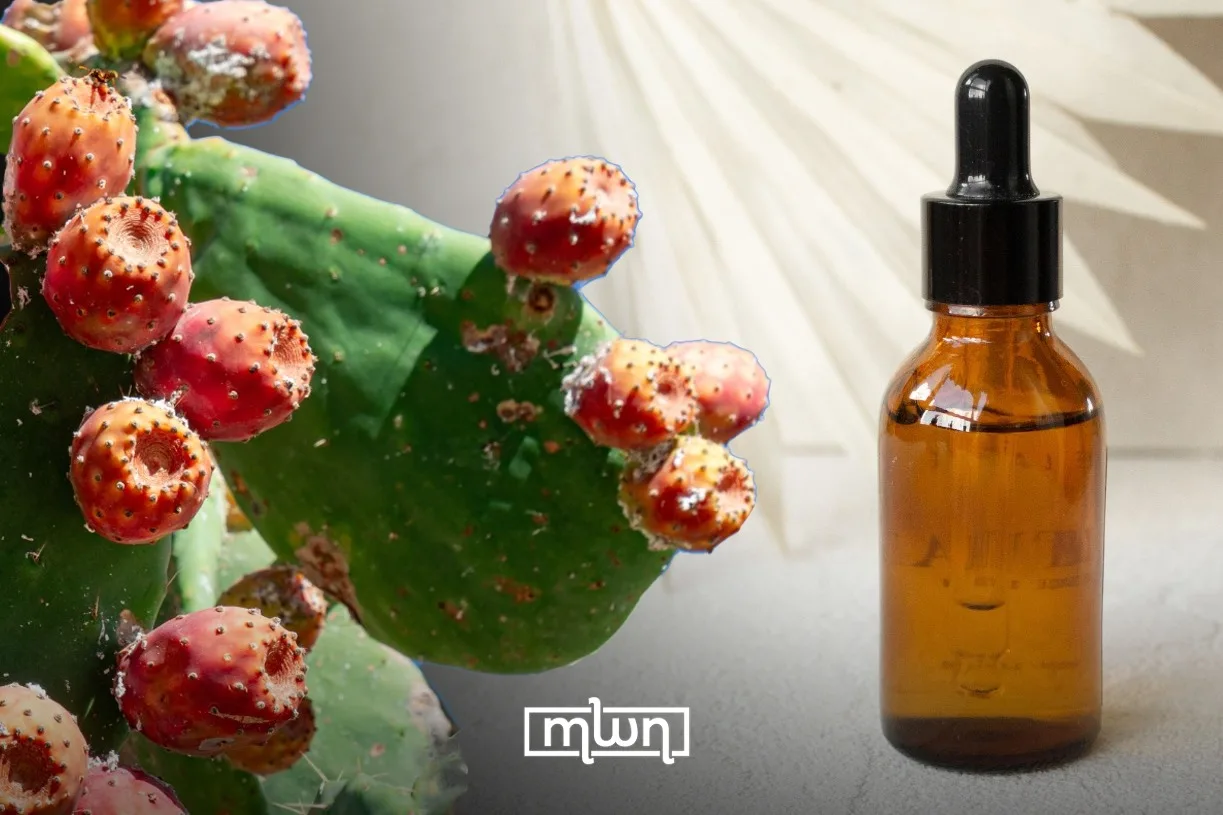
Safi – Prickly pear seed oil is one of the most expensive plant oils in the world, and it grows on a spiny, sun-beaten cactus scattered across the Moroccan countryside.
Pressed from the seeds of the prickly pear, it sells for more per milliliter than argan, sometimes by a wide margin.
Yet most people meet it only after it has been folded into a luxury serum, its origin left off the label.
Argan oil became a global household name. Prickly pear seed oil, rarer and dearer, stayed in the fine print.
That gap is easy to miss on a shelf in Paris, and easy to see in Morocco’s south, where this year’s harvest is underway.
A cactus built for the Moroccan sun
The prickly pear cactus, known botanically as Opuntia ficus-indica and in English as the Barbary fig, is “karmouss el hindi” in Moroccan Darija.
It thrives in the country’s dry and semi-arid regions, and its most renowned growing areas lie in the south and southeast: the provinces of Sidi Ifni, Tata and Guelmim, and near the city of Agadir.
It has adapted to some of Morocco’s harshest landscapes, thriving in intense heat, prolonged drought, and rocky, nutrient-poor soils. With almost no need for irrigation or fertilizer, it remains remarkably resilient.
The fruit ripens between July and September. Women usually pick it by hand, taking each fruit off carefully to avoid the fine spines that make the work slower than it looks.
The seeds are then cleaned, dried, ground and cold-pressed in small batches, mostly through rural cooperatives that have turned hard work into a living.
What it does for your skin
Prickly pear seed oil carries one of the highest concentrations of vitamin E of any plant oil, alongside linoleic acid, an omega-6 fatty acid.
The antioxidants help shield skin from everyday environmental stress, and the fatty acids reinforce the skin barrier and support elasticity.
The oil absorbs quickly without leaving a greasy residue. As a non-comedogenic ingredient, it won’t clog pores, making it suitable for oily and combination skin as well as dry and mature complexions. It also helps regulate excess sebum production.
The most common use is around the eyes. Press one small drop gently under each eye at night, on clean skin, and after a week or so the skin there looks less tired. It layers well, too.
Smooth it onto damp skin first, under your usual moisturizer, and it helps carry the next product deeper. As with anything new, test it on a small patch first.
One ton of fruit for one liter of oil
Its high price is a matter of simple math. Each prickly pear contains hundreds of tiny seeds, yet every seed yields only a drop of oil. Producing a single liter requires nearly a ton of fruit, around 10,000 prickly pears, and most of the process is still carried out by hand.
That scarcity helps explain one of the beauty industry’s quiet realities. While cosmetic labels disclose their ingredients, they rarely reveal how much of each is used.
As a result, a serum can prominently advertise prickly pear seed oil while containing only a small amount of it.
Authentic, high-concentration prickly pear seed oil comes at a premium.
A 30-milliliter bottle from a reputable Moroccan producer is unlikely to cost the same as a drugstore moisturizer. If it does, chances are the formula contains only a small amount of the precious oil.
A good share of the world’s supply comes from Moroccan cooperatives, many led by women where every stage of production, from harvesting the fruit to pressing and bottling the oil, is carried out locally.
The oil sold at a luxury beauty counter in Paris is often the very same oil pressed in a workshop near Agadir, with branding, packaging, and markup accounting for much of the difference.