Fez — Apparently, having aura is no longer enough. Now people are competing for it.
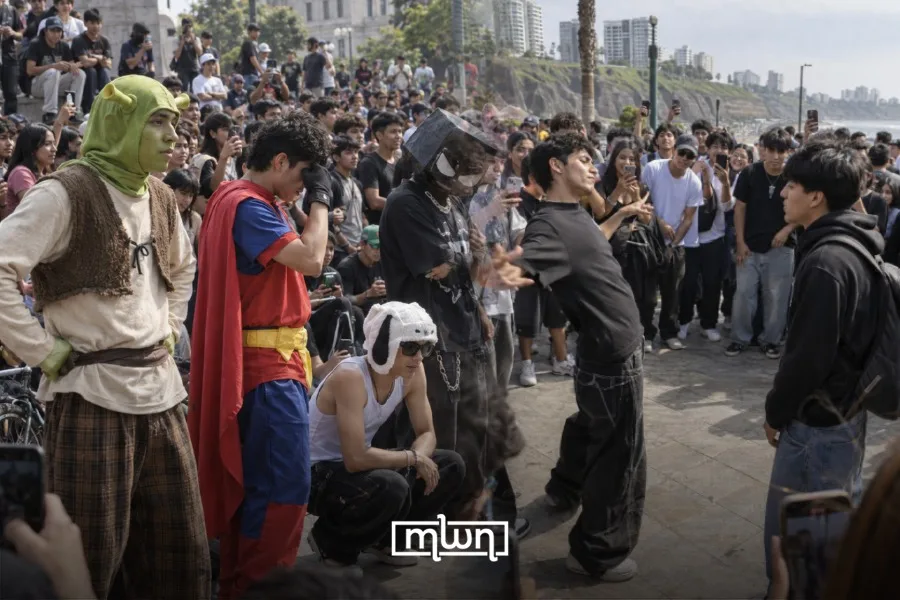
Young people across Latin America are gathering for “aura battles,” where participants dance, pose, imitate memes, and perform characters before cheering crowds.
The format takes the online idea of “aura farming” and turns it into a physical competition. Recent events have appeared across Peru, Mexico, Ecuador, Argentina, Brazil, and Spain.
Associated Press (AP) has documented organized aura competitions spreading from Brazil through social media before appearing in cities including Lima, Mexico City, Quito, Buenos Aires, Madrid, Burgos, and Zaragoza.
So what exactly is aura farming?
Online, “aura” has become slang for an almost invisible measure of coolness, confidence, presence, or effortless style.
Someone pulling off an impressive move might gain imaginary “aura points.” Someone embarrassing themselves might lose them.
“Aura farming” takes that joke further.
The expression borrows the logic of video games, where players “farm” points or resources through repeated actions. In an aura battle, however, the reward is social approval.
Participants face each other without physical contact. The crowd effectively decides the winner through applause and noise.
The phenomenon has featured competitors dressed as Spider-Man, Shrek, and even former Venezuelan President Nicolás Maduro. Others imitate viral gestures or Cristiano Ronaldo’s famous “Siuuu” celebration.
At a recent event in Lima, competitors performed rolls, push-ups, dances, and exaggerated poses while spectators surrounded them.
A professor at Colombia’s Los Andes University described the trend as less about conventional popularity and more about projecting positive energy and having others recognize it.
The meme is leaving the phone
That may be the most interesting part of the trend.
What began as internet language is turning into an excuse for young people to gather offline.
The events combine memes, cosplay, dance, football references, and crowd participation into something resembling an improvised talent show.
Not everyone has welcomed them.
Officials in Lima canceled one gathering because organizers lacked the permits required for the public space. In Cuiabá, Brazil, a mayor rejected another tournament before organizers moved it to a university campus.
Costa Rica has produced a more complicated debate.
Several schools restricted aura battles over concerns about classroom disruption, conflicts, online exposure, and possible humiliation of students. Local reporting documented restrictions at multiple educational institutions.
But Costa Rica’s Ministry of Public Education did not impose a national ban.
The ministry instead clarified that students should not be punished simply for “farming aura.” Schools should intervene when activities disrupt learning, threaten safety, or involve harassment or discrimination.
Mexico took an even lighter approach. Its education minister publicly joined the joke, posting a video about “farming good education” ahead of the school year.
Aura farming may disappear as quickly as countless other internet trends.
For now, however, it shows how Gen Z culture can travel in reverse: born on screens, turned into a meme, then brought into streets, campuses, and public squares where the applause is no longer imaginary.