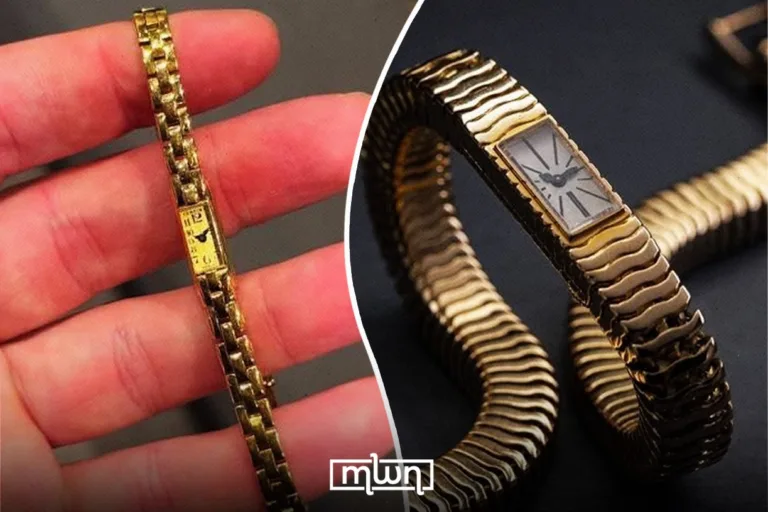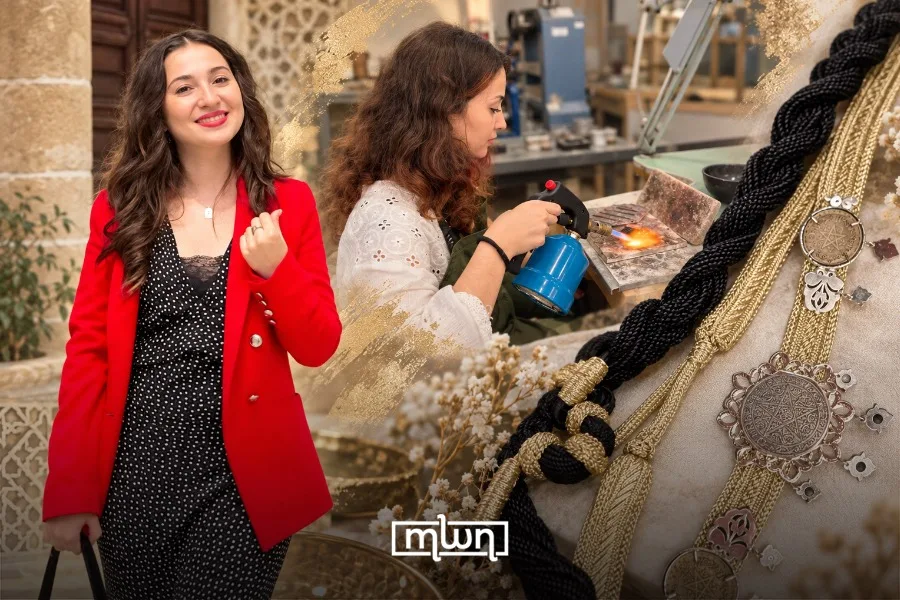
Rabat – With an ambition to give Moroccan heritage a new life through modern design, Mariem Rimech brought Chemir Jewellery to Bijorhca Paris 2026, turning traditional symbols, contemporary jewellery with stories of their own, far from the reproduction of the past.
Mariem Rimech’s journey into jewellery was sparked by her love for handmade objects and design. In spite of her background in economics, her thirst to create art had never left her imagination. She first experimented with materials such as resin before fully deciding to pursue jewellery professionally at the Académie des Arts Traditionnels in Casablanca.
“My journey started quite naturally with a love for handmade objects and design,” Rimech told MWN Lifestyle magazine. Her training introduced her to traditional craftsmanship alongside metalwork, stone setting, 3D design and digital fabrication, a combination that would later shape her approach to contemporary jewellery.
“That combination of traditional craftsmanship and new technology really shaped the designer I am today,” she added. It also led to the creation of her brand, Chemir Jewellery, through which Rimech began developing her own visual identity and exploring ways to give traditional Moroccan jewels “a new soul through new designs.”
Mariem Rimech in Paris at Bijorhca
At Bijorhca Paris, Mariem Rimech was not only presenting Chemir Jewellery as her personal brand to an international audience, but also bringing with her years and years of learning, experimentation and a deep connection to Moroccan craftsmanship.
“Being selected for Bijorhca was a very important moment for me,” Rimech expressed. “Knowing that my work could be presented alongside designers and brands from different countries felt like recognition of all the years of learning, experimenting and developing my identity.” she added.
For Rimech, being there was more than her own success, in fact was more of a recognition of the Moroccan heritage of jewelry, culture, and those who work hard to preserve the “tamgherabit” (Moroccanness) in artistic pieces of this kind.
“For me, it was not only about presenting jewelry. It was also about bringing a small part of Morocco with me and showing that Moroccan craftsmanship can have a place within contemporary international design,” she said.
The exhibition itself gave Rimech a chance to see how people from different backgrounds responded to her work. She found the experience intense, particularly because each visitor brought a different perspective to jewelry and its meaning.
“What interested me most was explaining the story behind each piece,” she mentioned. “Some people would first be attracted by the design, and then become even more interested when they discovered the Moroccan references behind it.”
The grass is not always greener, and so is the experience
While Meriem was trying to perfectly represent herself, her brand, and her country, she did face a few obstacles that have never extinguished her ambition to continue the journey. Beyond the excitement of presenting her work in Paris, Rimech had to deal with the practical demands of preparing, protecting and transporting the pieces and making sure they arrived ready to be presented.
“One of the biggest challenges was also the logistics surrounding an international exhibition: preparing the pieces, protecting them, transporting them and making sure everything was presented properly,” she highlighted. Still, it was the reaction of visitors that made the effort worthwhile. “Seeing people stop, observe the details and ask questions about the inspiration behind the collection made all that work meaningful,” Rimech added.
A piece of jewelry is a piece of Morocco
For Rimech, the pieces she creates are not meant to simply look different. Their identity comes from the stories, objects and symbols that shape them. Moroccan jewelry, architecture, textiles and decorative motifs all become part of her creativity, making use of Amazigh fibulas and traditional coins to Moroccan embroidery and historical functional jewelry.
“I never wanted to compete by simply creating something visually different. I wanted my work to have a real story,” Meriem said.
The artisan takes elements of inspiration and reinterprets them through a contemporary lens. It is a way of keeping the references recognizable while allowing them to flourish beyond their original context.
“I don’t reproduce traditional pieces exactly. I reinterpret their shapes, functions or symbols in a contemporary way,” she said.
That approach also reflects the deeper meaning Rimech sees in Moroccan jewelry. Historically, jewelry could communicate identity, social status, protection, spirituality and belonging. For her, bringing those references into contemporary design is a way of encouraging people to see different worlds of Morocco through the object itself and become curious about the stories it carries.
“Jewelry was not simply decorative,” she said. “Through my work, I want people to become curious about those stories and to understand that Moroccan craftsmanship is not something frozen in history.”
Giving future generations confidence to continue
Behind the contemporary designs is another part of Rimech’s work that is equally significant. For her, preserving that heritage means recognizing the artisans who have carried these techniques across generations, while also making space for the female artisans who can carry them forward.
“It means a lot to me because craftsmanship carries knowledge that has been transmitted through generations,” She explained. “Representing Moroccan artisans internationally is a responsibility, because behind every technique there are years of experience, patience and cultural history.”
As a Moroccan woman building her own jewelry brand, Meriem also sees her journey through exhibiting at Bjorhca Paris as a way to inspire other young women out there to find their corner within the creative industries.
She wants them to see craftsmanship not as something confined to the past, but as a field where they can become designers, entrepreneurs and creators of their own. “For me, preserving craftsmanship doesn’t mean keeping it in the past. It also means giving a new generation the confidence to continue it and transform it,” she said.
Meriem Rimech’s success might be just one example among many creative minds out there, who are willing to carry their stories and culture to higher levels with much ambition and pride.