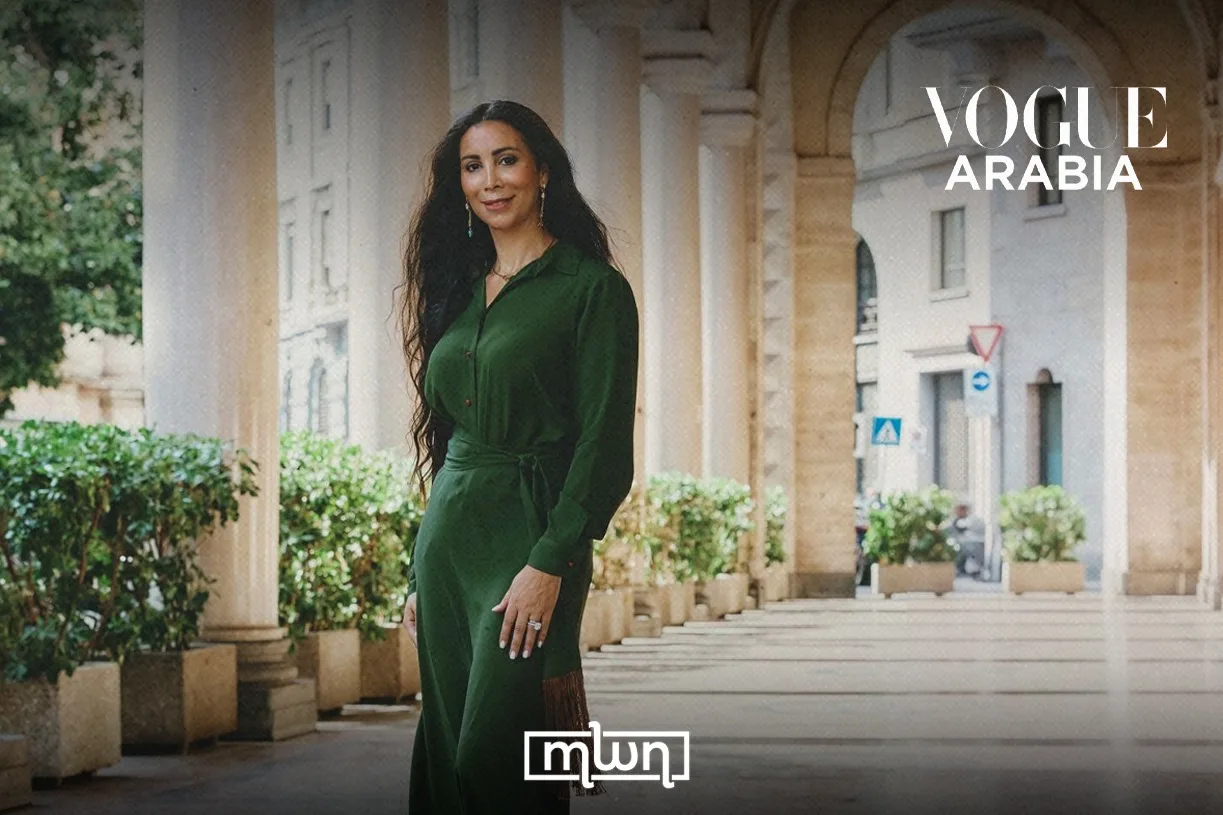
Fez — For Moroccan designer Halima Hadir, Milan and Morocco do not sit on opposite sides of her creative identity. They meet inside the clothes.
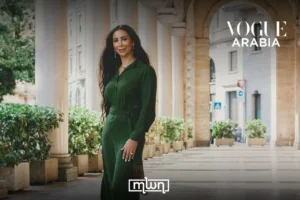
Hadir, founder and creative director of Safira Milano, was among the Arab creatives highlighted by Vogue Arabia this week as Milan turned its attention toward Vogue World Milano. The September 22 feature explored how designers and artists with Arab roots are shaping the Italian city while carrying pieces of their heritage into their work.
For Hadir, that connection appears through color, fabric, embroidery, and one of Morocco’s most recognizable garments, the kaftan.
Her label combines Italian production and tailoring with Moroccan artisanal techniques, including hand embroidery, tassels, and handcrafted buttons. Linen, cotton, silk, and hemp appear alongside details produced by women artisans from the Maghreb.
From engineering to fashion
Fashion was not Hadir’s original professional path.
Born in Morocco, she first studied engineering before moving toward design. She has said that the discipline remained useful even after she changed careers, particularly through its focus on precision, structure, and problem-solving.
Her interest in clothes began much earlier. As a child, she made dolls and sewed clothing for them, an early creative habit that eventually developed into a professional label.
Hadir founded Safira Milano in Italy in 2018. The brand was conceived as a meeting point between Made in Italy fashion and Moroccan craftsmanship, rather than a choice between the two.
That combination is especially visible in the kaftan. Instead of treating it only as a ceremonial garment, Hadir reworks its lines for contemporary wardrobes and places it beside flowing dresses, shirts, trousers, and coordinated sets.
Safira Milano also describes its work with women artisans as central to the label, particularly in preserving embroidery techniques transmitted across generations.
Morocco meets Milan
Hadir’s design language draws different lessons from both places.
She told Vogue Arabia that Morocco shaped her understanding of color, ornamentation, material, and light, while Milan sharpened her approach to construction, restraint, and quality.
That balance has increasingly placed her work within conversations about Mediterranean design, craftsmanship, and cultural exchange.
In 2026, Hadir was also named a recipient of the Premio Internazionale Eccellenza Euro-Mediterraneo, recognizing her fashion career and contribution to creative exchange across the Mediterranean.
Her latest spotlight arrives as Milan once again becomes a global fashion meeting point. For Hadir, however, the story is not simply about bringing Morocco to Italy.
It is about allowing both places to shape the same garment, giving Moroccan craftsmanship room to move inside an international fashion language without losing where it came from.