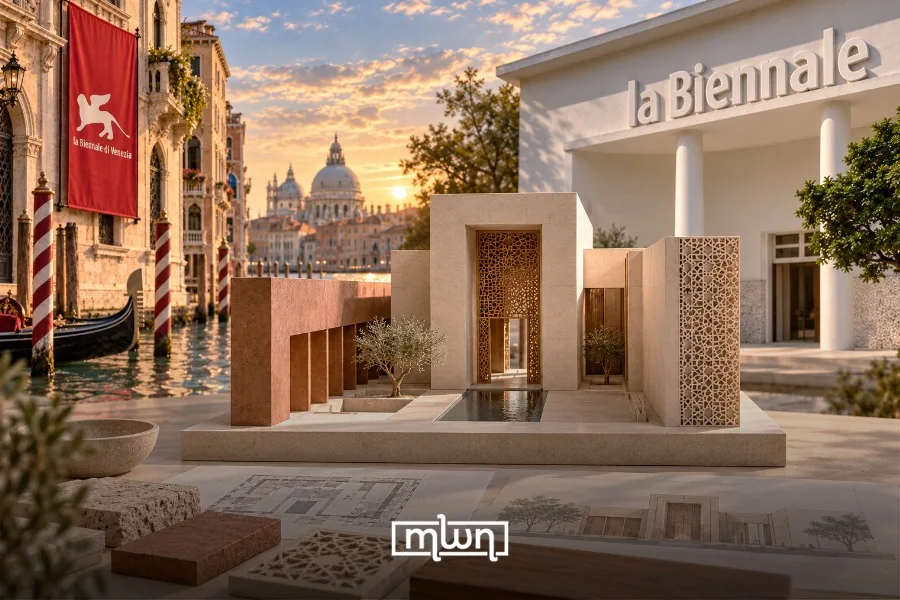
Fez — Morocco is searching for the architects who will shape how the country presents itself at the 2027 Venice Architecture Biennale.
The Ministry of Youth, Culture and Communication has extended the deadline for its national architectural competition to September 15 at 4:30 p.m., giving candidates additional time to propose the design, layout, and execution of Morocco’s pavilion.
The ministry originally set an August deadline but later extended it following requests from architects. It announced that five candidates will be shortlisted on September 17 before advancing to the competition’s second phase.
The winning team will eventually be responsible for turning Morocco’s presence in Venice into a complete exhibition environment rather than simply designing a temporary structure.
And there is a substantial budget behind it. The ministry allocated MAD 10 million, excluding tax, for the turnkey design and execution of the Moroccan pavilion. It stated that the competition is open to architects and architectural groups authorized to practice independently and registered with the National Order of Architects.
Candidates must also be in good standing with Morocco’s tax administration and social security system.
What Morocco will explore in Venice
Titled “Do Architecture — For the Possibility of Coexistence Facing a Real Reality,” the 20th International Architecture Exhibition will run from May 8 to November 21, 2027, at Venice’s Giardini, Arsenale, and other locations around the city.
La Biennale di Venezia revealed the theme in May, with Chinese architects Wang Shu and Lu Wenyu serving as curators.
Their concept asks architects to move beyond abstraction and confront real environments, local practices, material conditions, and the question of how people can coexist through architecture.
That framework could offer Morocco considerable room to explore its own architectural identity, from traditional building knowledge and climate-responsive design to rapidly changing cities.
Morocco’s 2025 architecture pavilion already focused heavily on those questions.
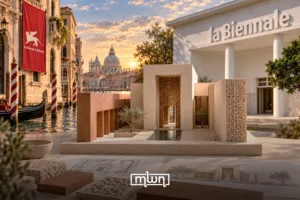
Titled “Materiae Palimpseste,” the exhibition examined traditional Moroccan materials and construction knowledge through an installation of 72 columns representing different landscapes, resources, and building techniques.
La Biennale di Venezia described the pavilion as an invitation to rethink how traditional Moroccan know-how could inform architecture’s future.
The 2027 competition now gives another group of Moroccan architects the chance to continue that conversation on one of the profession’s most visible global stages.
After the five finalists are selected, the second phase will run from September 18 to November 16, with the commission scheduled to meet again on November 18.