Fez — Artificial intelligence can sound distant when the conversation turns to computing systems, digital twins, and autonomous agents. For Casablanca-based ABA Fusion AI, the challenge is making those ideas useful outside a demo screen.
The company says it has been selected by NVIDIA to exhibit at GTC Berlin 2026, placing Moroccan-developed technology in front of developers, researchers, startups, and business leaders from across the international AI industry.
NVIDIA describes GTC Berlin as its flagship European AI conference. The event will run from October 20 to 22, with more than 100 sessions covering everything from accelerated computing and robotics to agentic and physical AI. NVIDIA CEO Jensen Huang will deliver the keynote on October 21.
For ABA Fusion AI, the appearance is less about introducing another chatbot and more about showing how artificial intelligence can sit inside systems people already depend on.
What does that actually mean?
The company is developing technology around agentic AI, digital twins, world models, physics AI, and physical AI.
In simpler terms, the goal is to build systems that do more than answer questions. They are designed to analyze information, anticipate possible outcomes, simulate environments, and help coordinate real-world operations.
A digital twin, for example, can create a virtual version of a factory, machine, or infrastructure system. That model can then be used to test changes, identify problems, or predict maintenance needs before something breaks.
ABA Fusion AI says its technology is already being applied across healthcare, industry, government, security, and critical infrastructure, including medical operations, predictive maintenance, simulation, and real-time decision support.
That focus makes the company’s GTC appearance relevant beyond the tech industry itself. AI infrastructure increasingly sits behind systems that shape everyday life, from how hospitals manage resources to how factories reduce downtime.
Built closer to where the data lives
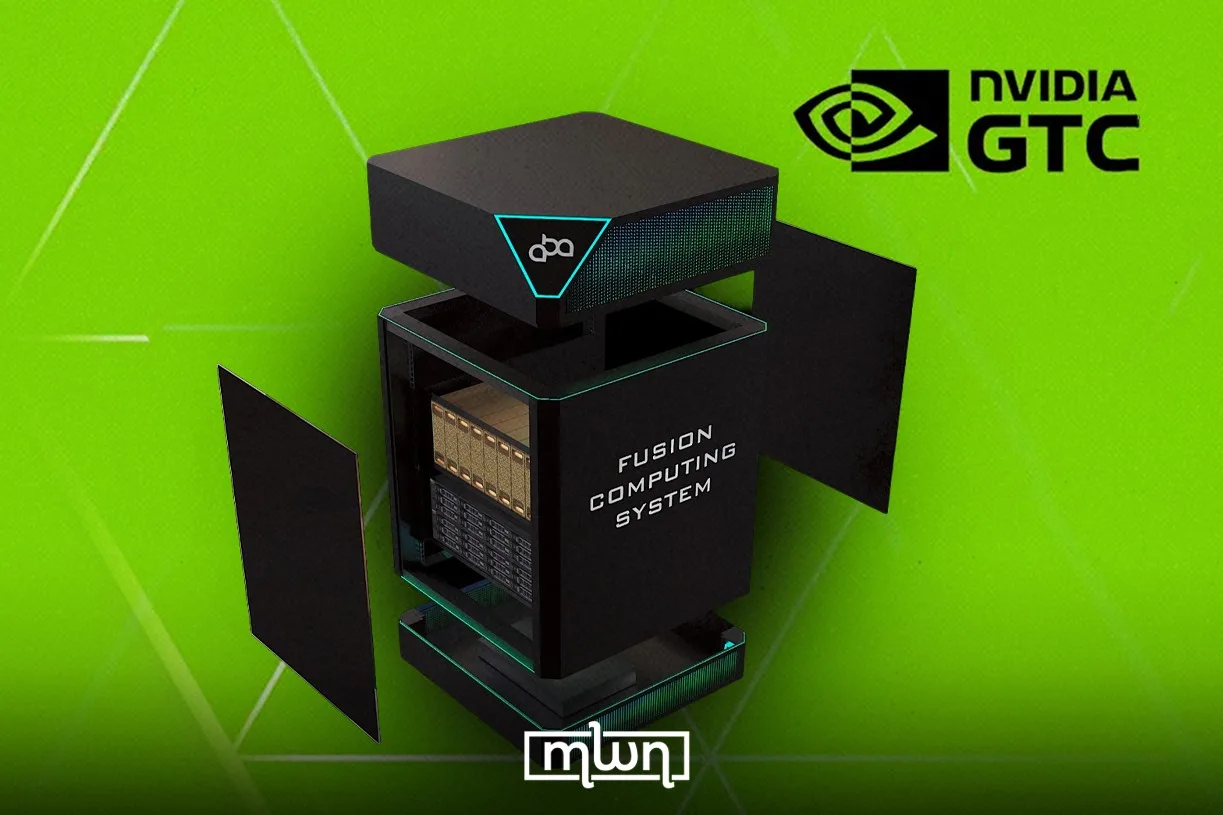
In Berlin, ABA Fusion AI also plans to present a new generation of its “Fusion Computing System.”
The hardware is designed to bring AI computing power closer to the places where data is actually generated and used, rather than depending entirely on distant cloud infrastructure.
That can matter when speed, security, or control over sensitive information becomes important.
ABA Technology President and Founder Mohamed Ben Ouda said the company wants to demonstrate that Morocco can build its own high-performance AI infrastructure while meeting international technological standards.
The company’s ambitions also reflect a longer investment in locally developed technology. Morocco’s Ministry of Industry previously highlighted ABA Technology’s Casablanca innovation center, which brought together dozens of engineers working across electronics, connected systems, and digital transformation.
GTC Berlin will give ABA Fusion AI a much larger stage for that work.
For lifestyle readers, the significance is perhaps less about memorizing terms like “world models” or “inference optimization.” It is about where the technology is coming from and where it may eventually show up.
A system designed in Morocco could end up helping manage a hospital, monitor industrial equipment, or simulate a complex environment before a decision is made in the real one.
That is the broader story ABA Fusion AI will be taking to Berlin: not simply building AI in Morocco, but trying to make Moroccan-built AI part of the infrastructure people eventually use without thinking about it.