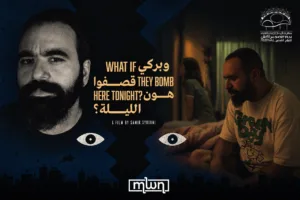
Rabat – For Lebanese filmmaker and producer Samir Syriani, “What If They Bomb Here Tonight?” did not begin as a screenplay. It began with a question whispered in the middle of the night.
During heavy bombardment in Lebanon, Syriani looked up at the glass ceiling of his bedroom and wondered what would happen if an airstrike shattered it. The glass, originally installed to bring sunlight into the family home, suddenly became a potential source of danger.
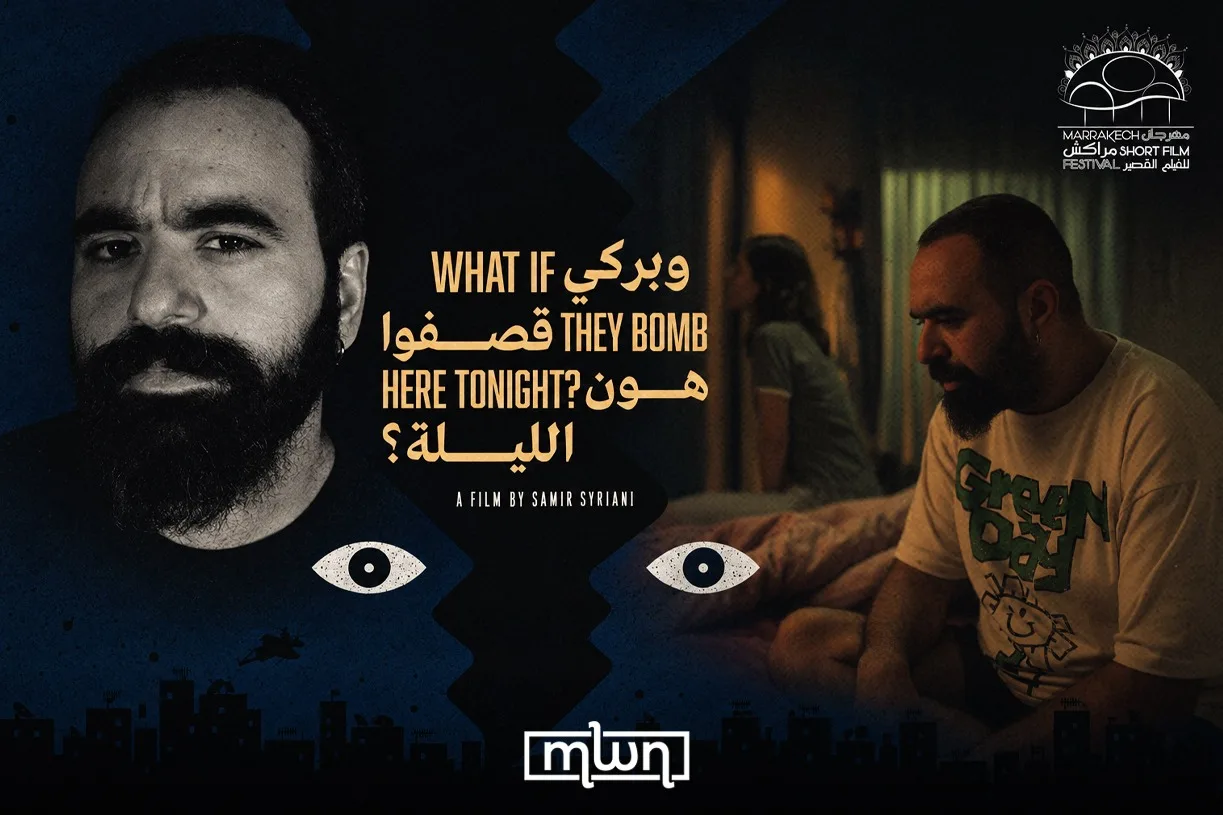
Syriani woke his wife, Nadyn Chalhoub, and shared his fear. The conversation that followed became the foundation of “What If They Bomb Here Tonight?”, a 17-minute short film that the couple wrote together and in which they both appear. The film will screen in the International Section of the Marrakech Short Film Festival, where it will draw audiences into the intimate psychological reality of a couple who must decide whether to stay or leave while their children sleep nearby.
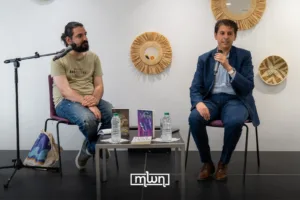
“We didn’t set out to write a story,” Syriani told MWN Lifestyle magazine in an interview. “We simply decided to recreate a real moment that had happened between us, in our own home, during a night of war.”
A night of uncertainty
Rather than focusing on physical destruction, Syriani wanted the film to capture what happens inside the mind when violence becomes an ever-present possibility.
The couple faces questions that become harder to answer with every passing moment: Should they stay? Should they leave? What happens to their children? Can they still imagine a future when they are?
Those questions came directly from Syriani’s own experience. He explains that he and his family lived in an area that was considered relatively far from the bombing. Yet that distance offered little psychological comfort. They could still feel the strikes through the vibrations of the glass panels above them and hear drones, warplanes, and explosions overhead.
“A home is supposed to be the one place where you feel safe,” he says. “But during that night, our home became a nightmare.”
That transformation of the familiar space into a source of fear became central to the film. The bedroom is not simply a location, but becomes a space where fear, exhaustion and uncertainty accumulate.
Syriani is also careful not to equate his experience with the suffering of those who lost loved ones, homes, land, olive trees and memories. Instead, the film offers a glimpse into one particular dimension of conflict: the psychological toll of never knowing what might happen next.
Because Syriani and Chalhoub were essentially portraying themselves, the writing process was deeply intimate.
The couple already knew their characters because they were the characters. They structured the story and refined the dialogue for the screen while preserving the essence of the conversation they had shared that night. Their real personalities also influenced the relationship at the centre of the story. Syriani describes himself as naturally anxious, while Chalhoub tends to respond to difficult situations with sarcasm and dry humor.
That contrast became part of the film’s emotional language.
“In many ways, writing and acting together was simply an extension of our real relationship,” Syriani explains. “We knew how the other would react, what they would say, and the little tensions and humor that naturally exist between us.”
The result is a story that moves between anxiety and humor without forcing either emotion. For Syriani, humor is part of how people navigate an otherwise overwhelming reality.
When sound tells the story
Much of the film’s tension comes not from what audiences see, but from what they hear.
Syriani says the soundscape was built around the sounds the couple actually experienced during the war. Drones, warplanes and sonic booms form an almost constant presence throughout the film.
“All the sounds you hear in the film are real sounds recorded during the war,” he says.
The sounds were so intense that the filmmakers eventually lowered the volume of the drones and warplanes. Without having experienced the reality themselves, viewers might otherwise have found the sounds exaggerated, Syriani explains.
Music adds another layer. Composer Cedric Kayem created the score around three notes produced by broken glass striking piano strings. The music was composed before filming began.
Together, the sounds and score build tension around both what is heard and what remains unsaid.
“Through the sound work all that is unsaid is deeply heard, and mostly felt,” Syriani says.
Behind and in front of the camera
Syriani directed the film while also taking on one of its central roles, an experience he describes as particularly demanding because it marked his first time acting.
Yet the decision was deliberate.
He wanted the film to remain rooted in his own reality. The filmmaker shot inside the family’s actual bedroom and home, with their children present and his father participating over the phone.
“I wanted everything to feel real because I wanted to tell my own story, not just create a fictional version of it,” he says.
The process was exhausting, he admits, and he does not expect to direct and act simultaneously again. For now, he says, he prefers to remain behind the camera.
A Lebanese story with a wider resonance
Although the film emerged from one night in Syriani and Chalhoub’s life, he sees it as part of a much longer Lebanese experience.
Lebanon’s history of conflict has left many people familiar with the fear, uncertainty and anxiety depicted in the film. Syriani says Lebanese viewers often tell him after screenings that the story reflects exactly what they have felt themselves.
That recognition, he believes, comes from the familiarity of living between periods of uncertainty.
The film is therefore deeply personal, but its emotions extend beyond one couple. Its characters represent people who must continue with ordinary life while war remains a possibility.
From Lebanon to the international festival circuit
“What If They Bomb Here Tonight?” has travelled widely on the festival circuit, screening at almost 100 film festivals and receiving 17 awards, according to Syriani, including Best Film, Best Screenplay and Audience Awards.
The international response has reinforced his belief that the story can connect with audiences beyond Lebanon.
One reaction, in particular, has stayed with him. After screenings, audience members would sometimes approach him simply to say, “I’m sorry.”
For Syriani, those encounters demonstrated that audiences were connecting not only with the film’s characters but with the psychological reality behind the story.
He believes the film offers viewers a perspective on war that is often less visible: the experience of waiting, listening, and wondering whether the next sound could change everything.
The film’s selection for the Marrakech Short Film Festival carries particular significance for Syriani.
He describes the festival as an important point in the film’s journey and says he was excited to discover how Moroccan audiences would respond to the story.
More than anything, he hopes the screening will allow viewers to engage with a dimension of war that is often absent from conventional coverage: the human and psychological experience of those living through it.
For a film born from one anxious conversation between a husband and wife, its journey to Marrakech represents an opportunity to turn a deeply personal moment into a shared experience.
The question that remains
For Syriani, the most important question is not simply whether audiences understand the fear depicted in the film, but what they do with that understanding.
“What If They Bomb Here Tonight?” asks what happens when ordinary life can disappear without warning. It asks what it means to make decisions for children while confronting dangers beyond one’s control. And it asks whether anyone should have to live in that state of uncertainty.
“It is not fair. None of it is fair,” Syriani says.
His hope is that the film encourages audiences to think about the people who continue to live under bombardment and to remember that behind the headlines and images of war are individuals trying to preserve something as basic as an ordinary night at home.
For Syriani, that is ultimately where the film’s question leads: toward the need to choose not only what is right, but what is genuinely humane.