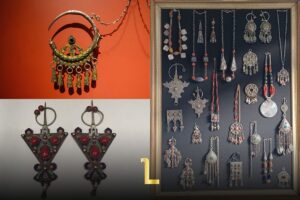
Four Days, One World: The Spirit of Fez in Music
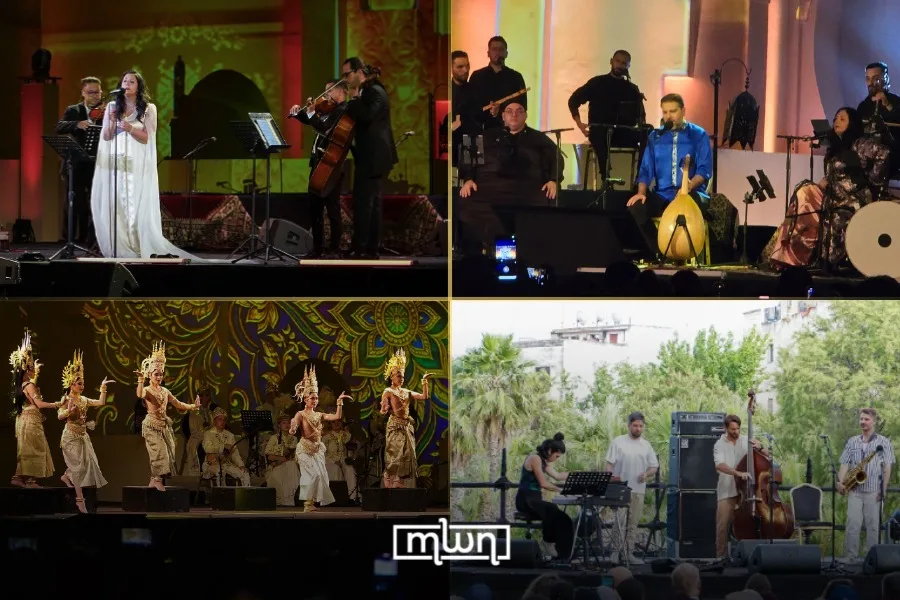
Fez– As the final notes drifted into the night sky above Bab Al Makina, the 29th edition of the Fez Festival of World Sacred Music came to a close, ending four days that transformed Morocco’s spiritual capital into a crossroads of cultures, traditions and artistic expression. Over the course of the festival, more than 160 artists from across Europe, Asia, Africa and the Middle East gathered in Fez, turning the city’s historic venues into spaces of encounter and exchange. Through music, dance and poetry, performers invited audiences to travel across continents while exploring themes of spirituality, memory and shared humanity. The journey began with “Anima Ex Materia: From Heaven to Earth”, an ambitious opening creation that celebrated the artisanal heritage of Fez. Blending music, choreography and visual storytelling, the performance paid tribute to generations of craftsmen whose work has shaped the identity of the city. It was a fitting introduction to a festival rooted in the idea that artistic creation can serve as a bridge between cultures and eras. Throughout the following days, audiences were immersed in an extraordinary diversity of traditions. From the intimate folk melodies of Irish singer Niamh Bury to the sacred Khmer dances of Cambodia, each performance offered a distinct perspective on the relationship between art and spirituality. The vast landscapes of Central Asia came alive through the Qulansaz Ensemble of Kazakhstan, whose music evoked the enduring traditions of nomadic peoples. Elsewhere, L’Antidote brought together Iranian percussionist Bijan Chemirani, Lebanese pianist Rami Khalifé and Albanian cellist Redi Hasa in a remarkable dialogue between musical worlds, demonstrating the power of collaboration across cultural boundaries. Among the festival’s most memorable evenings was “Hymns”: Voices of Women from East and West. Bringing together Lebanese vocalist Ghada Shbeir, Moroccan singer Nabyla Maan, Indian classical star Kaushiki Chakraborty, Germany’s Kat Frankie and Bodies, and the women of Ahwach Isaffen from Morocco’s High Atlas, the performance celebrated the richness and diversity of female artistic expression. Their voices moved effortlessly between sacred and traditional repertoires, creating one of the festival’s most powerful moments. The festival also ventured into new musical territories. Indian vocalist Pandit Shyam Sundar Goswami explored the poetic universe of ragas and Rabindranath Tagore, while French-Swiss saxophonist Léon Phal proposed a contemporary dialogue between ritual, spirituality and modern soundscapes. Yet few performances generated as much anticipation as the return of Sami Yusuf. Performing before a sold-out Bab Al Makina, the internationally acclaimed artist delivered one of the defining moments of this year’s festival. Spectators travelled from across Morocco to attend the concert, filling the historic venue hours before the performance began. The atmosphere was charged with excitement, and throughout the evening the audience responded with enthusiasm, transforming the concert into a collective celebration. Blending spiritual reflection with musical virtuosity, Sami Yusuf once again demonstrated why his connection with the Fez Festival remains so enduring. The standing ovations and emotional reactions from the crowd made the concert one of the highlights of the entire edition. Later that night, Pakistani singer Sanam Marvi carried audiences deeper into the mystical traditions of Sufism. Her powerful interpretations of devotional poetry provided a moment of contemplation and transcendence, extending a journey that had begun earlier in the evening. The final day of the festival turned toward the great cultural routes that have linked civilizations for centuries. Tunisian musician Jasser Haj Youssef and Tanzanian singer Yahya Hussein Abdallah Bihaqi explored the poetic dimensions of the Sufi tradition, while “Songs of the Mountains and the Steppes” brought together artists from Mongolia, Uzbekistan and Kyrgyzstan in a celebration of the musical heritage of Central Asia. The closing night offered a fitting conclusion. “Sami Yusuf and the Night of Samaa” united the celebrated artist with Nabyla Maan, the Konya Metropolitan Sufi Music Ensemble and renowned Moroccan voices in a performance that embodied the festival’s spirit of dialogue and spiritual communion. As music, devotion and tradition converged beneath the walls of Bab Al Makina, the festival concluded on a note of both celebration and reflection. More than a succession of concerts, this year’s edition reaffirmed the unique place of the Fez Festival of World Sacred Music on the international cultural calendar. The festival offered a rare space where artists and audiences could meet through beauty, listening and shared experience. For four days, Fez became a stage for the world. And as the city returns to its familiar rhythm, the echoes of those encounters will continue to resonate long after the final applause.
Sami Yusuf’s Sold-out Concert Draws a Frenzied Crowd on His Fourth Return to Fez
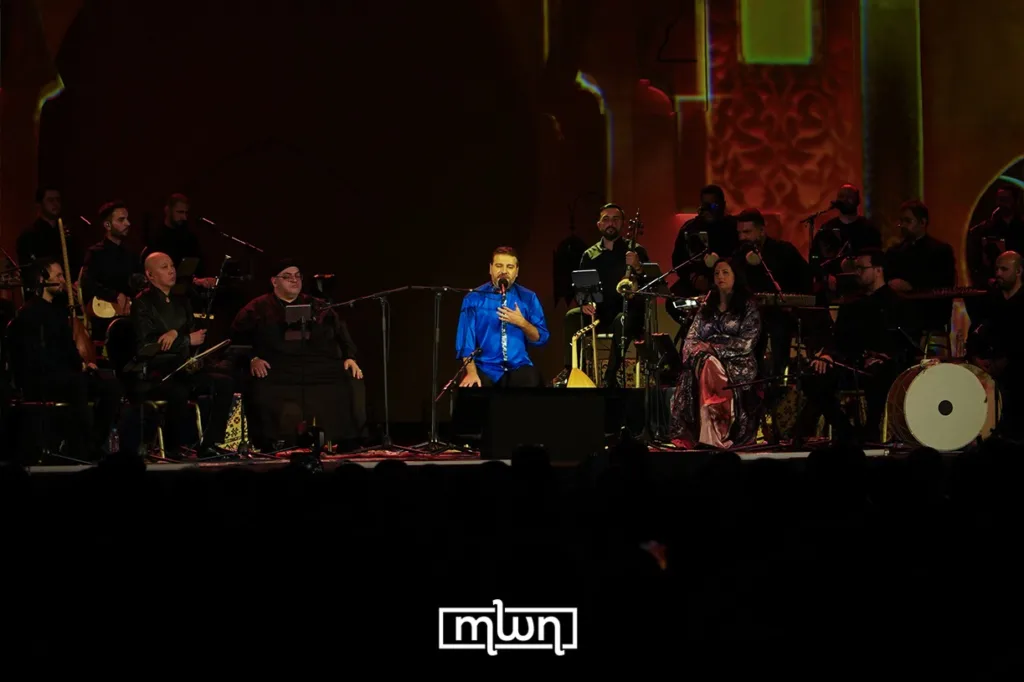
Before a single note was played, the atmosphere at Bab Al Makina had already reached a fever pitch.
Kat Franke: ‘What Is Sacred Is Us Together’
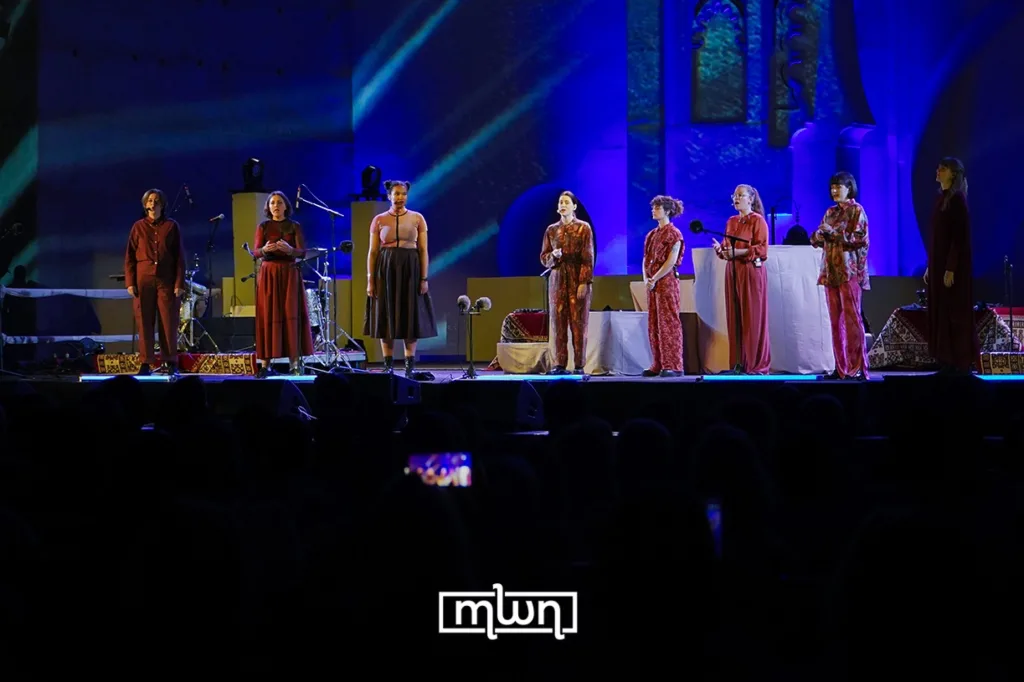
For the founder of the Berlin-based ensemble B O D I E S, singing is not only sound but presence, a physical, shared act that turns individual voices into something larger, more fragile and more complete.
Nabyla Maan: Fez, Memory and the Living Pulse of Tradition
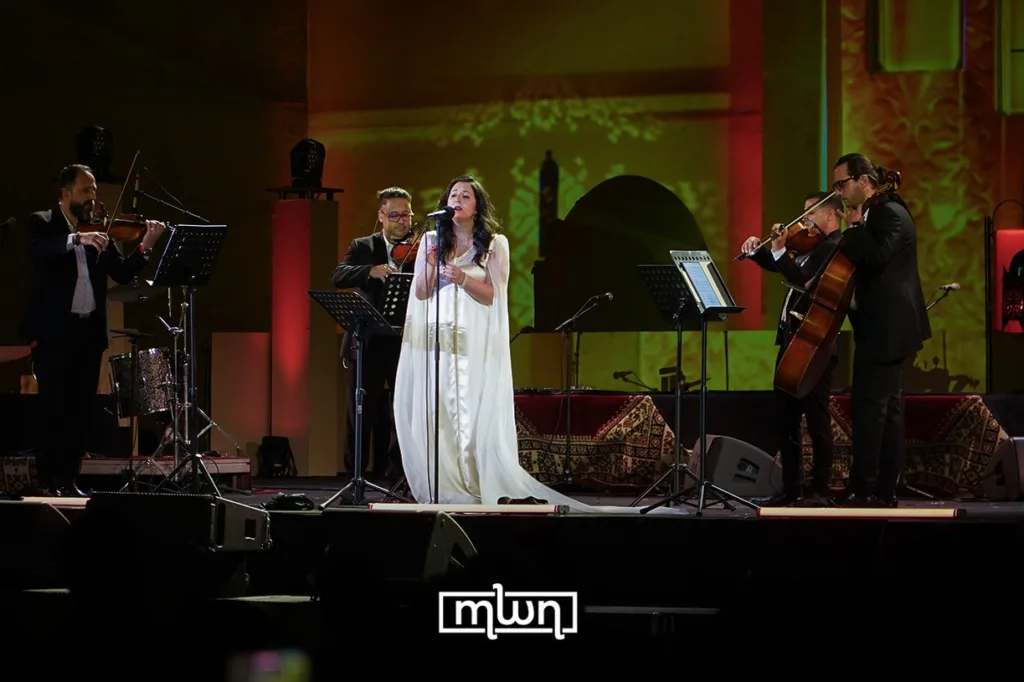
For Nabyla Maan, Fez is not only a city of origin but a living musical memory that continues to shape how she reimagines Morocco’s traditional heritage.
A Celebration of Women’s Voices Marks the Second Night of the Fez Festival
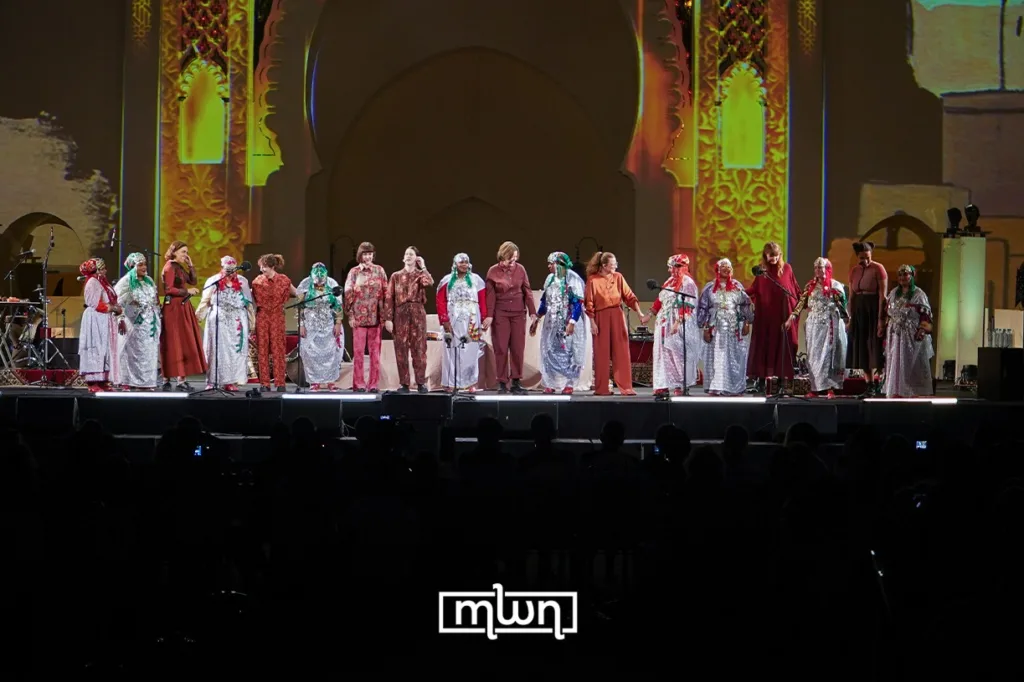
Fez– The second evening of the Fez Festival of World Sacred Music placed Women’s voice at the heart of its programme, bringing together artists whose performances revealed singing as a vehicle for spirituality, memory and cultural transmission. Across traditions separated by geography yet united by a shared devotion to vocal expression, the evening unfolded as a celebration of heritage constantly renewed through artistic creation. The journey began with Lebanese singer Ghada Shbeir, whose profound interpretation of Aramaic chants enveloped the audience in an atmosphere of contemplation. Sung in the language traditionally associated with Jesus of Nazareth, her repertoire carried a sense of serenity that transformed the stage into a space of reflection and inner peace. Indian vocalist Kaushiki Chakrabarty then introduced audiences to another dimension of sacred and classical expression. Appearing for the first time at the festival, the acclaimed artist displayed the remarkable virtuosity that has made her one of the leading voices of Hindustani classical music. Her mastery of khayal, shaped by the Patiala Gharana tradition, combined technical precision with emotional depth, allowing centuries-old musical forms to resonate with striking immediacy. The spirit of cultural dialogue continued through Matrouz, the “embroidered song” tradition that intertwines Arabic and Hebrew poetry. Rooted in the memory of Al-Andalus, the repertoire evoked a shared heritage where languages, faiths and artistic traditions coexist within the same musical fabric. That dialogue between preservation and renewal has long been central to the artistic journey of Moroccan singer Nabyla Maan. Performing in her native city of Fez, Maan brought her distinctive approach to Moroccan heritage, one that embraces tradition while seeking new ways to speak to contemporary audiences. For the artist, the survival of traditional music depends precisely on this ability to evolve. As she told MWN Lifestyle magazine on the sidelines of the festival, “the music that has endured over time is the music that we have been able to revisit and modernize.” While preserving its original foundations, she said, artists must continue exploring new interpretations capable of reaching younger generations and encouraging them to reconnect with the richness of Morocco’s musical legacy. The commitment is both artistic and personal. Maan described working on traditional repertoires as a responsibility she carries as a Moroccan artist, but also as a source of genuine pleasure. Researching ancestral musical forms and imagining new ways to reinterpret them has become a defining element of her creative work. That connection to heritage is inseparable from her attachment to Fez itself. “This entire city is part of me and I am part of this city,” she said, recalling how the spiritual and cultural atmosphere of the city shaped her artistic sensibility from an early age. The evening’s exploration of the voice then entered a more contemporary register with B O D I E S Ensemble, the acclaimed vocal creation led by Australian singer, songwriter and composer Kat Frankie. Accompanied by seven performers, Frankie transformed the stage into a living landscape of harmonies, rhythms and vocal textures produced almost entirely without instruments. The project reimagines the possibilities of collective singing. Voices overlap, respond and merge, creating an intricate sonic architecture where individual identities dissolve into a larger whole. Drawing on original compositions while incorporating elements of pop and neo-classical music, B O D I E S challenges conventional approaches to vocal performance and opens new pathways for artistic expression. In her artistic vision, Frankie views the voice not merely as an instrument but as a physical and emotional force capable of creating powerful connections between performers and audiences. That philosophy was evident throughout the performance, where movement, breath and sound combined to produce an immersive experience built entirely around the human body. The programme brought a surprising moment with the women of Ahwach Isaffen from Morocco’s High Atlas, whose collective songs echoed many of the themes explored throughout the evening preforming with B O D I E S, to demonstrate how music transcend cultural, religious or language barriers. Rooted in oral transmission and community life, their performances offered a reminder that the voice remains one of humanity’s oldest and most enduring forms of cultural memory. Sacred chants, classical traditions, Andalusian legacies, contemporary creations and Amazigh expressions met on the same stage, the second night of the festival demonstrated how music continues to transcend borders while remaining deeply rooted in place. In Fez, heritage was not presented as a relic of the past but as a living tradition, constantly reinterpreted by artists determined to carry it forward.
Turkish Sema Ritual Brings a Message of Love and Spirituality to Fez Festival
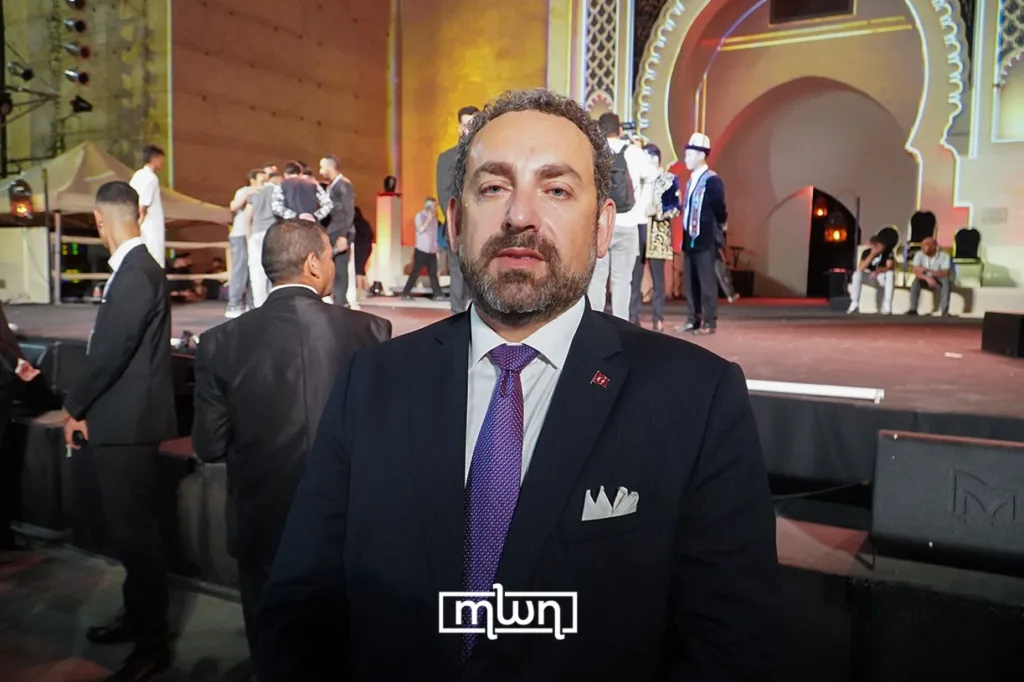
Fez– Turkey’s centuries-old Sema ritual was among the highlights of the opening night of the Fez Festival of World Sacred Music, bringing a message of spirituality, devotion and cultural exchange to the historic city. Speaking to MWN Lifestyle magazine on the sidelines of the festival, Turkish Ambassador to Morocco Mustafa İlker Kılıç said he was proud to see the tradition represented in Fez, describing the event as an important platform for sharing cultures and spiritual heritage from around the world. The ambassador noted that Turkey was represented this year by the Konya Ensemble Sema, which performed during the festival’s opening ceremony and is also scheduled to take part in the closing evening alongside singer Sami Yusuf. Originating from the city of Konya, the Sema ceremony is a centuries-old spiritual practice rooted in the teachings of Sufism. The ritual is best known for the whirling movement of its performers, whose dance carries deep symbolic meaning. According to Kılıç, the central message of the ceremony is love, particularly the love of God. He explained that the symbolism of the ritual reflects a spiritual connection between heaven and earth, with one hand receiving from God and the other passing that blessing on to humanity. The ambassador added that the Sema ritual remains a significant part of Turkey’s cultural and spiritual heritage, making its presence at the Fez festival particularly meaningful. As artists and performers from different traditions gather in Fez, the Turkish participation once again sheds light on the festival’s role as a meeting point for cultures, faiths and shared human values.
Mehdi Bensaid: Fez Festival as a Space of Identity and Global Encounter Mehdi Bensaid

Fez – At the opening night of the 29th Fez Festival of World Sacred Music, Morocco’s Minister of Youth, Culture and Communication, Mehdi Bensaid, described the event as both a reflection of national identity and a meeting point with the wider world. Speaking to MWN Lifestyle magazine, Bensaid said the festival offers a dual perspective that goes beyond performance alone. “It’s a window into Morocco, on the cultural front, but it’s also a window to the world,” he said. “Culture has this strength, this magic, where it can bring people closer together through its activity, its performances, its works.” Bab Makina hosted the opening production of this year’s edition, a large-scale artistic creation that brought together performers from Morocco, Central Asia, India, China, Cambodia and the Balkans. The show unfolded as a tribute to craftsmanship, memory and the long history of cultural exchange that has shaped Fez. For Bensaid, this international dimension is at the core of what makes the festival significant. He pointed to the annual collaborations between regions and artistic traditions, which he described as a form of cultural dialogue that continues to evolve over time. He also highlighted this year’s participation of Kazakhstan, saying it was both an honour for Morocco to host its artists and an opportunity for local audiences to discover new traditions. “It is also a discovery for Moroccans,” he highlighted, adding that the festival plays an important role in opening cultural horizons, particularly for younger generations and visitors passing through the city. Set against the historic backdrop of Fez, the opening night transformed the city’s artisan heritage into a living performance, blending music, movement and visual storytelling. While the production itself paid homage to centuries of craftsmanship, Bensaid’s remarks placed emphasis on what the festival represents beyond the stage. For Bensaid, Fez Festival continues to function as a cultural bridge, one that connects Morocco not only to its own traditions, but to a broader global conversation carried through art. In a city long defined by knowledge, craftsmanship and exchange, this year’s opening once again positioned Fez as a meeting point where cultures briefly share the same space, and then move on, carrying something of each other with them.
Fez Sacred Music Festival Opens with a Poetic Tribute to the Artisans Who Shaped a Civilization
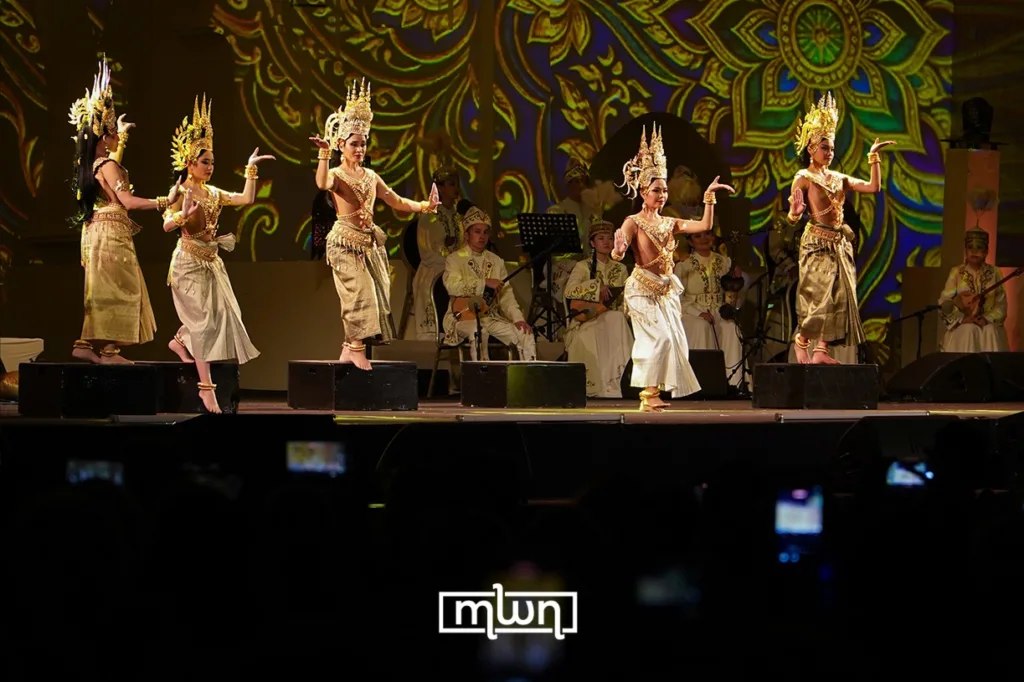
The Fez Festival of World Sacred Music opened Friday night with an ambitious artistic creation that traced the origins of craftsmanship, spiritual heritage, and cultural exchange
Fez Sacred Music Festival Opens Thursday with a Tribute to the City’s Master Artisans
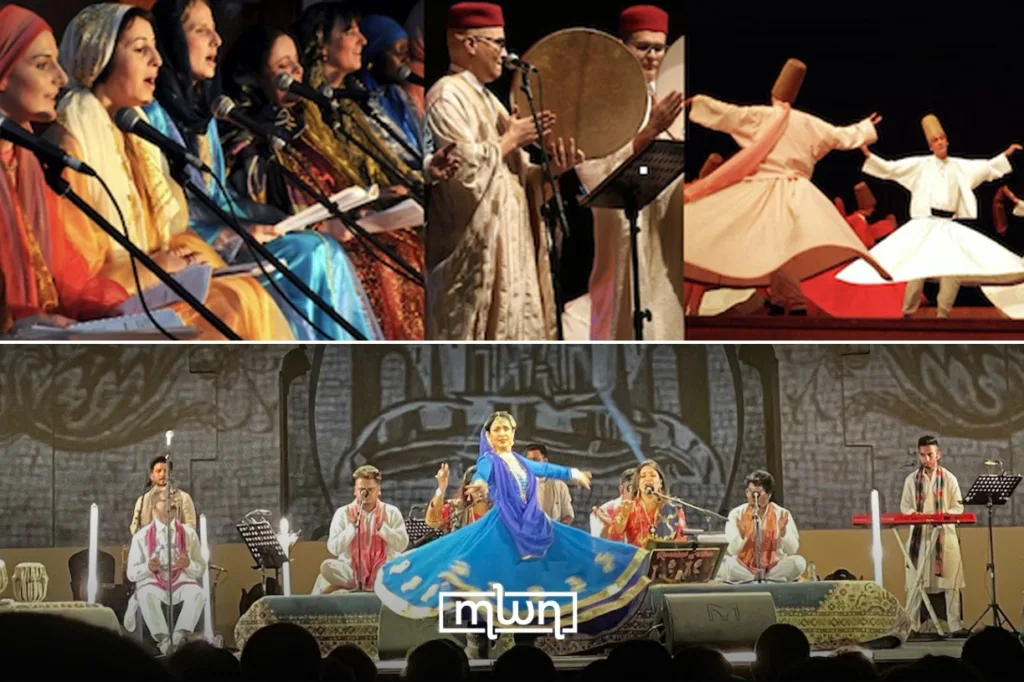
Fez is getting ready to welcome artists, musicians and audiences from around the world as the 29th Fez Festival of World Sacred Music opens on Thursday night Fez – The 29th edition of the Fez Festival of World Sacred Music will open on Thursday evening with a spectacular creation celebrating the craftsmen and women whose skills have shaped the cultural identity of Morocco’s spiritual capital for centuries. At 9 p.m. on June 4, the historic Bab Al Makina venue will host “Anima Ex Materia – From Heaven to Earth”, the festival’s opening production and the first major event of this year’s edition, held under the theme “Fez and the Maâlems, Guardians of Gesture and Heritage.” The performance places the artisan’s hand at the center of the story, exploring the creative gesture that transforms raw materials into works of beauty and meaning. Through music, choreography and visual storytelling, the show traces a journey from the heart of Fez’s medina to the cultural landscapes of Asia and the East. Illuminated by the lanterns of traditional metalworkers, the production will recreate the atmosphere of workshops where fire, earth, water and air, the four elements that have inspired generations of craftsmen, come together. Potters, weavers, leather workers, zellige masters, carpenters and coppersmiths all serve as inspiration for a performance designed as a tribute to the city’s living heritage. The show also travels across time and geography, drawing connections between the silk traditions of ancient China, the intricate zellige art of Fez, the mosaics of Volubilis and artistic influences from across the Mediterranean and Asia. Artists from Morocco, India, China, Cambodia, Central Asia and the Balkans will take part in the opening celebration. The evening will continue at 11 p.m. in Jnan Sbil Garden with a performance by the Traditional Chamber Music Ensemble of the China Conservatory of Music, offering festivalgoers a first taste of the international program that awaits over the coming days. This year’s festival will bring together more than 160 artists from around the world across four days of concerts, spiritual performances and cultural encounters in some of Fez’s most iconic venues. Among the highlights scheduled for Friday, June 5, is “Songs of the Mountains and the Steppes,” a musical journey along the Silk Road featuring performers from Mongolia, Uzbekistan and Kyrgyzstan. The concert, set for 6 p.m. at Jnan Sbil Garden, will celebrate the traditions of Central Asian poets, storytellers and nomadic musicians. The same evening, Bab Al Makina will host one of the festival’s most anticipated events: “Sami Yusuf and the Night of Samaa.”. The internationally acclaimed artist will share the stage with the Konya Metropolitan Sufi Music Ensemble from Turkey and leading Moroccan voices in a performance dedicated to spiritual music and Sufi traditions. Recognized as the world’s first festival devoted to sacred music and recently honored with the prestigious Mercurio Alato award, the Fez Festival continues to strengthen its reputation as a meeting point between cultures, artistic traditions and spiritual expressions from across the globe. With the festival kicking off on Thursday night, Fez is preparing for four days filled with music, culture and encounters from across the world. This year’s edition begins with a tribute to the artisans whose skills and creativity remain at the heart of the city’s identity.
Italian-Moroccan Concert at Fez Festival Wins Top Cultural Diplomacy Prize

An Italo-Moroccan performance at the Fez Festival of World Sacred Music has been named the best cultural event of 2025 by Italy’s Ministry of Foreign Affairs.