Festival des Plages Maroc Telecom Kicks Off in Morocco
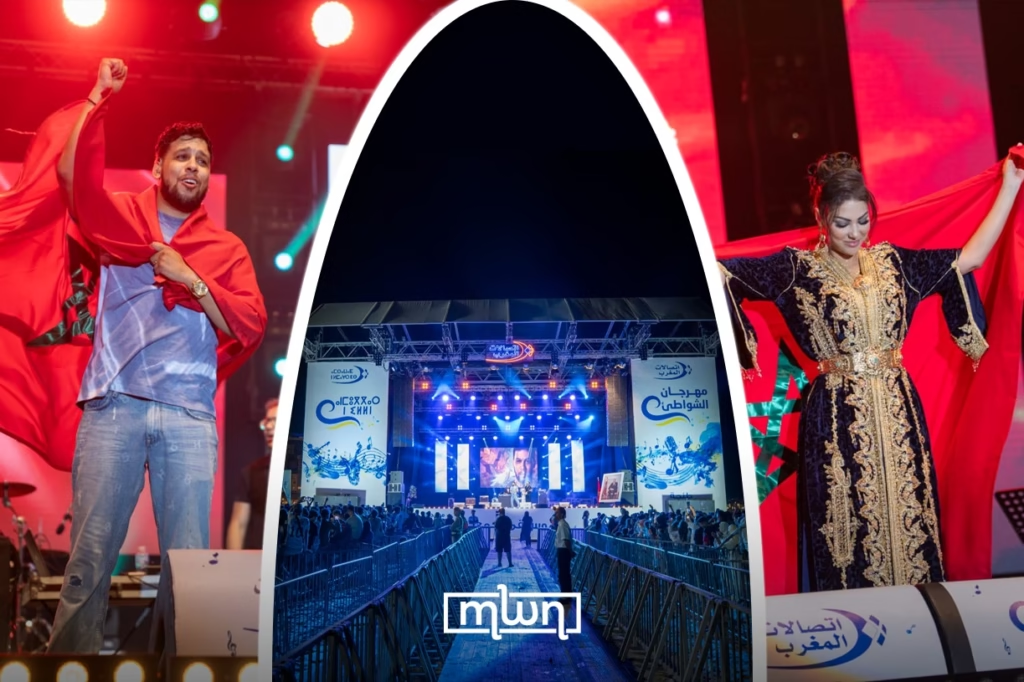
Staying true to the festival’s DNA, each city begins with a local opening act; a nod to Morocco’s rich, city-rooted talent and a way to spotlight emerging voices in front of massive audiences.
Tangier to Host Fourth Edition of International Summer Festival at the End of July
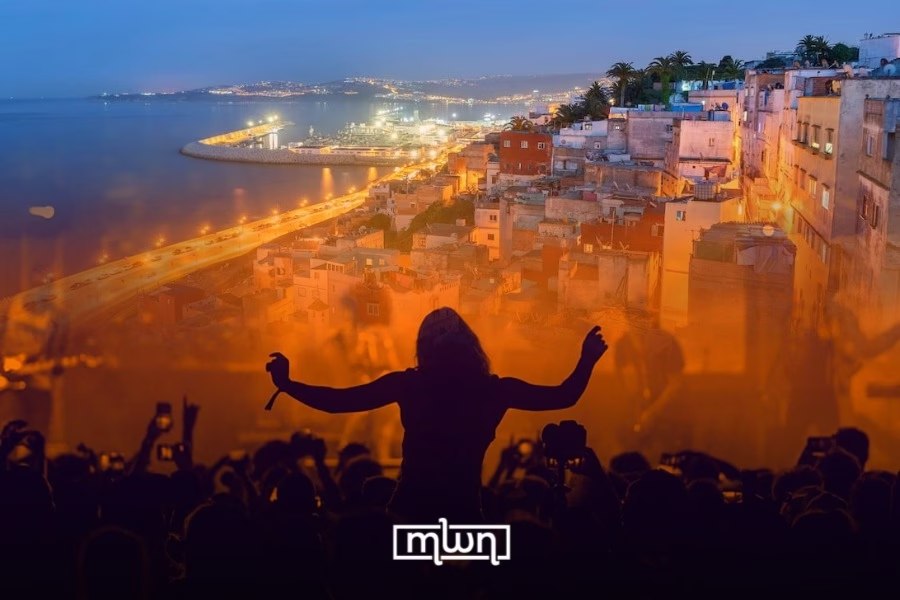
The countdown begins for one of Tangier’s most anticipated cultural festivals, set to take place on Throne Day and the 50th anniversary of the Green March. Fez – Tangier is getting ready to welcome back one of its most vibrant cultural highlights: the fourth edition of the Grand Tangier International Summer Festival, set to take place from July 28 to 31 at the historic Bab Diwane space near the old port. This year’s edition is more than just an artistic celebration; it’s deeply rooted in national memory. The festival coincides with two major milestones in Morocco’s collective history: the 26th anniversary of King Mohammed VI’s accession to the throne and the 50th anniversary of the Green March. The symbolism isn’t lost. It’s a festival that celebrates not only culture, but also unity, loyalty, and a shared national identity. Now a fixture in the city’s cultural calendar, the festival has grown into a space where artistic expression meets civic pride. It’s a place where music, creativity, and education come together to reflect the many layers of Moroccan identity. This year’s program is designed to be rich, diverse, and accessible to everyone, from children to adults, from locals to tourists. One of the highlights will be a symbolic carnival reenacting the Green March, taking to the streets in a vivid display of historical memory and popular participation. Alongside it, an ambitious summer academy will offer workshops in science, technology, mathematics, coding, and the arts; a serious investment in the city’s youth and their creative potential. The idea is clear: fun and learning can (and should) go hand in hand. And of course, the nights in Tangier will be just as alive as the days. Each evening at 10 p.m., the stage will light up with live performances by some of the biggest names in Moroccan and international music. These concerts are not only about entertainment, they’re part of a larger vision to position Tangier as a global cultural destination and give local audiences access to world-class experiences without leaving their city. For the organizers, this festival is about more than putting on a show. It’s a long-term project, a commitment to cultural and social development in Tangier. They see it as a bridge between generations, a platform for dialogue, and a celebration of national belonging. As the event continues to grow, so does its role in shaping the city’s cultural landscape, making it not just a summer event, but a symbol of what Tangier stands for today: creativity, connection, and community. The countdown has begun. Tangier is ready. Read also: Chikhat in Morocco: Tradition, Stigma, and the Struggle for Respect
Discover 6 Traditional Cafes to Visit in Tangier
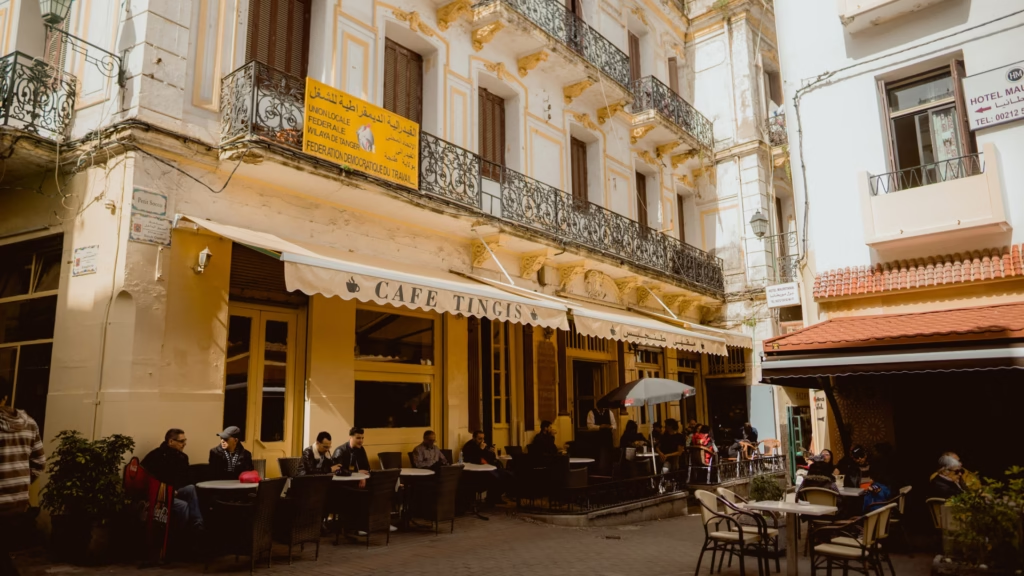
With a rich cafe culture, this is no better place to relax with drinks than at a table in one of the city’s traditional cafes.
The Silent Wall of Dreams: A Story of Tangier’s ‘Sour Ma’gazine’
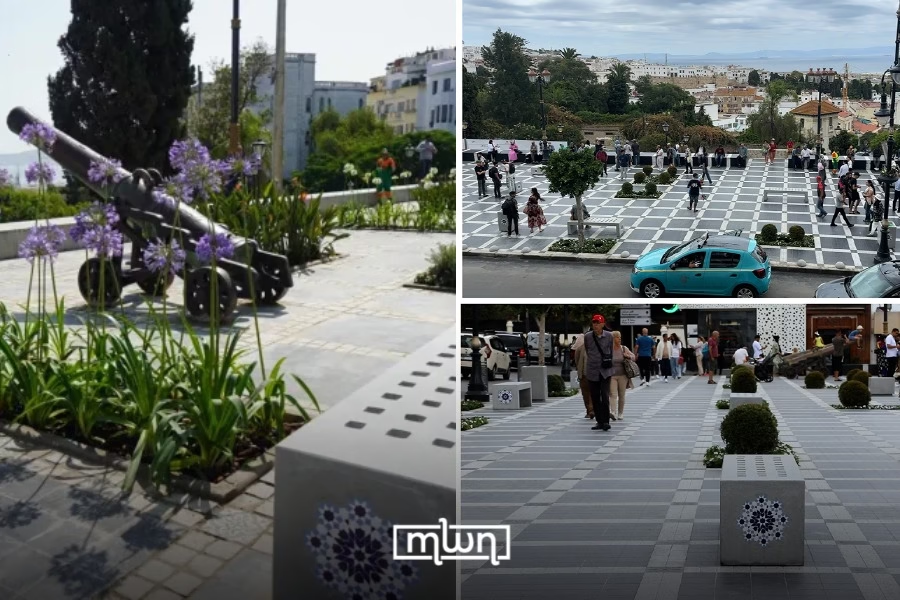
Far from being a landmark by design, one structure has evolved into a cultural fixture shaped by time and habit. Fez- There’s a place in Tangier where time doesn’t seem to move. Where the city’s hurried rhythm pauses for a moment. That place is Sour Ma’gazine, a stretch of cement that offers no glamour, no grandeur, but somehow holds more stories than any monument ever could. A simple bench-like structure overlooking the Mediterranean, it has become a living archive of the city’s social life, its shifts, and its quiet hopes. Originally built in 1911, Sour Ma’gazine was never designed to be iconic. Its first purpose was purely practical: a wall built to keep back the creeping dunes. But what emerged from that modest beginning was something far more meaningful. It evolved into a terrace, a viewing point, and eventually a symbol. Today, what stands there is a wide concrete ledge, somewhere between 50 and 70 centimeters high, spanning dozens of meters. It’s not much to look at, but somehow, it’s where Tangier goes to reflect, to rest, or just to watch the world go by. Its name, like much of its history, is wrapped in debate. Some say it refers to those who used to sit there day after day: the idle men, the “lazy ones,” who made a habit of simply observing rather than acting. Others link the name to a misheard sign from a nearby photography studio, “Photo Magazine,” that slowly morphed into “Ma’gazine.” Another story roots the name in the past lives of tour guides who waited here for European visitors disembarking from ships. Each version of the name reflects a different era, a different use, a different spirit of the city. But perhaps what matters most isn’t the name, but what the place has come to mean. It is not a tourist site by design, yet it draws people from all walks of life. During the day, older men take their place along the ledge, backs turned to the sea, eyes fixed on the street, an open-air theatre of people coming and going. In the evening, the spot fills up quickly. Some come for air, others for conversation, a few just for silence. Young couples sit shoulder to shoulder, newlyweds pose for photos, and tired souls find a kind of unspoken comfort in the company of strangers. What used to be a place for gazing at the horizon has slowly turned inward. The sea, though still there, no longer draws the same attention. Instead, it is the people, the passersby, the living pulse of the city, that hold the gaze. The dream of Europe, so vivid from this point on a clear day, is no longer always the center of desire. But the telescopes still stand, inviting a few dirhams in exchange for a brief glimpse of a continent that once symbolized escape. Over the years, the wall and its surroundings have changed. Some renovations have added new stones, repositioned old cannons, or attempted to polish the space. Others, however, have stripped it of some of its charm. The soft garden that once welcomed visitors has in places hardened into lifeless concrete. Where there were once public restrooms, there are now closed-off spaces. The garden, though still maintained, has become a nighttime shelter for the city’s lost and forgotten. Even so, Sour Ma’gazine endures. It has been both overlooked and loved. Sometimes neglected, sometimes fought over, but never truly empty. Children still climb the old cannons. Teenagers lean against the railing. Elders settle in their usual spots. And every now and then, a foreigner tries to make sense of it all, a wall that faces the sea but watches the street. In a city that constantly reinvents itself, where old neighborhoods fall to new towers and familiar corners are lost to traffic, this strange little ledge remains untouched in spirit. If you ever lose your way in Tangier, just ask to be taken there. Drivers don’t need directions. Everyone knows. Because in the end, Sour Ma’gazine represents a habit, a pause and a piece of the city’s soul still sitting quietly in the sun.
Inside Cafe Hafa – An Iconic Spot in Tangier
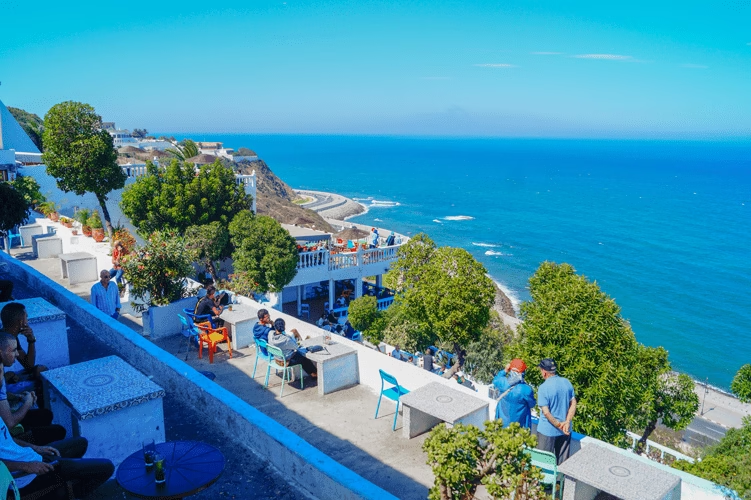
After reading this article, you’ll know it’s about time you visit the Moroccan cafe that spans continents.
Public Kissing Scene in Tangier Sparks National Debate

Morocco is facing a cultural crossroads after a kissing scene filmed in Tangier triggered outrage and official complaints. Fez – A kiss on screen has triggered a storm off-screen. In late June, a video showing two foreign actors kissing in Tangier’s symbolic Place du Grand 9 Avril, in front of the Moroccan flag, ignited a wave of public outrage, formal complaints, and a heated national debate. For some, it’s a matter of artistic expression. For others, it’s a blatant disregard for Moroccan values. At the center of the controversy is a scene filmed for a foreign movie, reportedly featuring a prolonged kiss shot multiple times in a highly frequented public space, with minimal visible crew presence. The footage spread rapidly across Moroccan social media, polarizing public opinion and raising difficult questions about cultural respect, artistic liberty, and the invisible lines that foreign productions are expected to observe when filming in a Muslim country. Let’s not forget: Morocco is a Muslim-majority nation, where public displays of affection are not just frowned upon, they’re often considered violations of religious, cultural, and legal norms. While the law may not explicitly criminalize every form of PDA, local tradition holds a powerful influence over what is deemed acceptable in public spaces. In a society where modesty is tied closely to both identity and public behavior, a kissing scene in front of a national symbol is bound to provoke more than a shrug. In response to the video, the Center for the Protection of Social Rights and Development Strategies filed an official complaint to the Public Prosecutor in Rabat, calling the scene an “affront to public decency.” The organization argues that the kiss, staged openly in such a meaningful location, constitutes a moral transgression and possibly a breach of Moroccan law. The complaint further criticizes the Moroccan Cinematographic Center (CCM) for approving a script that allegedly includes unethical content, and also holds the production company, actors, film crew, and the municipality of Tangier accountable for negligence and lack of oversight. What’s especially striking about this incident is not just the kiss, but the clash of two mentalities it reveals among Moroccans themselves. On one hand, some argue that foreign films follow global cinematic norms and should be granted artistic freedom. These voices maintain that intimacy is a normal part of storytelling and that Morocco, as a global filming destination, should not impose overly rigid constraints on content. “It’s just a movie,” some say. “No one was hurt.” On the other hand, critics say that filming such a scene in public, and particularly in front of national symbols, is insensitive at best and provocative at worst. “You’re in Morocco. Respect the culture,” they argue. The sentiment isn’t necessarily anti-art. Rather, it’s a call for basic cultural sensitivity when operating in a society with different social and religious expectations. Foreign productions, they argue, shouldn’t apply their rules wholesale when they’re hosted in countries with their own codes of conduct. The debate touches a raw nerve in Morocco’s ongoing negotiation between tradition and globalization. The country has long been a magnet for international productions, known for its cinematic landscapes and cooperative film industry. But as this case demonstrates, that openness comes with boundaries. There’s also a broader issue at play: who gets to define cultural respect? Should the presence of a film permit automatically validate the content? Is it enough to say “this is art” in a country where modesty in public spaces is taken seriously? Or should art be allowed to push social boundaries, even if that boundary happens to be a kiss on the steps of a public square? There are no easy answers. But what’s clear is that the divide runs deep. One group sees this incident as harmless and overblown. The other sees it as symptomatic of a larger trend of cultural disregard, an erosion of national values under the guise of creative license. In the end, this isn’t just about a kiss. It’s about the kind of Morocco we want to be: welcoming and modern, yes, but also rooted in traditions that still matter to many. The real challenge lies in striking that delicate balance, without silencing creativity or erasing cultural dignity. Read also: Rihanna, A$AP Rocky Expecting Third Child and Hint at Gender, Name
Tanger Fashion Week Champions Inclusivity, Artisanal Excellence, and Young Talent
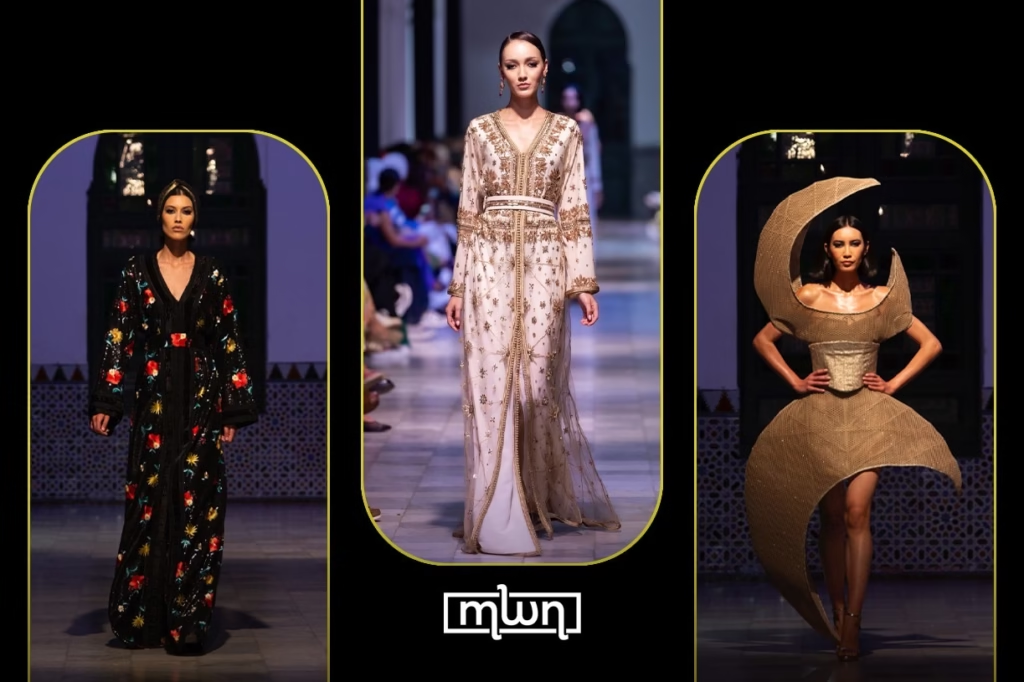
If fashion weeks are usually about who wore what, Tanger reminded me it can also be about who we lift up — and why.
Tangier’s 25th National Film Fest Rolls Out the Red Carpet This October

If you’re wondering where to be this October, the answer is simple: Tangier.
Tangier Spring Festival Is Back and Bolder Than Ever
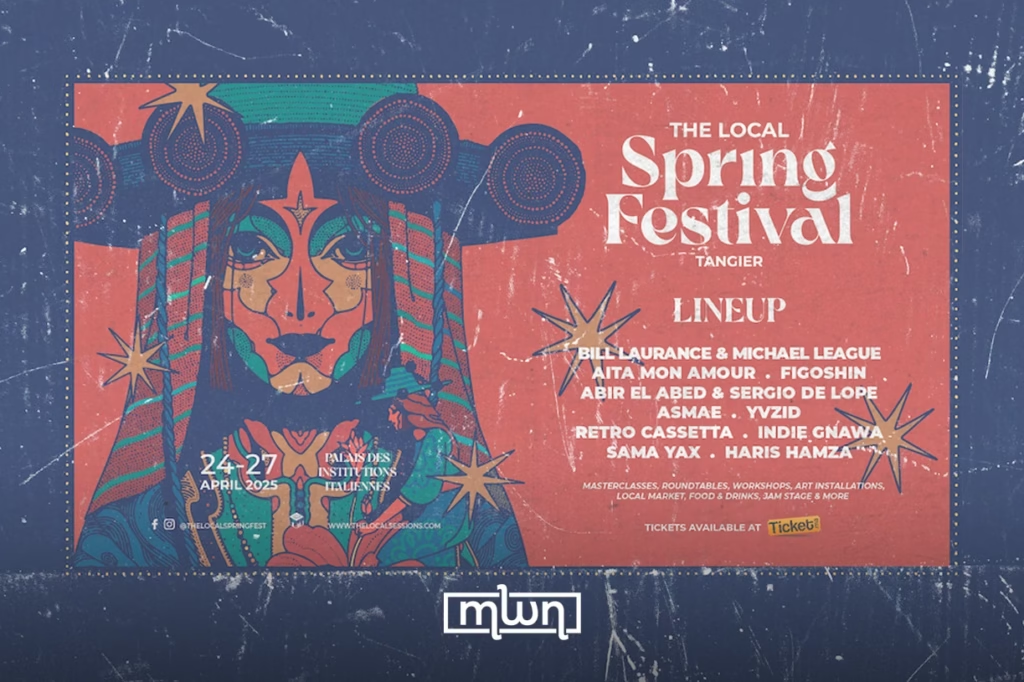
The cultural calendar’s hottest ticket? A springtime explosion of talent in the heart of Tangier. Fez– From April 24 to 27, Tangier will ditch its quiet mystique for something far louder, bolder, and beautifully chaotic: the 2025 edition of “Le Festival du Printemps Local”. And if past years were a warm-up, this time, the city’s creative pulse is going into overdrive. Indie Gnawa will light up the stage with their genre-defying sound, a modern twist on Morocco’s spiritual roots. As the festival rolls on, artists like Figoshin and Asmae will bring their own flavors to the mix, while Sunday wraps with a world-class exclamation point: none other than composer Bill Laurance. Whether you’re into hypnotic grooves, soulful vocals, or cinematic jazz, there’s something to make your ears perk up, and your jaw drop. But “Printemps Local” isn’t just about soundwaves. It’s a whole ecosystem for thinkers, makers, and dreamers. The festival’s masterclasses and roundtables are where ideas get messy, in the best way. Artists, entrepreneurs, and cultural movers will dive into honest conversations and hands-on sessions that aim to stretch what’s possible in Morocco’s creative industries. Want to try your hand at something new? The practical workshops are built for that, offering immersive experiences in everything from digital art to textile techniques. Then there’s the Creative Market: a true love letter to Moroccan craftsmanship. This is where local artisans showcase pieces you won’t find anywhere else: bold, and rooted in centuries of heritage. It’s also where cultures collide, as visiting creatives and local legends swap stories, skills, and maybe even some WhatsApp numbers for future collabs. Tangier itself becomes part of the artwork. Think murals, sculptures, and interactive installations scattered across the city like visual Easter eggs. These pieces aren’t just eye candy, they’re conversation starters, bridging history and modernity with every brushstroke or pixel. At its heart, the festival is doing serious work. It’s spotlighting local talent, injecting new energy into Tangier’s economy, and proving, once again, that culture isn’t just for the elite. It’s a tool for transformation. So, if you’re an artist, a culture geek, or just someone looking for a reason to fall in love with Tangier all over again, the Spring Festival is a movement that you will admire. And this year, it’s one you won’t want to miss. Read also: Everything You Need to Know About the 2025 Casa Vintage Festival
Ibn Battuta: The Moroccan Who Outsmarted Time and Distance
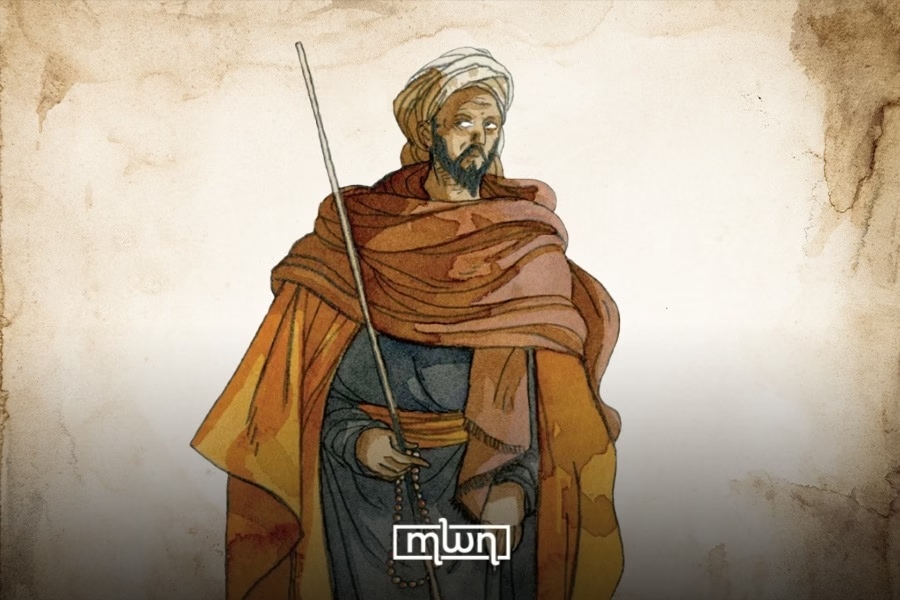
Before planes, passports, or guidebooks, Ibn Battuta walked the world and made it his own. Fez – Once upon a time, in 1304, a young man from Tangier packed a small bag, kissed his family goodbye, and began a journey that would rewrite what we thought was possible in the 14th century. His name? Ibn Battuta. You’ve probably heard it floating around Moroccan history lessons, but let’s be honest, no textbook really captures how wild his life actually was. Ibn Battuta wasn’t just a traveler. He was a time hacker. A passportless polyglot. A walking Google Maps before satellites existed. His first mission? Hajj. A simple pilgrimage to Mecca. But spoiler alert: he didn’t come back for 24 years. Let’s pause there. Imagine leaving home at 21 and not returning until you’re pushing 50. That’s not a trip. That’s an era. From the dusty streets of Cairo to the extravagant courts of Delhi, Ibn Battuta was everywhere. He moved through the Islamic world like water: seamless, fluent, and adaptive. He wasn’t just observing cultures, he was being absorbed by them. In the Maldives, he served as a judge. In India, he cozied up to the sultan as a high-ranking official. In China, he rode boats across the Yangtze as if he were born on them. He wasn’t rich. He didn’t come from royalty. His only superpowers were curiosity and a knack for people. That and his training in Islamic law opened palace doors faster than any sword ever could. While others were planting flags, Ibn Battuta was planting stories. But not during the journey. So, how do we have an account of his travels? He didn’t jot things down like a modern-day blogger. Instead, years later, when he finally returned to Morocco, the Sultan of Fez ordered him to sit with a writer and spill everything. That writer, named Ibn Juzayy, turned his words into a legendary manuscript: “Rihla” (translating to “journey””). And what a journey it was. Across nearly 120,700 kilometers (yes, more than Marco Polo), he gave us not just places, but people. He described their clothes, their spices, their accents, their values. He was fascinated, but never naive. He could admire a society’s sophistication and still roast its lack of hospitality in the same paragraph. He was observant, bold, and, let’s be honest, sometimes a little dramatic. That’s what makes “Rihla” so entertaining. It’s more than a travel log. It’s an emotional, political, social deep-dive into the medieval world. Today, we throw around his name as if he were just a historical footnote. A mall here, an airport there. But Ibn Battuta was so much more than a decorative figure. He was living proof that Morocco wasn’t some isolated outpost in the 1300s, it was connected, curious, and culturally ambitious. He didn’t go looking for fame. He went looking for meaning. And in doing so, he mapped out a version of the world that was borderless, human, and full of possibility. So, why does Ibn Battuta matter now? Because in a time when everyone’s screaming about divisions and differences, he reminds us that we’ve always been linked. That cultures don’t just collide; they converse. That faith can be a compass, not a cage. And that a Moroccan with a heart full of wonder can go from Tangier to Timbuktu to Tibet, and come back with stories that still shape how we see the world. This wasn’t just a man who traveled. This was a man who translated the world into understanding. Read also: Prince Moulay Rachid Honors Moroccan Circumcision Traditions in Personal Celebration