Rabat — “I was, in a way, born into theatre.” This is how Kacem Skalli, a graduate of the Ecole Superieur des Arts Visuels (ESAV) Marrakech, describes his deep connection to cinema, drama, and the broader arts.
Skalli, who comes from an artistic lineage, is among the Moroccan filmmakers whose work has been selected for the Marrakech Short Film Festival (MARRAKECHsFF), which will open on September 25 and run for six days.
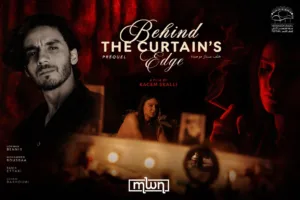
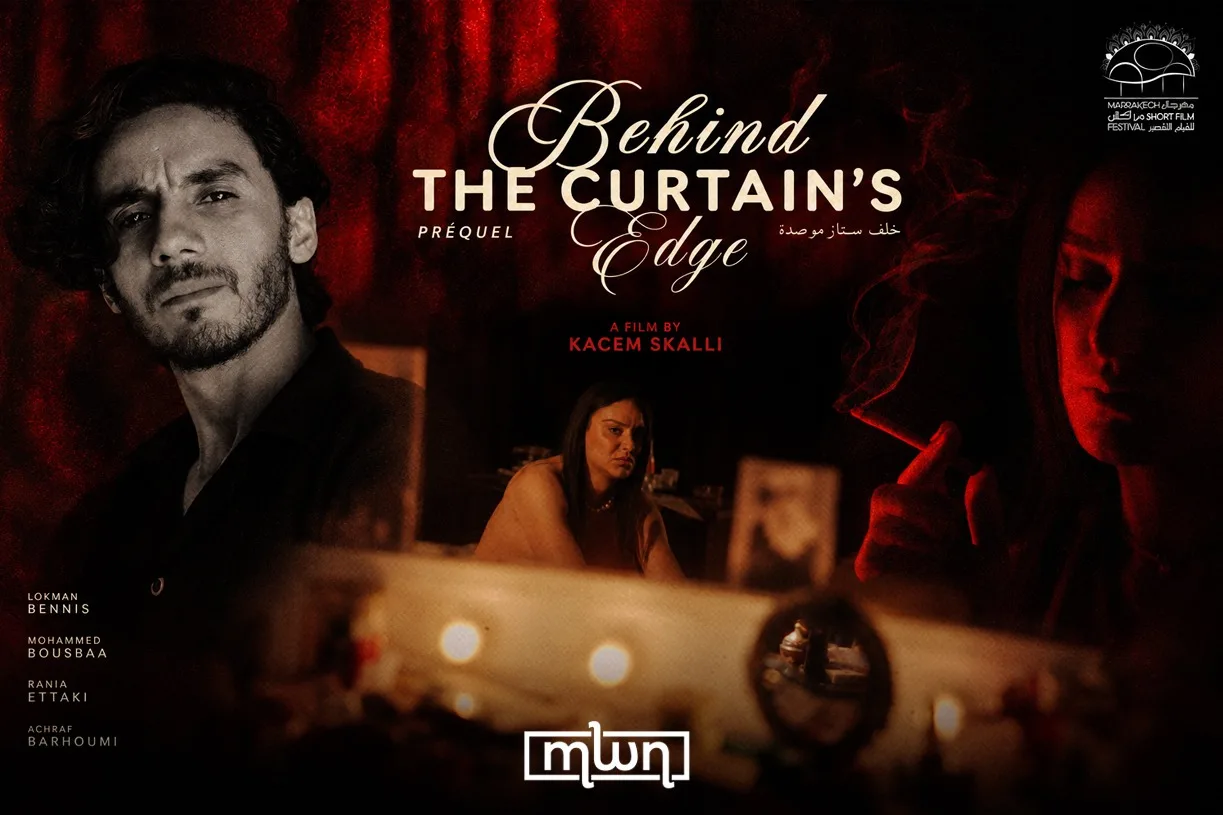
The festival will feature Skalli’s “Behind the Curtain’s Edge”, one of the short films selected for the national competition for the Belarj Prize.
Ahead of the festival, Skalli spoke to MWN Lifestyle Magazine about the film and what its selection represents to him, describing the project s as an “important turning point” in his artistic journey.
The film
“It was my graduation film, but it was also an opportunity to return to a world I know very well: theatre,” he says, while reminiscing about how his passion for the arts first took shape around the stage.
As a director and screenwriter, Skalli makes short films, both fiction and documentary, that have been officially selected and awarded at numerous international and national festivals, including “Behind the Curtain’s Edge.”
“Having grown up around the stage, I was always fascinated by what happens behind the curtain, the tensions, relationships, ambitions, and everything the audience never gets to see,” he explains.
Skalli’s connection to theatre is also deeply personal. His father was a stage actor who spent over 50 years in the field. Skalli said he grew up surrounded by all components of theaters, including backstage corridors, dressing rooms, and everything that happens behind the curtain.
“What fascinated me most was the contrast between the person an actor becomes on stage and who they are behind it,” Skalli elaborates.
At 20 minutes, “Behind the Curtains’ Edge” follows an actor who takes on the role of Ophelia while drawing on memories of his late mother, with tensions behind the curtain. Skaalli examines how personal loss, artistic ambition, and emotions can shape the world of theatre.
The film presents a new adaptation of “Hamlet”, one of Shakespeare’s most famous and complex masterpieces.
“By becoming Ophelia, he believes he can reconnect with a mother he never truly knew. But that inheritance also becomes a burden. The protagonist slowly realizes that he has been building his identity around someone else’s image. His transformation is therefore both physical and emotional: a search for his own identity, beyond his mother’s legacy and the roles others expect him to play,” Skalli explains.
The film incorporates memory, inheritance, and transformation, delving also into the protagonist’s relationship with his late mother, showing that it is not only about grief, but about trying to keep her presence alive through performance.
Where the show ends and reality begins
Asked why he chose to revise “Hamlet” from this particular perspective, the Moroccan filmmaker said Shakespeare felt “almost inevitable” for him.
“ I grew up with theatre, and you can hardly speak about theatre without thinking of him. What fascinates me most about his characters is how a desire, an obsession, or a need can push them to do almost anything to achieve what they want,” Skalli adds.
That interest in Shakespeare’s characters naturally connected with the filmmaker’s own approach to his story.
“I naturally connected their personal struggles with ‘Hamlet’, the play they are preparing to perform. The result is a kind of theatre within theatre: they perform Shakespeare on stage, while behind the curtain, they are performing their own roles in real life,” he further explains.
What happens behind the curtain raises fundamental questions for the filmmaker, including: where does performance end, and where does reality begin?
“That tension became the starting point for ‘Behind the Curtain’s Edge’: two actors who perform different versions of themselves, until the line between identity, desire, and performance begins to disappear.”
Shakespeare’s works often explore bleak and tragic visions of human nature, moral conflict, desire, and vulnerability, themes that have shaped the playwright’s enduring appeal.
Skalli’s movie similarly explores some of these elements, as he acknowledged that making the film confirmed his interest in navigating the “darkest and most vulnerable sides of human nature, and in telling stories where the line between what people show and what they truly feel can become blurred. It definitely influenced the kind of stories I want to explore in the future.”
Speaking on the moral of the movie, Skalli stressed that the film is beyond just being an adaptation of “Hamlet” but also the urgency to reveal a person’s perspective and what they truly are beyond the roles “others impose on us.”
“Through my protagonist, I wanted to explore how identity can become intertwined with performance, memory, and the desire to belong. The relationship with his late mother, the struggle to find a place on stage, and the rivalry surrounding him all come from the same question: how far are we willing to go to be recognized?” Skalli tells MWN Lifestyle Magazine.
The film does not seek to offer audiences a straightforward answer. Instead, Skalli wants to leave them with what he describes as a “feeling of ambiguity.”
Skalli wants viewers to question where performance ends and where truth begins, with theatre serving as the “natural language for this story.”
The filmmaker’s quest is to explore not what happens on stage but what occurs behind the curtain, “where the characters can no longer hide behind their roles.”
For Skalli, the stage becomes a space where performance and personal life collide, forcing the characters to confront identities that they can no longer separate from the roles they play.
The festival
In his interview with MWN Lifestyle Magazine, Skalli also emphasized the importance of MARRAKECHsFF as an essential hub contributing to the development of a new generation of Moroccan filmmakers.
For him, the festival provides a platform for emerging voices to show their work, network, and above all create connections with audiences.
“Just as an anecdote, this is actually my second selection at the festival. I was first selected in 2022 with my very first short film ‘Memoria’, which went on to have a nice festival journey, including its national premiere at the Tangier National Film Festival,” Skalli explains.
The filmmaker acknowledged that visibility is hard to reach for young artists, especially at the beginning of their careers.
Festivals, however, can help break the ice and serve as a bridge between emerging talent, the industry, and the public, and can help films as well as encourage filmmakers to keep creating.
Speaking of his movie, Skalli expressed pride in seeing his movie taking part in a “great run of selections and awards at prestigious international and national festivals.”
This nomination and featuring, however, feels really special as it takes place at home, in Marrakech, where he was born and when the relationship with cinema began.
“So this selection feels a little different, to be honest. Having the film presented here, in my hometown, and competing for the Belarj Prize is a very personal moment. Professionally, it also means a lot to see the film continue its journey and connect with audiences in Morocco after being shown internationally,” the filmmaker elaborates.
Commenting on his film’s recognition at the festival, which increasingly positioned itself as an international space for cultural exchange and dialogue through cinema, Skalli described the symposium as important, as it allows his work to exist in a conversation that goes beyond its own story.
“Marrakech has a unique position between Moroccan and international cinema, and being part of that exchange gives me the opportunity to meet different perspectives and audiences,” he says, conveying his pride in seeing his native country becoming a space where Moroccan filmmakers can present their movies, meet audiences, and artists as well as other filmmakers from different backgrounds.
“Being part of that dialogue with a film that started as a school project feels very meaningful to me,” the filmmaker concludes.